
The Unlikely Mediator Steps Into the Spotlight
When Vice President JD Vance and Iranian Parliament Speaker Mohammad Bagher Ghalibaf shook hands in Islamabad's Serena Hotel on April 11, 2026, they were participating in the highest-level face-to-face engagement between Washington and Tehran since the 1979 Islamic Revolution. The meeting, which stretched across 21 tense hours, marked the culmination of frantic diplomacy by Pakistan, a nation that has suddenly emerged as the world's most unlikely mediator in one of the most dangerous conflicts of recent decades.
Contents
- The Unlikely Mediator Steps Into the Spotlight
- The Trump Connection: How Field Marshal Munir Won Washington
- The Deadline Drama: Securing a Ceasefire Against the Clock
- Inside the Serena Hotel: 21 Hours of Tension
- The Impasse: Hormuz, Nukes, and Frozen Billions
- Why Pakistan? Geography, History, and Strategic Positioning
- The China Factor
- The Nightmare Scenario: Risks of Mediation Failure
- Beyond Diplomacy: The New Economic Corridor
- What Comes Next
- Key Points
The stakes could not be higher. For six weeks, war between the United States, Israel, and Iran has disrupted global energy markets, closed the Strait of Hormuz through which one-fifth of the world's oil flows, and killed thousands across the Middle East. Pakistan's intervention secured a fragile two-week ceasefire just hours before a threatened American bombing campaign, but the April 11-12 talks ended without a breakthrough, leaving the world watching to see whether a second round can transform a temporary pause into lasting peace.
For Pakistan, the risks are existential. The South Asian nation is simultaneously fighting insurgencies in two provinces, managing explosive tensions with nuclear rival India, and conducting open military operations against Afghanistan. It has also signed a mutual defense pact with Saudi Arabia, potentially pitting Islamabad against its neighbor Iran should the Gulf kingdom enter the war. Yet despite these challenges, Pakistan has leveraged its unique web of relationships to position itself as the only country trusted by all parties, including the United States, Iran, China, and Gulf Arab states.
"Pakistan is trying to remain relevant, and this is how it does so," says Ishtiaq Ahmad, a professor emeritus at Quaid-i-Azam University in Islamabad. By facilitating dialogue between powers that have not spoken directly in 47 years, Pakistan aims to escape its reputation as merely India's troubled neighbor and rebrand itself as a regional stabilizer with global clout.
The Trump Connection: How Field Marshal Munir Won Washington
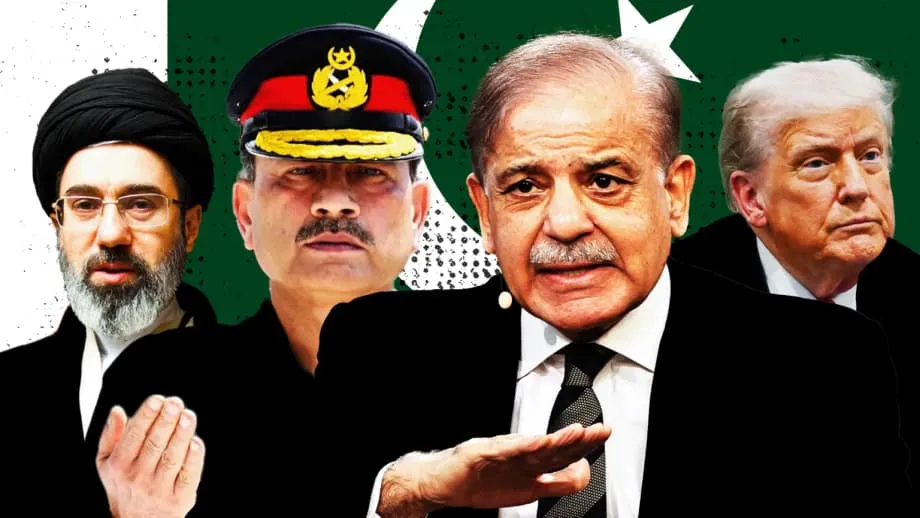
The diplomatic breakthrough traces back to Pakistan's military chief, Field Marshal Asim Munir, whom President Donald Trump has publicly called his "favorite field marshal." This warm relationship represents a dramatic reversal from Trump's first term, when he dismissed Pakistan as a sideshow and tweeted negative comments about the country. Under the second Trump administration, however, Munir has cultivated a direct line to the Oval Office that proved decisive when war broke out in February.
Munir delivered two early wins that secured Trump's gratitude. Acting on CIA intelligence, Pakistan handed over the alleged mastermind behind the 2021 Kabul airport bombing that killed 13 American service members and 170 Afghans. "Trump was so grateful that he mentioned this in his first address to the Congress," notes Maleeha Lodhi, a former Pakistani ambassador to the United States and UN. Munir also conveyed that Trump had played a pivotal role in preventing a wider war with India during the May 2025 crisis, a move that led Islamabad to nominate the American president for the Nobel Peace Prize.
The relationship extends beyond flattery. In September 2025, Pakistan's Frontier Works Organisation, which operates under military oversight, signed a $500 million investment deal with a US company for critical minerals access. In January, Pakistan signed an agreement with an affiliate of World Liberty Financials, the cryptocurrency venture co-founded by Trump and his family, potentially integrating its stablecoin into Pakistan's digital payment system. These deals have created financial stakes that give Washington incentives to keep Islamabad close.
But Pakistan has maintained what officials call a "principled stance" that prevents it from being seen as an American puppet. When the US and Israel launched initial attacks on Iran in February, Pakistan officially condemned them. When Iran subsequently bombed Saudi oil fields, Islamabad issued strongly worded criticism against Tehran. This careful balancing act has preserved trust with all sides, allowing Prime Minister Shehbaz Sharif to speak with more than a dozen world leaders across Washington, Moscow, Beijing, and Gulf capitals over the past five weeks.
The Deadline Drama: Securing a Ceasefire Against the Clock
The path to the Islamabad talks nearly collapsed on April 5, when Trump issued an unusually precise ultimatum. In an expletive-laden social media post, he warned that if Iran did not reopen the Strait of Hormuz by "Tuesday, April 7, 8:00 P.M. Eastern Time," the US would destroy "every bridge and power plant" in the country. He added grimly that "a whole civilization will die tonight," referring to the potential annihilation of Iranian infrastructure and society.
With hours remaining before the deadline, Sharif publicly requested Trump to extend it for two weeks, citing "progressing steadily, strongly and powerfully" diplomatic efforts. Simultaneously, he asked Iran to open the strait for a corresponding period. The gambit worked. Trump announced he had spoken with Sharif and Munir, declaring a suspension of bombing for two weeks subject to Hormuz reopening. Iran's Supreme National Security Council responded by agreeing to halt defensive operations if attacks against it ceased.
Sharif announced the breakthrough on social media: "With the greatest humility, I am pleased to announce that the Islamic Republic of Iran and the United States of America, along with their allies, have agreed to an immediate ceasefire." Both Washington and Tehran confirmed the pause, giving Pakistan its first diplomatic victory. The announcement triggered a two-day public holiday in Islamabad as the city prepared to host the historic talks.
Inside the Serena Hotel: 21 Hours of Tension
The talks convened at Islamabad's luxury Serena Hotel, a five-star property in the capital's heavily fortified Red Zone. Security preparations included deploying 10,000 police officers and expanding the Red Zone boundaries to encompass key government buildings. Authorities declared a two-day holiday to clear streets and minimize security risks, while military, Rangers, and police jointly managed protection for the delegations.
Inside the hotel, the layout reflected the deep mistrust between the parties. One wing was reserved for the Americans, another for the Iranians, with a common area for trilateral meetings involving Pakistani mediators. Phones were banned from the main negotiating room, forcing delegates including Vance and Iranian Foreign Minister Abbas Araqchi to step outside during breaks to relay messages to their capitals.
The atmosphere shifted repeatedly throughout the marathon session. "There were ups and downs. There were tense moments. People left the room, and then came back," recounted a Pakistani security source. At one point, raised voices prompted Munir and Deputy Prime Minister Ishaq Dar to call a tea break and separate the sides into different rooms to cool tensions. By early Sunday morning, the mood had improved sufficiently that participants considered extending the talks for an additional day, but fundamental disagreements persisted.
How can we trust you when, in the last Geneva meeting, you said the U.S. would not attack while diplomacy was under way?
This sharp question from Araqchi captured the Iranian delegation's core concern. The US-Israeli attack that killed Supreme Leader Ayatollah Ali Khamenei had begun just two days after previous talks in Geneva, creating deep skepticism in Tehran about American good faith. Despite Pakistan's efforts to soften the atmosphere, sources described the interactions as "heavy and unfriendly," with neither side showing willingness to ease tensions easily.
The Impasse: Hormuz, Nukes, and Frozen Billions
While participants came "very close" to an agreement and were "80% there" according to one source, three major issues created an insurmountable gap during the first round. The most contentious was the Strait of Hormuz, the narrow waterway between Iran and Oman that carries roughly 20% of global petroleum consumption. The US demanded Iran immediately reopen the strait as "free waters" with no tolls. Iran refused to surrender its leverage, insisting it would only reopen the waterway after a final peace deal, not as a precondition.
The nuclear question proved equally divisive. The American delegation, according to White House spokeswoman Olivia Wales, maintained the red line that "Iran can never have a nuclear weapon." Washington demanded an end to all uranium enrichment, dismantling of major facilities, and turnover of nearly 900 pounds of highly enriched uranium. Iran countered by insisting on its right to peaceful nuclear energy, including continued enrichment, and demanded recognition of this right as part of any settlement.
Money formed the third obstacle. Tehran demanded the release of approximately $27 billion in frozen assets and an end to primary and secondary sanctions. The US position focused narrowly on the nuclear file and Hormuz, while Iran sought a broader comprehensive agreement that included guarantees against future strikes, not just on Iran itself but on its regional allies including Hezbollah in Lebanon.
Vance departed Islamabad stating, "We leave here with a very simple proposal, a method of understanding that is our final and best offer. We'll see if the Iranians accept it." Despite the deadlock, dialogue has continued through Pakistani channels, with Sharif confirming on April 13 that "full efforts are underway to resolve" remaining issues before the ceasefire expires on April 22.
Why Pakistan? Geography, History, and Strategic Positioning
Pakistan's emergence as the primary mediator surprised many international observers who had watched India eclipse its neighbor economically and diplomatically in recent years. However, Islamabad possesses unique attributes that make it indispensable for this particular crisis. The two countries share a 920-kilometer border that has necessitated decades of cooperation on issues ranging from militants to refugee flows. Nearly 20% of Pakistan's population is Shia Muslim, creating religious ties to Tehran that the regime has carefully cultivated without crossing lines that would threaten Pakistani security.
Historically, Pakistan and Iran have mediated for each other since 1947. During Iran's monarchical period, Tehran helped mediate Pakistan's disputes with Afghanistan and supported Pakistan in its 1965 and 1971 wars with India. This reciprocal relationship means the Iranian regime is "at least willing to listen to Pakistan," according to regional security experts.
Perhaps more importantly, Pakistan maintains strong connections with all major powers involved. It has the world's closest strategic partnership with China, a defense pact with Saudi Arabia, and now a direct pipeline to the Trump White House. This positioning allows Islamabad to convene quadrilateral meetings with Turkey, Egypt, and Saudi Arabia while simultaneously briefing Beijing and Washington. As Paul Staniland, a senior fellow at the Council on Global Affairs, notes, "Pakistan is trying to use these different connections to place itself in a mediator role in ways that signal a greater level of geopolitical clout and influence than we might have expected a couple of years ago."
The China Factor
Beijing's role in Pakistan's mediation effort adds another layer of complexity. China imports roughly 12% of its crude oil from Iran and has a 25-year strategic cooperation agreement worth up to $400 billion in pledged investment. The Belt and Road Initiative and China-Pakistan Economic Corridor (CPEC), valued at approximately $62 billion, give Beijing strong incentives to see the conflict end and Hormuz reopen.
Foreign Minister Ishaq Dar visited Beijing on March 31, 2026, despite medical advice to rest following a shoulder fracture, underlining the urgency of coordinating with China. During the visit, both countries announced five principles for mediation: immediate ceasefire, resumption of talks, protection of civilians, maritime security, and adherence to the UN Charter. While some analysts speculated China might serve as a "guarantor" for any deal, others argued Beijing would avoid underwriting a potentially declining Iranian regime. Instead, China appears to be supporting Pakistan's shuttle diplomacy while protecting its own energy and economic interests.
The Nightmare Scenario: Risks of Mediation Failure
While Pakistan basks in international praise for its diplomatic coup, the potential downside of failure keeps officials awake at night. The most immediate risk involves Pakistan's September 2025 Strategic Mutual Defense Agreement with Saudi Arabia, which declares that an attack on one is considered an attack on both. When Iran bombed Saudi petrochemical facilities in Jubail during the negotiations, it created a scenario that could activate this pact, dragging Pakistan into war against the very neighbor it is trying to mediate with.
Abdul Basit, a South Asia expert at Nanyang Technological University in Singapore, warns that if talks collapse, Pakistan could face a "nightmare scenario" where "three borders of Pakistan [become] hot" simultaneously: Afghanistan to the west, India to the east, and potentially Iran to the southwest. This would come as Pakistan is already fighting "two full-fledged insurgencies" in Balochistan and Khyber Pakhtunkhwa provinces. "Pakistan cannot afford that," Basit stresses.
The domestic risks are equally severe. Protests erupted across Pakistan following the initial US-Israeli attacks on Iran, particularly in Karachi where at least 22 people died in clashes on March 1 after a mob tried to storm the US Consulate. The killing of Supreme Leader Khamenei, a central religious figure for Shia Muslims worldwide, inflamed passions among Pakistan's large Shia population. A prolonged war or perceived American betrayal could trigger internal instability that the government is ill-equipped to handle.
Additionally, Pakistan's own economic fragility makes it vulnerable to energy shocks. The country relies on Middle East oil and gas imports, while remittances from 5 million Pakistanis working in Arab states equal the nation's total export earnings. The war has already forced Pakistan to increase fuel prices by 20%, straining Sharif's government. Islamabad needs a settlement to prevent economic collapse, not merely to win diplomatic accolades.
Beyond Diplomacy: The New Economic Corridor
While hosting peace talks, Pakistan and Iran have simultaneously deepened their economic ties in ways that could reshape regional trade. On April 10, Islamabad launched the Pak-Iran Transit Corridor, dispatching the first shipment of frozen meat from Gwadar port to Tashkent, Uzbekistan, via Iranian territory. This new route connects the China-Pakistan Economic Corridor to Central Asia, offering an alternative to the Chabahar Port that India developed in Iran but has been forced to abandon due to US sanctions.
The timing suggests strategic coordination between the diplomatic and economic tracks. As Israel's 12-day war with Iran last June demonstrated, shared economic interests can reinforce peace efforts. The corridor also gives China an additional route for BRI connectivity while bypassing potential Indian interference. Trade between Pakistan and Central Asia, including Afghanistan, has already risen to $2.41 billion in 2025 from $1.92 billion the previous year, indicating the economic stakes of regional stability.
What Comes Next
The immediate goal for Pakistani diplomats is securing an extension of the ceasefire beyond its April 22 expiration date, followed by a second round of talks. Sources indicate Sharif may visit Saudi Arabia as part of these efforts, while Dar continues coordinating with Turkish, Egyptian, and Chinese counterparts. The format for future negotiations remains uncertain, whether direct face-to-face meetings or indirect talks through Pakistani intermediaries.
Success would "radically change perceptions of Pakistan" globally, according to Professor Ishtiaq Ahmad, establishing Islamabad as a credible bridge between conflicting powers. Failure, however, could validate skeptics who question whether a nation mired in its own conflicts can effectively manage peace between others. As one diplomatic source noted, Pakistan has "played its part" by bringing the parties to the table, but "as a broker, mediator or facilitator, your job is to take the horse to water. You can't make it drink."
The world will be watching when, or if, the delegations return to the Serena Hotel. Until then, Pakistan continues its high-stakes diplomatic tightrope walk, trying to prevent a regional war that could engulf its own borders while securing a place on the world stage that its economic and military power alone could never guarantee.
Key Points
- Pakistan hosted the first direct US-Iran talks since 1979 on April 11-12, 2026, mediated by Field Marshal Asim Munir and Prime Minister Shehbaz Sharif
- The 21-hour negotiations at Islamabad's Serena Hotel ended without a deal but maintained a fragile two-week ceasefire expiring April 22
- Major sticking points include control of the Strait of Hormuz, Iran's nuclear enrichment program, and $27 billion in frozen Iranian assets
- Pakistan's unique trust relationships with the US, Iran, China, and Gulf states allowed it to broker the initial ceasefire just hours before a threatened American bombing campaign
- A mutual defense pact with Saudi Arabia creates existential risks for Pakistan if talks collapse and Riyadh enters the war against Iran
- Simultaneous with peace efforts, Pakistan and Iran launched a new transit corridor connecting Gwadar port to Central Asia, deepening economic integration
- Diplomatic sources indicate intensive efforts are underway to schedule a second round of talks and extend the ceasefire beyond its current deadline