A Novel Fix for Mounting Waste
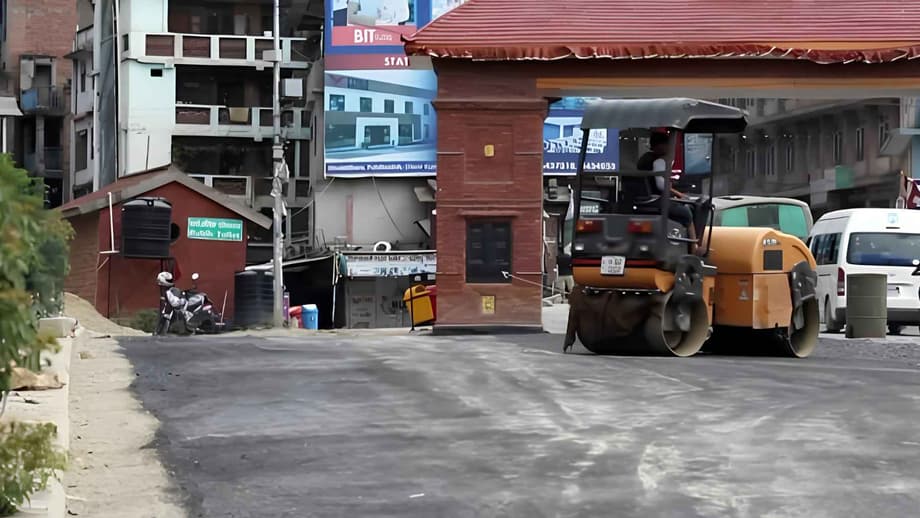
In the Himalayan city of Pokhara, discarded noodle packets and biscuit wrappers are finding an unexpected second life beneath the tires of passing cars. Nepal is piloting a method that shreds low value plastic waste and mixes it into asphalt, creating a hybrid pavement that supporters hope will cut construction costs while cleaning up streets. The initiative, led by Green Road Waste Management, represents a small but growing effort to address two chronic problems at once: plastic waste that clogs landfills and rivers, and roads that crumble under heavy monsoon rains. Cars are already driving over these experimental surfaces in Pokhara, where about 201 tons of waste are generated each day according to United Nations Development Programme figures. The sight of snack packaging becoming road surface captures global attention precisely because the idea appears elegantly simple. The world produces more than 440 million tons of plastic annually, and cities everywhere need smoother streets. Connecting the two challenges seems logical. Bimal Bastola, founder of Green Road Waste Management, has argued that the approach can absorb plastics that traditional recyclers ignore, giving difficult to recycle materials a purpose. Early pilots between 2018 and 2020 laid roughly 8,200 feet of plastic mixed asphalt and consumed more than 6,600 pounds of low value plastic. Those numbers are modest, yet they signal a willingness to experiment where formal recycling markets have failed. However, scientists and policymakers warn that this solution requires careful study before it can expand from pilot projects to national policy.
Overflowing dumps, open burning, and plastic choked drains shape daily life across South Asia. In Nepal, the pressure is particularly acute in rapidly growing urban areas where municipal collection systems struggle to keep pace with consumption. The United Nations Development Programme notes that rapid expansion in Pokhara has increased pressure on lakes, wetlands, and neighborhoods. Green Road Waste Management has worked with UNDP support to introduce recycled plastic into road construction, aiming to reduce environmental harm while creating local jobs. Bastola told the UNDP that his goal is to build a cleaner country by linking communities, companies, and technology around waste solutions. The concept is not unique to Nepal. India has already built nearly 24,855 miles of rural roads using plastic waste under its Pradhan Mantri Gram Sadak Yojana, with roughly 8,078 miles completed in just the two years prior to October 2024. That scale proves the concept can move beyond novelty and into government backed programs, though Nepal faces distinct geographical and economic constraints that demand customized approaches.
How Waste Becomes Pavement
The transformation from garbage to road surface follows a specific sequence. Workers collect discarded packaging from noodles, biscuits, and other snacks, then sort and shred the material into fine pieces. This shredded plastic is used to coat hot aggregates before bitumen, the conventional asphalt binder, is introduced. The plastic does not replace the bitumen entirely. Instead, it reduces the volume of fresh raw material required while integrating waste that lacks commercial value. A 2024 study published in the International Journal For Multidisciplinary Research found that adding several types of plastic waste at approximately 8% reduced demand for virgin bitumen and improved laboratory properties such as moisture resistance, Marshall stability, and density. Marshall stability measures the strength of asphalt mixtures under load, a critical factor in regions where heavy vehicles and sharp temperature swings punish road surfaces. In practical terms, better Marshall stability means a surface is less likely to deform or crack under stress.
Additional published research using machine learning approaches, reported in Nature Scientific Reports, analyzed 210 samples of plastic modified asphalt and identified optimal ranges for plastic particle size between 2.5 and 4 millimeters, bitumen content near 5.3 to 5.5%, and plastic content between 20 and 30%. Those findings suggest that when mixing parameters are carefully controlled, recycled plastics can act as a polymeric reinforcement that improves binder cohesion and elasticity. At the same time, the literature notes important deployment challenges such as dispersion and binder plastic compatibility, storage stability, and possible low temperature brittleness that can offset benefits if left unmanaged. Consequently, recycled plastics should be regarded as conditionally beneficial modifiers, whose performance advantages are realized when technical challenges are appropriately managed.
Promises of Durability and Cost Savings
Proponents argue that plastic roads offer measurable engineering advantages beyond waste diversion. Bimal Bastola told Agence France Presse that the method lowers costs, prevents water infiltration, and extends road lifespan. That claim carries weight in Nepal, where monsoon downpours routinely turn poorly maintained pavement into networks of potholes. Laboratory evidence supports some of these assertions. Research indicates that incorporating waste polyethylene can increase mixture stiffness at high temperatures, helping the surface resist permanent deformation under load. Studies also report improved resistance to rutting and fatigue, which are common failure modes on busy highways. In Bangladesh, where the World Bank is supporting pilot projects across eight administrative divisions, early results show promise. A pilot road in Gazipur withstood flood damage, resisted bitumen bleeding during extreme summer heat, and cost less to build than conventional bitumen only surfaces.
Sahadat Hossain, a leading researcher at the University of Texas at Arlington who has built plastic roads in Texas and Bangladesh, stated that plastic roads can reduce cracking and pothole damage by up to 75% when up to 10% recycled plastic is incorporated. His team observed that during the hottest summer in fifty years in Bangladesh, traditional asphalt softened and melted while adjacent plastic modified sections showed no visible distress. Thermal stability and moisture resistance are attractive qualities for any nation with extreme weather patterns. Hossain explained that incorporating plastics such as LDPE, HDPE, and PP into asphalt mixtures reduces demand for virgin petroleum based materials, lowering the carbon footprint of road construction. The material also improves road durability and lifespan, requiring fewer repairs and using fewer resources for maintenance activities over time.
The Microplastic Question
For all the engineering enthusiasm, environmental scientists are raising serious concerns about what happens after the pavement is laid. The World Bank has cautioned that plastic roads have not undergone the full scientific evaluation needed to understand their environmental footprint. A central worry involves microplastics, tiny fragments that could shear off as tires abrade the surface over years of use. A study published in Science of the Total Environment simulated road traffic on plastic modified asphalt samples and quantified microplastic release for the first time. Researchers found that recycled LDPE, LLDPE, and ABS modified asphalt released microplastics ranging from 2 to 40 micrometers in size. Cold temperatures and acidic conditions favored higher release rates. The study also discovered that incorporating recycled plastic as a polymer modifier within the bitumen matrix caused earlier microplastic release compared to adding it as a synthetic aggregate substitute.
The World Bank has plainly summarized the uncertainty surrounding this infrastructure approach.
“Using recycled plastics in road construction has not yet gone through the full rigor needed to evaluate environmental considerations, and it remains unclear whether plastic roads can be recycled at the end of life.”
These findings suggest that environmental factors influence how much plastic escapes into surrounding soil and water. Another major unknown concerns end of life management. The World Bank report asks whether plastic roads can be recycled when they are eventually torn up, or whether the current solution will become a contaminated waste stream. Conventional asphalt is highly recyclable, often milled into reclaimed asphalt pavement for new projects. Adding plastic could complicate that circularity. A separate literature review in Frontiers in Built Environment warned that such uses of plastic waste may represent an ongoing effort at greenwashing, which delays and distracts from finding real solutions to the plastic pollution crisis. The review noted that these practices could exacerbate negative ecological impacts and increase demand for continued production of new virgin plastics by creating new markets for waste materials.
Health, Standards, and the Risk of Greenwashing
Beyond physical wear, experts worry about chemical leaching and occupational safety. A review published in Frontiers in Built Environment examined the use of plastic waste across construction applications and found that many studies overlooked potential health costs. Plastics contain thousands of chemical additives, roughly one fourth of which have known hazardous properties. When plastic waste is heated during road construction, workers may inhale particles or fumes, yet guidelines for protecting laborers remain underdeveloped. Erica Cirino, communications manager for the Plastic Pollution Coalition and lead author of the review, told Grist that several studies she examined were funded by chemical and plastic makers rather than independent researchers, creating potential bias toward positive portrayals.
The National Academies of Sciences in the United States concluded in a major report that there has been virtually no substantial research in the country to back industry claims about plastic road benefits. The report noted high material and installation costs alongside uncertainties about long term performance. David Dzombak, a professor emeritus at Carnegie Mellon University who chaired the committee behind that report, explained that even if plastic roads prove viable, they are unlikely to serve as a massive sink for plastic waste. Asphalt pavement can only accommodate a maximum of about 0.5% waste plastic by dry weight according to the National Academies literature review. Even under optimistic scenarios, replacing all virgin plastic in asphalt binder would consume only a tiny fraction of national plastic waste generation. Dzombak stressed that infrastructure is not a dumping ground for mixed plastic trash, and that demand for clean, superior quality polyethylene may simply divert material from other recycling streams rather than from landfills.
Building a Roadmap for Nepal
Nepal must weigh these benefits and risks against its own geographical and institutional realities. The mountainous terrain, seasonal landslides, and limited municipal budgets make road maintenance expensive and logistically demanding. Simply copying the Indian rural road program, which has built thousands of miles of plastic roads, may not be feasible without adapted supply chains and quality controls. Green Road Waste Management and its partners recognize this. Bastola has focused on low value plastics that conventional recyclers reject, aiming to create a local market where none existed. However, scaling up requires standardized guidelines for plastic content, mixing temperatures, and performance benchmarks. Without national standards, variations in material quality could produce roads that fail prematurely, undermining public trust.
Sahadat Hossain pointed out that training asphalt plant workers is necessary for any new technology to succeed. Mixing plastics requires adjustments in temperature and timing because different plastics have varying melting points and bitumen compatibility. If temperatures climb too high, there is a risk of releasing dioxins and other harmful compounds, so maintaining safe operating thresholds is essential. The Solid Waste Institute for Sustainability at the University of Texas at Arlington is currently working with transportation agencies to develop design guidelines that could be applied nationally or even globally. For Nepal, adopting such protocols could help bridge the gap between promising pilots and trustworthy infrastructure policy. Clear monitoring systems would allow engineers to track road performance across seasons and adjust specifications before problems become widespread.
Regional Momentum and Global Context
South Asia as a whole is watching the plastic road experiment with interest. Bangladesh is collaborating with the World Bank to study whether plastic roads better withstand natural disasters while monitoring microplastic runoff. The Indian state of Odisha recently sought technical expertise from the National Highways Authority of India to launch urban pilots using shredded plastic mixed with bitumen at temperatures between 170 and 180 degrees Celsius. Stanford University researchers, funded by the National Academies of Sciences, have explored broader applications including plastic composite building panels and pavement, emphasizing the need for improved waste sorting and performance databases. Their work suggests that recycling entire buildings made of polymer composites could create more uniform waste streams, making downstream reuse more predictable.
Meanwhile, the broader concept of downcycling, converting lower value waste into construction inputs, fits within circular economy frameworks that prioritize keeping materials in use. Yet critics argue that downcycling can disguise continued reliance on virgin plastic production. The Plastic Pollution Coalition and other advocacy groups note that upstream strategies, such as limiting unnecessary plastic production, are preferable to end of life management schemes that may extend the plastic economy. Nepal sits at this crossroads. It can learn from Indian scale, Bangladeshi flood resilience testing, and American academic research while crafting policies that suit the Himalayan context. The ultimate goal is not merely smoother highways, but a waste management system that reduces environmental harm without creating hidden costs for future generations.
The Bottom Line
- Nepal is testing plastic mixed asphalt roads in Pokhara and other pilot areas to address plastic waste and road durability simultaneously.
- Green Road Waste Management has used over 6,600 pounds of low value plastic in early pilots, using a method that coats aggregate with shredded waste before adding bitumen.
- Regional neighbors, particularly India and Bangladesh, have advanced larger plastic road programs, providing models for South Asian nations.
- Laboratory studies show improved Marshall stability, moisture resistance, and thermal performance, yet field data over decades remains limited.
- The World Bank and independent scientists warn that microplastic release, chemical leaching, and end of life recyclability require rigorous long term study.
- Experts stress that plastic roads are not a comprehensive solution to plastic pollution, as construction can absorb only a small fraction of total waste.
- Clear national standards, worker safety protocols, and monitoring systems are essential before Nepal can safely expand from pilots to policy.