Historic Weakness Forces a Reckoning
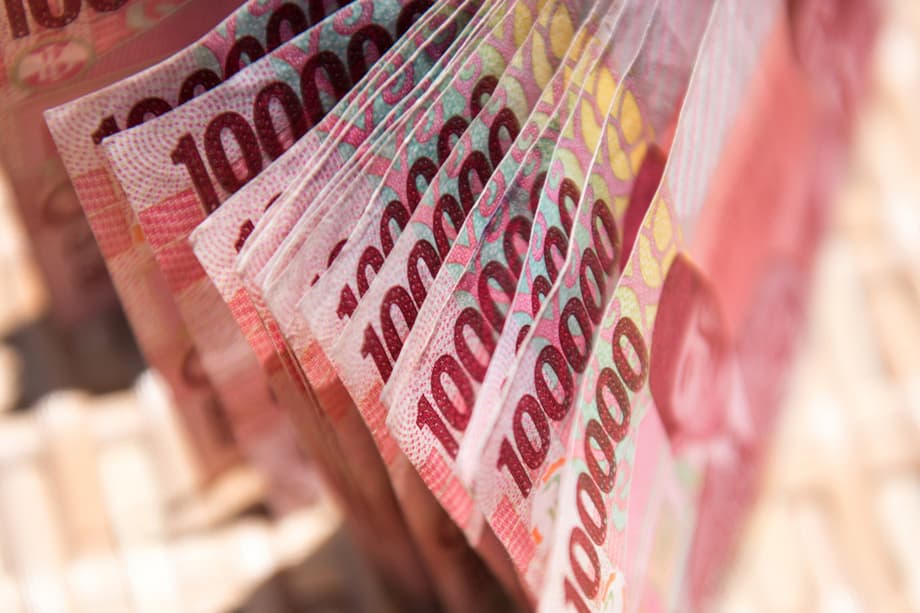
The Indonesian rupiah shattered longstanding psychological barriers in the middle of May 2026, sinking to 17,513 per United States dollar and registering the weakest level in the recorded history of the currency. The roughly 5 percent decline since the start of the year signals that conventional stabilization tools are losing traction against a wall of external shocks and domestic vulnerabilities. For a country that endured the traumatic Asian Financial Crisis of the late 1990s, the breach of the 17,500 threshold marks more than a statistical record. It represents a stress test for the economic credibility of Bank Indonesia and the administration of President Prabowo Subianto.
Capital flight began early. In the first three weeks of January alone, outflows reached 1.6 billion dollars, foreshadowing a sustained exodus that would intensify as geopolitical tensions reshaped global risk appetites. The United States Dollar Index climbed relentlessly, fueled by demand for safe havens, while emerging market assets fell out of favor. Yet monetary authorities have faced accusations of adopting what critics describe as an ostrich policy, downplaying deteriorating conditions to maintain a narrative of stability. In reality, the rupiah descent reflects a convergence of war-driven energy markets, institutional uncertainty, and structural imbalances that monetary intervention alone cannot easily reverse.
Currency and commodities observer Ibrahim Assuabi emphasized that the Strait of Hormuz remains heated despite statements from officials that hostilities have ended. The United Arab Emirates strike on an Iranian refinery and the continued blockage of oil shipments have amplified safe haven flows into the dollar, leaving Indonesia vulnerable. Even a relatively strong first quarter economic growth print of 5.61 percent has failed to restore market confidence, largely because the expansion was driven by government spending and seasonal consumption rather than productive investment.
How Did the Currency Fall So Far?
Currency markets function as barometers of confidence, responding to the net flow of money across borders. When foreign investors purchase local stocks and bonds or corporations direct capital into a country, demand for the local currency rises. When those flows reverse, the currency weakens. Indonesia has faced both sides of this equation simultaneously. The current account, which records the net flow of goods, services, and income, has run persistent deficits for years outside brief commodity booms. Even a modest 2025 deficit of 1.5 billion dollars left the rupiah exposed to external shocks.
The immediate catalyst is the war in Iran and related blockades of the Strait of Hormuz, one of the most critical energy arteries on the planet. Disruptions there have removed up to 100 million barrels of crude supply from global markets each week, pushing Brent crude toward 110 dollars per barrel and forcing Indonesia to spend more dollars on fuel imports. Simultaneously, the United States Federal Reserve maintains rates at 3.75 percent while the 10 year Treasury yield sits at 4.47 percent. This elevated return on dollar assets has narrowed the interest rate differential with Indonesian instruments, stripping emerging markets of their yield advantage and accelerating capital flight toward safer harbors.
Seasonal factors have compounded the pressure. Corporate demand for dollars peaks during the middle of the year dividend distributions and foreign debt servicing, while the pilgrimage season and import cycles drain additional foreign exchange from the domestic market. According to the Financial Services Authority, Indonesia suffered capital outflows of 990 million dollars in April 2026 alone, the highest in Southeast Asia. The rupiah is no longer merely reacting to global sentiment; it is caught in a structural downdraft of dollar demand that outpaces available supply.
Domestic Vulnerabilities Undermine Confidence
While external shocks provide the spark, domestic conditions have supplied the fuel. The administration under President Prabowo Subianto ran a 2025 budget deficit equivalent to 2.92 percent of GDP, the widest in two decades excluding the pandemic era. Indonesian law caps the annual deficit at 3 percent and public debt at 60 percent of GDP, limits that have anchored investor confidence since the late 1990s. Persistent speculation that these rules might be relaxed to accommodate costly welfare programs, including a 20 billion dollar free school meals initiative, has rattled bond markets. Foreign investors sold roughly 6.4 billion dollars worth of Indonesian government bonds last year, with the largest selloff occurring in September when longtime Finance Minister Sri Mulyani Indrawati was abruptly replaced by growth focused economist Purbaya Yudhi Sadewa.
Institutional uncertainty extends to the central bank itself. The appointment of a nephew of the president as a Bank Indonesia deputy governor, alongside a burden sharing arrangement in which the central bank agreed to help fund government programs such as affordable housing, has reignited fears about eroding monetary independence. Parliament is also deliberating a bill that would strengthen the role of the central bank in supporting economic growth, a mandate that could conflict with its traditional price and currency stability objectives. Government and central bank officials have repeatedly denied any politicization of monetary policy, but markets frequently treat perception as reality. In May 2026, global index provider MSCI removed 18 Indonesian equities from its benchmarks, far more than authorities anticipated, citing concerns over concentrated shareholding and limited free float in major listed firms. The resulting repositioning by foreign funds dumped additional rupiah supply into the market.
Rating agencies have responded in kind. Fitch and another major agency revised the Indonesian sovereign outlook from stable to negative earlier in 2026, citing policy uncertainty and fiscal trajectory. These downgrades raise the cost of borrowing and reinforce a cycle of investor caution that deepens currency fragility.
The Net Importer Trap Tightens
As a net oil importer, Indonesia turns every spike in global energy prices into a fiscal and currency shock. The government regulates fuel prices through state owned Pertamina, which accounts for 69 percent of national oil production. Under the reimbursement system, Pertamina receives the difference between the subsidized retail price of 10,000 rupiah per liter for Pertalite and its actual procurement cost in dollars. Because the reference price formula relies on the Mean of Platts Singapore index and the dollar buying rate of the central bank from the previous month, a weaker rupiah automatically inflates the subsidy bill even if crude prices remain static.
The numbers are sobering. The 2026 budget originally allocated 381.3 trillion rupiah for energy subsidies based on assumptions of 70 dollar crude and an exchange rate of 16,500 per dollar. With oil hovering near 100 dollars and the rupiah nearing 17,500, the compounding effect could add more than 200 trillion rupiah to the total subsidy burden. Finance Minister Purbaya has acknowledged that if oil averages 92 dollars per barrel, the budget deficit could touch 3.6 percent of GDP, breaching the legal ceiling. To prevent this, the government has capped subsidized fuel purchases at 50 liters per private vehicle per month and scaled back the free nutritious meal program from six days to five days a week, measures expected to save roughly 20 trillion rupiah, one fifth of the required amount.
The subsidy burden extends beyond petroleum. State electricity company Perusahaan Listrik Negara faces fixed capacity payments to independent power producers regardless of whether electricity is dispatched, a structural gap costing an estimated 33 trillion rupiah annually. Government compensation to PLN reached 11 billion dollars in 2024, consuming 5 percent of the national budget. As fossil fuel costs rise, the fiscal vise squeezes tighter, leaving fewer resources for productive investment and raising the specter of debt financing for consumption rather than capital formation.
Winners and Losers Across the Economy
Exchange rate movements transmit unevenly across economic sectors. Through the balance sheet channel identified by economist Paul Krugman, businesses earning dollars while paying rupiah costs see profitability improve, whereas those with dollar debt and rupiah revenue face margin compression. Commodity exporters in coal, crude palm oil, nickel, and natural gas have benefited from revenues denominated in dollars against domestic operating expenses. Tourism operators may also gain as a weaker rupiah makes Indonesia a more affordable destination for foreign visitors.
However, the domestic economy bears the heavier weight. Manufacturing industries that rely on imported raw materials, including pharmaceuticals, cosmetics, steel, and electronics, confront rising production costs at a moment when consumer demand is already softening. Bank Indonesia Retail Sales Survey predicted a decline of 1.91 percent from the same period a year earlier in retail sales for April 2026, with respondents forecasting further weakness over the next three to six months. When producers attempt to pass import costs to consumers through higher prices, they risk choking off sales volumes and triggering inflation driven by supply costs. With household incomes stagnant, purchasing power erodes, dragging the broader economy toward a survival mindset in which expansion plans freeze and efficiency measures, including layoffs, become unavoidable.
The trade balance, though still in surplus, offers little relief. Import growth of 7.18 percent in 2026 has dwarfed export growth of just 0.90 percent, meaning that the real sector is generating insufficient foreign exchange to offset corporate and government dollar demand. Meanwhile, the Jakarta Composite Index has plummeted more than 20 percent since the start of the year, making it one of the worst performers in Asia and amplifying negative wealth effects.
Bank Indonesia Faces an Impossible Choice
Modern central banking theory recognizes the impossible trinity, also known as the monetary trilemma. No country can simultaneously maintain a fixed exchange rate, independent monetary policy, and free capital movement. Indonesia has long navigated among these competing priorities, but the current crisis has exposed the limits of that navigation. Bank Indonesia has held its benchmark rate at 4.75 percent despite inflation remaining relatively muted at 2.42 percent, well within target. Raising rates sharply would defend the rupiah by improving yields relative to dollar assets, yet it could also strangle a consumption dependent economy already showing shallow growth characteristics.
Instead of hiking the benchmark, the central bank has deployed seven stabilization measures, including intensified intervention in the spot foreign exchange market, purchases of government securities in the secondary market, and stepped up operations in the NDF market. It has also raised the interest rate offered on Bank Indonesia Rupiah Securities (SRBI) to attract capital without officially tightening monetary policy. Senior Deputy Governor Destry Damayanti pledged that the bank would go all out to defend the currency, intervening around the clock in offshore and onshore markets. The threshold for domestic NDF and swap transactions was raised from 5 million to 10 million dollars each to ease pressure on the spot market.
Yet reserves are thinning. Foreign exchange holdings fell to 146.2 billion dollars in April 2026 from 148.2 billion dollars the previous month, marking the fourth consecutive monthly decline. While this stock still covers roughly 5.8 months of imports, the trajectory signals finite ammunition. Josua Pardede, chief economist at Permata Bank, warned that constant vigilance alone cannot prevent further depreciation.
Bank Indonesia being ready around the clock does not prevent the rupiah from potentially weakening sharply. Even so, if the market faces a fresh wave of dollar demand from importers and foreign investors reducing risk, the central bank can slow the move far more easily than it can fully reverse it in one session.
Destry also underlined efforts to increase rates on short term rupiah notes aimed at strengthening the interest rate structure without changing the benchmark. Analysts caution that currency protection moves may buy time, yet a deeper slide and dwindling reserves could force an actual rate hike, especially if administered fuel prices rise and lift inflation beyond target.
A Crisis Unlike That of 1997
Comparisons with the 1997 to 1998 Asian Financial Crisis are inevitable given the historical trauma embedded in Indonesian economic memory, but they are also misleading. During the 1990s, the rupiah was pegged at an artificially high level against the dollar, and when the government was forced to float the currency, it collapsed by more than 500 percent. Today the rupiah trades freely, allowing gradual adjustment rather than sudden devaluation. External debt has also shifted in structure. Total public and private external debt now equals about 30 percent of GDP, the majority of which is extended maturity, a far more manageable profile than the dollar borrowing that crushed politically connected conglomerates three decades ago. The banking sector today carries stronger capitalization and tighter regulatory oversight, reducing the risk of widespread collapse.
That said, gradual depreciation can still inflict severe damage if it feeds a prolonged deterioration in confidence. Indonesia was once grouped among the Fragile Five emerging markets by Morgan Stanley in 2013, a club defined by current account deficits and dependence on foreign capital. In the present episode, Brazil and South Africa have seen their currencies strengthen, while Indonesia and India remain under pressure. This divergence confirms that external deficits continue to punish selected emerging markets whenever global liquidity tightens, leaving Indonesia hostage to decisions made in Washington and the Middle East. The danger today is not a sudden banking implosion but a slow burn of fiscal stress, imported inflation, and shrinking policy space that leaves the government constantly reacting to crises rather than preventing them.
Possible Paths for the Rupiah
Analysts have sketched two broad scenarios for the months ahead. Under a baseline case in which Middle East tensions persist without an escalation that fully blocks the Strait of Hormuz, the rupiah is likely to consolidate in a range of 17,550 to 17,700 per dollar. In this band, intervention and modest policy adjustments could prevent uncontrollable freefall, though volatility would remain elevated. Should the strait face a prolonged closure and oil surge beyond 120 dollars per barrel, the currency could weaken to between 18,000 and 18,300, a level that would strain subsidies, external debt servicing, and corporate balance sheets to a far greater degree.
Either path demands more than spot market intervention. Markets need credible fiscal discipline, transparent capital market governance, and a clear commitment to central bank independence. Structural reforms to reduce dependence on imported fossil fuels have become urgent. President Prabowo recently ordered the acceleration of diesel to solar conversions, targeting 100 gigawatts of new capacity to be executed by state wealth fund Danantara across 30 priority locations. Redirecting coal fired electricity subsidies toward renewable deployment could lower the import bill over time and attract private capital into clean energy. Without such extraordinary measures, the rupiah will remain hostage to Hormuz headlines and Federal Reserve decisions in Washington.
The Bottom Line
- The rupiah hit a historic low of 17,513 per dollar in May 2026, down roughly 5 percent since the start of the year, as capital outflows and oil shocks overwhelmed stabilization efforts.
- The war in Iran and Strait of Hormuz disruptions have removed up to 100 million barrels of weekly crude supply, costing Indonesia billions in additional energy subsidies due to its status as a net oil importer.
- Bank Indonesia has maintained a 4.75 percent benchmark rate while depleting foreign reserves and intervening across spot, NDF, and SRBI markets, yet it cannot simultaneously defend the currency, support growth, and preserve free capital flows.
- Domestic vulnerabilities including a widening budget deficit, central bank independence concerns, MSCI index removals, and downgrades from Fitch and another major agency are compounding external pressures.
- While Indonesia is not facing a 1997 style banking collapse because of healthier external debt levels and a floating exchange rate, prolonged depreciation risks imported inflation, manufacturing margin compression, layoffs, and a fiscal deficit breaching the 3 percent legal cap.
- Analysts see a baseline trading range of 17,550 to 17,700, with an adverse scenario of 18,000 to 18,300 if oil prices exceed 120 dollars and Middle East tensions sharply escalate.
- Restoring confidence will require accelerated energy transition away from imported fossil fuels, credible fiscal restraint, and structural reforms to improve capital market transparency.