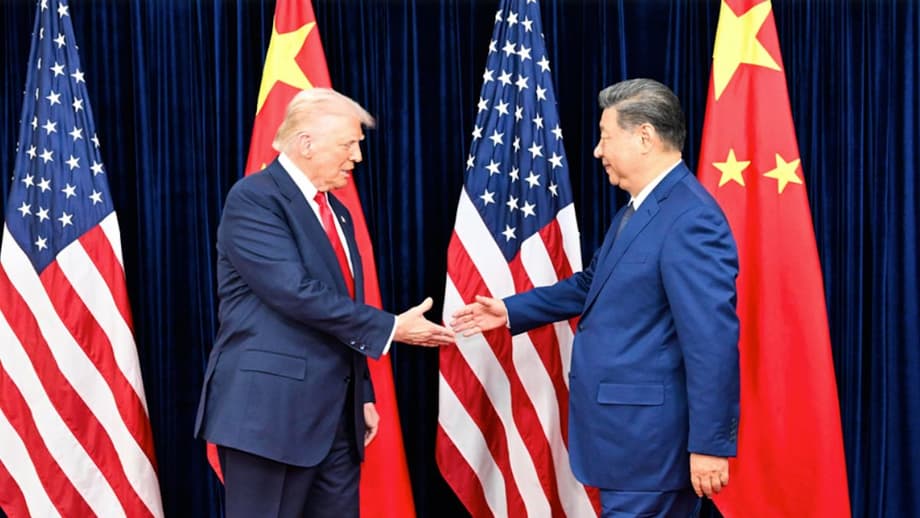
A Diplomatic Tightrope
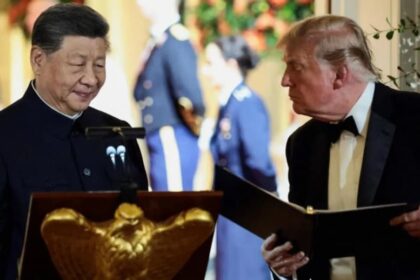
President Donald Trump and Chinese President Xi Jinping will convene in Beijing on May 14 and 15 for a high-stakes summit originally scheduled for late March, but postponed to allow the White House to focus on the escalating war in Iran. The delay illustrates how the Middle East conflict now dominates American foreign policy, casting a long shadow over attempts to stabilize the world’s most consequential bilateral relationship. The meeting marks the first visit by an American president to China since Trump traveled there in November 2017 during his initial term, and comes at a moment when tensions over trade, technology, and territorial sovereignty threaten to derail cooperation between the two superpowers.
Despite the crowded agenda spanning Iranian oil purchases, Taiwan arms sales, and artificial intelligence controls, both leaders enter the negotiations with lowered expectations. Washington seeks to extend a fragile trade truce signed last October while Beijing hopes to prevent further deterioration in relations that could harm its export-driven economy. However, the ongoing conflict in Iran threatens to consume the diplomatic bandwidth needed to address these complex issues. Jamieson Greer, the United States Trade Representative, stressed this concern in an interview this week.
We are looking for stability with China. We do not want this to be something that derails the broader relationship, or any agreements that might come out of our meeting in Beijing.
Greer acknowledged that the United States takes serious issue with Chinese purchases of Iranian crude oil, which Washington argues funds state-sponsored terrorism. The Treasury Department recently warned financial institutions about secondary sanctions risks associated with China’s independent teapot refineries, which allegedly process hundreds of millions of barrels of Iranian oil annually. Yet American officials remain wary of allowing Tehran’s influence to sabotage the broader diplomatic reset both nations need to manage their economic interdependence and avoid catastrophic miscalculation.
The Iranian Oil Standoff
The dispute over Iranian crude has emerged as the most immediate flashpoint threatening to derail the summit. On April 28, the Treasury Department’s Office of Foreign Assets Control issued warnings about secondary sanctions targeting Chinese teapot refineries accused of buying Iranian crude. These small independent facilities provide an opaque channel for Tehran to bypass international restrictions, handling roughly 13 percent of China’s total oil imports according to recent data. Washington views these transactions as direct financial support for a regime the United States designates as the world’s leading state sponsor of terrorism.
Beijing responded with unprecedented legal defiance. On May 2, China’s Ministry of Commerce invoked its Blocking Rules against American sanctions on five mainland refineries, including Hengli Petrochemical. The regulation declares that United States measures, including asset freezes and transaction bans, shall not be recognized, enforced or complied with within Chinese jurisdiction. This direct challenge to American extraterritorial sanctions represents a significant escalation in economic sovereignty disputes. Marco Rubio, the United States Secretary of State, issued a stern warning regarding this defiance.
If you ignore our sanctions, you are going to face secondary sanctions. We do not do these things for symbolic purposes.
Complicating matters further, Iranian Foreign Minister Abbas Araghchi visited Beijing this week to brief Chinese leadership on Pakistan-mediated negotiations with Washington. The visit signals Tehran’s anxiety that Beijing might sacrifice Iranian interests in exchange for trade concessions from Trump. China has maintained an ambiguous stance, privately urging Iran to consider peace deals while publicly condemning American tactics in the Strait of Hormuz as dangerous. With nearly half of China’s imported oil transiting through the Persian Gulf, Xi Jinping faces acute pressure to secure energy flows while avoiding the appearance of doing Trump’s bidding in the region.
Economic Leverage and the Board of Trade
Beyond the Iranian impasse, both leaders hope to announce concrete economic deliverables that demonstrate bilateral stability. American and Chinese officials have spent months developing a Board of Trade mechanism designed to identify products that can increase bilateral commerce without compromising national security or critical supply chains. Proposals include potential Chinese purchases of American poultry, beef, non-soybean crops, and a commitment to buy 25 million metric tons of soybeans annually for the next three years.
The aircraft sector stands as the most symbolically significant potential deal. Industry sources indicate China and Boeing have discussed an order encompassing 500 737 MAX jets plus dozens of wide-body aircraft, which would mark the first major purchase in nearly a decade. Such an agreement would provide Trump with a tangible victory to tout before November’s midterm elections. Additionally, Beijing has restarted imports of approximately 600,000 barrels per day of American crude oil, offering a partial alternative to Iranian supplies while addressing trade imbalance concerns.
However, underlying trade tensions remain acute. China dominates global production of rare earth metals essential for American automotive, aerospace, and defense manufacturing. Beijing’s recent export controls on these critical minerals have caused widespread disruptions to United States industrial supply chains. In response, Washington has launched investigations into Chinese excess industrial capacity and forced labor practices. Both sides have armed themselves with economic pressure tools that could easily transform from bargaining chips into active weapons if negotiations sour.
Taiwan’s Status as a Core Issue
While economic matters dominate public discussions, Taiwan represents the issue most likely to provoke genuine crisis. Chinese officials have elevated their rhetorical pressure ahead of the summit, with Foreign Ministry spokesperson Lin Jian declaring that the Taiwan question sits at the very core of China’s core interests and forms the bedrock of bilateral relations. Beijing has privately signaled it wants Washington to alter its declaratory policy from stating the United States does not support Taiwan independence to actively opposing it, a subtle but significant shift in diplomatic language.
The United States approved an $11 billion arms package for Taiwan last December, including 420 Army Tactical Missile Systems, more than 80 High Mobility Artillery Rocket Systems, and loitering munitions designed to strengthen the island’s asymmetric defense capabilities. Some components reportedly remain delayed at the State Department, creating potential leverage for Beijing. Chinese analysts suggest that Trump’s strategic retrenchment from the Indo-Pacific region, driven by Middle East preoccupations, might make Taiwan’s Democratic Progressive Party administration vulnerable to great power bargaining.
Wang Yi, China’s top diplomat, described Taiwan as the biggest point of risk for relations during a recent call with Secretary Rubio. He urged Washington to keep its promises and make the right choices to open new space for cooperation. The possibility that Trump might seek a grand bargain trading reduced arms sales for Chinese cooperation on Iran has generated anxiety in Taipei, where officials recognize that American military stocks depleted by Middle East conflicts may take years to replenish.
Technology Controls and AI Diplomacy
Artificial intelligence and semiconductor restrictions constitute another contested frontier. The White House recently accused Beijing of industrial-scale theft of American AI models while Chinese regulators moved to discourage local firms from purchasing Nvidia’s H200 artificial intelligence chips, even after Trump approved their export. This contradiction highlights the complex nature of technological competition, where American companies seek access to China’s $50 billion AI market while Washington attempts to throttle Beijing’s military applications of advanced computing.
One potential bargaining chip involves China’s strategic petroleum reserves, which hold approximately 1.4 billion barrels. Trump may request release of these stocks to alleviate global energy prices pressured by the Iran war. In exchange, Xi could demand loosening of restrictions on AI chip exports and advanced semiconductor manufacturing equipment. Michael Clark, a China expert at the Center for American Progress, analyzed this potential exchange.
We would be giving China exactly what they need to upgrade their own technology, and in turn military capabilities, using US technology.
Beyond specific hardware disputes, both nations face growing pressure to establish guardrails around artificial intelligence development. Researchers have raised alarms about AI-enhanced cyberattack capabilities and the potential for less sophisticated actors to develop novel bioweapons using AI tools. The summit may produce nonbinding safety guidelines or limited information-sharing agreements regarding AI misuse incidents, though deep mistrust persists between the two technological superpowers.
Human Rights and Summit Theater
Human rights issues, particularly the case of imprisoned Hong Kong media tycoon Jimmy Lai, add moral complexity to the diplomatic proceedings. Trump has indicated he will raise Lai’s case with Xi personally, calling the issue sensitive for the Chinese leader. Lai is currently serving a 20-year prison sentence for colluding with foreign forces, a conviction his son described as a death sentence given the 77-year-old’s age and health. Trump previously advocated for Lai’s release during their October meeting in Busan, but Beijing has shown no indication of clemency.
The choreography of Trump’s reception carries its own political weight. The president has publicly anticipated a lavish welcome including parading uniformed guards and what he described as a big, fat hug from Xi. However, Chinese officials worry that an overly extravagant ceremony might signal fawning accommodation at a moment when Beijing seeks to project itself as a neutral peacemaker in the Middle East. Images of American military C-17 transport planes landing at Beijing airport have already circulated on social media, indicating advance preparations for presidential security details and communications equipment.
The business delegation accompanying Trump appears smaller than the nearly 30 CEOs who joined his 2017 visit, when companies signed deals worth more than $250 billion. Current reports suggest Boeing and Citigroup chief executives will attend, along with technology leaders from Nvidia, Apple, and Qualcomm, though the White House has cautioned that reporting on invitations remains speculative until finalized.
Three Scenarios for Success or Failure
Analysts have outlined three potential trajectories for the summit’s outcome. The first scenario involves a grand bargain where Trump eases certain technology tariffs and provides security guarantees regarding Taiwan’s status in exchange for Xi drastically cutting Iranian oil imports and publicly pressuring Tehran to negotiate. Both leaders would claim victory, with Trump as peacemaker and Xi as global economic stabilizer.
The second scenario, considered more probable by experts at the Brookings Institution, involves a cold stalemate where no major breakthroughs emerge. China would continue gray-market purchases of Iranian oil while the United States maintains its sanctions regime. Both sides would agree to a truce on escalation, preserving the uneasy calm that has characterized relations since October while avoiding decisive resolution of fundamental disputes.
The third scenario envisions a great decoupling where visible acrimony derails the summit. Trump might enforce a total naval blockade of Iranian exports while Xi responds by restricting rare earth exports and increasing military maneuvers near Taiwan. Such escalation would force the global economy into a tailspin, potentially initiating formal economic decoupling and compelling other nations to choose sides in a new Cold War framework.
Success will ultimately be measured not by comprehensive agreements but by whether the two leaders establish sufficient personal rapport and institutional guardrails to prevent miscalculation. Presidential-level communication currently represents the only reliable brake on conflict between nuclear-armed competitors whose rivalry shapes the security and economic architecture of the 21st century.
Key Points
- President Trump and President Xi will meet in Beijing on May 14 and 15 for a summit postponed from March due to the Iran war
- The United States seeks Chinese cooperation in reducing Iranian oil purchases and opening the Strait of Hormuz
- China has invoked Blocking Rules to defy American sanctions on its teapot refineries processing Iranian crude
- Both nations are negotiating a Board of Trade mechanism covering agricultural purchases and potentially 500 Boeing aircraft
- Beijing wants Washington to change its Taiwan policy language from not supporting to opposing independence
- Trump may request China release strategic petroleum reserves in exchange for eased AI technology restrictions
- Human rights cases including Hong Kong media tycoon Jimmy Lai remain on the agenda alongside business deals
- Analysts expect modest outcomes focused on extending the October trade truce rather than comprehensive breakthroughs