Controversial Memorial Plan Abandoned in Auckland
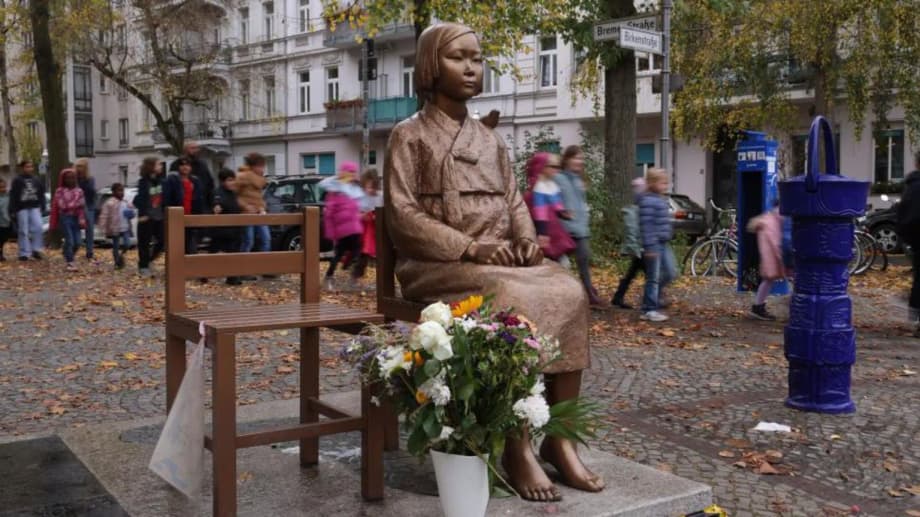
Plans to install a bronze statue commemorating the victims of Japan’s World War Two military sexual slavery system have been formally rejected by local authorities in New Zealand, following intense diplomatic pressure from Tokyo and divided community sentiment. The proposed memorial, which would have stood in Barry’s Point reserve within a Korean cultural garden in Devonport-Takapuna, was voted down by the local board after Auckland Council staff recommended against approval.
- Controversial Memorial Plan Abandoned in Auckland
- Historical Context: The Comfort Women System
- Diplomatic Intervention from Tokyo
- Local Decision-Making and Community Division
- International Pattern of Memorial Disputes
- Legal Frameworks and Freedom of Expression
- Advocacy and the Survivor Legacy
- The Bottom Line
The statue, depicting a young girl seated beside an empty chair, was intended to honour the estimated 200,000 women and girls from across Asia who were forced into sexual servitude by the Imperial Japanese Army between 1932 and 1945. These victims, euphemistically termed “comfort women” by Japanese military authorities, came primarily from Korea, but also included women from China, the Philippines, Indonesia, Taiwan, and other territories under Japanese occupation.
The proposal had been under consideration for several months before the final decision by the Devonport-Takapuna Local Board. The Korean Garden Trust had worked closely with the Aotearoa New Zealand Statue of Peace committee to identify an appropriate site within the existing cultural garden, hoping to create a space for reflection and education about wartime sexual violence. Local supporters had initially welcomed the gift as an opportunity to strengthen cultural ties with Korean communities while acknowledging a significant historical injustice affecting women throughout the Asia-Pacific region.
Historical Context: The Comfort Women System
The term “comfort women” represents one of the most contested and painful chapters of World War Two history in the Asia-Pacific region. Between 1932 and 1945, the Imperial Japanese military operated a vast network of brothels across frontline areas, coercing women and girls into sexual slavery through abduction, deception, and outright purchase from human traffickers. Historical researchers estimate that approximately 200,000 women endured this systematic sexual violence, though some scholars suggest the numbers could be higher.
The majority of victims were Korean, reflecting Japan’s colonial rule over the Korean peninsula from 1910 to 1945. However, the victims represented diverse nationalities, including Chinese, Filipina, Indonesian, Taiwanese, and even a small number from Japan and European countries caught in the war zone. Survivor testimonies describe horrific conditions: women were forced to service 10 to 30 soldiers daily in makeshift facilities, subjected to physical abuse, denied adequate medical care, and frequently subjected to forced abortions. Condoms were reportedly washed and reused, offering minimal protection against disease.
The systematic nature of these crimes has been documented through extensive historical research and survivor testimonies gathered by organisations such as the Korean Council. Many victims were teenagers when abducted, transported to military installations across Asia, and subjected to repeated sexual assault under brutal conditions. Those who attempted escape faced severe punishment or execution. The psychological trauma endured by survivors has spanned generations, affecting families and communities long after the war ended. In the decades following World War Two, the comfort women issue remained largely suppressed, with many survivors hiding their experiences due to social stigma. The breaking of silence by Kim Hak-sun in 1991 marked a turning point, inspiring hundreds of other survivors to come forward and demand accountability from the Japanese government.
Diplomatic Intervention from Tokyo
The Japanese Embassy in Wellington took the unusual step of issuing formal diplomatic representations regarding a local council planning matter, warning Auckland authorities that installation of the statue “could have a significant impact” on bilateral relations between Japan and New Zealand. Ambassador Makoto Osawa addressed a detailed letter to the council expressing concern that the memorial would cause “division and conflict within New Zealand’s wonderful diverse ethnic and cultural society and between Japanese and Korean communities peacefully co-existing in New Zealand.”
In his correspondence, Osawa acknowledged that Japan “has no intention whatsoever of denying or trivialising the existence of the issue,” but emphasised that authorities have been “earnestly addressing” diplomatic matters with Korea over many years. The ambassador also noted that New Zealand government funding for water and electricity infrastructure at the Korean cultural garden in 2015 could create the impression of official state endorsement if the statue were installed there.
“Needlessly stirring up interest in this issue could become a burden not only for Japan and South Korea’s cooperation but for Japan-New Zealand relations.”
An unnamed spokesperson from the Japanese Embassy elaborated on these concerns to international media, suggesting the statue could trigger diplomatic fallout extending beyond Wellington-Tokyo relations. The spokesperson indicated that Japanese cities might sever sister city relationships with New Zealand municipalities, replicating the 2018 rupture between Osaka and San Francisco over a similar memorial.
Local Decision-Making and Community Division
The rejection followed a structured consultation process that revealed sharp divisions within Auckland’s multicultural community. According to Auckland Council data, the proposal attracted 672 submissions from the public. Among individual respondents, 51 percent expressed strong opposition to the statue, while organisational responses showed 13 out of 21 groups against the installation. The demographic breakdown of submitters proved significant: 36 percent identified as Japanese New Zealanders, while 34 percent identified as Korean New Zealanders.
Supporters of the memorial argued it would serve as a vital reminder of wartime sexual violence and honour the resilience of survivors who have fought for decades for recognition. The Aotearoa New Zealand Statue of Peace committee, the grassroots organisation that proposed the installation alongside the Korean Garden Trust, expressed disappointment at the outcome. Rebekah Jaung, the committee’s chairperson, characterised Japan’s intervention as an attempt to “silence a monument honouring women on the other side of the world.”
Conversely, opponents viewed the statue as an inappropriate insertion of foreign political disputes into New Zealand public spaces. Some submitters reportedly expressed concern that the memorial would transform a local park into a venue for international historical grievances rather than community recreation. Kim O’Neill, head of Land and Property Advisory at Auckland Council, explained that staff suggested the proposal be declined based on public consultation results that revealed limited community backing for the installation. The council’s assessment provided the formal justification for staff recommending rejection, though the high volume of submissions from Japanese respondents suggests organised opposition to the proposal.
International Pattern of Memorial Disputes
The Auckland controversy fits a broader global pattern wherein comfort women statues have become flashpoints for diplomatic tension and historical memory contests. The first such memorial appeared outside the Japanese Embassy in Seoul in December 2011, marking the 1,000th weekly protest held by survivors and activists since 1992. Since then, at least 37 additional statues have been erected across South Korea, with others appearing in the United States, Canada, Australia, China, Taiwan, and Germany.
These installations have consistently provoked strong reactions from Japanese authorities. In 2018, Osaka Mayor Hirofumi Yoshimura terminated his city’s 60-year sister city relationship with San Francisco after the California city accepted a privately funded comfort women statue as public property. The Berlin district of Mitte removed a similar statue in 2025 following years of dispute, though other German cities have maintained their memorials. In 2020, Tokyo reacted with particular anger to statues in South Korea depicting former Prime Minister Shinzo Abe prostrating himself before a comfort woman statue, viewing these as deliberate diplomatic insults.
Japan maintains that the comfort women issue was settled “finally and irreversibly” by a 2015 agreement between Abe and then-South Korean President Park Geun-hye. Under that arrangement, Japan provided 1 billion yen (approximately $9 million USD) to a foundation supporting survivors, while Park’s government agreed not to raise the matter in international forums. However, Park’s successor Moon Jae-in effectively dissolved the fund in 2018, arguing it failed to account for survivor sentiments or public opinion in South Korea. This reversal reopened the diplomatic wound and fuelled continued activism for additional memorials worldwide.
Legal Frameworks and Freedom of Expression
The disputes surrounding these statues raise complex questions regarding international law, diplomatic protocol, and freedom of expression. Japan has consistently argued that comfort women memorials violate obligations under the 1961 Vienna Convention on Diplomatic Relations and the 1963 Vienna Convention on Consular Relations, which require host states to prevent “any disturbance of the peace” or “impairment of dignity” of diplomatic missions.
However, legal scholars and human rights advocates have challenged this interpretation. The South Korean Constitutional Court struck down blanket bans on demonstrations near diplomatic premises in 2003, balancing freedom of expression against diplomatic security interests. In the United States, the Supreme Court ruled in 1988 that a Washington DC statute banning insulting signs near foreign legations was unconstitutional, violating First Amendment protections. British courts have similarly held that diplomatic dignity is impaired only by abusive behaviour or actual violence, not by symbolic displays.
Legal experts note that Japan’s interpretation of the Vienna Conventions focuses on subjective diplomatic comfort rather than objective security threats. The conventions were designed to protect diplomatic personnel from violence and intimidation, not to shield governments from historical criticism or uncomfortable reminders of past atrocities. The South Korean courts have particularly emphasised that peaceful memorials constitute protected speech under international human rights law, including the International Covenant on Civil and Political Rights. New Zealand’s decision to prioritise diplomatic relations over local memorial installation represents a different calculation of interests, one that weighs trade partnerships and regional security cooperation against historical accountability and survivor advocacy.
Advocacy and the Survivor Legacy
Despite the Auckland setback, advocacy groups remain committed to preserving the memory of comfort women and supporting survivors of conflict-related sexual violence. The Korean Council for Justice and Remembrance continues its international campaign for memorial installation, viewing these statues as educational tools that honour victim dignity while preventing future atrocities. The Aotearoa New Zealand Statue of Peace committee has indicated it will persist in efforts to find an alternative location or method for commemorating the victims.
“This is a loss for our local community and for upholding survivor voices. We are steadfast in our commitment to stand with survivors of gender-based and conflict-related violence, and carrying on the legacy of the grandmothers.”
The committee’s statement, posted on social media following the rejection vote, reflects the ongoing activism that has characterised the comfort women movement for over three decades. With few survivors still living, most now in their nineties or older, advocates argue that physical memorials carry increasing importance for preserving historical truth. The empty chair depicted beside the girl in the statue design symbolises both the absence of the missing victims and an invitation for viewers to sit in solidarity with their memory.
The Bottom Line
- Auckland Council has rejected plans for a comfort women statue in Devonport-Takapuna following Japanese diplomatic protests and divided community consultation.
- The bronze memorial would have commemorated approximately 200,000 women forced into sexual slavery by the Imperial Japanese Army during World War Two.
- Japan’s Ambassador Makoto Osawa warned that installation could damage Japan-New Zealand diplomatic relations and cause community division.
- Public consultation showed 51% of individual submitters opposed the statue, with 36% of total submissions coming from Japanese New Zealanders and 34% from Korean New Zealanders.
- The rejection follows a pattern of international disputes over comfort women memorials, including Osaka cutting ties with San Francisco in 2018 and Berlin removing a statue in 2025.
- Advocacy groups have expressed disappointment, vowing to continue efforts to honour survivors and preserve historical memory of wartime sexual violence.