A New Era of Inclusive Space Exploration
Two Pakistani astronauts have arrived in Beijing to begin training at the China Astronaut Research and Training Center, marking a historic expansion of China’s manned space program beyond its borders. Muhammad Zeeshan Ali and Khurram Daud represent the first foreign nationals selected to participate in missions aboard the Tiangong space station, with one expected to join a flight as early as late 2026.
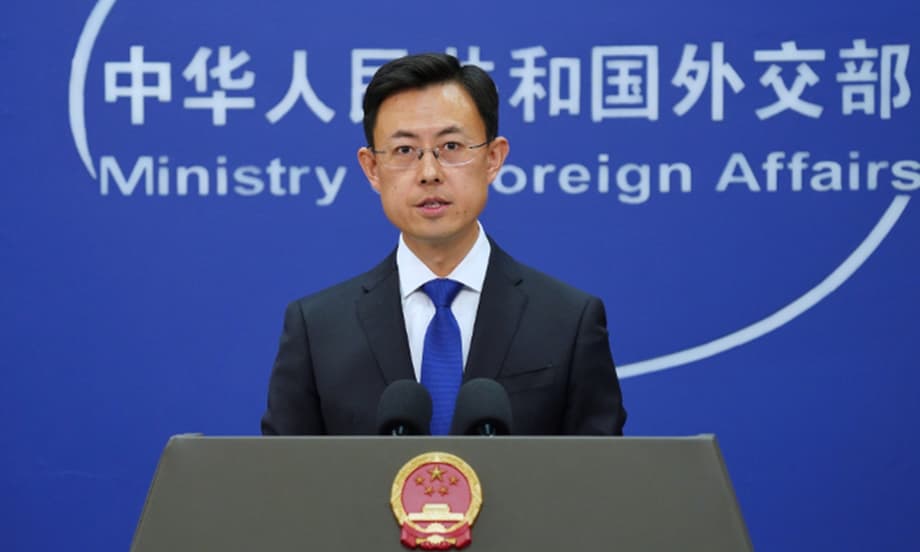
Their arrival coincides with the 11th China Space Day and the 70th anniversary of China’s space programs, celebrations that have become a platform for Beijing to articulate its vision for international cooperation. Speaking at a regular press conference on Friday, Chinese Foreign Ministry spokesperson Guo Jiakun emphasized that space should not serve as an “arena” for major-power contest.
Space is not an “arena” of major-power rivalry, and China will continue to work with all parties to build an open “friend circle” in space and advance the common cause of mankind’s exploration of outer space.
Guo’s remarks address growing concerns that global space competition has entered what analysts call a “Competition 2.0 phase,” characterized by rule-making and alliance-building rather than purely scientific pursuit. While the United States and its allies advance the Artemis Accords and the International Space Station partnership, China is cultivating an alternative network through its International Lunar Research Station and bilateral agreements with nations across the Global South.
Yet Chinese officials insist their approach differs fundamentally from traditional space cooperation models. Where previous space powers often restricted partnerships to advanced economies with existing capabilities, Beijing is actively lowering barriers to entry for developing nations.
Pakistan’s Historic Mission to the Stars
The selection of Ali and Daud culminates nearly a year of bilateral negotiations. In February 2025, Pakistan’s Space and Upper Atmosphere Research Commission (SUPARCO) and the China Manned Space Agency signed a comprehensive cooperation agreement establishing the framework for Pakistani participation in China’s human spaceflight program.
Both candidates underwent rigorous selection procedures targeting individuals with exceptional academic backgrounds and physical endurance. The final pool included experienced pilots and PhD holders in aerospace-related fields. Following their arrival at the Astronaut Centre of China, they will serve as reserve astronauts during a training curriculum focused on mastering the Tiangong space station’s three-module configuration and Shenzhou spacecraft operations.
Upon completing assessments, one will join a future Shenzhou mission as a payload specialist, conducting scientific experiments in microgravity rather than piloting the spacecraft. Planned research areas include material science, fluid physics, life sciences, and biotechnology, with applications for climate change mitigation, food security, and industrial innovation.
Prime Minister Shehbaz Sharif has described the mission as a reflection of the “enduring Pakistan-China strategic partnership.” During a meeting with the astronauts at the Prime Minister’s Office, Sharif told the candidates, “I am confident that you are going to write a new chapter in Pakistan’s history.” He added that the mission would add “new dimensions” to bilateral ties, remarking that “Pakistan and China’s friendship is ready to reach for the stars and touch the heights of the sky.”
Partnerships Across Continents
The Pakistani mission represents just one node in an expanding network of space cooperation that spans multiple continents. In Africa, China has signed satellite cooperation agreements with numerous countries, including a recent Memorandum of Understanding with Somalia signed at the NewSpace Africa Conference in Libreville. The agreement between China’s Land Satellite Remote Sensing Application Center and Somalia’s Ministry of Communication and Technology focuses on earth observation applications to support data-driven development and environmental monitoring.
Beijing has also incorporated cultural elements into its space diplomacy. Ten paintings by African teenagers are currently displayed aboard the Tiangong space station, symbolizing what officials describe as an inclusive approach to space exploration that values cultural exchange alongside technical cooperation.
In South America, the China-Brazil Earth Resources Satellite program continues to monitor and protect the Amazon rainforests, demonstrating long-term continuity in Beijing’s space partnerships. The program has operated for decades, providing critical data for environmental preservation and resource management.
These initiatives align with China’s broader foreign policy framework, including the Belt and Road Initiative’s space information corridor and the Global Development Initiative. By integrating satellite infrastructure with terrestrial development projects, Beijing offers bundled services in telecommunications, surveillance, and navigation to partner nations.
Scientific Discoveries Shared Globally
China’s cooperative approach extends beyond crewed missions to include sharing scientific data and samples from deep space exploration. In April 2025, seven institutions from six countries, including France, Germany, Japan, Pakistan, the United Kingdom, and the United States, received authorization to study lunar samples collected by the Chang’e-5 mission.
Recent analysis of these samples has yielded significant discoveries. Chinese scientists identified two previously unknown lunar minerals from the 1,731 grams of material returned by the mission. The International Mineralogical Association has officially approved and classified magnesiochangesite-(Y) and changesite-(Ce), marking the seventh and eighth new lunar minerals identified globally in returned samples.
Looking forward, the China National Space Administration has announced that the Tianwen-3 Mars sample-return mission, scheduled for launch around 2028, will carry five international cooperative payloads. Selected projects include the Mars PEX spectrometer led by the Committee on Space Research to search for traces of life, a Mars molecular ion composition analyzer from the Macau University of Science and Technology, and a laser heterodyne spectrometer from the Chinese University of Hong Kong to detect water isotopes in the Martian atmosphere.
Additionally, China has released opportunities for international cooperation on the Xihe-2 solar observation mission, inviting global partners to jointly advance solar science. The announcement aligns with Beijing’s pledge to make 10 large-scale scientific projects and facilities accessible to global researchers, including the Chinese Meridian Project, which has already served 267 organizations across 18 countries.
Deep Space and Lunar Ambitions
China’s cooperative framework extends to deep space exploration through the Deep Space Exploration Laboratory (DSEL) in Hefei, Anhui province. Since its establishment in 2022, DSEL has coordinated China’s contributions to lunar and planetary science while building international research networks.
The laboratory played a crucial role in the Queqiao-2 relay satellite and Chang’e-6 missions, the latter having returned humanity’s first samples from the far side of the Moon. Currently, DSEL scientists are conducting frontier studies on human settlement of the Moon, developing technologies expected to be tested during upcoming Chang’e-7 and Chang’e-8 missions as steps toward a permanent lunar research base.
In July 2025, China and partner institutions launched the International Deep Space Exploration Association (IDSEA), the first China-initiated global scientific organization dedicated to deep space research. The association has already attracted 85 institutional members from over 30 countries and more than 600 scientists from 60 nations. Membership is expected to reach 100 institutions by the end of 2025.
These activities support the International Lunar Research Station (ILRS), a China-led alternative to the US-led Artemis program. While the Artemis Accords have attracted over 35 signatories, including Brazil, India, and the UAE, the ILRS partnership includes Russia, Belarus, Egypt, Nicaragua, and South Africa, among others. The parallel development of two separate lunar base programs without formal cooperation mechanisms represents what some analysts term “astropolitical bifurcation.”
Navigating Geopolitical Tensions
Despite China’s emphasis on inclusive cooperation, the global space landscape remains shaped by strategic rivalry. The United States and China maintain sharply contrasting models of space engagement, with Washington emphasizing public-private partnerships and Beijing relying on state-directed programs.
Since 2011, the Wolf Amendment has prohibited NASA from using federal funds to cooperate with Chinese space entities, effectively excluding China from participation in the International Space Station. This legislative barrier has prompted Beijing to develop independent capabilities, including the Tiangong station, and to seek alternative international partnerships.
Analysts at the Atlantic Council have argued that despite substantial concerns regarding military hostility in space, both nations could benefit from limited cooperation. Proposed starting points include establishing a bilateral working group between NASA and the China National Space Administration to prepare for joint rescue operations for astronauts in distress, building on the 1968 UN Rescue and Return of Astronauts Agreement.
Research from TRENDS Research & Advisory highlights the risks of continued fragmentation. With the global space economy valued at $546 billion and projected to exceed $1 trillion by 2030, the emergence of dual-use satellite systems and competing governance regimes could undermine the sustainability of orbital activities. Both nations are investing in anti-satellite capabilities and lunar resource extraction technologies, raising concerns about the weaponization of space.
However, Chinese officials consistently emphasize peaceful use and inclusive development. The Foreign Ministry position paper for the UN Summit of the Future reiterates commitment to “equality, mutual respect, peaceful use and inclusive development” in outer space cooperation, opposing weaponization and arms races in space.
Democratizing Access to the Final Frontier
China’s strategy appears designed to position its space program as a viable alternative for nations historically excluded from elite space partnerships. Traditional space cooperation has often required substantial domestic capabilities and alignment with Western technological standards, effectively restricting full participation to wealthy nations.
By contrast, Beijing is offering developing countries opportunities to participate in space science without requiring multibillion-dollar investments in domestic launch capabilities. For Pakistan, the current mission provides a “high-tech shortcut” to human spaceflight, as one analyst described it, while also cementing long-term cooperation that includes a planned Pakistani lunar rover for the Chang’e-8 mission in 2028.
Wang Yanan, editor-in-chief of Aerospace Knowledge magazine, notes that through extensive collaboration, China has lowered the threshold for Global South countries to access aerospace technologies. This stands in contrast to past cooperation models of some developed nations, which only partnered with select counterparts possessing outstanding resources and advanced technology.
As the International Space Station approaches its planned decommissioning around 2030, China’s Tiangong station may become the primary orbital laboratory available to nations without independent human spaceflight capabilities. Whether this represents a fragmentation of space governance or an expansion of access depends largely on whether competing powers can establish norms for coexistence in orbit.
Key Points
- Two Pakistani astronauts, Muhammad Zeeshan Ali and Khurram Daud, have arrived in China as the first foreign trainees for missions to the Tiangong space station, with one expected to fly in late 2026.
- The initiative coincides with China’s 11th Space Day and 70th anniversary of its space programs, marking a shift toward inclusive international cooperation.
- China has established space partnerships across Africa, including a recent satellite imagery agreement with Somalia, and maintains the long-running China-Brazil Earth Resources Satellite program in South America.
- International scientists from six countries, including the United States, have been authorized to study lunar samples returned by the Chang’e-5 mission, which yielded two newly discovered lunar minerals.
- The Tianwen-3 Mars mission scheduled for 2028 will carry five international cooperative payloads from institutions in Europe and Asia.
- China’s International Lunar Research Station and Deep Space Exploration Laboratory represent alternative frameworks to the US-led Artemis Accords, with 85 institutional members from over 30 countries joining the new International Deep Space Exploration Association.
- Officials emphasize that space should not serve as an arena for major-power rivalry, though geopolitical tensions continue to shape the competitive landscape of lunar and cislunar exploration.