Internal Divide Over Maritime Toll Proposal
Indonesia’s government moved rapidly to quash speculation about charging ships to transit the Strait of Malacca, with Foreign Minister Sugiono declaring on April 23 that such levies would violate international law. The clarification came just one day after Finance Minister Purbaya Yudhi Sadewa suggested at a Jakarta symposium that Indonesia might follow Iran’s lead by imposing fees on vessels using the critical waterway. Speaking to reporters in the capital, Sugiono emphasized that Jakarta remains committed to freedom of navigation through one of the world’s busiest shipping corridors. “We also hope for free passage, and I believe this is a shared commitment among many countries to create a shipping lane that is open, neutral and mutually supportive,” he stated. “So, no… Indonesia is not in a position to do that.” The swift rejection highlighted tensions within the administration of President Prabowo Subianto, who has publicly urged officials to think more aggressively about monetizing Indonesia’s strategic geographic position.
- Internal Divide Over Maritime Toll Proposal
- Legal Barriers Under International Maritime Law
- Regional Neighbors Close Ranks
- The Iran Factor and Growing Tensions
- Strategic Stakes and Global Trade Implications
- Thailand Sees Opportunity in Land Bridge
- Historical Precedents and Military Risks
- Indonesias Foreign Policy Balance
- Key Points
Legal Barriers Under International Maritime Law
The foreign minister grounded his rejection firmly in the United Nations Convention on the Law of the Sea (UNCLOS), the 1982 treaty that governs maritime rights worldwide. Under UNCLOS, Indonesia holds status as an archipelagic state, which grants special recognition of its sovereignty over waters between its islands. This designation, however, comes with explicit obligations. Sugiono noted that the treaty guarantees the right of passage through sea lanes without impediment, meaning Indonesia cannot legally charge vessels simply for transiting international straits. This legal framework distinguishes between optional port services, where fees are permissible, and transit passage, which must remain free. Maritime policy expert Dr Izyan Munirah Mohd Zaideen explained the distinction clearly. “A transit toll is a charge for merely passing through, while maritime service charges are for optional services. This is the legal line that cannot be crossed,” she told Malaysian media. “Any forced levy carries high risk as it could trigger legal and diplomatic conflicts.” Singapore’s Foreign Minister Vivian Balakrishnan reinforced this position during a parliamentary session earlier in April, stating that transit passage “is not a privilege granted by bordering states. It is not a licence to be subjugated at all. It is not a toll to be paid. It is a right of all nations’ ships to traverse.”
Regional Neighbors Close Ranks
Malaysia and Singapore responded to the proposal with coordinated opposition, emphasizing that no single littoral state can determine policy for the shared waterway unilaterally. Malaysian Foreign Minister Mohamad Hasan stated on April 22 that Malaysia, Singapore, Indonesia and Thailand share a “watertight understanding” regarding the 900-kilometer strait. “Whatever is to be done in the Strait of Malacca must involve the cooperation of all four countries,” he declared at a Kuala Lumpur forum. “That is our understanding – it cannot be done unilaterally.” This consensus-based approach reflects the Association of Southeast Asian Nations (ASEAN) diplomatic tradition, where decisions require agreement among all members. The four littoral states currently conduct joint patrols to maintain security, a mechanism established specifically to avoid unilateral military presence in the sensitive waterway. Singapore, whose economy depends entirely on maritime trade, issued the strongest rejection. Balakrishnan told a CNBC event on April 22 that the city-state “will not participate in any attempts to close or interdict or to impose tolls in our neighborhood.” More than 130,000 vessels call at Singapore’s ports annually, making any restriction on Malacca transit an existential threat to its status as the world’s largest transshipment hub.
The Iran Factor and Growing Tensions
The Indonesian finance minister’s proposal drew direct inspiration from Iran’s recent decision to impose tolls on ships transiting the Strait of Hormuz, a move that has disrupted global energy flows since February. Purbaya pointed to Tehran’s actions during the April 22 symposium, noting that while ships pass through Malacca without charge, Iran was collecting fees at Hormuz. “If we split it three ways – Indonesia, Malaysia, and Singapore – it could be quite substantial,” he suggested, while acknowledging the idea remained complicated and preliminary. Iran’s toll regime, reportedly collecting payments in Chinese yuan or cryptocurrencies, followed weeks of conflict with the United States and Israel. The closure of Hormuz has forced Asian economies to reassess the security of alternative routes, particularly as oil prices climbed above $106 per barrel. The spillover anxiety has reached Southeast Asia partly because of deepening defense cooperation between Jakarta and Washington. The two nations signed a Major Defence Cooperation Partnership on April 13, raising concerns among some regional observers about a greater American military presence near the strait. However, Indonesia has maintained strict neutrality regarding the Hormuz crisis. Sugiono announced on April 24 that Indonesia would not join a UK-France proposed multinational naval mission to safeguard Hormuz shipping, stating that participation would “violate our neutral stance” and contradict Indonesia’s “free and active” foreign policy doctrine.
Strategic Stakes and Global Trade Implications
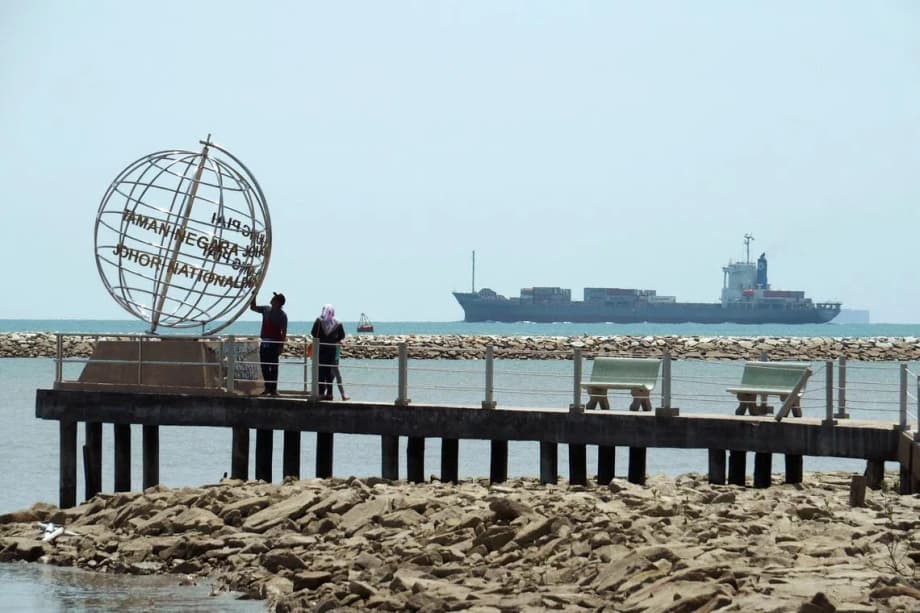
The Strait of Malacca serves as the primary maritime artery linking the Indian Ocean to the Pacific, handling approximately 25 to 30 percent of global traded goods. More than 200 vessels transit daily, including container ships, oil tankers and bulk carriers, totaling over 90,000 ships annually. The waterway carries roughly 23.2 million barrels of oil per day, surpassing even the Strait of Hormuz in petroleum volume. At its narrowest point near Singapore, the strait constricts to just 2.7 kilometers with an average depth of 25 meters, creating a natural bottleneck that makes navigation hazardous even without political interference. Any toll system would immediately cascade through global supply chains. As Dr Aizat Khairi of Universiti Kebangsaan Malaysia noted, “The impact is not only on consumer goods containers, but also industrial inputs, imported food and energy supply chains. Ultimately, the cost is passed on to importers, manufacturers, retailers and consumers.” China faces particular vulnerability, with approximately 80 percent of its oil imports passing through the strait. This dependency, known as the “Malacca dilemma” since former President Hu Jintao identified it in 2003, represents a strategic chokehold that Beijing fears could be exploited by rival powers. Chinese officials have long viewed the strait as critical to national energy security, prompting investments in alternative pipelines and renewable energy to reduce maritime dependence.
Thailand Sees Opportunity in Land Bridge
While Indonesia, Malaysia and Singapore debate maritime governance, Thailand has identified the regional uncertainty as an opportunity to advance an ambitious infrastructure project. Deputy Prime Minister Phiphat Ratchakitprakarn announced on April 20 that Bangkok will fast-track plans to build a land bridge connecting ports on the Andaman Sea to the Gulf of Thailand. The 1 trillion baht ($31 billion) project would link seaports through road and rail networks, potentially cutting transit time by four days and reducing shipping costs by 15 percent. “The Middle East conflict has demonstrated the advantage of controlling a transport route,” Phiphat stated. “Thailand will have a great advantage by operating the link between the Pacific Ocean and the Indian Ocean.” The proposal represents a less radical alternative to the long-debated Kra Canal, which would have cut across the narrowest part of the Malay Peninsula but was repeatedly abandoned due to massive projected costs and environmental concerns. With maritime routes now facing potential disruption, the land bridge concept has gained new relevance as a bypass option that could divert significant cargo volume away from the Malacca choke point entirely.
Historical Precedents and Military Risks
The strategic calculus surrounding maritime choke points has remained constant throughout military history, as demonstrated by the 110th anniversary this year of the Gallipoli campaign. During that 1915-1916 First World War operation, Allied forces attempted to seize control of the Dardanelles Strait to access the Black Sea, suffering immense casualties in the process. The failure highlighted how control of narrow waterways often determines the outcomes of major conflicts and economic flows. Analysts at the Lowy Institute warn that similar dynamics could apply to the Strait of Malacca in any future conflict involving China, Taiwan and the United States. Several scenarios present acute risks: blockades or maritime exclusion zones restricting access; sea denial operations including mining or submarine interdiction; precision strikes against port infrastructure; or attempts to capture littoral land areas to ensure total control of the waterway. As demonstrated at Gallipoli, control of the sea is often inextricably linked to control of adjacent land. The seizure of littoral territory along Peninsular Malaysia, Sumatra or Singapore could enable denial of maritime access and dominance over key sea routes. While the littoral states may declare neutral stances, such positions must be supported by credible military deterrence. The current joint patrol framework, while effective against piracy, may prove insufficient against great power competition.
Indonesias Foreign Policy Balance
The toll proposal controversy has exposed underlying tensions in Indonesia’s approach to great power competition. President Prabowo has instructed his administration to play a larger role in global trade and to think more “offensively” about leveraging national resources. However, Sugiono’s rapid rejection of both the Malacca tolls and the Hormuz naval mission demonstrates the continued dominance of Indonesia’s traditional “free and active” (bebas aktif) doctrine. This policy, established during the Cold War, mandates non-alignment and neutrality in major power conflicts. Analysts note that parts of the Indonesian system view strategic opportunities differently than Western partners. Euan Graham of the Australian Strategic Policy Institute observed that Prabowo has shown willingness to run counter to his own foreign ministry’s advice in pursuit of deals, suggesting the toll idea may have been a “trial balloon” to test regional reaction. The episode serves as a reminder that Indonesia’s geographic position gives it enormous potential leverage over global trade, even if legal and diplomatic constraints currently prevent its exercise. For the immediate future, the four littoral states appear committed to maintaining the status quo of free passage supported by cooperative security patrols. Philippine Foreign Secretary Theresa Lazaro confirmed on April 23 that ASEAN has not formally discussed the straits of Malacca and Singapore, with the grouping’s focus remaining on energy security, food security and protection of nationals.
Key Points
- Indonesia’s Foreign Minister Sugiono rejected a proposal by Finance Minister Purbaya Yudhi Sadewa to impose tolls on ships transiting the Strait of Malacca, citing violations of UNCLOS
- The proposal was inspired by Iran’s recent implementation of tolls at the Strait of Hormuz, but would require consensus among Malaysia, Singapore, Indonesia and Thailand to implement
- Singapore and Malaysia firmly opposed unilateral action, with Singapore emphasizing that transit passage is an international right, not a privilege subject to fees
- The Strait of Malacca handles over 90,000 vessels annually, carrying approximately 25 to 30 percent of global trade and 23.2 million barrels of oil per day
- Thailand is advancing a $31 billion land bridge project to bypass the strait entirely, capitalizing on heightened concerns about maritime choke point security
- Indonesia rejected participation in a UK-France led naval mission for the Strait of Hormuz, maintaining its “free and active” neutral foreign policy stance