The Unraveling of Asia’s Busiest Travel Corridor
More than 2,700 flights between China and Japan were cancelled in March 2026, bringing the cancellation rate to nearly 50 per cent and marking the latest chapter in an escalating diplomatic crisis that has severed one of Asia’s most vital travel arteries. The mass grounding of aircraft, which shows no signs of abating ahead of China’s Labour Day holiday in early May, represents the most severe disruption to bilateral travel since the COVID-19 pandemic, driven by political tensions over Taiwan that have transformed routine tourism into a geopolitical flashpoint.
- The Unraveling of Asia’s Busiest Travel Corridor
- From Political Remarks to Travel Chaos
- A Chronology of Cuts
- The Aviation Industry’s Response
- Economic Shockwaves Across Sectors
- Beyond Tourism: A Comprehensive Boycott
- Military Dimensions and Regional Realignment
- Diplomatic Impasse and Future Prospects
- The Bottom Line
According to data from aviation intelligence firm OAG, only 2,711 flights operated between the two countries last month, a sharp decline from the 5,512 flights that connected the Asian neighbours in March 2025. The 2,691 cancellations recorded in March bring the total number of scrapped services to staggering levels, with nearly half of all planned China-Japan flights failing to take off. This represents a 1.1 percentage point increase in cancellation rates compared to February, indicating a crisis that is deepening rather than stabilising.
The timing could hardly be worse for Japan’s tourism industry. Chinese visitors represent the largest source of international tourists to Japan, accounting for nearly 30 per cent of all tourist spending. Data from the Japan National Tourist Organisation reveals that Chinese tourist arrivals plummeted 55.9 per cent year-on-year to just 291,600 in March, stripping away a crucial revenue stream that had contributed more than one billion dollars monthly to the Japanese economy during the third quarter of 2025.
From Political Remarks to Travel Chaos
The origins of this aviation crisis trace back to November 2025, when Japanese Prime Minister Sanae Takaichi made comments regarding Taiwan that triggered an unprecedented response from Beijing. During parliamentary proceedings on November 7, 2025, Takaichi suggested that Japan could deploy military forces in the event of a conflict in the Taiwan Strait, describing a potential Chinese attack on the democratically governed island as a life-threatening situation for Japan that could trigger collective self-defence measures.
Beijing’s reaction was swift and severe. Within days, China’s Ministry of Culture and Tourism issued a travel advisory on November 14, 2025, urging citizens to avoid visiting Japan and citing significant risks to Chinese nationals. The advisory claimed that the overall security environment for Chinese citizens in Japan has continued to deteriorate, referencing isolated incidents of assaults despite Japan’s status as one of the world’s safest destinations with crime rates significantly lower than most major tourist hubs.
The impact was immediate and devastating. Within just three days of the advisory, Chinese travellers cancelled approximately 500,000 flight tickets to Japan, representing roughly 32 per cent of total bookings to the typically popular destination. Independent aviation analyst Li Hanming, who has tracked China-Japan travel data since 2023, described the scale as extraordinary.
The flight-ticket cancellations were 27 times that of new bookings, which shows safety concerns are the dominating factor for travel.
Li noted that he had not witnessed cancellations on such a scale since the early days of the COVID-19 pandemic in 2020.
A Chronology of Cuts
The crisis has unfolded in waves, with each month bringing new reductions in air connectivity. In December 2025, over 1,900 flights were cancelled, representing more than 40 per cent of scheduled services, according to Chinese state broadcaster CCTV. By January 2026, the cancellation rate had climbed to 47.2 per cent, an increase of 7.8 percentage points month-on-month. February saw all scheduled flights on 49 China-Japan air routes cancelled entirely, according to data platform Flight Master, affecting 38 airports across both nations.
Looking ahead, the outlook remains bleak. For the Labour Day holiday period running from May 1 to 5, approximately 45 per cent of planned flights from China to Japan have already been cancelled, including 210 services specifically operating during the peak travel window. OAG data indicates only 2,643 China-Japan flights scheduled for May 2026, a 55 per cent drop compared with the same period last year. June projections show a similar trajectory, with 2,376 flights scheduled versus 5,598 the previous year.
Airports in Beijing, Dalian, Guangzhou, Nanjing and Shanghai have borne the brunt of the cancellations, while popular Japanese destinations including Osaka, Nagoya and Sapporo have seen connectivity slashed. Routes linking China’s second- and third-tier cities such as Shenyang, Chongqing and Wuhan with Japanese tourism hubs have been particularly hard hit, effectively severing regional links that took years to establish.
The Aviation Industry’s Response
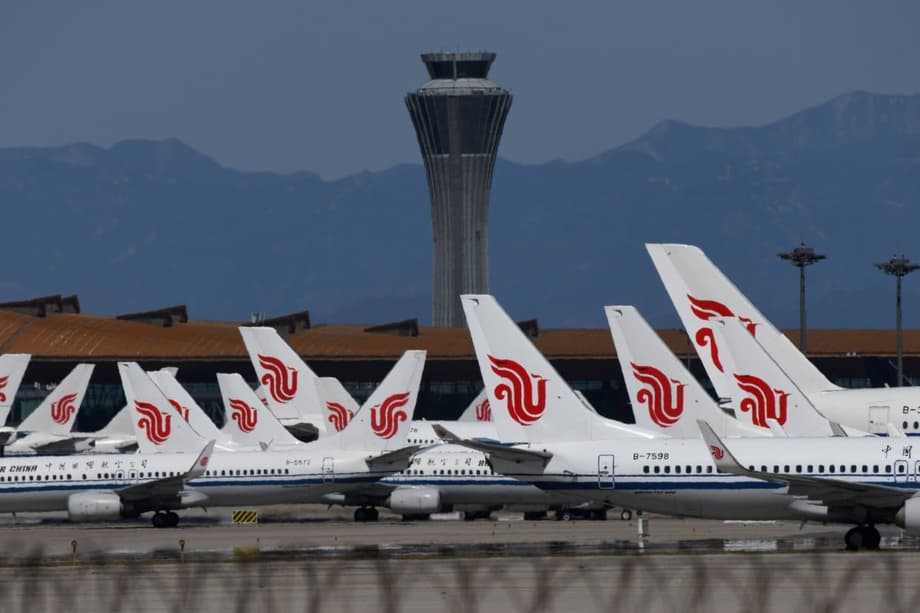
Crucially, the reductions are being driven almost entirely by Chinese carriers, while Japanese airlines have maintained their service frequency. John Grant, chief analyst at OAG, confirmed this asymmetry. “It’s primarily a Chinese airline thing, which by extension is a political move,” Grant stated. Major Chinese carriers including Air China, China Eastern Airlines and China Southern Airlines extended their cancellation and rescheduling periods for Japan-related flights until October 2026, while Sichuan Airlines cancelled all flights between Chengdu and Sapporo from January through late March.
The Chinese airline response has been coordinated and comprehensive. At least seven carriers, including the three state-owned giants, offered free cancellations and full refunds for Japan-bound flights booked until December 31, 2025. Spring Airlines, a budget carrier, suspended multiple Japan-bound flights citing company planning reasons, while the percentage of affected flights among mainland China-based airlines skyrocketed to 82.14 per cent on the Sunday following the initial advisory, remaining at 75.6 per cent the subsequent day.
Chinese travel agencies have mirrored these actions, with major operators including Ctrip and Caissa suspending group tours to Japan. One large state-owned tourism company removed all Japan travel options from its mobile application, while a Beijing-based agency stopped accepting Japan bookings entirely. Some operators ceased processing individual visa applications for Chinese travellers to Japan, though others continued operating tours in the hope that the disruption would prove temporary.
Economic Shockwaves Across Sectors
The economic consequences extend far beyond airline balance sheets. Japanese tourism-related stocks plummeted following China’s travel warning, with companies heavily dependent on Chinese consumer spending experiencing sharp valuation declines. The cosmetics, department store, airline and sportswear sectors all faced sell-offs as investors digested the likely consequences of losing access to their most valuable international market.
Nomura Research Institute has estimated that the sustained absence of Chinese visitors could result in an annual loss of approximately 2.2 trillion yen ($14.23 billion) for the Japanese economy, representing a GDP reduction of roughly 0.36 per cent. This projection assumes the boycott continues throughout 2026, a scenario that appears increasingly plausible as diplomatic positions harden.
The impact is particularly acute for small and medium enterprises in Kyoto and Hokkaido that specialise in catering to Chinese package groups. Yu Jinxin, vice president of East Japan International Travel Service, reported that her firm lost 80 per cent of bookings for the remainder of 2025 within days of the travel advisory. “This is a huge loss for us,” she stated, noting that while her company had weathered previous diplomatic flare-ups, such as the 2012 Senkaku Islands dispute, a protracted crisis this time could prove devastating. “If this lasts for one or two months, we can manage, but if the situation continues to worsen, it will obviously have a major impact on our business.”
Beyond Tourism: A Comprehensive Boycott
The flight cancellations form part of a broader economic and cultural countermeasure campaign by Beijing. In addition to the travel advisory, China reinstated an import ban on Japanese seafood, though the official justification regarding Fukushima water safety was widely understood as politically motivated given the timing. Japanese performers, including singers Hamasaki Ayumi and Otsuki Maki, saw their concerts in China cancelled, while film distributors indefinitely postponed screenings of at least two Japanese movies.
State media reported that box office receipts for Demon Slayer: Infinity Castle, an already-released Japanese animation, slumped due to strong dissatisfaction from Chinese audiences with Takaichi’s Taiwan comments. The annual Japan-China survey was cancelled at Beijing’s request, with the Chinese polling partner stating that results do not represent the current state of China-Japan relations and hold no practical relevance or reference value.
These cultural restrictions have narrowed channels of soft power exchange, weakening societal bonds between the two nations and facilitating the reproduction of hostile narratives. The cancellation of exchanges extends to education, where Chinese students, estimated at approximately 120,000 individuals, form the bulk of Japan’s international student cohort and represent another potential area of impact should tensions persist.
Military Dimensions and Regional Realignment
The diplomatic crisis has spilled into military posturing, further complicating efforts at de-escalation. In December 2025, J-15 fighter jets from the Chinese aircraft carrier Liaoning twice locked their fire control radars onto Japanese aircraft in threatening maneuvers, prompting emergency takeoffs from Okinawa. Subsequently, two Russian Tu-95 bombers capable of carrying nuclear weapons joined two Chinese H-6 bombers for a joint flight off the southern coast of the Japanese archipelago, entering South Korea’s air defense identification zone.
The crisis has forced regional actors to navigate carefully. South Korea has avoided taking sides while attempting to balance its economic dependence on China with its security alliance with the United States. Southeast Asian nations have largely maintained their One China policies while calling for regional stability. The United States has expressed support for Japan regarding China’s coercive economic measures, though President Donald Trump reportedly sought to limit escalation through meetings with both Xi Jinping and Sanae Takaichi, adopting a cautious tone to avoid damaging economic negotiations.
Chinese travellers, meanwhile, have not remained home but have redirected their holiday spending elsewhere. Flight data reveals brisk air traffic between China and destinations in South Korea, Vietnam, Thailand, Malaysia, Singapore and Hong Kong during the Lunar New Year and upcoming Labour Day periods. This shift has provided a welcome boost to alternative destinations while leaving Japanese tourism operators scrambling to diversify into Southeast Asian markets.
Diplomatic Impasse and Future Prospects
Efforts to resolve the crisis have yielded limited results. Tokyo dispatched senior foreign ministry official Masaaki Kanai to Beijing for talks with his Chinese counterpart Liu Jinsong in November 2025, while business leaders including Yoshinobu Tsutsui, head of Japan’s Keidanren business lobby, urged Takaichi to reconsider her stance. “Political stability is a prerequisite for economic exchange,” Tsutsui told reporters, highlighting the importance of stable relations for commercial activity.
However, Takaichi has refused to withdraw her remarks, which Beijing continues to demand as a precondition for normalisation. The Japanese government maintains that its official One China policy remains unchanged and that Takaichi’s comments merely reflect existing security doctrine, but Beijing views the explicit linkage of Taiwan’s security to Japan’s survival as a dangerous departure from strategic ambiguity.
The crisis highlights a fundamental clash between the two sides’ definitions of core interests. China considers its sovereignty claim over Taiwan indisputable and central to national rejuvenation narratives, while Japan increasingly views the Taiwan scenario as integral to national security given the island’s geographical position along critical maritime trade routes. This structural tension suggests that even if the current travel advisories are eventually lifted, the underlying frictions will continue to reshape bilateral relations.
The Bottom Line
- 2,691 flights between China and Japan were cancelled in March 2026, representing a 49 per cent cancellation rate and leaving only 2,711 services operational compared to 5,512 in March 2025.
- The crisis originated from November 2025 comments by Japanese Prime Minister Sanae Takaichi suggesting potential military involvement in a Taiwan conflict, triggering Chinese travel advisories and a comprehensive boycott.
- Chinese tourist arrivals to Japan dropped 55.9 per cent year-on-year to 291,600 in March, threatening an estimated $14.23 billion in annual Japanese tourism revenue.
- Chinese airlines have driven the cancellations while Japanese carriers maintain schedules, with analysts describing the move as politically motivated rather than market-driven.
- Approximately 45 per cent of Labour Day holiday flights have been cancelled for May 2026, with 210 specific services scrapped during the peak May 1-5 travel period.
- The boycott extends beyond aviation to include seafood import bans, film release postponements, concert cancellations, and suspended cultural exchanges.
- Military tensions have escalated with Chinese carrier aircraft radar-locking incidents and joint China-Russia bomber exercises near Japanese airspace.