A Strategic Outpost in the Global Technology War
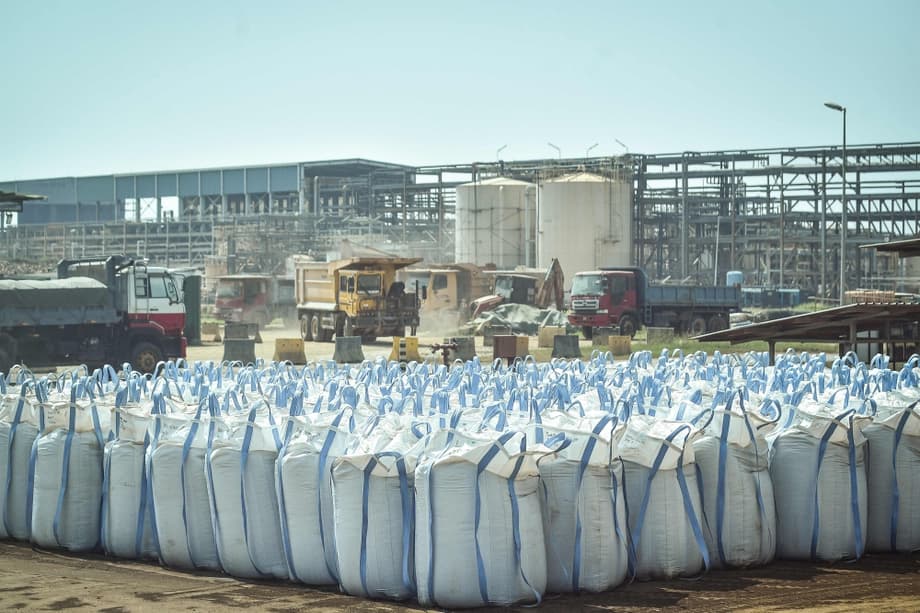
At an industrial facility in Gebeng, near the coastal city of Kuantan in eastern Malaysia, workers load tonnes of rare earth minerals into industrial bags destined for global markets. Each bag contains a mixture worth approximately US$100,000 (RM395,534.24), representing one of the most concentrated forms of wealth in modern manufacturing. These bags contain neodymium-praseodymium (NdPr), a critical component in high-performance magnets that power everything from smartphones and electric vehicles to fighter jets and wind turbines. The facility, operated by Australian mining giant Lynas Rare Earths, has become the world’s largest single rare earths processing plant outside China, processing materials from the company’s Mount Weld mine in Western Australia since 2012.
The Lynas Advanced Materials Plant (LAMP) currently handles 11 of the 17 rare earth elements, with ambitious expansion plans underway. The company, backed by Australian mining magnate Gina Rinehart and posting record quarterly revenues, has positioned this Malaysian facility as a crucial node in global supply chains increasingly threatened by geopolitical tensions. From Gebeng, the refined metal powders travel to Port Klang before shipping to Japan, where they become high-performance magnets for advanced industries including electronics and aerospace. This supply chain represents one of the few viable alternatives to Chinese dominance, which currently controls approximately 90 percent of global rare earth processing while Lynas maintains roughly 10 percent market share.
Chief Executive Officer Amanda Lacaze emphasizes that challenging Beijing’s grip requires sustained commitment. China has built its success on executing a clear industrial plan, she told AFP during a rare press visit to the sprawling chemical plant. Pushing against Chinese dominance will take discipline, focus and clear planning. The stakes extend beyond commercial competition into national security realms, as rare earths have become a flashpoint in the ongoing trade war between the United States and China.
The strategic importance of this facility has only intensified as Beijing has demonstrated its willingness to leverage control over these critical minerals. In October 2025, China restricted rare earth exports, rattling markets and snarling supply chains until reaching a temporary deal with Washington. With another summit between US President Donald Trump and Chinese counterpart Xi Jinping scheduled for mid-May, rare earth supply security remains a central discussion point in global diplomacy.
Breaking the Monopoly on Heavy Rare Earths
Lynas achieved a historic milestone in May 2025 by becoming the first company outside China to produce heavy rare earth oxides on a commercial scale. The facility successfully produced dysprosium, followed by terbium in June and samarium in March 2026, marking a significant crack in Beijing’s monopoly. These heavy rare earth elements are essential for high-temperature applications in electric vehicle drivetrains and advanced defense systems, yet until recently, no commercial production existed outside Chinese borders.
The technical achievement carries substantial geopolitical weight. China had dominated not just light rare earths but nearly all heavy rare earth processing, giving Beijing unique leverage over technologies crucial for the energy transition and modern warfare. The new separation circuit at the Malaysian facility, commissioned with a $25 million investment, can process up to 1,500 tonnes per year of mixed heavy rare earth compounds. This capacity includes SEGH concentrate (samarium, europium, gadolinium, holmium) and eventually will expand to include yttrium and lutetium, used in medical imaging, cancer therapy, and solid-state lasers.
Chief Operating Officer Pol Le Roux outlined the technical progression during a recent interview at the facility. The first step was to demonstrate that we are able to extract heavy rares, he stated. We demonstrated that with dysprosium in May last year, terbium in June and samarium last month. We started detailed engineering of a full heavy rare separation that will provide us the capability to extract any rare earths demanded by the market. The company expects to have a full suite of extraction capabilities at the Gebeng site by late 2027.
The expansion addresses a critical vulnerability in non-Chinese supply chains. High-performance NdFeB magnets require trace amounts of heavy rare earths like dysprosium and terbium to function at high temperatures inside electric vehicle motors. Without these additives, magnets lose their magnetic properties under thermal stress, rendering them unsuitable for advanced drivetrains. Lynas’s breakthrough means Western automotive and defense manufacturers now have an alternative source for these previously restricted materials.
Geopolitical Chessboard: Malaysia’s High-Stakes Balancing Act
Malaysia finds itself navigating increasingly narrow diplomatic territory as major powers compete for rare earth influence. While Lynas represents the Western-aligned supply chain, China has simultaneously moved to strengthen its position within Malaysia’s nascent domestic rare earth sector. During Chinese President Xi Jinping’s April visit to Malaysia, he reportedly proposed technical assistance for rare earth processing, while Reuters reported ongoing discussions between Khazanah Nasional (Malaysia’s strategic investment fund) and a Chinese state firm regarding a potential rare earth processing partnership.
This dual engagement reflects Malaysia’s complex position. The country possesses an estimated 16.2 million tonnes of rare earth deposits valued at approximately RM747.2 billion (US$175 billion), yet lacks the advanced technology to mine and process these resources at scale. The government’s National Mineral Industry Transformation Plan 2021-2030 aims to develop a mine to magnet ecosystem, targeting 30,000 tonnes of annual rare earth output by 2030 and creating 4,000 jobs. However, industry veterans note that China took decades to build its ecosystem, suggesting Malaysia’s targets may be optimistic without substantial foreign technological partnership.
The United States has actively courted Malaysia as part of its de-risking strategy. In October 2025, Prime Minister Anwar Ibrahim signed a memorandum of understanding with President Trump ensuring no restrictions would be placed on rare earth exports to the United States. This agreement, alongside the presence of Lynas’s Australian-Japanese backed facility, positions Malaysia as a potentially neutral but indispensable node in fragmenting global supply chains.
Japan has maintained particularly close ties with Lynas following the traumatic 2010 China-Japan rare earths dispute, when Beijing temporarily halted shipments over territorial tensions. In early 2026, Lynas extended its supply agreement with Japan Australia Rare Earths (JARE) through 2038, committing 5,000 tonnes annually of NdPr and 75 percent of all heavy rare earth oxides to Japanese industry. The deal includes a market-linked floor price of US$110 per kilogram for NdPr, with upside-sharing mechanisms if prices exceed US$150 per kilogram. Sojitz Corporation, the Japanese trading house, began importing Lynas-refined heavy rare earths in October 2025, aiming to cover approximately 30 percent of Japan’s total demand.
Environmental Scrutiny and Regulatory Conditions
Despite its strategic importance, the Lynas facility has faced persistent environmental opposition since construction began in 2007. Local residents and activists have raised concerns about radioactive waste management, drawing parallels to a previous rare earths refinery near Ipoh operated by Mitsubishi, which closed in 1992 amid health complaints and site contamination issues that required years of cleanup. The Save Malaysia Stop Lynas campaign has organized sustained protests, questioning why the facility was not built in Australia if the processes are truly safe.
In March 2026, Malaysia’s Department of Atomic Energy renewed Lynas’s operating license for 10 years, but imposed stringent new conditions. The company must halt all activities producing radioactive waste within five years of the renewal date and treat existing water leach purification residues so they are no longer radioactive. No new permanent disposal facilities will be approved after this transition period. This regulatory compromise allows continued operation while addressing long-term waste concerns.
Lynas maintains that its by-products are non-toxic and safe. The company states that refining produces magnesium-rich gypsum and iron phosphate with only very low levels of naturally occurring radioactive material, stored in permanent disposal facilities constructed to prevent environmental impact. The International Atomic Energy Agency (IAEA) assessed the Kuantan plant and judged it to meet all safety standards, describing the facility as state-of-the-art and well engineered. However, trust remains the central issue for local communities, who note that West Australia refuses to accept the waste material back despite its low radioactivity levels.
The environmental challenges extend beyond Lynas to Malaysia’s broader rare earth ambitions. Illegal mining operations in neighboring regions have polluted Mekong tributaries with arsenic and cadmium, highlighting the risks of inadequate regulation. As Malaysia develops its domestic rare earth deposits, likely using in-situ leaching methods similar to those in southern China, environmental groups warn that chemical injection into sensitive ecosystems could trigger new contamination crises. Opposition from activists and fishermen represents a material permitting risk that could delay or halt future projects.
Malaysia’s Domestic Rare Earth Ambitions
While processing Australian ore at Gebeng, Malaysia harbors ambitions to develop its own substantial rare earth reserves. A 2024 Department of Mineral and Geoscience reconnaissance study identified significant ionic adsorption clay deposits across Peninsular Malaysia, potentially offering geology similar to China’s rare earth-rich southern provinces. Currently, only one legal mining project operates domestically, a partnership between the Perak state government and Chinese state-owned enterprise Chinalco.
The federal government imposed a moratorium on rare earth exports in December 2023, mirroring Indonesia’s approach to nickel, to ensure domestic processing and value addition. Minister of Investment, Trade and Industry Tengku Zafrul has emphasized that Malaysia no longer wishes to remain merely a raw material exporter. Malaysia is not imposing a permanent ban on rare earth exports; rather, it is to prevent the export of unprocessed, low-value raw materials, so that more added value remains within the country, he stated, defending the recent US cooperation agreement against accusations of selling out sovereignty.
The challenge lies in execution. Malaysia lacks domestic technology for advanced rare earth extraction and separation, creating dependency on foreign partners whether from China, the US, or Australia. The 2030 target of 30,000 tonnes annual output requires massive infrastructure investment, secure chemical reagent supplies, and downstream partnerships with magnet manufacturers that do not yet exist in Malaysia. While Swiss company Bomatec and Japanese giant Shin-Etsu operate magnet manufacturing facilities in Malaysia, the ecosystem remains fragmented compared to China’s vertically integrated supply chains.
Lynas itself is diversifying beyond simple ore processing. The company plans to invest 500 million ringgit (approximately US$118 million) to build a new heavy rare earth separation plant with 5,000 tonnes annual capacity. Additionally, Lynas is exploring rare earth applications as catalysts in the hydrogen supply chain, particularly for ammonia cracking during long-haul gas transport. In 10 years from now, I expect this to be a substantial part of the business, Le Roux predicted, indicating ambitions to move downstream beyond oxide production.
The Bottom Line
- Lynas Rare Earths operates the world’s largest rare earth processing facility outside China in Gebeng, Malaysia, with a newly renewed 10-year license effective March 2026
- The facility achieved a historic milestone in 2025 by becoming the first commercial producer of heavy rare earth oxides (dysprosium, terbium) outside China, breaking Beijing’s monopoly on critical materials for high-performance magnets
- Each bag of neodymium-praseodymium processed at the facility is worth approximately RM395,000, with materials shipped primarily to Japan for magnet manufacturing serving electric vehicle and defense industries
- Malaysia possesses an estimated 16.2 million tonnes of domestic rare earth reserves valued at RM747.2 billion, but faces significant technical and environmental challenges in developing these resources
- The facility must cease all radioactive waste-producing activities within five years under its new license conditions, while continuing to manage existing residues safely
- Malaysia navigates complex geopolitical rivalries, maintaining processing partnerships with Australian-Japanese interests while engaging with both US and Chinese technology offers for developing domestic mining capacity