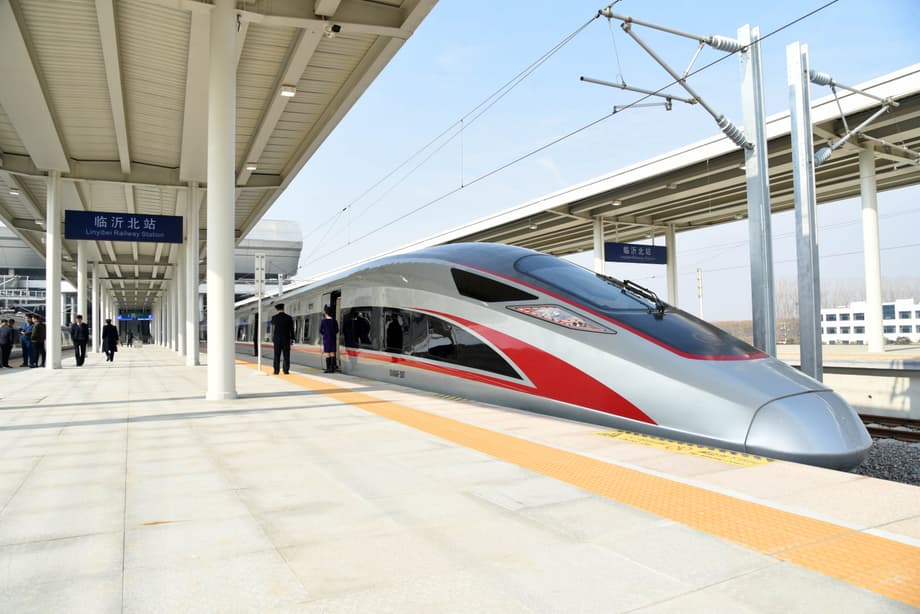
A Transportation Revolution at Breakneck Speed
China’s high-speed rail network has compressed decades of infrastructure development into less than twenty years, creating a system that now dominates global rail travel. By the close of December 2025, the network extended beyond 50,000 kilometers following the opening of the Xi’an-Yan’an line in Shaanxi Province, representing approximately 70 percent of the world’s total high-speed rail tracks. The newest trains routinely operate at speeds reaching 350 kilometers per hour, a stark contrast to the 48 kilometers per hour average recorded in 1993 when outdated infrastructure constrained movement across the country. During the 2026 Spring Festival travel period, the network carried a record 538 million passengers, with nearly 13,000 trains running daily at peak capacity.
The transformation began in August 2008, when the first high-speed line connecting Beijing and Tianjin opened just ahead of the Olympic Games. This milestone marked a departure from legacy systems like Japan’s Shinkansen or Germany’s ICE, which evolved gradually over multiple decades through incremental upgrades. The Beijing-Shanghai high-speed rail line commenced service in June 2011, cutting the 1,300-kilometer journey from over ten hours to just over four hours. Newer lines including the Guangzhou-Zhanjiang and Baotou-Yinchuan corridors continue expanding reach into western and southern regions, ensuring that by 2024 the network served 97 percent of Chinese cities with populations exceeding 500,000 and cumulatively transported more than 22.9 billion passengers.
Compressing Time and Space
Academic researchers describe the phenomenon as time-space compression, where high-speed rail fundamentally alters the relationship between distance and travel time. Studies utilizing context-adapted weighted average methods demonstrate that HSR station locations critically shape spatial accessibility dynamics. In Guangxi Province, once-isolated ecotourism destinations saw accessibility improve dramatically following HSR integration, with travel times to major scenic spots dropping from nine to ten hours to between 3.7 and six hours. This increased the percentage of attractions reachable within six hours from 31.58 percent to 78.95 percent, demonstrating patterns of centrality and diffusion as transportation hubs emerged as strategic nodes that greatly expedite travel times.
The Wuhan-Guangzhou line generated similar effects in Hubei Province, while new corridors through central China bring destinations such as Yichang, gateway to stretches of the Yangtze River, within a few hours of major hubs like Wuhan and Chongqing. This compression transforms remote regions into viable weekend destinations for urban dwellers. The Baotou-Yinchuan line reduced journeys across northern desert and grasslands from over six hours to just 2.5 hours. Travelers from Shanghai or Hangzhou, who previously faced two or three days of road travel to reach Ningxia in the northwest, can now depart in the morning and arrive by dinner after approximately ten hours of travel via hubs like Xuzhou and Xi’an.
Provincial governments now market two-hour tourism circles, promising residents that diverse landscapes and cultural experiences lie within a single high-speed train ride. Such connectivity enables short-haul, high-frequency travel patterns that were impossible under conventional rail or road systems, turning previously isolated areas into accessible destinations for spontaneous excursions and same-day intercity commuting.
Secondary Cities Awaken to New Opportunities
The redistribution of tourism flows represents one of the most substantial economic impacts of the HSR expansion. Secondary and inland cities previously overshadowed by coastal megacities now experience surging visitor numbers. Research indicates cities connected by high-speed rail recorded nine percent growth in tourist arrivals, with corresponding increases in tourism-related revenues. Tour operators have shifted away from long bus itineraries toward rail-based programs, often integrating high-speed trains with local transport to create seamless multi-city circuits.
The transformation of Altay Prefecture in Xinjiang illustrates this potential dramatically. Once dependent on mining extraction facing environmental constraints and declining secondary industry output during 2015 and 2016, the region pivoted toward ice and snow tourism following the imposition of ecological protection measures under China’s ecological civilization initiative. This longitudinal transformation occurred across three distinct phases, navigating trade-offs between preservation and growth amid ecological constraints. Tourist arrivals grew from 1.5 million in 2007 to over 26 million in 2021, then reached 30 million in 2023. The share of the tertiary sector rose from approximately one-third in 2007 to nearly 50 percent by 2020, supported by ski resorts, winter sports facilities, and cultural events that attracted visitors seeking unique experiences.
Similar infrastructure improvements have transformed Hainan Province, where veteran travel agents from Singapore and Macao have observed remarkable changes over the past fifteen years. Jiang Huijun, president of Singapore-based Jun-Air Travel, observed the evolution of facilities over fifteen years of promoting the island’s luxury tourism.
Many more beaches have been developed into tourist-friendly resorts. I plan to promote high-end and long-stay vacation packages and recommend Hainan as a destination for major exhibitions.
Macao-based travel agent Paco Ng highlighted the island’s appeal across age groups, citing helicopter tours, diving, diverse cuisine, and the convenient one-hour flight from the Guangdong-Hong Kong-Macao Greater Bay Area.
Local economies throughout the network benefit from increased foot traffic. Hotels, restaurants, and cultural attractions in cities like Zhengzhou and Nanchang report substantial business growth as tourists explore beyond traditional hotspots. Municipal authorities have responded by upgrading station districts, developing shuttle links to historic quarters, and zoning for transit-oriented commercial projects within walking distance of platforms.
The China Travel Boom Meets Seamless Connectivity
International tourism has accelerated through the integration of high-speed rail with streamlined entry policies and payment systems. As of June 2025, China granted unilateral visa-free access to 47 countries and expanded the 240-hour visa-free transit policy to 55 nations, creating what officials call a multilayered, streamlined system for travel services. In the first half of 2025, 13.64 million foreign visitors entered without visas, up 53.9 percent year-on-year and accounting for 71.2 percent of all foreign arrivals.
British travel vloggers Reanne and Ben have documented this accessibility through over 40 videos featuring titles with keywords like “shocking” and “unbelievable” to describe the efficiency of China’s rail network combined with digital payment systems. Their content, garnering over 80 million views on YouTube alone for videos tagged “China Travel,” highlights how high-speed rail allows international visitors to move efficiently beyond gateway cities into the country’s interior. The State Taxation Administration introduced instant tax rebates at the point of purchase in April 2024, with tax refund stores exceeding 10,000 by August and refund claims jumping 247.8 percent year-on-year.
Digital platforms report a 35 percent increase in 2025 bookings combining air and rail travel, driven by seamless connections between major airports and high-speed rail stations in Beijing and Shanghai. In Shenzhen alone, foreign nationals conducted 85.88 million non-cash payment transactions in the first half of 2025, valued at 11.81 billion yuan, following increases in mobile payment caps to $5,000 per transaction. This integration allows visitors to traverse from international arrivals to interior destinations like Xi’an or Chengdu with minimal friction, supporting the viral “China Travel” trend across global social media.
Extending Across Borders
China’s rail ambitions extend beyond domestic borders through regional projects under the Belt and Road Initiative. The Laos-China Railway, which became operational in 2021, connects Kunming with Vientiane over 1,000 kilometers. The journey from Boten on the Chinese border to Vientiane now takes three to four hours by rail, compared to more than a full day by road previously. By 2025, the line is expected to serve more than 30 million passengers annually.
The World Bank estimates that with appropriate policy reforms to facilitate trade and improve logistics services, the railway could increase aggregate income in Laos by up to 21 percent over the long term. The analysis notes the potential for Laos to develop into a logistics hub, with targeted investments in agriculture and tourism creating new export opportunities.
With the right reforms undertaken by the Lao government, the railway connecting Lao PDR to the vast Belt and Road network could potentially increase aggregate income by up to 21 percent over the long term.
Success depends on modernizing customs and border agency practices, including the introduction of effective risk management systems, electronic submission of customs declarations, and adopting railway consignment notes as transit documents. Simplifying border controls for passengers remains essential to avoid lengthy delays that could undermine the attractiveness of the railway for tourists.
Transit trade through Laos along the railway corridor could reach an estimated 3.9 million tonnes annually by 2030, shifting an estimated 1.5 million tonnes from maritime transport to rail. Passenger traffic is expected to account for the majority of train traffic by 2030. Expansion plans target Thailand and Malaysia to create a continuous network linking major economic hubs across Southeast Asia, potentially transforming landlocked economies into land-linked centers and reducing land transport prices by 40-50 percent between Vientiane and Kunming.
Balancing Expansion with Sustainability
Despite these successes, the system faces challenges regarding financial sustainability and peak period capacity management. The construction costs for the Laos-China Railway alone reached $5.9 billion, representing one-third of Lao GDP in 2017, funded through a 30-70 ownership split between Lao and Chinese partners. Domestically, some stations built on city fringes have struggled to attract sufficient ridership, raising questions about land-use planning and feeder transport integration.
Environmental considerations shape future development within China’s ecological civilization framework, which was enshrined in the constitution in 2018. The transformation of resource-based cities like Altay occurred under pressure from ecological redlines and central environmental protection inspections, obligating local governments to shift development paradigms toward harmony between humanity and nature. In ecologically sensitive regions like Guangxi, where karst landscapes and biodiversity corridors require protection, planners must balance accessibility with preservation of fragile environments and low-carbon transit solutions.
Future targets include expanding the domestic network to 60,000 kilometers by 2030 while testing medium-speed maglev projects in Guangdong and implementing 5G-based communications and energy-efficient rolling stock. Railway authorities continue refining services to address overcrowding during major holidays like Chinese New Year, when daily volumes exceed 20 million passengers. These investments support national goals for emissions reduction and balanced regional growth, ensuring high-speed rail remains a backbone of low-carbon transport.
Key Points
- China’s high-speed rail network exceeds 50,000 kilometers, comprising roughly 70 percent of the global total, with trains operating at speeds up to 350 kilometers per hour.
- The network carried 538 million passengers during the 2026 Spring Festival period, with daily services exceeding 13,000 trains at peak capacity.
- Travel times to ecotourism destinations in Guangxi dropped from 9-10 hours to 3.7-6 hours, increasing accessibility from 31.58 percent to 78.95 percent within a six-hour window.
- Cities connected by high-speed rail experienced nine percent growth in tourist arrivals, redistributing tourism flows from coastal megacities to secondary inland destinations.
- Altay Prefecture transformed from a mining economy to an ice and snow tourism hub, with visitor numbers growing from 1.5 million in 2007 to 30 million in 2023.
- The Laos-China Railway reduces cross-border journeys from over 24 hours by road to 3-4 hours, with potential to increase Lao aggregate income by 21 percent long-term.
- Visa-free policies combined with rail connectivity fueled a 53.9 percent year-on-year increase in visa-free foreign entries during the first half of 2025, totaling 13.64 million visitors.