An Ambitious Vision Meets Structural Constraints
President Prabowo Subianto has unveiled one of the most aggressive electrification programs in Southeast Asian history. The Indonesian leader aims to convert approximately 120 million gasoline-powered motorcycles to electric power within three to four years, a sweeping initiative designed to eliminate fuel imports and achieve energy independence. “The whole plan is to convert all of our motorcycles to electric,” Prabowo declared in a March video address, framing the policy as a national security imperative amid volatile global oil markets.
- An Ambitious Vision Meets Structural Constraints
- The Workshop Bottleneck: A Mathematical Impossibility
- Lessons from Failed Precedents
- Safety Concerns and Technical Realities
- The Coal-Powered Electric Paradox
- Policy Instability and Industry Desperation
- Alternative Pathways and Private Sector Initiatives
- The Bottom Line
The urgency behind this target stems from Indonesia’s vulnerability to international energy shocks. The country imports roughly one million barrels of oil daily, with 20 to 25 percent transiting through the Strait of Hormuz. Recent geopolitical tensions in the Middle East have demonstrated how quickly supply disruptions can cascade into economic crises. Energy and Mineral Resources Minister Bahlil Lahadalia has been tasked with leading a government task force on energy transition, with instructions to complete the conversion “even faster if possible.”
However, beneath the political rhetoric lies a stark disconnect between ambition and capacity. Energy experts, industry analysts, and academic researchers have raised alarm bells about the feasibility of converting the world’s third-largest motorcycle fleet in such a compressed timeframe. Fahmy Radhi, an energy economist at Gadjah Mada University, has emerged as a prominent skeptic, arguing that Indonesia’s current ecosystem lacks the fundamental infrastructure to support mass electrification.
The Workshop Bottleneck: A Mathematical Impossibility
The most immediate obstacle confronting Prabowo’s vision is a severe shortage of certified conversion facilities. According to the Institute for Essential Services Reform (IESR), Indonesia currently operates merely 39 government-certified workshops capable of performing electric motorcycle conversions. To achieve the administration’s target of converting 120 million units within five years, the nation would require approximately 16,000 to 27,000 certified workshops distributed across all regions, assuming each facility handles 900 to 1,500 conversions annually.
This represents a gap of staggering proportions. Fabby Tumiwa, executive director of IESR, confirmed that authorized workshops number “no more than 50, and even those are concentrated in Greater Jakarta,” with additional clusters in Bogor, Bandung, and Bali. For motorcycle owners in rural provinces like Papua, Kalimantan, or Sulawesi, the nearest certified facility could require hundreds of kilometers of travel, rendering the conversion process economically impractical regardless of government subsidies.
The geographic concentration reflects broader infrastructure disparities between Java and the outer islands. Conversion technology requires specialized training, diagnostic equipment, and supply chains for battery management systems and electric motors. Without rapid workforce development and facility certification, the mechanical capacity to process millions of vehicles annually simply does not exist.
The technical process itself presents additional complications. Converting an internal combustion engine motorcycle to electric power involves removing the fuel tank and gasoline engine, then installing a battery pack, electric motor, and modified control systems. Peer-reviewed research published in academic journals indicates that conversion times directly impact adoption probability. A 50 percent increase in conversion duration reduces EMC (Electric Motorcycle Conversion) adoption probability by 5.2 percentage points while increasing new gasoline motorcycle purchases by 3 percentage points.
Lessons from Failed Precedents
The current administration’s plan is not Indonesia’s first attempt at motorcycle electrification. Under former President Joko Widodo, the government launched a conversion program in 2023 offering subsidies of 7 million to 10 million rupiah (approximately $408 to $583) per vehicle for conversion kits including batteries and motors. The program targeted 50,000 conversions in 2023 and 150,000 in 2024.
The results proved disappointing. According to ministry data cited by CNN Indonesia, only 145 motorcycles underwent conversion in 2023, rising to 1,615 units in 2024. These figures represent less than 1 percent of the annual targets, highlighting the gap between policy planning and ground-level execution. Bebin Djuana, a retired automotive executive, attributed these failures to missing ecosystem components: “There were many supporting factors that were not yet in place. Each vehicle model is different; you cannot apply a one-size-fits-all conversion. We need trained workers to handle conversions, but where is the training?”
Consumer behavior research from Gadjah Mada University reveals heterogeneous barriers across rider demographics. Hardcore motorcycle enthusiasts and older riders express primary concerns about financing and resale value depreciation. Daily commuters who rely heavily on their vehicles worry about procedural complexities and information availability regarding conversion costs. Higher-power enthusiasts and newer riders with light motorcycles focus on potential travel disruptions during the conversion process, which typically requires 45 minutes to two hours per vehicle for experienced mechanics.
Academic analysis indicates that resale values for electric motorcycles depreciate more rapidly than conventional gasoline models, creating economic disincentives for owners. Many Indonesian motorcyclists view their vehicles as long-term assets rather than disposable consumer goods, making them reluctant to invest in technologies with uncertain secondary markets.
Safety Concerns and Technical Realities
Beyond logistical constraints, safety experts have raised serious concerns about the technical viability of mass conversion programs. Retrofitting gasoline motorcycles with electric powertrains involves fundamental alterations to vehicle frames originally engineered for different weight distributions and structural loads. In Vietnam, where similar conversion programs have been debated, technical experts have warned that gasoline motorcycle frames were never designed to accommodate heavy battery packs and electric motors.
Bui Van Hung, a technical expert at a Vietnamese motorcycle company, explained that replacing original engines and transmissions with electric components compromises vehicle balance and disrupts suspension systems, tires, and frame integrity. “The vehicle’s original heat dissipation system may not be adequate to handle the new battery, increasing the risk of fire,” he noted, referencing incidents where modified electric motorcycles caught fire, exposing added battery compartments after frames burned away.
These safety concerns resonate in the Indonesian context, where many workshops lack sophisticated engineering capabilities. While some Indonesian companies like Bintang Racing Team, Elders Garage, and Spora EV have developed proprietary conversion kits using in-house motors and imported batteries (primarily from China and South Korea), most smaller workshops rely on third-party motors from numerous small American and Chinese suppliers with varying quality standards.
Dr. Nguyen Van Long Giang, from the mechanical engineering department at Ho Chi Minh City University of Technology and Education, reported that university experiments with gasoline-to-electric conversions were deemed impractical due to safety concerns and aesthetic degradation. “The cost effectiveness of the conversion remains questionable,” he added, noting that conversion costs often reach 60 to 100 percent of the price of new electric motorcycles, with lithium batteries accounting for nearly half the expense and requiring replacement every three to five years.
The Coal-Powered Electric Paradox
Environmental benefits of the electrification program face scrutiny due to Indonesia’s electricity generation mix. Approximately 56 percent of the national electricity supply originates from coal-fired power plants, creating a structural contradiction in the government’s green transition narrative. While electric motorcycles produce zero direct emissions during operation, the energy required to charge their batteries carries a substantial carbon footprint.
Fahmy Radhi highlighted this environmental Catch-22, noting that without cleaning the national grid, widespread EV adoption merely shifts pollution from vehicle tailpipes to power plant smokestacks. Indonesia’s transportation sector accounts for approximately 22 percent of national fossil fuel combustion emissions, but electricity generation contributes roughly 50 percent. Mass motorcycle electrification could theoretically increase electricity demand substantially, potentially exacerbating coal consumption unless accompanied by rapid renewable energy deployment.
President Prabowo has separately announced plans to construct 100 gigawatts of solar generation capacity and retire 13 diesel power plants within two years, targeting a reduction of 200,000 barrels per day in fuel imports. However, energy analysts question whether renewable infrastructure can scale quickly enough to outpace increased demand from millions of newly electrified vehicles.
Policy Instability and Industry Desperation
Regulatory uncertainty compounds the technical challenges facing the conversion program. Budi Setiyadi, Chairman of the Indonesian Electric Motorcycle Industry Association (AISMOLI), confirmed that while producers support the electrification agenda, “policy certainty becomes very important” for maintaining business viability. Industry sources report that some manufacturers have begun feeling desperate due to unstable government support frameworks.
Government incentives for electric vehicle purchases introduced in mid-2023 expired in December 2024 and faced repeated postponements throughout 2025 before authorities ultimately announced that no new EV incentives would be introduced. This policy whiplash has created a highly unstable environment for investment planning. Meanwhile, the overall motorcycle market has stagnated, with growth slowing to just 0.6 percent in 2025 before March 2026 saw sales plummet 17.2 percent year-on-year following fuel price increases.
The fiscal mathematics of subsidizing 120 million conversions appear daunting. Should the government provide comparable support to previous programs (up to 10 million rupiah per unit), total program costs could reach 1,200 trillion rupiah, approximately $70 billion. This exceeds Indonesia’s entire 2025 fuel subsidy expenditure of 26.7 trillion rupiah by a factor of nearly 45, raising questions about fiscal sustainability.
Industry Minister Agus Gumiwang Kartasasmita has indicated that the government is preparing regulatory frameworks to eventually mandate that all motorcycles sold domestically must be electric, potentially phasing out internal combustion engine production for the domestic market while continuing exports to Africa, the Middle East, and South America. However, without addressing the conversion ecosystem’s structural deficiencies, such mandates risk stranding existing vehicle owners or forcing unsafe, uncertified conversions.
Alternative Pathways and Private Sector Initiatives
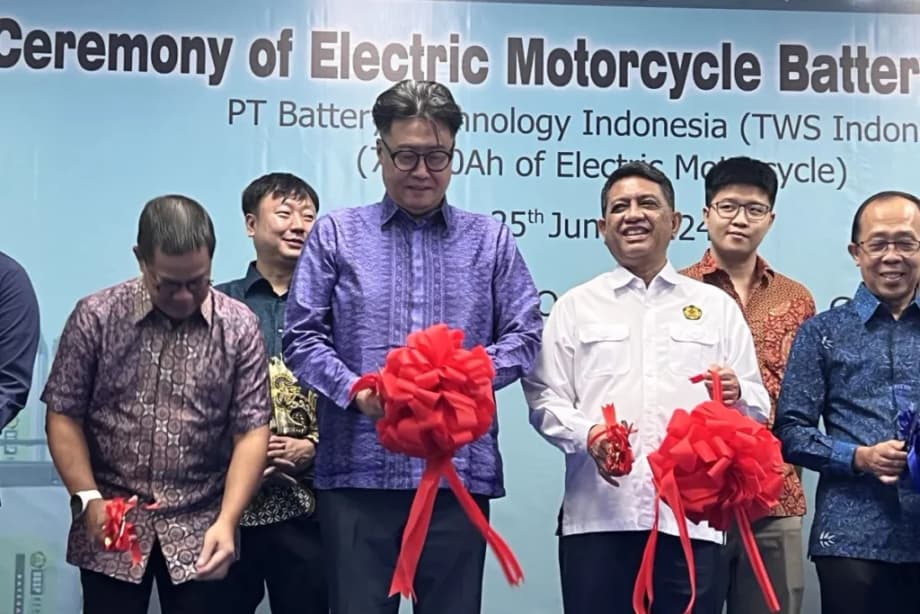
Despite systemic challenges, some private sector developments suggest ecosystem growth is possible, albeit at modest scales. Chinese EV giant Yadea has established a production facility in Bekasi, West Java, covering 28,000 square meters with annual capacity for 300,000 units. Domestic startup MAKA Motors recently debuted the MAKA Cavalry, a locally designed electric motorcycle featuring 160 km range and advanced regenerative braking, following a $37.6 million seed funding round co-led by AC Ventures.
Automotive component manufacturer PT Dharma Polimetal has launched Dharma Connect, a collaborative ecosystem encompassing battery packs, charging stations, and conversion technology for both two-wheel and four-wheel vehicles. President Director Irianto Santoso emphasized these initiatives reflect commitment to “supporting Indonesia’s clean energy transition while developing innovative products created by local talent.”
Energy experts recommend pivoting from mass conversion targets to targeted, phased approaches. Fabby Tumiwa suggests focusing initially on high-intensity users such as online motorcycle taxi drivers, logistics couriers, and industrial zone workers, where conversion of approximately 2 million units could save up to 800,000 kiloliters of fuel annually. Others propose “cash for clunkers” programs allowing owners of motorcycles over ten years old to trade them toward new electric vehicles rather than attempting retrofitting.
Urban-focused pilots in Jakarta, Surabaya, and Bandung could allow workshop networks to mature while charging infrastructure expands from current concentrations in shopping centers to broader geographic coverage. Academic research confirms that travelers using older motorcycles demonstrate highest willingness-to-adopt EMC, suggesting targeted programs focusing on aging vehicle fleets rather than newer models would maximize environmental impact per conversion.
Fahmy Radhi maintains that Indonesia should align targets with actual capacity rather than political ambition. “We should set targets that reflect our actual capacity. Overly ambitious goals risk missing the mark,” he warned. “These programmes are not suited to addressing short-term problems like rising fuel prices.”
The Bottom Line
- Indonesia aims to convert 120 million gasoline motorcycles to electric power within three to five years under President Prabowo’s energy independence agenda.
- Only 39 certified conversion workshops currently exist nationwide, far short of the 16,000 to 27,000 required to meet annual conversion targets of 24 million units.
- Previous conversion programs achieved only 145 conversions in 2023 and 1,615 in 2024 against targets of 50,000 and 150,000 respectively.
- Approximately 56 percent of Indonesia’s electricity comes from coal, limiting the environmental benefits of vehicle electrification.
- Safety concerns regarding frame modifications, battery fires, and heat dissipation present technical barriers to mass retrofitting.
- Full subsidies for 120 million conversions could cost approximately $70 billion, raising fiscal sustainability questions.
- Experts recommend focusing on high-intensity commercial users and older vehicles rather than attempting universal conversion.