Energy Emergency Spurs Controversial Talks
The Philippines is navigating a precarious diplomatic tightrope as President Ferdinand Marcos Jr. considers joint oil exploration with China in the disputed South China Sea, a move critics warn could compromise national sovereignty while rewarding Beijing for years of maritime harassment. The renewed discussions emerged from the 11th Bilateral Consultation Mechanism held last month, where both nations acknowledged the importance of energy cooperation amid a global supply crisis triggered by the Middle East conflict.
Marcos declared a national energy emergency after oil prices surged dramatically between February and March, with the Philippines recording the highest petrol price increase of any nation worldwide during that period. The price spike has strained the economy, forcing the government to implement the UPLIFT recovery plan involving PHP238 billion in subsidies for transport workers, farmers, and low-income households. With the Malampaya gas field nearing depletion and the country importing over 90 percent of its petroleum needs, the administration views untapped reserves in the West Philippine Sea as a potential lifeline.
In an interview with Bloomberg Television, Marcos suggested that the Middle East war could provide an impetus for both sides to reach an agreement on joint development. He acknowledged that territorial disputes have historically obstructed such cooperation, stating that this is something we have been talking about for a great deal, but territorial disputes are getting in the way of that. Foreign Secretary Theresa Lazaro subsequently indicated that while no formal directive has been issued to restart talks, such a move may be forthcoming.
Legislators Demand Transparency and Warn of Dangerous Precedent
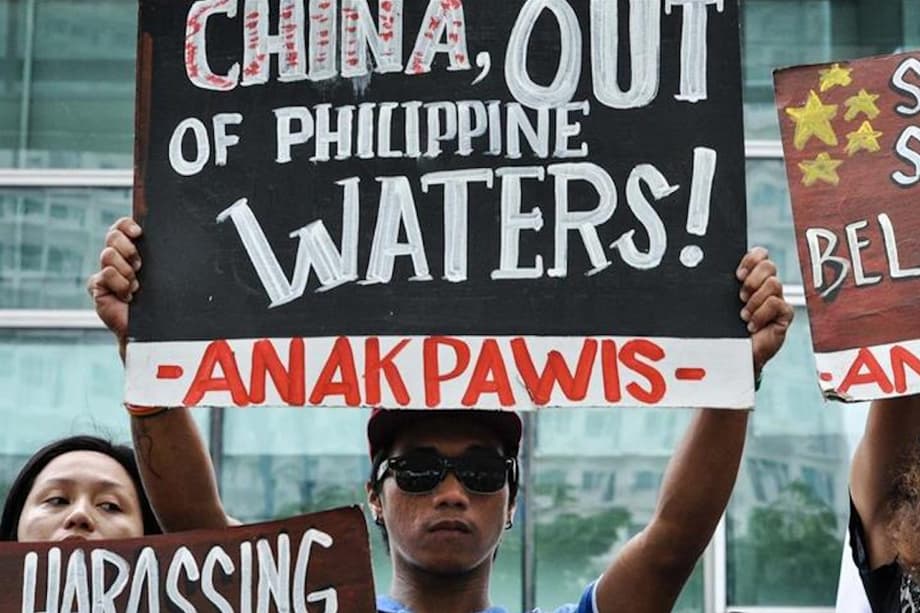
Opposition lawmakers have responded with sharp criticism, questioning both the transparency of the negotiations and the wisdom of partnering with a nation that continues to harass Philippine vessels in contested waters. Chel Diokno, a member of the House of Representatives, expressed concern about the secretive nature of the discussions, arguing that transparency should be a governing principle in our foreign and energy policies. He announced plans to spearhead oversight hearings to ensure that any agreement does not contravene the Constitution.
Perci Cendana, another House member, framed the potential deal as tantamount to rewarding bad behavior. He referenced increasing aggression by the China Coast Guard against Filipino patrols in the West Philippine Sea, which covers the portions of the South China Sea within Manila’s exclusive economic zone. We are sending the wrong message and encouraging more powerful countries to escalate disputes to extract concessions, Cendana stated. Instead of demanding compliance with international law, we are adjusting to China's violations.
Senator J.V. Ejercito echoed these sentiments, questioning how the Philippines could enter into an agreement of joint exploration with someone who is trying to disrespect your sovereignty, undermine your sovereignty, and trying to annex your territory. Trust is the very foundation of any relationship, he added. I'm sorry, but I'm really consistent in saying that I don't trust the Chinese government.
Historical Precedents and Legal Barriers
The skepticism surrounding current negotiations draws heavily from decades of failed cooperation attempts and legal complications. In 2018, President Rodrigo Duterte signed a memorandum of understanding with Chinese President Xi Jinping for joint oil and gas development, only to face similar accusations that the move undermined the 2016 international arbitration ruling that invalidated China's expansive claims in the South China Sea.
Earlier attempts at cooperation proved even more contentious. During the Arroyo administration, the Philippine National Oil Company signed a 2004 agreement with China National Offshore Oil Corporation for seismic surveys in disputed waters. This evolved into a 2005 tripartite agreement involving Vietnam, known as the Joint Marine Seismic Undertaking. The deal collapsed amid corruption allegations and constitutional challenges regarding the 60/40 rule, which requires Philippine entities to own at least 60 percent of capital in natural resource projects and the government to retain 60 percent of net profits. In 2023, the Philippine Supreme Court formally voided the 2005 agreement because it involved wholly foreign-owned companies, creating a significant legal barrier for any future arrangement.
Legal experts note that any new joint development agreement would need to navigate these constitutional restrictions while addressing the 2016 arbitral ruling that found no legal basis for China's historic rights within the nine-dash line. The tribunal's decision effectively means there are no overlapping maritime entitlements between the Philippines and China in the West Philippine Sea, complicating the legal framework for joint development under the United Nations Convention on the Law of the Sea.
Patterns of Coercion and Bad Faith
Critics point to a documented history of Chinese coercion in the South China Sea that undermines confidence in Beijing as a reliable partner. Academic research from the Belfer Center at Harvard University identifies systematic patterns of Chinese behavior, including the 2011 expulsion of Philippine vessels exploring for oil around Reed Bank and the 2012 blockade of Philippine naval vessels at Scarborough Shoal.
Recent incidents have intensified concerns. On August 25, Chinese vessels surrounded and rammed the BFAR vessel BRP Datu Sanday during a humanitarian mission near Sabina Shoal. The following day, China deployed roughly 40 vessels to block a mission delivering supplies to personnel at Second Thomas Shoal. In April 2026, Philippine authorities accused Chinese boats of carrying cyanide near Second Thomas Shoal, warning that the substance could be used for sabotage against local fish populations and the reef supporting the grounded warship BRP Sierra Madre.
These actions occur against a backdrop of daily harassment. The Philippine Coast Guard has documented 189 protests against China in recent years, including water cannon attacks, dangerous maneuvers, and obstruction of navigation. The Stratbase Institute, a Manila-based think tank, characterized China as neither a reliable partner nor a responsible actor, warning that entering into an oil partnership would expose the country to unnecessary risk.
A state that persistently disregards international law and violates Philippine sovereign rights cannot be expected to honor any agreement.
The Stratbase Institute statement continued, urging the government to reject the deal outright and instead develop energy resources through partnerships with like-minded states.
Geopolitical Implications and Alternative Strategies
The debate over oil cooperation intersects with broader geopolitical realignments in the Indo-Pacific. While Marcos has fortified security relations with the United States and pursued a transparency policy publicizing Chinese aggression, the energy crisis has prompted a recalibration. The President told Bloomberg that a reset in bilateral ties with China is certainly going to happen, citing a very serious restructuring of global alliances.
However, this potential thaw creates friction with other claimants and allies. Malaysia has expressed concerns about Philippine maritime laws, particularly legislation that restates historical claims over the Malaysian state of Sabah. Regional analysts note that overlapping claims among Southeast Asian nations complicate unified resistance to Chinese expansion, with Malaysia often maintaining muted responses to Chinese incursions to protect economic ties worth nearly $100 billion in annual trade.
Some observers suggest alternative approaches to energy security. Rather than partnering with a hostile claimant, the Philippines could develop resources through cooperation with Japan, South Korea, or Western energy firms willing to operate under Philippine constitutional constraints. The Philippine Coast Guard has also taken unilateral sovereignty assertion measures, unveiling its first dedicated command center in the Spratly Islands to monitor contested waters.
The Department of Foreign Affairs has attempted to assuage concerns by assuring that any potential joint oil and gas exploration will strictly adhere to the Philippine Constitution and existing laws. The DFA emphasized that the Philippines retains sovereign rights over natural resources within its Exclusive Economic Zone and that any arrangement would be anchored in the primacy of Philippine sovereignty. Yet critics argue that the 2024 provisional understanding on resupply missions to Second Thomas Shoal, negotiated by Secretary Lazaro, already set a concerning precedent by creating secretive arrangements that sideline the 2016 arbitral award.
The Energy-Security Dilemma
Underlying the political controversy is a stark economic reality. The Philippines faces imminent depletion of the Malampaya gas field, which supplies a significant portion of energy to Luzon, the country's most populous island. The Reed Bank, located within the Philippine EEZ but claimed by China, holds commercially viable natural gas reserves that could offset this decline. International conglomerates have historically avoided the area for fear of offending China, leaving Manila with limited development options.
During the 2023 state visit to Beijing, Marcos and Xi agreed to keep communication lines open regarding joint exploration, but discussions stalled as tensions escalated in 2024 and 2025. China's Foreign Ministry has expressed willingness to work with Philippine scientific research institutions to advance maritime practical cooperation, but Beijing consistently rejects any framework that would imply recognition of Philippine sovereignty in disputed areas.
Analysts note that China views the South China Sea as strategically vital both for resources and military positioning. The U.S. Energy Information Administration estimates the region holds 190 trillion cubic feet of natural gas and 11 billion barrels of oil. Control of these waters would allow China to potentially interdict U.S. assistance to Taiwan in the event of conflict, making energy cooperation politically sensitive for Washington as well as Manila.
Key Points
- President Marcos Jr. is considering joint oil exploration with China in the South China Sea to address a national energy emergency caused by Middle East supply disruptions.
- Opposition legislators and security experts warn the deal could undermine the 2016 arbitral ruling and reward Chinese coercion, including recent harassment of Philippine vessels at Sabina Shoal and Second Thomas Shoal.
- The Philippine Supreme Court voided a 2005 joint seismic undertaking with China and Vietnam in 2023, establishing constitutional barriers that require Philippine entities to maintain 60 percent ownership in resource projects.
- Historical attempts at energy cooperation during the Arroyo and Duterte administrations collapsed due to corruption allegations, sovereignty concerns, and failure to comply with the 60/40 constitutional rule.
- The Department of Foreign Affairs insists any new agreement would adhere to Philippine law and sovereignty, while critics demand transparency and oversight hearings to prevent concessions that validate China's nine-dash line claims.
- Alternative strategies include developing Reed Bank resources with non-Chinese partners or through Philippine Coast Guard unilateral sovereignty assertions rather than bilateral cooperation with Beijing.