The Dubai Double-Launch Signals a New Era
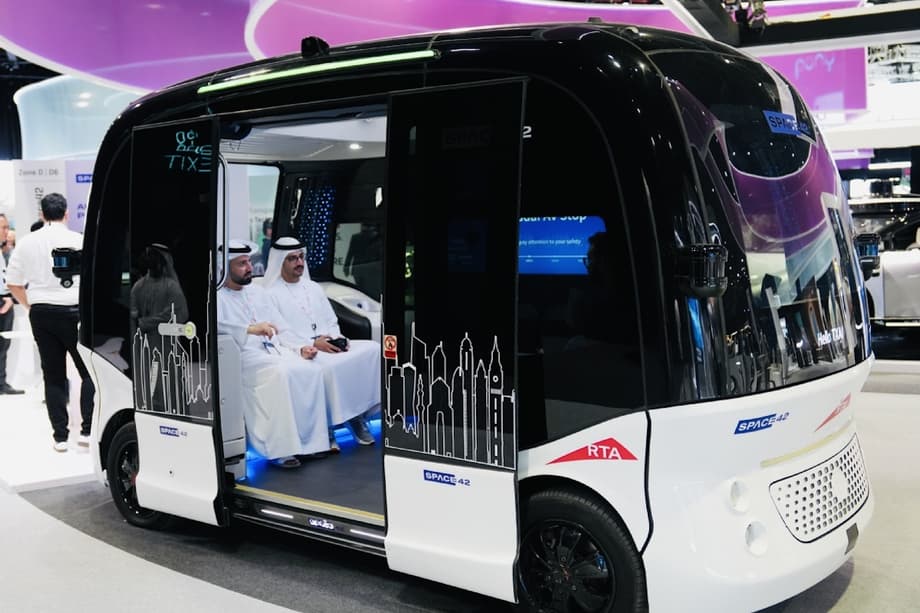
On April 1, 2026, Apollo Go from Baidu opened bookings on its proprietary app in Dubai, marking the first international deployment of the company autonomous ride-hailing platform. Just two days earlier, on March 30, WeRide and Uber had already launched the first fully driverless robotaxi operations in the emirate, allowing passengers to summon vehicles without any human operator present through the familiar Uber interface. These consecutive launches made Dubai the first city outside China where multiple Chinese autonomous driving companies operate fully driverless commercial robotaxi services in parallel.
- The Dubai Double-Launch Signals a New Era
- Escaping the Domestic Price War
- Why the Gulf is Welcoming Chinese Technology
- Three Competing Visions for Driverless Mobility
- The American Absence
- Perfect Conditions for Autonomous Algorithms
- A New Model for Global Expansion
- Geopolitical Risks and Future Frontiers
- The Bottom Line
The vehicles themselves represent distinct engineering approaches. Apollo Go deployed its sixth generation RT6, a purpose built autonomous vehicle developed entirely in house by Baidu. WeRide and Uber rolled out the Robotaxi GXR, built on the Farizon vehicle platform from Geely and powered by Level 4 autonomous driving software from WeRide. Level 4 autonomy means the vehicle can handle all driving tasks in specific conditions without human intervention, though operational design domains may limit where they can travel.
WeRide, founded in Guangzhou in 2017, now operates over 200 robotaxis across the Middle East and notably achieved operational profitability in the region during 2025, a milestone the company has yet to reach in its home market. Apollo Go from Baidu, despite running the largest robotaxi fleet in China, has only recently achieved unit economics break even in its flagship city of Wuhan. The disparity highlights a crucial dynamic: the same brutal domestic competition that erodes margins in China is creating battle hardened companies with advanced technology and aggressive pricing that find overseas markets comparatively welcoming.
Escaping the Domestic Price War
The expansion into the Gulf represents a strategic retreat from a domestic market that has become increasingly hostile to profitability. The electric vehicle sector in China has been locked in a price war since late 2022 that shows no signs of abating. More than 130 brands now compete for market share in electric and plug in hybrid vehicles, with almost none earning positive returns. The consolidation analysts predicted, where smaller competitors would be squeezed out and pricing would normalize, has failed to materialize.
The pressure extends beyond vehicle manufacturing. In food delivery, Meituan, the dominant platform, faces intensifying competition from JD.com and Douyin. This food delivery war has driven down commission rates and delivery fees across the industry. Meituan responded by expanding overseas through its international brand Keeta, which launched in Saudi Arabia in September 2024 and became the kingdom third largest food delivery platform within four months. Just as WeRide and Geely launched robotaxis in Dubai, Keeta Drone obtained the first commercial beyond visual line of sight drone delivery license from the Dubai Civil Aviation Authority in December 2024. Within a year, the company transformed from having no presence in the Gulf to operating drone deliveries in Dubai and commanding significant market share in Riyadh.
The market entry strategy from Keeta mirrors that of EV makers in China: drive down prices through aggressive vouchers and waived delivery fees, capturing market share through low or negative margins. While this approach has stopped delivering competitive advantages at home, where consumers are price saturated and options abound, the same strategy proves effective in less contested overseas markets.
Why the Gulf is Welcoming Chinese Technology
The Gulf has emerged as the preferred destination for this expansion because it offers what the saturated market in China cannot: regulatory openness to new technologies, government partners eager to co invest in smart city infrastructure, and first mover advantages in markets where American and European competitors have been slow to enter. The Roads and Transport Authority of Dubai has established a target of 25 percent autonomous journeys by 2030, a goal reinforced by Vision 2030 from Saudi Arabia, which treats technological modernization as a national priority.
Abu Dhabi launched the Smart and Autonomous Vehicles Industry (SAVI) cluster in 2023 to accelerate development, projecting that autonomous vehicles could add up to AED 120 billion (US$32.67 billion) to the economy and create nearly 50,000 jobs. The emirate aims for 36 percent of all trips to be driverless by 2040. The Vision 2030 initiative in Saudi Arabia plans for 15 percent of public transport vehicles to be autonomous by 2030, while the Kingdom also launched the Future Mobility Sandbox, an autonomous vehicle testing area at the King Abdullah University of Science and Technology.
These policies give Chinese firms a government backed runway that would be far harder to secure in the United States or Europe. Zhang Liang, a general manager in the autonomous driving unit Apollo from Baidu who oversees European and Middle East markets, described the regulatory environment in the UAE as relatively open but careful and pragmatic on details. Speaking at the World New Energy Vehicle Congress in Abu Dhabi, he noted that Chinese companies welcome positive and active competition in the region.
Three Competing Visions for Driverless Mobility
Three major Chinese players are carving out distinct positions in the Gulf robotaxi market, each leveraging different strengths and partnerships.
WeRide holds the strongest current position. The company received the world first autonomous driving license in the UAE for all types of self driving vehicles in July 2023, giving it a commanding first mover advantage. In November 2025, WeRide began fully driverless commercial operations through TXAI, its Abu Dhabi robotaxi service on Yas Island, becoming the first Level 4 autonomous service available on Uber outside the United States. The company expanded into Saudi Arabia in May 2025, launching tests in Riyadh and Al Ula, with commercial services expected by late 2025. WeRide also secured an exclusive partnership with Ras Al Khaimah, the northernmost emirate, to build its entire transport system around driverless cars as the city prepares for a tourism boom surrounding the first casino opening in the UAE in 2027.
Thaha Muhammed Abdul Kareem, a Qatar based independent consultant, offered a succinct explanation for the sudden influx of autonomous vehicle companies to the region.
The Middle East and this kind of market, they already have the infrastructure, they have the capital, they have the ambition, which is very important. So that is why everybody is queuing up here.
His comments reflect the confluence of factors making the Gulf attractive: existing infrastructure, government funding, and explicit targets for automation.
Apollo Go from Baidu represents the second major force. The company plans to introduce 100 fully autonomous RT6 robotaxis in Dubai by the end of 2026, scaling to at least 1,000 by 2028. Apollo Go also partnered with Autogo in Abu Dhabi, aiming to build the largest fully driverless fleet in the city by 2026. Baidu brings significant scale advantages; its vehicles have completed 10 million trips in China as of March without serious traffic accidents, and the RT6 vehicle costs approximately 204,600 yuan ($28,800), making it significantly more affordable than Western alternatives.
Pony.ai, backed by Toyota, constitutes the third competitor. The company signed an agreement with the Roads and Transport Authority of Dubai to begin supervised robotaxi trials in late 2025, with fully driverless operations slated for 2026. Pony.ai aims to ramp up its global fleet to thousands of vehicles within two years and hopes to integrate its robotaxis with metro and tram routes in Dubai. The company recently began mass production of its autonomous robotaxis in partnership with Toyota, planning 1,000 units this year and 3,000 by 2026 across China, Europe, and the Gulf Cooperation Council regions.
The American Absence
While Chinese firms expand aggressively, American competitors remain largely confined to domestic markets. Waymo, owned by Alphabet, operates fully driverless cars in Phoenix, San Francisco, Los Angeles, and Austin, but its international presence remains limited to testing in Tokyo and a planned launch in London. General Motors paused almost all driverless operations from Cruise in late 2023 after a series of safety incidents and regulatory pressure in California, focusing since then on rebuilding safety systems rather than expanding abroad.
Elon Musk, CEO of Tesla, announced during a Gulf tour with United States President Donald Trump that he would bring Cybercab robotaxis to Saudi Arabia, though he provided no specific timeframe. Tesla plans to launch a trial in Austin, Texas by the end of June 2025, aiming to scale to about a thousand vehicles within a few months, but Gulf deployment remains speculative.
The contrast reflects different regulatory and liability environments. Josep Laborda, founder and CEO of Barcelona based transportation consulting group Factual, identified the 2023 Cruise incident in San Francisco, where an autonomous vehicle struck a pedestrian, as a turning point that put United States regulators on high alert and stifled innovation. Chinese companies enjoy government support and a more relaxed regulatory environment at home, allowing them to refine their technology before exporting it to receptive markets abroad.
Perfect Conditions for Autonomous Algorithms
The Middle East offers near perfect conditions for training self driving algorithms. Predictable weather with minimal rain and no snow allows year round testing, while well maintained roads and strict traffic enforcement create the rule based environment autonomous systems require. Shoaib Mohamed, managing director at Dubai based automotive safety solutions provider Resolute Dynamics, emphasized that a rule based roads and infrastructure system is mandatory for autonomous vehicles, suggesting the region might be the best equipped place for such technology to thrive.
Beyond technical conditions, economic factors favor automation. The Gulf relies heavily on migrant workers for taxi and ride hailing services, and high labor costs combined with driver shortages make robotaxis economically attractive. Saudi Arabia and the UAE face specific challenges in staffing transport roles, creating practical demand for autonomous solutions that can ease labor shortage pressures while supporting smart city and green transportation goals.
A New Model for Global Expansion
Chinese companies are pioneering an asset light partnership model for international expansion. Rather than owning and operating entire fleets themselves, firms like WeRide provide the autonomous driving technology and software while local partners handle fleet operations, maintenance, and customer interfaces. Uber serves as the primary platform, giving Chinese robotaxis access to 171 million monthly active users across more than 500 cities.
This approach allows Chinese firms to guarantee data sovereignty to host governments, a crucial concern in an era of increasing digital nationalism. They also offer financing through joint ventures rather than demanding upfront payments, and localize operations extensively. Pony.ai received $100 million from NEOM, the futuristic city project in Saudi Arabia, in 2023, while Dubai awarded WeRide $900,000 for winning the 2025 World Challenge for Self Driving.
Ryan Zhan, regional general manager for the Middle East and Africa at WeRide, explained that working closely with local and federal governments is vital to revise laws, policies, and determine pilot locations. The company continuously seeks to expand into global markets that make business sense, aiming to bring advanced autonomous driving technology to regions where it can deliver maximum social value.
Geopolitical Risks and Future Frontiers
Despite the momentum, challenges remain. Geopolitical tensions pose risks to Chinese investments in the region. The effective closure of the Strait of Hormuz due to regional conflict has already disrupted operations and raised prices for raw materials. Sustained instability could threaten the infrastructure investments and operational continuity these companies depend upon.
Technical and public trust challenges also persist. While early rider adoption has been encouraging, building broader acceptance of driverless vehicles for daily use requires consistent safety records and transparent operations. Scaling from hundreds of vehicles to the tens of thousands projected by 2030 demands massive continued investment.
Looking beyond the Gulf, Chinese firms are targeting Europe. Baidu announced plans to bring autonomous ride hailing services to London, a right hand drive market, while Pony.ai is expanding through its European division headquartered in Luxembourg. The company has signed a non binding memorandum of understanding with Stellantis to accelerate robotaxi development using the medium size van platform from the European manufacturer.
The Bottom Line
- Dubai became the first city outside China to host multiple fully driverless Chinese commercial robotaxi services in April 2026, with Apollo Go from Baidu and WeRide launching consecutive services.
- WeRide operates over 200 robotaxis in the Middle East and achieved operational profitability in the region in 2025, while Baidu plans to deploy 1,000 vehicles in Dubai by 2028.
- Chinese companies are expanding aggressively into the Gulf to escape domestic price wars and overcapacity, finding regulatory openness and government support unavailable in Western markets.
- American competitors including Waymo and Cruise remain largely confined to United States domestic markets due to regulatory pressure, safety incidents, and litigation risks.
- The Gulf offers ideal conditions for autonomous vehicle testing including predictable weather, well maintained infrastructure, and strong traffic enforcement creating rule based environments suitable for AI training.
- Chinese firms are utilizing asset light partnership models with Uber and local governments, providing technology while partners handle fleet operations and funding.