A Silent Epidemic in Southern Punjab
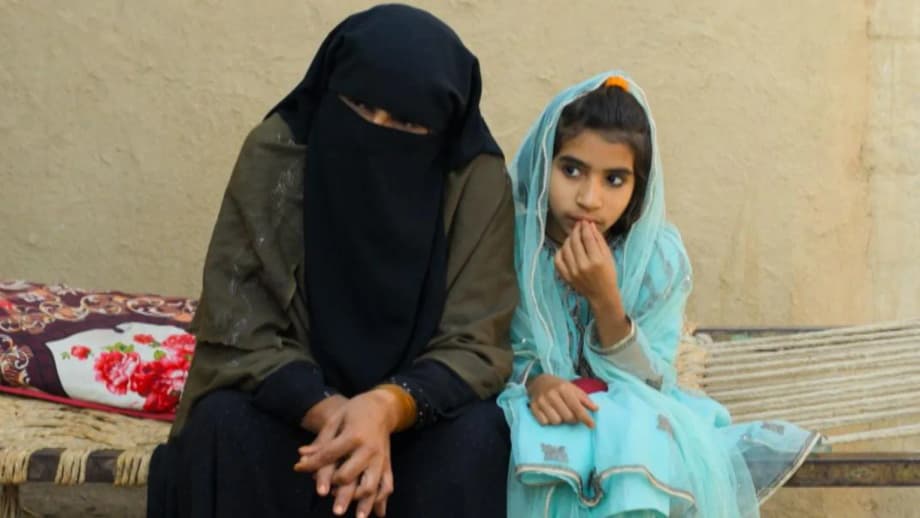
Mohammed Amin was eight years old when he died shortly after testing positive for HIV. His fevers were so severe that the boy insisted on sleeping outside in the rain to cool his burning skin. He writhed in pain like he had been thrown in hot oil, his mother Sughra recalls. His sister Asma, just ten years old, kneels at his graveside in Taunsa, a city in Pakistan’s Punjab province. She remembers how her younger brother used to fight with her, but also how he loved her. Not long after Mohammed Amin contracted the virus, doctors diagnosed Asma with HIV as well.
Their family believes both children were infected during routine medical treatment at the Tehsil Headquarters Hospital, known locally as THQ Taunsa. They are two of 331 children identified by BBC Eye as testing positive for HIV in Taunsa between November 2024 and October 2025. The outbreak has torn through a community where parents once trusted their local hospital to heal their children, not infect them with a lifelong virus.
After a doctor at a private clinic linked the outbreak to THQ Taunsa in late 2024, local authorities promised a massive crackdown. They suspended the hospital’s medical superintendent in March 2025, replacing him with Dr Qasim Buzdar, who pledged zero tolerance for unsafe practices. Buzdar told reporters that HIV prevention was his main focus and that staff had received proper training in infection prevention and control.
But eight months after these promises, BBC Eye investigators went undercover at THQ Taunsa to discover whether conditions had truly improved. During 32 hours of filming across several weeks in late 2025, the team documented dangerous injection practices that continued unabated despite official assurances of reform.
Undercover Evidence of Continued Danger
The footage reveals medical staff reusing syringes on multi-dose vials of medicine on ten separate occasions, creating a clear risk of viral contamination. In four of these cases, medicine from the same potentially contaminated vial was administered to different children. Investigators also filmed staff injecting patients without sterile gloves on 66 occasions, including one instance where a doctor administered injections without proper protection. A nurse was filmed rummaging through medical waste disposal boxes without sterile gloves, violating basic safety protocols.
Most disturbingly, the footage captured a nurse retrieving a used syringe from beneath a counter. The syringe still contained liquid from the previous patient. Rather than discarding the contaminated equipment, she handed it to a colleague, apparently ready for reuse on another child.
To understand why these practices are so dangerous, it helps to understand how HIV transmission works in healthcare settings. When a syringe is used on an HIV-positive patient, the virus can contaminate both the needle and the barrel of the syringe. Even if a medical worker attaches a new needle, reusing the syringe body can transfer the virus into the next patient bloodstream through the medication being injected.
Dr Altaf Ahmed, a consultant microbiologist and one of Pakistan’s leading infectious disease experts, reviewed the undercover footage and explained the mechanism of transmission. Even if they have attached a new needle, the back part, which we call the syringe body, has the virus in it, so it will transfer even with a new needle, he warned.
The risk increases significantly when medications are drawn from multi-dose vials after syringe reuse. Once a vial is contaminated, every subsequent patient receiving medication from that container faces exposure. At THQ Taunsa, most children received injections via cannulas, tubes inserted directly into veins. This method bypasses the body’s natural skin defenses, allowing contaminated medicine immediate access to the bloodstream.
Dr Fatima Mir, professor of pediatric medicine at the Aga Khan University Hospital in Karachi, analyzed the footage and identified broader weaknesses in infection control training across Pakistan. She issued a stark warning to healthcare providers.
We must warn our injectors: You have become an active instrument for passing disease.
A Pattern of Denial and Deflection
When confronted with the undercover footage, Dr Qasim Buzdar, the current medical superintendent at THQ Taunsa, refused to acknowledge its authenticity. He claimed the recordings could have been made before his tenure began or suggested the footage could also be staged. Despite visual evidence of his own hospital’s wards and staff, he insisted his facility was safe for children.
I can say to them with certainty, with confidence, that you should get your treatment done at THQ Taunsa, Buzdar told reporters when asked what message he would send to local parents.
The Punjab government has similarly resisted accountability. In an official statement, local authorities claimed that no validated epidemiological evidence had conclusively established THQ as a source of the outbreak. Instead, they pointed to unregulated private practices and unscreened blood transfusions as contributing factors, citing a joint mission by UNICEF, the World Health Organization, and the regional healthcare department.
However, BBC Eye obtained a leaked copy of that same joint mission’s April 2025 inspection report. The document reveals findings that mirror the BBC investigation, describing conditions as especially concerning in the pediatric emergency room. The report documented that essential pediatric medications were missing, unsafe injection practices were common, IV fluids were being reused, cannulas were unlabeled, and used IV sets were left hanging on stands. Hand hygiene was neglected, with blocked basins and no sanitizers available.
The previous superintendent, Dr Tayyab Farooq Chandio, was suspended in March 2025 when the official case count stood at 106. Within three months, he was working with children again as a senior medical officer at a rural health center in Taunsa’s outskirts. In an interview with BBC Eye, Chandio maintained that he took immediate action after being notified of HIV-positive cases and insisted the hospital was not the cause of the outbreak.
A National Crisis of Unsafe Injections
The Taunsa outbreak is not an isolated tragedy. It represents the latest chapter in Pakistan’s ongoing struggle with unsafe medical injections, a problem that claims lives across the country with disturbing regularity. Pakistan has one of the highest rates of therapeutic injections in the world, with estimates ranging from 8 to 13 injections per person annually, far exceeding the World Health Organization’s recommended levels.
According to peer reviewed research published in the International Journal of Epidemiology and Public Health Research, over 70% of therapeutic injections in Pakistan are administered using unsafe practices. The country carries the second-highest burden of Hepatitis-C infections globally, with 44% of all new infections attributed to unsafe medical injections across 60 representative countries studied by WHO.
In 2019, the town of Ratodero in Sindh province experienced a similar pediatric HIV outbreak that infected more than 1,500 children by 2021. Dr Imran Arbani, the whistle blower doctor who first exposed that scandal, found repeated clinic visits and multiple injections in the medical histories of infected children. New infections continue to occur there even now, six years later.
While BBC Eye was filming in Taunsa, another cluster of cases emerged in Karachi. At Kulsoom Bai Valika Hospital in the SITE Town area, children treated at the government facility later tested positive for HIV. Among them was two-year-old Mikasha. Family members reported that hospital staff used the same syringe on multiple children, filling it repeatedly for different patients.
The federal health minister confirmed that the outbreak of 84 cases in Karachi was triggered by the reuse of contaminated syringes at the hospital. Yet the hospital’s medical superintendent, Dr Mumtaz Shaikh, initially denied the possibility, stating that qualified doctors will never reuse syringes, so we have no concept of such things happening in government hospitals.
Nationally, Pakistan is experiencing its fastest year of HIV case escalation in history. Over 10,000 new infections were confirmed in the first nine months of 2025, with projections suggesting the total could exceed 14,000 by year’s end. Modeling by UNAIDS, WHO, and UNICEF estimates that as many as 40,000 people could contract HIV in Pakistan by the end of 2025, though most may never be diagnosed due to the absence of structured screening systems.
The Economic and Cultural Drivers of Danger
Several structural pressures drive the dangerous overuse of injections in Pakistan’s healthcare system. Culturally, both patients and providers view injections as more powerful and effective than oral medications. Members of the public frequently request injections for themselves and their children, believing they provide quicker relief. For private practitioners, prescribing injections generates additional income, creating a financial incentive to administer unnecessary shots.
Resource shortages in government hospitals compound these risks. Medicines and supplies are allocated through quota systems overseen by superintendents, with set quantities supposed to last entire months. When supplies run short, dangerous cost cutting becomes inevitable. During the undercover filming at THQ Taunsa, investigators found that basic supplies were often missing from wards. Patients who could afford liquid paracetamol were told to bring their own. One nurse complained that they make us account for every little bit of medicine.
The regulatory environment offers little protection. Quackery remains rampant, with unlicensed practitioners operating freely in both urban and rural areas. While the Punjab government claims to have sealed 175 quack run centers in Taunsa, historical patterns suggest these closures are temporary. After the 2019 Ratodero outbreak, authorities initially sealed unauthorized clinics, but they reopened within months after obtaining clearances.
Dr Rafiq Khanani, president of the Infectious Diseases Society of Pakistan, explained that regulatory departments exist only on documents and in offices. Practically, they are ineffective.
Living with the Consequences
For the children and families affected by the Taunsa outbreak, the consequences extend far beyond the initial diagnosis. Asma, the ten-year-old sister of Mohammed Amin, is losing weight and now faces a lifetime of antiretroviral treatment for a virus she should never have been exposed to. The stigma associated with HIV means neighbors often prevent their children from playing with her, leaving her isolated as well as sick.
Asma asks her mother what is wrong with me, struggling to understand why her life has changed so dramatically. Standing at her brother’s grave, she tells reporters that she misses him and believes he is with God now. Despite her illness, she works hard at school and dreams of becoming a doctor when she grows up.
The financial burden crushes already impoverished families. Parents must travel to distant cities for specialized pediatric HIV medications not available locally, spending thousands of rupees per trip. One father from Taunsa told local reporters that he has spent all his savings to save his son. My debt has piled manifold, cattle sold to bear expenditures of X-Ray, ultra-sound, blood transfusion, he explained. The family never imagined such a tragedy would befall them.
The crisis in Taunsa symbolizes a collapse in public health accountability, especially for the most vulnerable members of society. As the case numbers continue to climb and official denials persist, families are left to navigate a future of medical bills, social ostracism, and unanswered questions about how their children became victims of a system meant to protect them.
What to Know
- 331 children tested positive for HIV in Taunsa, Pakistan, between November 2024 and October 2025, with contaminated needles identified as the transmission source in more than half of cases
- BBC Eye undercover investigation filmed medical staff at THQ Taunsa Hospital reusing syringes on multi-dose vials and injecting patients without sterile gloves, eight months after officials promised reforms
- Hospital administrators denied the authenticity of the footage, while the Punjab government claimed no conclusive evidence linked the hospital to the outbreak, despite leaked reports confirming unsafe conditions
- Pakistan has one of the world’s highest rates of therapeutic injections, with 8 to 13 administered per person annually, and over 70% of these injections use unsafe practices
- The country is on track to record over 14,000 new HIV cases in 2025, the highest number in a single year, with outbreaks also reported in Karachi and recurring cases in Sindh province
- Experts recommend mandatory use of auto disable syringes that cannot be reused, extended outpatient hours at government clinics to reduce reliance on private quacks, and community empowerment to question unsafe practices