When a Postcard View Becomes a Burden
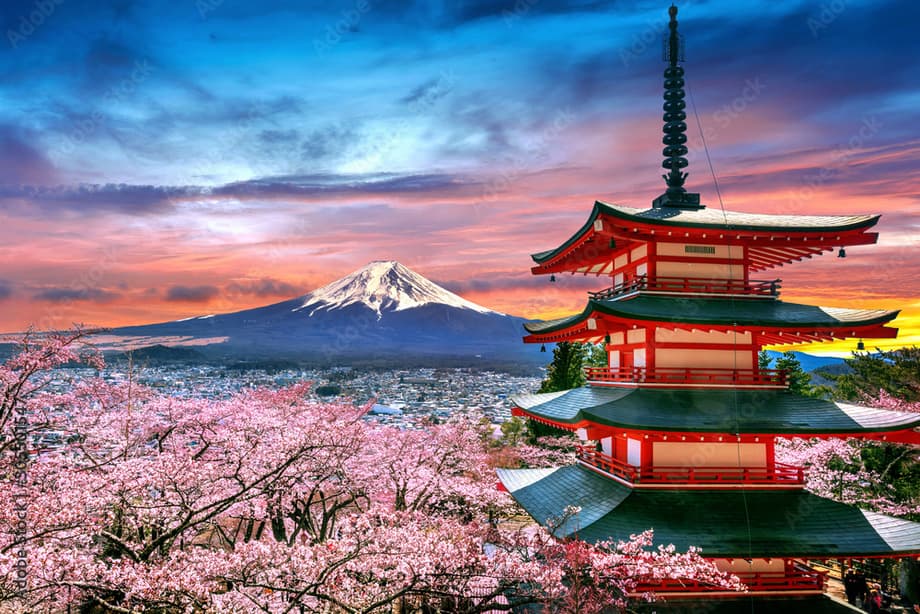
The trouble began with a single photograph. A snow-capped Mount Fuji rising behind a vermillion five story pagoda, framed by delicate pink cherry blossoms against a clear spring sky. The image spread across Instagram and travel blogs, transforming a quiet suburban neighborhood in Fujiyoshida, Yamanashi Prefecture, into a global bucket list destination almost overnight. Tourists arrived by the thousands, armed with cameras and itineraries, eager to capture the exact angle that had captivated the internet.
- When a Postcard View Becomes a Burden
- The Breaking Point: Why Officials Cancelled a Decade Old Tradition
- Beyond Bad Manners: The Specific Costs of Overtourism
- A Nation at Crossroads: Economic Needs Versus Community Peace
- Divided Streets: Residents Caught Between Profit and Peace
- Global Echoes: Fujiyoshida in the Context of Worldwide Overtourism
- What Comes Next: Mitigation Measures and Uncertain Futures
- The Message to Travelers: Respect in the Age of Mass Mobility
- The Essentials
What followed was not the gentle boost of cultural exchange city officials had hoped for when they launched the Arakurayama Sengen Park Cherry Blossom Festival in 2016. Instead, residents found themselves facing an invasion that would ultimately force municipal leaders to make a painful decision. In February 2026, city officials announced the cancellation of the annual festival, citing a crisis of overtourism that had transformed their community into what locals now call “tourism pollution.”
The phenomenon illustrates a growing tension in Japan, where record breaking visitor numbers collide with the reality of residential neighborhoods never designed to host global attractions. As the country grapples with economic pressures and demographic decline, the question of how to balance tourism revenue against residential dignity has reached a breaking point in this town at the foot of Japan’s most sacred mountain. The weak yen has made Japan historically affordable for foreign travelers, while social media algorithms continue to identify and promote photogenic locations to millions of potential visitors instantaneously, creating surges that local infrastructure cannot accommodate.
The Breaking Point: Why Officials Cancelled a Decade Old Tradition
The Arakurayama Sengen Park Cherry Blossom Festival began in 2016 with modest ambitions. City officials opened the park gates during sakura (cherry blossom) season to enhance the area’s appeal, hoping to create a lively atmosphere and draw visitors to a town of roughly 45,000 residents. The panoramic view from the park’s observation deck, featuring the Chureito Pagoda with Mount Fuji in the background, offered what many consider the epitome of traditional Japanese scenery.
For years, the event operated smoothly, drawing manageable crowds who appreciated the cultural significance of hanami, the custom of cherry blossom viewing. However, following the end of the COVID-19 pandemic, visitor figures surged dramatically. During the 2025 festival period, approximately 210,000 visitors descended on the city over 18 days, with daily tallies exceeding 10,000 during peak bloom.
The volume created chaos in the narrow residential streets leading to the park. Traffic congestion became chronic, with vehicles gridlocked for hours. Parents raised alarms as throngs of tourists pushed schoolchildren off sidewalks into roadways, creating dangerous situations during morning commutes. The infrastructure, designed for a quiet suburban lifestyle, simply could not process the human traffic.
Mayor Shigeru Horiuchi addressed the decision with a tone of regret and urgency. In a statement posted on the city’s official website, he explained the rationale behind the cancellation.
For Fujiyoshida City, Mount Fuji is not just a tourist attraction; it is our very way of life. However, I feel a strong sense of crisis about the reality that, behind the beautiful scenery, the quiet lives of citizens are being threatened. To protect the dignity and living environment of our citizens, we have decided to bring the curtain down on the 10 year old festival.
The mayor emphasized that the city had reached its limit, with overtourism exceeding what could be accommodated without sacrificing residential safety and peace.
Beyond Bad Manners: The Specific Costs of Overtourism
While crowd density alone created logistical nightmares, resident complaints focused on specific behaviors that transcended mere inconvenience. The narrow lanes surrounding Arakurayama Sengen Park, lined with modest homes and small businesses, became sites of repeated intrusion and disrespect.
Security guard Hiroaki Nagayama spent the recent blossom season attempting to direct traffic and enforce basic etiquette. His experience illustrates the daily frustrations that accumulated over years of unchecked tourism growth.
I am struggling. I cannot communicate with them in Japanese. Some people buy food at stalls and leave litter behind. I think what is happening here is a typical example of overtourism.
The issues went far beyond language barriers and litter. City officials documented incidents of tourists opening private home doors without permission to use restrooms. When refused entry, some visitors trespassed into residential gardens to relieve themselves, then raised arguments when confronted by homeowners. Cigarette butts accumulated in private yards, and the general disregard for property boundaries left residents feeling violated in their own neighborhoods.
For elderly residents like 93 year old Hitoshi Mori, who lives blocks from the park, the transformation meant altering basic life patterns. “It is too crowded outside so I can only get groceries once a week and stock up on food,” he explained, describing how the simple act of leaving his home became a daunting task during peak season.
The safety concerns extended to the city’s youth. Schoolchildren navigating routes to class found themselves forced into streets as tourists occupied sidewalks, creating hazardous conditions that alarmed parents and administrators alike. The situation reflects a broader national crisis. Japan welcomed a record 42.7 million international visitors in 2025, a 15.8 percent increase over the previous year and the first time arrivals exceeded 40 million. Visitor spending soared to approximately 9.5 trillion yen, making tourism one of Japan’s top economic sectors according to data from the Japan National Tourism Organization.
A Nation at Crossroads: Economic Needs Versus Community Peace
The cancellation in Fujiyoshida highlights a paradox at the heart of Japanese economic policy. While local communities crumble under the weight of visitor numbers, the national government maintains ambitious targets to increase inbound tourism from the current 40 million to 60 million visitors by 2030. Officials view the sector as vital stimulus for an economy facing demographic decline, labor shortages, and sluggish domestic consumption.
This disconnect between national strategy and local reality creates friction at the municipal level. While the central government celebrates tourism’s contribution to gross domestic product, cities like Fujiyoshida, Kyoto, and Kamakura grapple with infrastructure never designed for mass visitation. The weak yen, while boosting national competitiveness, has simultaneously made Japan a bargain destination for international travelers, accelerating growth beyond management capacity.
In Kyoto, traditionally dressed geisha performers report harassment from tourists frenzied for photographs. In Fujikawaguchiko, another town near Mount Fuji, authorities erected a 20 meter black mesh barrier to block a famous convenience store view of the mountain after tourists endangered themselves and others crossing busy roads for photos. The barrier proved effective and, though removed temporarily during a typhoon, authorities warned it could return if crowds did.
The tension extends to Mount Fuji itself. During the 2024 climbing season, the Yamanashi prefectural government introduced entry fees of 5,000 yen for hikers using the most popular routes, alongside daily visitor caps of 4,000 people. These measures represent attempts to apply the user pays principle to resource management, yet they also acknowledge that pure market forces cannot regulate cultural and environmental preservation.
Divided Streets: Residents Caught Between Profit and Peace
The overtourism crisis has split Fujiyoshida’s community into two camps. Some residents, particularly those who have capitalized on the influx, see revitalization where others see only disruption. The economic opportunities presented by 200,000 annual visitors have transformed once shuttered commercial districts into bustling marketplaces.
Kyoko Funakubo, a 60 year old employee at a local hotel and part time vendor selling Fuji themed souvenirs, represents this perspective. She recalls a time when the area seemed destined for decline. “This place used to be almost abandoned, with many shuttered shops. But now, with many stores reopened or new shops that have opened, I feel good seeing this area come alive again.” For business owners and employees in the hospitality sector, the crowds represent salvation from economic obsolescence.
Conversely, longtime residents like Masami Nakamura, who runs a decades old school uniform shop with her husband, view the changes with anxiety. “The sudden flood of visitors is a huge change for people like us who are used to a quiet suburban lifestyle,” she observed. Her hope that tourists will respect local rules and manners reflects a broader desire for boundaries that respect the residential character of the neighborhood.
Even those benefiting from tourism acknowledge the dangers. Funakubo recounts nearly striking a tourist who jumped into the street without looking, illustrating how the economic gains come with increased liability and stress. The division creates complex social dynamics within the community, as neighbors debate whether the financial benefits outweigh the loss of tranquility and safety.
Global Echoes: Fujiyoshida in the Context of Worldwide Overtourism
Japan’s struggle is not unique. Across the globe, destinations are implementing increasingly strict measures to protect residential quality of life from the pressures of mass tourism. Italy has emerged as a laboratory for such restrictions, with Venice charging day trippers entry fees on peak days between April and July, requiring payment of 5 euros if booked in advance or 10 euros for last minute visits. Rome recently introduced a 2 euro charge to access the Trevi Fountain viewing area, with funds directed toward monument upkeep and crowd management.
These measures reflect a growing recognition that tourism, while economically beneficial, carries external costs that municipalities can no longer absorb. The “tourism pollution” described in Fujiyoshida mirrors complaints in Barcelona, where residents have protested the conversion of housing stock to short term rentals, and Amsterdam, which has launched campaigns to discourage disruptive visitor behavior in the city center.
Professor Yoshihiro Sataki of Josai International University, an author specializing in overtourism studies, suggests that Fujiyoshida’s cancellation, while understandable, may be insufficient without structural reforms. He notes that many foreign travelers visit primarily to take photographs, and stopping the festival alone is unlikely to improve the situation greatly. In Europe and the United States, he observes, many sightseeing destinations have adopted entry fees and reservation systems, which visitors have come to accept as necessary components of access to fragile locations.
The global trend points toward managed access rather than open borders for iconic sites. As social media continues to identify and viralize hidden gems, converting them into overnight sensations, the window for unregulated tourism appears to be closing. Destinations are increasingly choosing residents over record breaking visitor numbers, signaling a fundamental shift in how the travel industry operates and how nations balance economic development with cultural preservation.
What Comes Next: Mitigation Measures and Uncertain Futures
Even without the official festival, authorities expect large crowds to descend on Arakurayama Sengen Park when cherry blossoms bloom in April. The city has implemented a series of mitigation measures designed to protect residents while accommodating the inevitable influx. These include increasing security patrols, restricting vehicle access to residential zones, installing temporary toilet facilities, and encouraging visitors to use public transportation rather than private vehicles.
Starting April 1, 2026, the city increased security guard presence and restricted entry of tour buses into the scenic neighborhood, requiring visitors to reach the park on foot. Road restrictions now begin at 7:30 a.m. to match school commuting hours, attempting to separate tourist traffic from daily resident routines. Parking farther from the site has been made cheaper to encourage dispersal and reduce congestion in the immediate area.
City officials emphasize they are not attempting to end hanami, the traditional cherry blossom viewing, but rather to eliminate the promotional activities that amplified visitor numbers beyond sustainable levels. Tourism section chief Mika Katsumata at the city’s Mount Fuji division explains the delicate balancing act. “We are careful that our message does not sound like ‘do not come,’ but communicating that balance is extremely difficult.”
Future solutions may include more aggressive management strategies. The city is considering introducing an admission fee to the observation deck, following the model used for Mount Fuji hiking trails. Reservation systems and daily visitor caps represent additional options under review. However, these measures require infrastructure and staffing that smaller municipalities struggle to fund and maintain.
The Message to Travelers: Respect in the Age of Mass Mobility
For international visitors, the cancellation serves as a stark reminder that access to the world’s most beautiful places carries responsibilities that extend beyond the duration of a vacation. Tourists who descended on Fujiyoshida during early April 2026, despite the festival’s cancellation, encountered hours long waits to reach the observation deck, with lines stretching for three hours during peak bloom.
Some visitors, like Lisa Goerdert from Paris, found the experience manageable despite restrictions, appreciating the organized nature of the crowd control. “It is pretty well organized. When they let you come in, you have like five minutes to take as many pictures as you can, and it was amazing,” she reported after visiting the restricted viewing area.
Others, like Vicky Tran from Melbourne, Australia, who traveled with family and friends, found the crowds prohibitive, unable to reach the pagoda due to congestion. Still, she said she enjoyed the view and the neighborhood from lower vantage points, demonstrating that alternative experiences remain possible even when primary attractions reach capacity.
The city’s official communications now emphasize etiquette and boundaries with increasing urgency. Visitors are urged to use public transport, visit early in the morning to avoid peak congestion, refrain from entering residential areas, and respect private property boundaries. The message is clear: the beauty of Mount Fuji and cherry blossoms remains accessible, but the era of unchecked mass tourism at sensitive locations is ending as communities reclaim authority over their living spaces.
As Japan continues to promote itself as a destination while managing the consequences of its success, Fujiyoshida stands as a cautionary tale about the velocity of modern tourism. The viral photograph that started it all captured a moment of natural and architectural harmony, but the pursuit of that identical image by thousands of individuals simultaneously created discord. The challenge for modern tourism is finding ways to share cultural treasures without destroying the very qualities that make them worth visiting, ensuring that future generations can enjoy both the views and the communities that surround them.
The Essentials
- The city of Fujiyoshida cancelled its decade old Arakurayama Sengen Park Cherry Blossom Festival in February 2026 due to overtourism concerns and resident safety.
- Visitor numbers reached 200,000 during the festival period, with over 10,000 tourists per day at peak times, overwhelming the residential neighborhood.
- Resident complaints included trespassing, public urination in private gardens, littering, traffic congestion, and tourists entering homes without permission to use bathrooms.
- Japan recorded 42.7 million international visitors in 2025, a record high, driven by a weak yen and social media promotion of photogenic locations.
- Despite the festival cancellation, the park remains open with increased security, traffic restrictions, and potential future entry fees or reservation systems under consideration.