A Smaller Workforce Pushes Japan Toward Robots
Japan wants to capture 30% of the global physical AI market by 2040 as a shrinking workforce puts pressure on factories, freight networks, construction sites and elderly care. The Ministry of Economy, Trade and Industry announced the target in March 2026, backed by approximately $6.3 billion in government support under Prime Minister Sanae Takaichi.
Contents
- A Smaller Workforce Pushes Japan Toward Robots
- Why Logistics and Industrial Work Come First
- Safety Gives Automation Another Purpose
- Care Robots Face Demanding Tasks
- A Railway Station Assembled Overnight
- Robot Orders and Computing Investment Grow
- Japan Builds Around Hardware Strength
- Specialist Companies Target Specific Work
- Research Shows Why Skills Still Matter
- Financing and Reliability Shape Adoption
- Other Aging Economies Watch Japan
- The Bottom Line
Physical AI means artificial intelligence operating through machines that can act in the real world. Instead of producing only text or calculations, these systems move goods, control equipment or help perform physical tasks. Japan increasingly sees them as infrastructure needed to keep its economy functioning.
The urgency comes from a population that declined for a 14th consecutive year in 2024. Japan's population of working age is projected to shrink by nearly 15 million over the next two decades. The International Monetary Fund projects that the domestic labor force will fall by some 24 million between now and 2050, a decline immigration is unlikely to offset.
Japan's birth rate stands at roughly 1.4 children per woman, below the 2.1 needed to maintain population stability. Deaths outnumber births by approximately 1,000 people each day. By 2050, nearly 40% of Japanese citizens will be over 65, compared with about 28% today.
Those changes create a structural labor shortage: the economy lacks enough workers to maintain current output, even when employers raise wages. For Japan, the case for robots is shifting from making individual businesses more efficient to keeping essential activities running with fewer people.
The response combines public funding, established manufacturers, specialist startups and new computing investment. Its success will depend on whether machines can perform useful work reliably, safely and at a cost employers can afford.
Why Logistics and Industrial Work Come First
Japan's immediate labor pressures include the 2024 Problem, the name given to disruption associated with new overtime regulations for truck drivers. Introduced in 2024, the rules strictly limited working hours and created logistics bottlenecks throughout the supply chain.
The International Federation of Robotics says mobile robots used in transportation can save drivers up to 25% of their working time by automating loading and unloading. Removing those tasks from a driver's day helps preserve time for moving freight within the legal working limits.
Ally Warson, a partner at venture capital firm UP.Partners, has spent years telling investors that Japan illustrates where physical AI becomes essential. She describes the target as "the jobs no one wants" and points to a large number of industrial vacancies.
There are something like 600,000 unfilled jobs in the industrial space. No one's raising their hand and signing up for it.
Warson's examples include dangerous construction work, washing windows hundreds of feet above the ground and boring tunnels in hazardous conditions. The argument also extends to elderly care, where demand is growing while recruitment remains difficult.
Japan's Ministry of Health, Labor and Welfare recorded only one candidate for every 4.25 positions in elderly care in 2025. That imbalance places pressure on hospitals, nursing homes and services that help older people in their own homes.
Safety Gives Automation Another Purpose
Warson argues that the strongest case for physical AI goes beyond efficiency or lower costs. Machines can take on tasks that put workers at risk, including walking through construction sites at midnight where nails protrude from the ground and responding to leaks at offshore oil and gas facilities.
Such incidents can bring human tragedy and insurance claims worth millions of dollars. Sending a machine into a dangerous location addresses worker safety and staffing shortages at the same time.
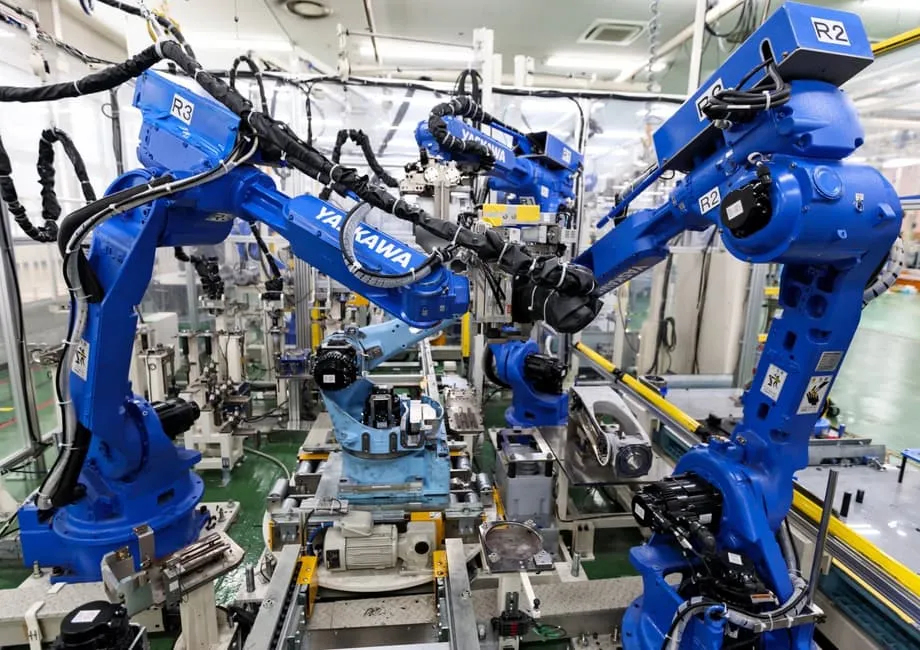
Japan has a long industrial foundation for that effort. It installed its first industrial robots in the late 1960s and currently controls approximately 70% of the global industrial robotics market. The current expansion takes automation beyond its established role in automotive manufacturing and into a wider range of physical work.
Care Robots Face Demanding Tasks
Waseda University researchers have developed AIREC, short for Artificial Intelligence Robot for Elderly Care. The humanoid weighs 150 kilograms and is capable of turning bedridden patients, changing diapers and repositioning bodies to prevent injuries.
Those tasks are essential to care and physically exhausting for the people providing it. They also illustrate why a robot's ability to move accurately matters as much as its ability to process information. A machine helping a patient must coordinate its movements with the physical needs of a person.
The care sector faces several unresolved challenges. Robots need absolute precision around patients, must adapt to environments that are less predictable than factory production lines and remain expensive, particularly in humanoid form. The emotional side of care also includes needs that machines cannot replicate.
Japan's wider familiarity with robotics may help adoption. Decades of automation in manufacturing have normalized people working alongside robots. The concept of monozukuri, or craftsmanship, extends to robotic systems, supporting a cultural acceptance of the technology that runs deeper than in many Western nations.
A Railway Station Assembled Overnight
Construction offers another example of automation moving into practical use. Technology from ABB Ltd helped build Japan's first railway station made using 3D printing, in a project involving Serendix and West Japan Railway Company.
The station was assembled overnight, between the last evening train and the first morning service. Traditional railway station construction can take several months. Robotic automation and manufacturing away from the site allowed assembly to be completed in hours, reducing disruption to railway operations.
Mr. Sato, chief operating officer of Serendix, described the pressures behind the company's approach and the role of mortar in producing the building materials.
The construction industry has been severely impacted by rising labor and material costs, as well as a shortage of skilled workers. Our 3D printer based construction approach can reduce labor costs and produce all building materials from mortar.
The project brings several economic pressures together. Fewer available skilled workers make conventional construction harder to staff, while higher labor and material costs make projects more expensive. Robotic construction aims to reduce those costs while improving precision.
Robot Orders and Computing Investment Grow
The Japan Robot Association reported industrial robot orders of ¥324.5 billion, or $2.2 billion, in the first quarter of 2025. Orders rose 14.2% from a year earlier, producing the strongest quarter since record keeping began in the 1980s.
Export orders, comprising roughly 70% of shipments, are surging from China, South Korea, the United States and Germany. Those markets face demographic pressures of their own, giving Japanese manufacturers opportunities beyond domestic demand even as competition from Chinese firms grows.
Microsoft has announced a $10 billion investment in Japan through 2029. The commitment covers expanded AI infrastructure, cybersecurity cooperation and training for one million engineers by 2030. It comes as Japanese government estimates suggest a shortage of more than three million AI and robotics workers by 2040.
Microsoft is working with SoftBank and Sakura Internet so sensitive data can remain in Japan while organizations access computing systems capable of handling demanding AI tasks. Domestic computing resources combined with Azure cloud platforms would allow organizations to process sensitive information locally while using global AI models and meeting governance requirements.
Brad Smith, Microsoft's vice chair, framed the investment as support for Japan's digital transformation and economic security. The computing expansion supplies part of what physical AI needs behind the machinery: capacity to develop and operate the software directing it.
Japan's recent developments and longer targets span several dates:
- 2024: Japan's population declined for a 14th consecutive year, while new truck driver overtime limits put pressure on freight operations.
- First quarter of 2025: Industrial robot orders reached ¥324.5 billion, rising 14.2% from a year earlier.
- 2025: Elderly care recruitment recorded one candidate for every 4.25 positions.
- March 2026: The Ministry of Economy, Trade and Industry announced its physical AI market target.
- 2029 and 2030: Microsoft's investment runs through 2029, with its engineering training target set for 2030.
- 2040: Japan aims for 30% of the global physical AI market, while government estimates point to a shortage of more than three million AI and robotics workers.
- 2050: The IMF projects a domestic labor force decline of some 24 million, while nearly 40% of citizens are expected to be over 65.
Japan Builds Around Hardware Strength
Japan's strategy draws on strengths that differ from those of its largest competitors. The United States leads in software and market development, while China has advantages in manufacturing scale and cost efficiency. Japan is particularly strong in precision components, including actuators, sensors and motion control systems.
Actuators produce movement, sensors gather information about surroundings, and motion control systems direct how equipment moves. Together, they connect AI software with physical action. A useful robot needs that connection to work reliably.
Sho Yamanaka, a principal at Salesforce Ventures, describes a shift from pursuing efficiency to protecting industrial survival. Japan faces a physical supply constraint: too few workers are available to sustain essential services. With the population of working age shrinking, physical AI has become a matter of national urgency for maintaining industrial standards and social services.
Toyota Motor Corporation, Mitsubishi Electric and Honda Motor bring manufacturing scale, customer relationships and deployment capabilities built over decades. Startups contribute software that coordinates machines, systems that interpret surroundings and automation of work processes.
The resulting structure relies on collaboration between established corporations and younger companies, rather than a technology market dominated by a single winner. Large companies can help bring equipment into industrial use, while smaller businesses develop specialized capabilities.
Ro Gupta, managing director at Woven Capital, identifies cultural acceptance of robotics, demographic labor shortages and strength in mechatronics and hardware supply chains as drivers of adoption. Mechatronics combines mechanical equipment, electronics and control systems, the disciplines needed to turn software instructions into controlled movement.
Specialist Companies Target Specific Work
Mujin illustrates the focus on specialized capabilities. It develops robotics control platforms that allow existing hardware to carry out logistics tasks autonomously. That approach centers on making equipment perform useful work without requiring every machine to be replaced.
WHILL combines electric vehicles with cloud based fleet management for autonomous transport. It uses Japan for hardware refinement and the United States for software development, linking the strengths of the two markets.
Terra Drone applies systems driven by AI that bring together operational data to support autonomous functions in defense and infrastructure applications. Across these businesses, the common aim is to connect information, software and physical equipment around a defined task.
Hogil Doh, a general partner at Global Brain, describes physical AI as a way to maintain continuity: keeping factories, warehouses, infrastructure and service operations running with fewer people. That places reliability during ordinary operations at the center of the business case.
Issei Takino, chief executive of Mujin, stresses that physical AI requires a detailed understanding of the physical characteristics of hardware. Software must work alongside highly specialized control technologies, which take substantial time to develop and carry high costs when they fail.
Japan's hardware foundations therefore give it an advantage as software capabilities spread globally. The challenge is to turn those foundations into systems customers can use repeatedly in real working conditions.
Research Shows Why Skills Still Matter
A peer reviewed study of Japan's early robotization between 1978 and 1991 found that shortages of unskilled factory workers strongly predicted later robot adoption. Shortages of skilled workers had the opposite effect.
The research used newly digitized data at industry level. Its findings suggest that the relationship between labor shortages and automation depends on the occupations involved. Robots can complement specialized human labor, making skilled workers part of the process of introducing and operating automation.
The IMF has also described how Japan's experience may differ from that of other advanced economies. With labor disappearing and immigration limited, automation can support wages and economic growth by helping employers carry out work that would otherwise lack staff.
IMF staff calculations using data at prefectural level found that higher robot density in Japanese manufacturing correlated with gains in local employment and wages. Those results ran in the opposite direction to similar studies in the United States.
Japan's recruitment problem also reaches the technology workforce itself. Microsoft's plan to train one million engineers by 2030 sits alongside the government estimate of a shortage exceeding three million AI and robotics workers by 2040. Building more automated workplaces still requires people who can develop and manage the technology.
Financing and Reliability Shape Adoption
Mizuho Leasing reports rising demand for robotics in hotels, restaurants and convenience stores over the past two years. Applications are now spreading to logistics centers and factories, showing how interest is extending across different kinds of workplaces.
The company sees Japan as a testing ground for demographic pressures that other nations will face. China and South Korea are already experiencing similar contractions, making Japan's experience relevant to economies with their own shrinking workforces.
Across Japanese industry, automation is moving from experimental pilots toward deployments for which customers pay. Doh identifies several practical signs of a maturing market: customers paying for systems rather than suppliers funding trials, reliable operation across full shifts, and measurable results.
Those results include uptime, the amount of time equipment is available to work; human intervention rates, or how often a person must step in; and changes in productivity. These measures show whether a robot can contribute during a normal working day.
High humanoid costs, precision in patient care and the difficulty of handling unpredictable surroundings remain obstacles. The government has announced its market target and support, but no date was given for when the care robot capabilities described would become routine across care services.
Other Aging Economies Watch Japan
South Korea's fertility rate fell to 0.72 in 2024, the lowest of any major economy. Germany's industrial workforce is projected to shrink by seven million by 2035. The International Labour Organization estimates that 14 of the world's 20 largest economies will face substantial manufacturing and logistics labor shortages by 2030.
For Japan, South Korea and Germany, those pressures make robotics a response to the risk that essential work will lack workers. Japan's combination of demographic urgency and industrial experience gives its efforts relevance beyond its own borders.
Bank of America has predicted that people may own more humanoid robots than cars by 2060. That forecast captures the scale of expectations surrounding machines capable of working in environments built for people, although Japan's immediate needs are more concrete: moving freight, supporting care and maintaining infrastructure.
The demographic comparisons also show why overseas demand matters to Japanese manufacturers. Export customers already account for roughly 70% of industrial robot shipments, while the domestic strategy aims to secure 30% of the global physical AI market by 2040. Japan is trying to address its own staffing shortages while selling technology to countries facing related pressures.
By the measures Doh identifies, including paid deployments, full shift operation and measurable productivity, Japan's physical AI sector is moving from experimentation toward an industrial standard. Its central task is to make machines dependable enough to support services and production as fewer people are available to do the work.
The Bottom Line
- Japan's population of working age is projected to shrink by nearly 15 million over the next two decades, increasing pressure on manufacturing, logistics, construction and care.
- The government targets 30% of the global physical AI market by 2040, backed by approximately $6.3 billion in support under Prime Minister Sanae Takaichi.
- Industrial robot orders reached a record ¥324.5 billion in the first quarter of 2025, up 14.2% from a year earlier.
- Microsoft plans to invest $10 billion in Japan through 2029 and train one million engineers by 2030.
- AIREC at Waseda University and the railway station built with robotic 3D printing illustrate automation expanding beyond conventional factory work.
- Research on Japan links robot adoption to labor shortages and, in IMF calculations, local employment and wage gains.
- Reliable operation, affordable costs, skilled staff and safety around people will shape how widely physical AI is adopted.