A Festival Ends, but the Crowds Keep Coming
About 210,000 visitors arrived over 18 days during Fujiyoshida's 2025 cherry blossom festival, overwhelming a Japanese city of roughly 45,000 residents. In February 2026, officials cancelled the Arakurayama Sengen Park Cherry Blossom Festival after complaints about traffic, trespassing, litter and dangers to children walking to school.
Contents
- A Festival Ends, but the Crowds Keep Coming
- How a Photograph Changed a Neighborhood
- The Dates Behind the Decision
- When Crowds Interfere With Daily Life
- Tourism Has Also Brought Shops Back
- Japan's Record Arrivals Meet Local Limits
- Other Japanese Destinations Are Restricting Access
- Fees and Reservations Beyond Japan
- What Changed Around the Park in April
- Visitors Still Found Beauty, and Long Waits
- The Essentials
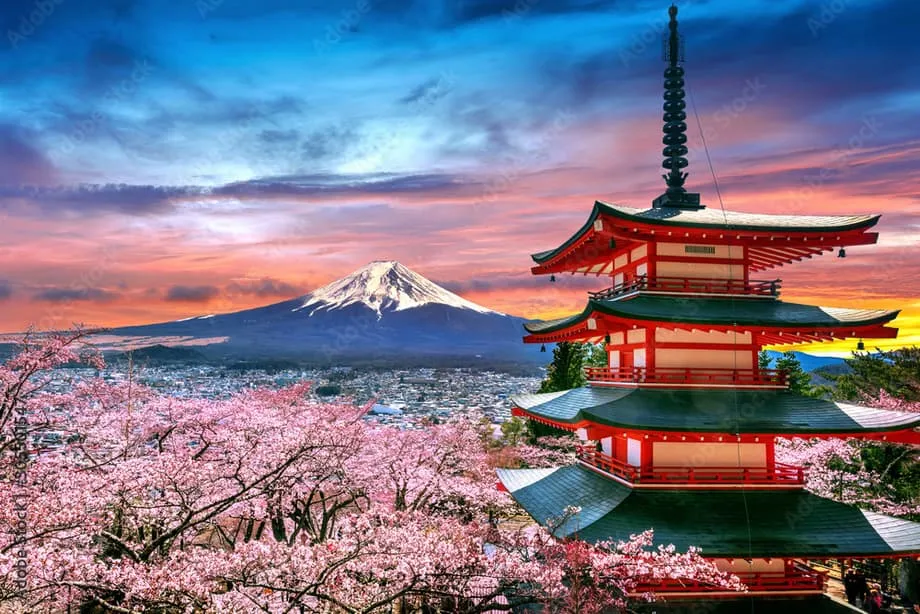
By early April, the cancellation had not stopped visitors from gathering for the park's famous view: a snow covered Mount Fuji behind the vermillion Chureito Pagoda, framed by pink cherry blossoms. Queues for the observation deck stretched to three hours during peak bloom. The park remained open, while the city increased security and tightened access through the surrounding neighborhood.
The decision ended a festival launched in 2016 to bring visitors and activity to the area. It also exposed a difficult choice for a community where tourism has reopened shops and supported jobs, while making everyday errands and school journeys harder for residents.
Mayor Shigeru Horiuchi explained the cancellation in a statement on the city's official website, describing Mount Fuji as part of local life and expressing concern for residents.
For Fujiyoshida City, Mount Fuji is not just a tourist attraction; it is our very way of life. However, I feel a strong sense of crisis about the reality that, behind the beautiful scenery, the quiet lives of citizens are being threatened. To protect the dignity and living environment of our citizens, we have decided to bring the curtain down on the 10 year old festival.
Horiuchi said visitor pressure had exceeded what the city could accommodate while protecting residential safety and peace. Officials are now trying to preserve access to the scenery without continuing the festival promotion that helped draw such concentrated crowds.
How a Photograph Changed a Neighborhood
Fujiyoshida, in Yamanashi Prefecture, became an international destination through an image that spread across Instagram and travel blogs. The composition combined a clear spring sky, Mount Fuji, the pagoda's five stories and delicate blossoms. Travelers arrived with cameras and itineraries, seeking the same angle they had seen online.
Arakurayama Sengen Park's observation deck offered that combination in one panoramic view. For many visitors, it represented an ideal image of traditional Japanese scenery. For the people living along the narrow approaches to the park, its popularity brought thousands of strangers into streets built for everyday suburban life.
City officials began the festival in 2016 with modest ambitions. They opened the park gates during sakura, or cherry blossom, season to make the area more attractive, create a lively atmosphere and bring visitors to the city. For years, manageable crowds enjoyed hanami, the Japanese custom of viewing cherry blossoms.
Visitor numbers rose sharply after the COVID-19 pandemic ended. During the 2025 festival, daily attendance exceeded 10,000 at peak bloom. The approximately 210,000 visits across 18 days amounted to nearly five times the city's population, although that attendance total counted visits throughout the festival rather than people arriving at once.
The weak yen made Japan more affordable for foreign travelers, while social media continued to promote photogenic locations to large audiences. Together, those pressures accelerated demand for places whose streets, toilets and transport arrangements had not been designed for crowds on that scale.
The Dates Behind the Decision
Fujiyoshida's response developed across several years, from promoting blossom viewing to cancelling the festival and managing visitors who continued to arrive. The sequence explains why ending an event did not immediately end congestion.
- 2016: The city launched the Arakurayama Sengen Park Cherry Blossom Festival.
- 2025: Approximately 210,000 visits were recorded during the festival's 18 days, with more than 10,000 visitors a day at peak bloom.
- February 2026: Officials announced the festival's cancellation, citing overtourism and threats to residents' living conditions.
- April 1, 2026: The city increased security guards and restricted tour buses from entering the scenic neighborhood.
- Early April 2026: Visitors continued arriving during blossom season, with waits of up to three hours for the observation deck.
As of April 12, the city's approach was to keep the park accessible while reducing disruption around it. Cancelling the festival removed an organized promotional event, but the mountain, pagoda and blossoms remained a powerful attraction.
When Crowds Interfere With Daily Life
Residents' complaints went beyond busy streets. Vehicles became gridlocked for hours on the narrow residential approaches to the park. Parents reported that tourists occupying sidewalks pushed schoolchildren into roadways during their morning journeys.
City officials documented visitors opening the doors of private homes without permission to seek toilets. Some people who were refused entry went into residential gardens to relieve themselves, then argued with homeowners who confronted them. Cigarette butts accumulated in private yards, while food litter added to the burden of keeping the neighborhood clean.
Security guard Hiroaki Nagayama described the difficulty of directing visitors and enforcing basic rules during the recent blossom season. His account connected communication problems with the waste left behind.
I am struggling. I cannot communicate with them in Japanese. Some people buy food at stalls and leave litter behind. I think what is happening here is a typical example of overtourism.
Overtourism means visitor pressure has become too heavy for a place to manage without harming local life. In Fujiyoshida, that pressure involved both the number of people arriving and behavior that crossed private property boundaries. Residents described the result as "tourism pollution."
Hitoshi Mori, a resident aged 93 who lives a few blocks from the park, explained how the crowds changed an ordinary household routine.
It is too crowded outside so I can only get groceries once a week and stock up on food,
Mori's experience shows the practical cost of congestion for people who do not work in tourism. A street full of visitors can make shopping difficult, while a sidewalk blocked by people taking photographs can turn a routine school journey into a safety concern.
Parents and school administrators were alarmed by children having to enter the road. The city's later decision to begin traffic restrictions at 7:30 a.m. directly addressed the overlap between sightseeing traffic and school commuting hours.
Tourism Has Also Brought Shops Back
Fujiyoshida's residents do not share a single view of the visitor boom. Some see renewed commercial life in an area where shops had closed. Others see a sudden loss of the quiet surroundings they had known for decades.
Kyoko Funakubo, aged 60, works at a local hotel and also sells souvenirs themed around Mount Fuji. She described the change from shuttered premises to reopened shops and new businesses.
This place used to be almost abandoned, with many shuttered shops. But now, with many stores reopened or new shops that have opened, I feel good seeing this area come alive again.
For hotel workers, vendors and business owners, roughly 200,000 visitors during a festival season can mean customers and income in streets that previously appeared to be declining. Those benefits explain why some residents welcome the activity even as they recognize its costs.
Masami Nakamura runs a school uniform shop with her husband that has operated for decades. She described how abruptly the visitor surge changed the neighborhood.
The sudden flood of visitors is a huge change for people like us who are used to a quiet suburban lifestyle,
Nakamura hoped tourists would respect local rules and manners. Her concern was about maintaining boundaries around a residential community, rather than simply removing every visitor.
Funakubo also recalled nearly hitting a tourist who stepped into the street without looking. Even residents who gain financially from tourism face dangerous encounters and additional stress. The debate is therefore more complicated than a division between businesses that welcome visitors and households that oppose them.
Neighbors are weighing income, reopened shops and hospitality jobs against traffic, safety risks and reduced peace at home. Those costs and benefits can fall on the same person, and they are not distributed evenly across the city.
Japan's Record Arrivals Meet Local Limits
Japan welcomed a record 42.7 million international visitors in 2025, up 15.8 percent from the previous year. It was the first time annual arrivals exceeded 40 million. Visitor spending reached approximately 9.5 trillion yen, placing tourism among the country's leading economic sectors, according to data from the Japan National Tourism Organization.
The national government aims to increase inbound tourism to 60 million visitors by 2030. Compared with the 2025 total of 42.7 million, that target would require another 17.3 million arrivals, an increase of about 41 percent.
National officials see tourism as a source of economic activity while Japan faces demographic decline, labor shortages and weak domestic consumption. Spending by visitors helps explain why the government continues to pursue growth even as some popular destinations struggle with existing crowds.
Fujiyoshida, Kyoto and Kamakura face the local side of that policy. Their streets and other infrastructure were not designed for mass visitation. A weak yen has increased Japan's appeal as a bargain destination for foreign travelers, adding demand faster than some communities can comfortably manage.
The tension lies in where the benefits and costs appear. National arrival and spending totals show the scale of tourism's economic contribution. Residents near a famous viewpoint experience the pressure through blocked roads, crowded sidewalks, waste and intrusions into private space.
Fujiyoshida's cancellation illustrates how a city can support tourism as an economic activity while deciding that a particular event attracts more people than its neighborhood can safely accommodate.
Other Japanese Destinations Are Restricting Access
Kyoto's traditionally dressed geisha performers have faced harassment from visitors eager to take photographs. The behavior reflects a problem also seen around Mount Fuji: the pursuit of a picture can take priority over the people who live or work at the destination.
In Fujikawaguchiko, another town near Mount Fuji, authorities erected a black mesh barrier measuring 20 meters to block a popular view of the mountain behind a convenience store. Visitors gathering for photographs had endangered themselves and others by crossing busy roads.
The barrier proved effective. Authorities temporarily removed it during a typhoon, but warned it could return if the crowds came back. Its purpose was to reduce the dangerous concentration of people at a specific photography spot.
During the 2024 Mount Fuji climbing season, Yamanashi's prefectural government introduced entry fees of 5,000 yen for hikers on the most popular routes, alongside a daily limit of 4,000 people. These controls applied the principle that users should contribute to managing the place they visit.
A fee and a visitor cap serve different purposes. A fee asks visitors to help meet management costs. A cap limits how many can enter, even when more people are willing to pay. Both are ways to regulate pressure on a destination rather than leaving access entirely to demand.
Fujiyoshida is considering whether a charge for its observation deck could help manage the park. The experience elsewhere around Mount Fuji has made paid or restricted access part of the discussion about protecting scenery, cultural places and surrounding communities.
Fees and Reservations Beyond Japan
Venice charges people making day trips an entry fee on peak days between April and July. The charge is 5 euros when booked in advance and 10 euros for visits booked at the last minute. Rome recently introduced a fee of 2 euros to enter the Trevi Fountain viewing area, with money directed toward monument upkeep and crowd management.
Barcelona's residents have protested the conversion of housing into rentals for short stays. Amsterdam has run campaigns intended to discourage disruptive visitor behavior in its city center. Although the problems differ, each city is responding to tourism costs that affect people living there.
Municipalities must pay for cleaning, crowd control and upkeep, while residents can lose access to housing or find familiar streets difficult to use. Tourism brings spending, but the expense and disruption of handling visitors can extend beyond the businesses receiving that money.
Yoshihiro Sataki, a professor at Josai International University and an author specializing in overtourism studies, argues that cancelling Fujiyoshida's festival alone is unlikely to improve conditions greatly. Many foreign visitors come primarily to take photographs, so their reason for visiting survives the event's cancellation.
Sataki points to sightseeing destinations in Europe and the United States that use admission fees and reservations. Visitors have come to accept those systems as part of gaining access to places under pressure.
Reservations allocate visits to particular times, while entry limits control numbers. Such measures address the concentration of visitors more directly than removing a festival from the calendar. Fujiyoshida's experience places it within a wider move toward managed access to heavily visited locations.
Social media can rapidly turn a little known viewpoint into a destination sought by travelers worldwide. For local authorities, that speed leaves less time to prepare roads, toilets and staffing before crowds arrive. Communities are increasingly putting residential living conditions ahead of further records in visitor numbers.
What Changed Around the Park in April
Fujiyoshida expected substantial crowds during April's cherry blossom season despite cancelling the festival. Its response included more security patrols, restrictions on vehicles entering residential areas, temporary toilets and requests for visitors to use public transport instead of private vehicles.
From April 1, 2026, the city increased the presence of security guards and restricted tour buses from entering the scenic neighborhood. Visitors were required to approach the park on foot. Road restrictions began at 7:30 a.m. to coincide with school commuting hours and reduce conflict between tourist traffic and children heading to class.
Parking farther from the park was made cheaper to encourage drivers to leave vehicles away from the immediate approaches. That measure sought to spread traffic rather than concentrate it beside the attraction.
Mika Katsumata, the tourism section chief in the city's Mount Fuji division, explained the difficulty of telling visitors that the festival had ended without presenting the city as closed to tourism.
We are careful that our message does not sound like 'do not come,' but communicating that balance is extremely difficult.
Officials said they were not trying to end hanami. They wanted to remove promotional activities that had pushed attendance beyond sustainable levels while protecting the neighborhood around an open park.
The city was considering an admission fee for the observation deck, along with reservations and daily visitor limits. No final decision or implementation date was given for those options. Such arrangements would require infrastructure and staff, which smaller municipalities can struggle to finance and maintain.
The immediate measures focused on security, toilets and traffic. The longer discussion concerned how many people the site could accommodate and how their visits might be organized.
Visitors Still Found Beauty, and Long Waits
Visitors arriving in early April encountered queues lasting as long as three hours for the observation deck. The continued demand supported Sataki's view that cancelling an event would not remove the appeal of the photograph itself.
Lisa Goerdert, a visitor from Paris, found the crowd control manageable and appreciated the organization. She described a brief period for taking photographs after entering the restricted viewing area.
It is pretty well organized. When they let you come in, you have like five minutes to take as many pictures as you can, and it was amazing,
Vicky Tran, visiting from Melbourne, Australia, with family and friends, could not reach the pagoda because of congestion. She nevertheless enjoyed the view and neighborhood from lower vantage points. Her experience showed that visitors could still find worthwhile views away from the busiest destination.
The city's communications urged travelers to use public transport, arrive early in the morning to avoid peak congestion, stay out of residential areas and respect private property. Those requests addressed the problems residents had described, from blocked routes to people entering gardens and homes.
Fujiyoshida's predicament is about sharing access to scenery without overwhelming the community surrounding it. A photograph brought attention to the harmony of Mount Fuji, a pagoda and cherry blossoms. Thousands of people seeking that same image at once created pressure on streets where families shop, children walk to school and businesses operate.
As of April 12, the festival had ended, but blossom viewing continued. The city's task was to preserve the economic benefits and public enjoyment of the area while restoring safety and peace for the people who live there.
The Essentials
- Fujiyoshida cancelled the Arakurayama Sengen Park Cherry Blossom Festival in February 2026 after a decade of operation.
- The 2025 festival attracted approximately 210,000 visits over 18 days, with more than 10,000 visitors daily at peak bloom.
- Residents reported traffic congestion, dangerous school routes, litter, trespassing and visitors seeking toilets inside private homes.
- Tourism reopened shops and supported hospitality work, leaving residents divided over its benefits and costs.
- Japan recorded 42.7 million international visitors and approximately 9.5 trillion yen in visitor spending in 2025.
- From April 1, Fujiyoshida increased security and restricted tour buses, with road controls beginning at 7:30 a.m.
- The park remained open, and early April visitors faced waits of up to three hours for the observation deck.
- Admission fees, reservations and daily limits were under consideration, with no final decision or start date announced.