Airport road changes move from trials to the streets
Japan is introducing colored turning lanes, rubber posts and clearer signs near three major airports after injury crashes involving foreign drivers in rental cars reached 212 in 2025. In Hokkaido, police recorded another 37 such crashes through October 2026, already exceeding the island's 30 cases for all of last year.
Contents
- Airport road changes move from trials to the streets
- What the accident figures show
- Why right turns are a particular danger
- What drivers will see near the airports
- Hokkaido faces a difficult winter
- Mount Fuji communities face hundreds of smaller collisions
- Rental counters become the first safety checkpoint
- What happens next
- Key Points
The Ministry of Land, Infrastructure, Transport and Tourism is beginning with roads around New Chitose Airport in Hokkaido, Fukuoka Airport and Naha Airport in Okinawa. Measures at seven locations around New Chitose were in place by mid October, while work near Fukuoka and Naha is planned within the fiscal year ending March 2027.
The ministry's July 17 announcement describes a move from experimental measures to wider implementation. The first locations include intersections on major routes linking airports with tourist destinations, where visitors must quickly adjust to driving on the left.
The practical aim is simple: make the correct route through an intersection easier to follow before an unfamiliar driver turns into the wrong lane. Rental counters, police and tourism officials are also expanding explanations of stop signs, winter driving and what to do after a collision.
The national total rose from 134 crashes in 2016 to 212 in 2025, an increase of about 58%. Local figures show another part of the problem: collisions that damage walls, curbs and other property can place a much larger burden on popular destinations than national injury figures alone convey.
What the accident figures show
The transport ministry counts 212 rental car crashes in 2025 involving foreign drivers holding international driving permits or foreign licenses, compared with 47 in 2020. That is more than four times the earlier total.
The Cabinet Office's 2025 traffic safety white paper gives the preceding year's figure as 171. The increase from 171 in 2024 to 212 in 2025 was about 24%.
Japan's visitor numbers also recovered sharply over this period. The white paper records about 36.87 million international visitors in 2024, compared with about 4.12 million in 2020. The Japan Tourism Agency is now collecting information about rental use, routes and driving concerns to help authorities assess where intervention is needed.
The white paper also tracks a broader population of foreign drivers, including residents. Accidents involving foreign drivers rose from 5,441 in 2020 to 7,286 in 2024. At the end of 2024, Japan had 3,768,977 foreign residents, and 1,254,522 foreign nationals held Japanese driving licenses, about 27.3% more than in 2020.
Each set of figures describes a different group. The national rental car series focuses on drivers using international permits or foreign licenses. Local police also record property damage, while some research counts crashes in which visiting drivers were judged most responsible. Those definitions help explain the different totals seen across tourist destinations.
Why right turns are a particular danger
A transport ministry analysis found that 24% of rental car crashes involving foreign drivers occurred during right turns, compared with 9% for Japanese drivers. The share was about 2.7 times as high.
Japan's traffic keeps left, so a driver turning right must cross the path of oncoming vehicles before entering the left side of the new road. Someone accustomed to traffic keeping right may instinctively aim for the wrong side after completing the turn.
The Institute for Traffic Accident Research and Data Analysis identifies other difficulties, including unfamiliar ways of checking for hazards, language barriers and limited knowledge of local roads. A driver must understand the sign, watch other vehicles and choose the correct lane almost at once.
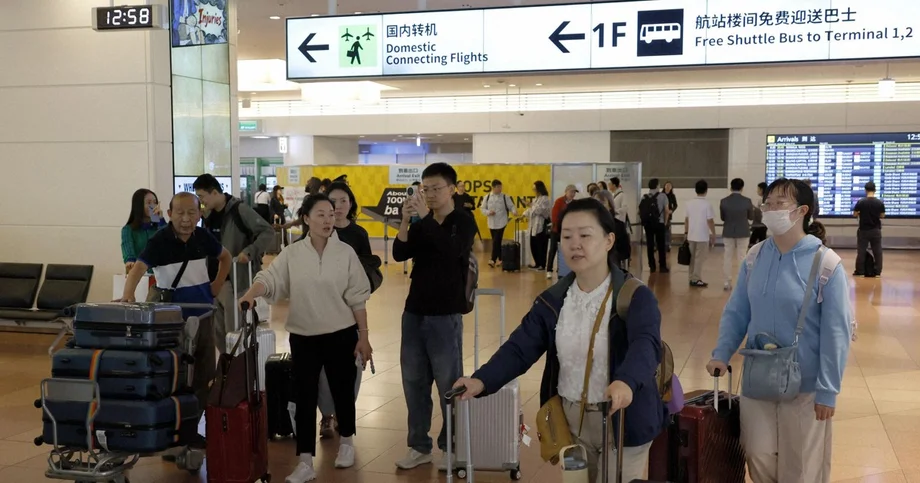
Tyler David, an Australian tourist visiting with his family, described the pressure before his first drive in Japan from Nissan Rent a Car's Haneda Airport branch in late September.
Japan's roads are crowded, and I have to watch out for unfamiliar road signs,
David listened to staff instructions before setting off for Akigawa Valley in western Tokyo. His concern illustrates why explanations extend beyond which side of the road to use: signs, traffic density and unfamiliar routes can challenge visitors from countries that also drive on the left.
What drivers will see near the airports
Colored pavement will trace the intended path of a right turn. Rubber posts will help discourage drivers from crossing into lanes used by oncoming traffic. Signs near clusters of rental businesses will remind customers to keep left as they begin their journeys.
New Chitose, Fukuoka and Naha were selected because they serve many visitors renting vehicles, including a large share arriving from places where traffic keeps right. Major routes around the airports also include national highways managed directly by the central government, giving the ministry locations where it can carry out the work.
Officials planned to analyze traffic during the busy summer season before selecting detailed measures. The July announcement sets out implementation within the fiscal year, and subsequent developments in Hokkaido show that installation has begun. Exact completion dates for the Fukuoka and Naha measures have not been announced.
The changes build on earlier experiments using ETC2.0, an electronic toll system that can also provide vehicle movement data. Sudden braking can help identify locations where drivers encounter unexpected danger or become confused.
The ministry says earlier trials produced reductions in sharp braking. A trial launched in 2017, using warning signs at locations identified through vehicle data, recorded a reduction of about 60%. Earlier data collection included 36 rental cars equipped with ETC2.0 in Okinawa and 50 vehicles fitted with driving recorders in Kyushu.
Hokkaido faces a difficult winter
Hokkaido's 37 injury crashes involving foreign rental car drivers through October 2026 left 50 people dead or injured, according to police. The total had passed the 30 crashes recorded in 2025 before the busiest winter rental period began.
A collision in Furano on July 20 killed a Chinese woman in a rental car. The vehicle, driven by a visitor from Hong Kong, collided head on with a passenger car on a national highway. In another incident in mid July, a rental car carrying five Chinese nationals collided with a train at a crossing on the JR Furano Line in Kamifurano.
The Hokkaido rental car association federation says use by foreign visitors peaks from December through February. In fiscal 2025, it recorded about 160,000 uses by foreign customers, with travelers from Asia, including Taiwan and Thailand, accounting for roughly 80%.
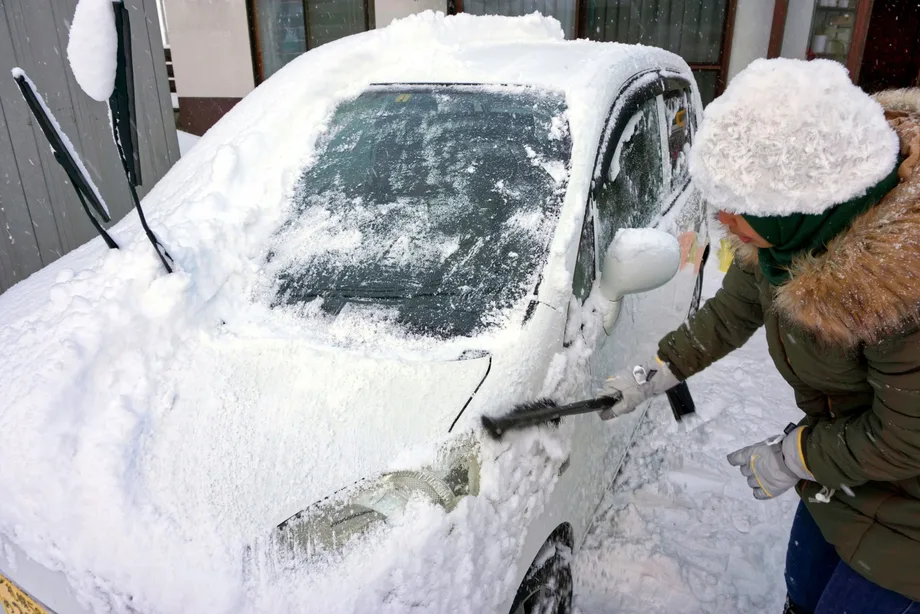
Snow adds another unfamiliar task. Hokkaido police and rental businesses use short educational videos showing winter road dangers, while the rental association is preparing information in foreign languages. Authorities have also encountered rental vehicles stranded because they lacked winter tires.
Hokkaido police have used English STOP markings and signs around airports and tourist areas since 2017. The wider road safety picture remains useful context: of 8,743 injury accidents in Hokkaido in 2024, visiting foreign tourists were judged most responsible in 21, or about 0.2%.
Mount Fuji communities face hundreds of smaller collisions
Fujiyoshida, a popular base for views of Mount Fuji, shows the scale of damage below the national injury totals. Police recorded 770 property damage accidents caused by foreign tourists in rental cars within the local police station's jurisdiction in 2024, up from 216 in 2019.
That was about 3.6 times the earlier figure. Many involved a single vehicle hitting a curb, wall or another object. Residents have raised concerns with police and the city government.
Fujiyoshida police produced an English safety leaflet, followed by versions in Chinese, Korean and Thai. Illustrated guidance explains stop signs, pedestrian priority at crossings and the requirement to call police on 110 after an accident.
Yamanashi police also share accident analysis with rental companies and municipalities. That work has supported foreign language booklets, maps explaining driving rules and additional parking near tourist attractions. Parking provision matters because officials also report illegally parked and abandoned rental cars at destinations.
Okinawa faces substantial pressure as well. It recorded 46 of the 212 national injury crashes in 2025. Earlier institute research covering the five years through 2018 found that Okinawa and Hokkaido together accounted for about 80% of the tourist rental car accidents it studied, with right turn crashes prominent in Okinawa and intersection and rear end collisions common in Hokkaido.
Rental counters become the first safety checkpoint
Nissan's Haneda Airport branch serves as many as 30 to 40 groups of foreign customers a day during busy periods, according to its operator, Yokohama based Nissan Car Rental Solutions. Staff have received increasing reports of property damage and traffic violations involving foreign customers.
The branch distributes brochures in English, Chinese and other languages explaining road rules, precautions and penalties. Elsewhere, companies have introduced navigation guidance in English, Chinese and Korean, and some in Okinawa and Hokkaido have promoted magnetic notices identifying an unfamiliar foreign driver.
Police education is reaching beyond the three airports. On November 16, 2026, Ibaraki Prefectural Police officers and others distributed English leaflets at a rental shop outside JR Mito Station to foreign tourists visiting the prefecture.
National changes have been under way for years. An April 2017 amendment to the order governing road signs and markings allowed English wording alongside Japanese on stop signs and certain other regulatory signs. The transport ministry has also been improving English on direction signs.
The Immigration Services Agency provides transport information in 19 languages, including easy Japanese, covering road rules, licenses and responses to accidents. Rental demand had already been growing well before the recent tourism recovery: ministry figures show rentals by foreigners rising from about 179,000 in 2011 to 705,000 in 2015, nearly fourfold.
What happens next
The Japan Tourism Agency began surveying foreign visitors in August about rental car use and concerns while driving. Results are expected by the end of fiscal 2026, in March 2027. Officials want to understand where visitors collect vehicles, where they travel and which problems need attention.
The sequence of policy decisions and local action is:
- April 2017: Japan amended its road sign rules to allow English wording on stop signs and certain other regulatory signs.
- July 17, 2026: The transport ministry announced wider safety measures around New Chitose, Fukuoka and Naha airports.
- August 2026: The tourism agency began its survey of foreign visitors' rental car use and driving concerns.
- By mid October 2026: Measures were installed at seven locations around New Chitose Airport.
- November 16, 2026: Police and others distributed English driving guidance outside JR Mito Station.
- By March 2027: The government aims to implement the remaining airport measures and complete the tourism survey.
The tourism agency and the ministry's Road Bureau will use the survey and experience at the first locations to consider further measures and expansion to other regions. For visitors, the immediate changes are more visible guidance at difficult intersections and more instruction before collecting a car. For residents, the goal is fewer collisions, blocked roads and damaged properties along busy tourism routes.
Key Points
- Japan recorded 212 injury crashes involving foreign rental car drivers in 2025, up from 171 in 2024 and 134 in 2016.
- Colored road surfaces, rubber posts and signs are being introduced around New Chitose, Fukuoka and Naha airports.
- Right turns accounted for 24% of foreign drivers' rental car crashes in a ministry analysis, compared with 9% for Japanese drivers.
- Hokkaido recorded 37 such injury crashes through October 2026, exceeding its total of 30 in 2025.
- Fujiyoshida recorded 770 property damage accidents caused by foreign tourists in rental cars in 2024, compared with 216 in 2019.
- A tourism agency survey is due by March 2027 and will help guide further safety measures.