Thirteen New Projects Bring the Investment Pipeline to $40 Billion
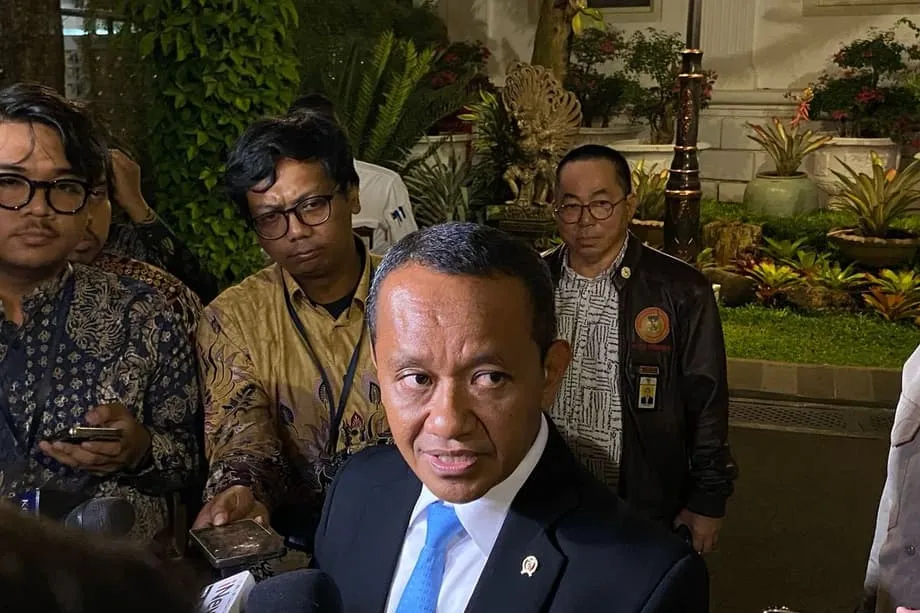
Indonesia is adding 13 industrial projects worth about Rp 239 trillion ($14 billion) to its push to process more of its natural resources at home. Energy and Mineral Resources Minister Bahlil Lahadalia announced the investment pipeline after meeting President Prabowo Subianto at the presidential residence in Bogor, West Java.
Contents
- Thirteen New Projects Bring the Investment Pipeline to $40 Billion
- Why Danantara Is at the Centre of the Programme
- Smelters and Biofuel Plants Move Into Construction
- Balikpapan Expands the Domestic Fuel Supply
- Seventeen Modular Refineries Add a Regional Focus
- Battery Manufacturing Meets a Recycling Expansion
- Trade Agreements Connect Processing to Overseas Markets
- Automakers and Domestic Demand Support the Battery Push
- Power Supply and Charging Infrastructure Need to Grow
- Key Points
The new projects join an initial portfolio of 20 projects worth approximately $26 billion, overseen by Danantara, Indonesia's sovereign wealth fund. Together, the two waves represent about $40 billion in planned investment across mining, energy, agriculture and advanced manufacturing, making the programme one of Southeast Asia's most ambitious industrialisation efforts.
Bahlil, who leads the ministry responsible for energy and mineral resources, described the additional investment after the Bogor meeting:
We are adding 13 downstream projects with a total investment of around Rp 239 trillion.
Downstream processing means turning a raw material into something further along the production chain. Instead of selling ore that another country turns into metal, Indonesia wants to make the metal itself. The same principle applies to converting agricultural products into fuel and mineral resources into battery materials.
The government wants this shift to increase export earnings, create skilled jobs and strengthen domestic energy security and food production capacity. Indonesia has the world's largest nickel reserves, extensive bauxite deposits and abundant agricultural land, yet historically shipped many of those resources abroad without processing them.
The announcement expands an investment pipeline. Several projects in the earlier portfolio have entered construction, while the additional 13 projects represent the next wave of the government's industrial programme.
Why Danantara Is at the Centre of the Programme
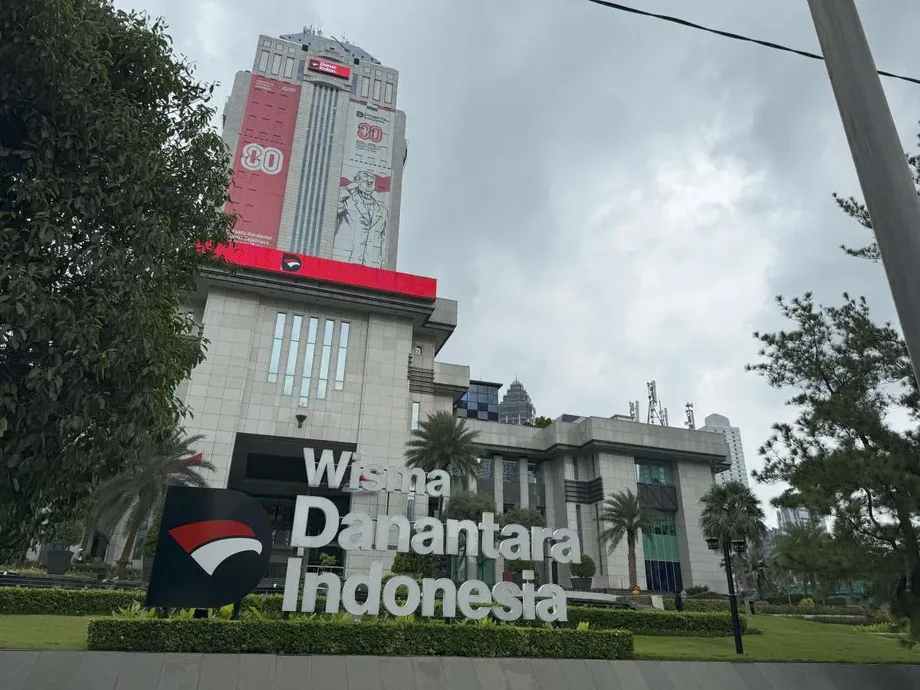
Danantara was established to manage strategic state investments and consolidate oversight of major state enterprises. Its responsibilities include coordinating industrial initiatives previously managed by separate ministries, bringing projects involving different sectors under a central investment structure.
The fund also oversees major state enterprises including Pertamina, Indonesia's state energy company. This arrangement is intended to make decisions faster when a project needs cooperation across businesses, ministries and industries.
A refinery, for example, needs investment, crude oil supplies, engineering work and a market for the fuel it produces. A battery operation needs mineral processing, manufacturing technology and customers. Danantara's role is to coordinate state resources and attract foreign partners for projects with these connected requirements.
Indonesia's strategy requires large amounts of capital and the transfer of technology. Building a smelter or battery factory means acquiring the equipment and knowledge needed to turn resources into products that buyers can use. The government expects domestic processing to keep more industrial expertise and economic value inside the country.
Higher value exports could increase state revenues and reduce the economy's exposure to swings in raw commodity prices. The programme also seeks to retain more of the production chain within Indonesia, instead of leaving later processing and manufacturing stages to overseas businesses.
Smelters and Biofuel Plants Move Into Construction
Mempawah in West Kalimantan is among the locations where projects from the initial $26 billion portfolio are already taking shape. An aluminium smelter there will add value to Indonesia's bauxite resources by supporting domestic metal production instead of exports of raw ore.
Cilacap in Central Java hosts an aviation biofuel facility, while a bioethanol plant is being developed in Banyuwangi, East Java. Both projects apply the same processing strategy to agricultural resources, turning feedstocks into fuels with greater commercial value.
Bioethanol is a fuel produced from agricultural materials. The Cilacap and Banyuwangi initiatives are intended to provide alternatives for Indonesia's aviation and automotive sectors while reducing dependence on imported fuel.
Domestic production can also create additional demand for crops, supporting farmers who supply the feedstocks. By producing these fuels inside Indonesia, the government seeks to reduce exposure to changes in global oil prices and build greater energy self sufficiency.
Mempawah's location also reflects the effort to spread industrial development beyond Java. Resource rich outer islands are expected to gain economic opportunities from facilities that process materials closer to where they originate.
The three construction projects show how the programme extends across different industries. Refined metals, aviation fuel and bioethanol serve different customers, but each involves moving beyond the sale of an unprocessed resource.
Balikpapan Expands the Domestic Fuel Supply
The Balikpapan refinery in East Kalimantan, inaugurated in January, now produces 5.6 million kilolitres of gasoline and 4.5 million kilolitres of diesel annually. Those volumes strengthen the country's domestic fuel supply and support the government's effort to improve national reserves.
Bahlil addressed fuel availability during a subsequent press briefing. The energy and mineral resources minister said stocks exceeded the national standards for the main fuels used by households, transport and industry:
Our fuel reserves are above national standards for diesel, gasoline, aviation fuel, and LPG.
LPG, or liquefied petroleum gas, is among the energy products included in Indonesia's supply arrangements. The minister's statement covered LPG alongside diesel, gasoline and aviation fuel, although he did not give the individual stockpile volumes.
Greater refining capacity allows Indonesia to change what it imports. Instead of buying as much finished gasoline or diesel, the country can purchase cheaper crude oil and process it domestically. The intended benefit is to keep more of the refining work and value within Indonesia.
The government links that change to potential savings in an energy budget that allocates approximately $50 billion annually to subsidies, including direct fuel subsidies and indirect costs associated with distribution logistics. Refining capacity and the cost of moving fuel between islands both matter to that effort.
Seventeen Modular Refineries Add a Regional Focus
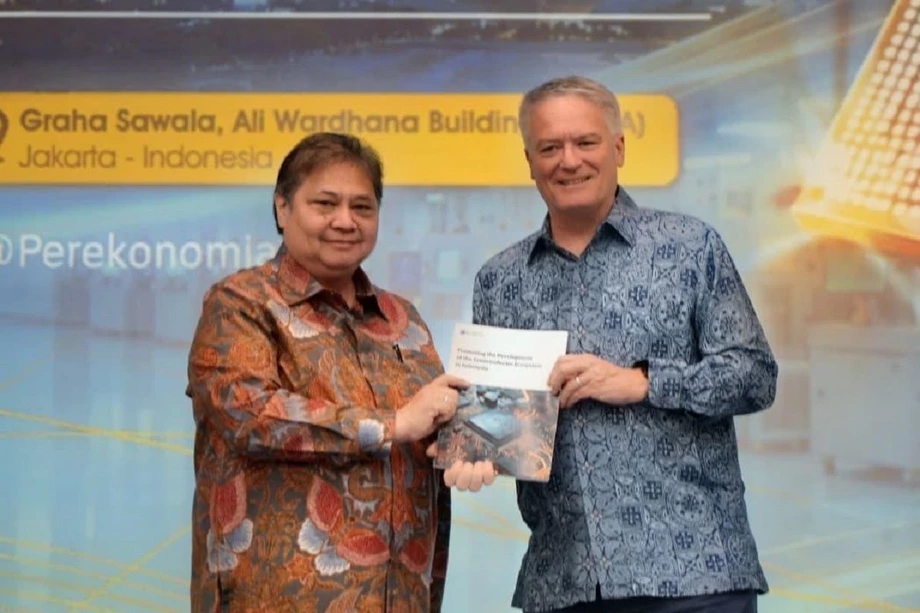
Indonesia has secured an $8 billion partnership with American engineering firms to build 17 modular refineries across Sumatra, Kalimantan, Java and eastern Indonesia. Coordinating Minister for Economic Affairs Airlangga Hartarto confirmed that Danantara and an engineering, procurement and construction company based in Texas will participate. The company's name was not given.
A modular refinery uses a smaller processing setup than a large central refinery. Indonesia plans to use this approach to serve regional markets directly, reducing the distances fuel must travel across the archipelago.
Transport costs are an important part of the programme's logic. Moving fuel between islands adds to distribution expenses and consumer prices. Facilities located nearer to regional customers are intended to reduce those costs while expanding the country's ability to process crude oil.
The modular projects complement Balikpapan's increased output. Balikpapan strengthens production from a major refinery, while the proposed network spreads additional processing capacity across several parts of the country.
The $8 billion refinery partnership is a separate investment figure from the $14 billion announced for the 13 new downstream projects. It forms part of the wider effort to expand domestic energy processing and reduce the burden associated with imported fuel and its distribution.
Battery Manufacturing Meets a Recycling Expansion
Indonesia is advancing an electric vehicle battery project valued at IDR 96.04 trillion ($5.9 billion). It includes a lithium-ion manufacturing facility in Karawang, West Java, with annual capacity planned to expand from 10 gigawatt-hours to 20 gigawatt-hours and production of more than 32.6 million battery cells each year.
A gigawatt-hour measures the amount of energy batteries can store. For this project, the planned increase from 10 to 20 gigawatt-hours means doubling the annual capacity measured by energy storage. Battery cells are the individual units assembled into larger battery packs.
Chinese recycling specialist GEM Company plans to invest up to $8 billion in a battery recycling hub within the Indonesia Green Industrial Park in Morowali, Central Sulawesi. Its first phase, valued at $2 billion, focuses on recycling with zero emissions and recovering lithium, cobalt and rare earth materials from used electric vehicle batteries.
GEM already operates in the region through its QMB joint venture. The company's existing recycling record includes processing more than 10% of China's used batteries and electronic waste.
Manufacturing and recycling address different stages of the battery's life. Karawang is intended to produce new cells, while Morowali would recover useful materials after batteries have been used. Bringing those materials back into production creates a circular economy, in which resources are reused instead of being discarded.
The government sees this approach as a way to maintain access to critical minerals as global demand rises. Recovering metals from used batteries creates another source of feedstock alongside newly extracted minerals.
Presidential Regulation No. 109/2025 establishes new frameworks for battery waste management, including emission standards for lithium battery recycling facilities and collection and sorting protocols across the archipelago. The measures address waste management concerns in a country where 60.99% of national waste currently goes unmanaged.
The regulation aims to make batteries at the end of their useful life a source of valuable materials rather than an environmental hazard. Collection and sorting are essential steps because recycling facilities need used batteries to reach them in a form they can process.
Trade Agreements Connect Processing to Overseas Markets
Indonesia's investment in advanced processing also serves its international trade strategy. The United States Inflation Reduction Act provides electric vehicle tax credits of $7,500 under requirements involving the origin and processing of battery minerals and the manufacture of components.
The programme describes eligibility in terms of battery minerals processed in the United States or free trade partners such as Indonesia, or components partly made in North America. Domestic refining and recycling are intended to improve the documentation used to trace materials through the supply chain and help producers meet clean energy sourcing requirements.
Traceability means being able to follow where a material came from and how it was processed. For battery producers, keeping those records connects a mineral or recycled material to the finished product that contains it.
Indonesian officials also used planned investments in American energy infrastructure to seek favourable terms during negotiations with Washington. United States President Donald Trump initially threatened tariffs of 32% on Indonesian goods, while the final agreement settled on a reduced rate of 19%.
Indonesia committed to purchasing $15 billion in American energy products, including crude oil, LPG and gasoline, as part of the arrangement to help balance bilateral trade. The purchases connect Indonesia's energy needs with its effort to improve access for goods sold into the United States.
Indorama, an Indonesian petrochemical company, is preparing a $2 billion investment in a blue ammonia facility in Louisiana. That project creates an investment flow in the opposite direction, with an Indonesian business financing production in the United States.
Pertamina has signed cooperation agreements with ExxonMobil and Chevron to secure feedstock supplies and explore additional downstream investment opportunities. Feedstock is the material a processing plant uses to make its products, such as crude oil entering a refinery.
Those agreements are intended to create lasting supply partnerships that extend beyond individual commodity purchases. Together with the planned refinery partnership and energy imports, they show how Indonesia's domestic industrial programme connects with overseas suppliers and investment partners.
Automakers and Domestic Demand Support the Battery Push
Hyundai, BYD and Wuling have established or expanded manufacturing facilities in Indonesia. The country's nickel reserves and supportive government policies are among the reasons for those commitments.
Electric vehicle incentives include exemptions from value added tax, known as VAT, and luxury sales tax. These policies are intended to encourage vehicle purchases while supporting manufacturers that establish local production.
Indonesia's stated targets include hosting 2 million electric vehicles by 2025, followed by 12 million electric two wheelers and 2 million battery electric vehicles by 2030. The 2025 figure is a target from an earlier year; the programme gives no corresponding result for that deadline.
The domestic market is part of the investment strategy. More locally used electric vehicles would create demand for batteries and components made in Indonesia, giving manufacturers customers inside the country alongside potential export markets.
The government therefore links its mineral resources, battery facilities, recycling plans and vehicle incentives into a connected production chain. Nickel provides a resource base, processing adds value, factories make batteries and vehicles, and recycling returns materials to production after use.
Power Supply and Charging Infrastructure Need to Grow
Indonesia's industrial expansion requires additional electricity generation and distribution. Smelters, refineries and battery factories all need dependable power, while electric vehicle adoption requires places where drivers can recharge.
The country has more than 400 gigawatts of renewable energy potential, including 200 gigawatts from solar, 75 gigawatts from hydropower and 29 gigawatts from geothermal sources. A gigawatt measures power capacity, rather than the energy storage measured in gigawatt-hours for batteries.
The programme also cites 23.6 gigawatts of geothermal capacity, of which only 11% is being used. These figures put geothermal development among the areas with substantial room for expansion.
Coal still generates 43% of national electricity. Indonesia has a target of reaching net zero emissions by 2060, with some officials seeking to bring that deadline forward to 2050. Expanding industrial production while increasing cleaner power generation is a central challenge for the programme.
Charging infrastructure has its own targets: 2,500 electric vehicle charging stations by 2025 and 7,000 by 2030. The earlier infrastructure figure was 961 battery swap stations in 2022. Charging stations recharge a battery in the vehicle, while swap stations allow a depleted battery to be exchanged for another.
Each public charging installation requires more than IDR 342 million ($21,859) in capital expenditure. User fees are capped to encourage adoption, making the cost of building the network another part of the investment effort.
More than 10,000 villages still lack grid connections across Indonesia's approximately 17,000 islands. Extending reliable electricity to those communities must proceed alongside the construction of power infrastructure for new industrial facilities.
Indonesia's $40 billion industrial pipeline therefore depends on several connected tasks: financing factories, securing supplies, building electricity capacity and reaching customers. Construction in Mempawah, Cilacap and Banyuwangi provides early progress, while the larger programme seeks to turn more of the country's resources into finished products at home.
Key Points
- Indonesia announced 13 additional downstream projects worth Rp 239 trillion ($14 billion), joining 20 projects worth approximately $26 billion overseen by Danantara.
- Construction is underway on an aluminium smelter in Mempawah, an aviation biofuel facility in Cilacap and a bioethanol plant in Banyuwangi.
- The Balikpapan refinery produces 5.6 million kilolitres of gasoline and 4.5 million kilolitres of diesel annually. Bahlil said fuel reserves exceeded national standards.
- An $8 billion partnership with American engineering firms will develop 17 modular refineries across several Indonesian regions.
- A $5.9 billion battery project includes manufacturing in Karawang, while GEM plans up to $8 billion for a recycling hub in Morowali.
- The United States tariff agreement reduced the announced rate from 32% to 19% and included an Indonesian commitment to buy $15 billion in American energy products.
- Vehicle production, battery recycling, charging infrastructure and electricity supply are connected parts of the industrial programme.
- The government aims to increase the value of exports, create skilled employment and strengthen domestic energy and food self sufficiency.