A Bigger Tourism Recovery Reaches Beyond Seoul
South Korea welcomed approximately 16.37 million foreign tourists in 2024, reaching 94% of the level before the pandemic, according to the Korea Culture and Tourism Institute. As of April 12, 2026, its tourism ambitions increasingly depend on helping visitors travel beyond Seoul, with changes ranging from larger suitcase allowances on Busan buses to a planned restoration of flights between Incheon International Airport and Jeju.
Contents
- A Bigger Tourism Recovery Reaches Beyond Seoul
- Busan Makes Room for Larger Suitcases
- Jeju Plans an Easier Connection Through Incheon
- Rural Tourist Taxis Fill Gaps Between Attractions
- The National Plan Targets 30 Million Visitors
- Airports, Rail and Cruises Form a Wider Network
- Digital Services Help Visitors Navigate and Pay
- Cheongju Combines Visitor Services With Local Spending
- New Attractions and Winter Visits Show Regional Demand
- Key Points
Approximately 45% of the country's tourism businesses remain concentrated in the Seoul Metropolitan Area. That concentration contributes to congestion in the capital while leaving secondary cities with room to attract more visitors and spending. Local governments are responding with airport connections, changes to public transport, easier payment systems and services that carry tourists to places beyond regular bus routes.
Travel demand has also shifted from organised groups toward individual experiences. International visitors are seeking regional encounters, while the worldwide popularity of Korean music and entertainment continues to encourage repeat trips. Surveys indicate that 79% of international visitors plan to return within a year, creating a growing market of travellers who may already know Seoul and want to explore elsewhere.
The national goal is to attract 30 million international tourists annually. Reaching that figure means making the whole journey easier: entering the country, finding a connection to another region, paying for a local bus and reaching the final attraction. A destination can have appealing scenery or cultural sites, yet still lose visitors when those steps are difficult.
Busan, Jeju, rural municipalities and North Chungcheong Province are tackling different parts of that journey. Their initiatives combine physical infrastructure with practical services such as luggage storage, foreign card acceptance, subsidised taxis and multilingual travel information.
Busan Makes Room for Larger Suitcases
Busan, South Korea's second largest city and fastest growing tourist destination, has launched a pilot allowing suitcases measuring 30 inches on city bus Route No. 85. The trial began on a Wednesday and covers a corridor connecting Seomyeon, Busan Station and Yeongdo, where foreign passenger numbers remain consistently high.
Standard city buses nationwide typically limit luggage to carry on bags measuring 20 inches. That creates a practical problem for visitors arriving with larger checked bags: the suitcase they brought on their flight may be too large for the bus needed to reach their accommodation.
Under Busan's trial, passengers can secure larger suitcases in designated wheelchair spaces. The approach uses existing bus infrastructure to meet changing passenger needs, bringing the requirements of visitors carrying substantial luggage into spaces designed for accessibility. The city will assess the pilot before deciding whether to extend it to more routes.
Busan is also developing a premium bus service for the approximately 350 kilometre journey connecting the city with Incheon International Airport. Reclining seats and more space are intended to make that long transfer more comfortable. Other planned changes include overseas card compatibility on public transport, addressing cash only payment barriers that can confuse foreign visitors, and expanded services at night for late arrivals and the city's evening economy.
Busan Mayor Park Heong-joon described the city's aim as encouraging visitors to spend more time there and return after their first trip.
Building on last year's achievement of attracting more than 3.64 million foreign visitors, we aim to promote qualitative growth in Busan's tourism sector so that more visitors stay longer, engage more deeply with the city and return.
Busan is strengthening transport links to coastal attractions and historic temples in neighbouring Ulsan and South Gyeongsang Province. The intention is to make the wider area work as a connected tourism region, allowing visitors to combine several destinations instead of treating each city as an isolated stop.
Jeju Plans an Easier Connection Through Incheon
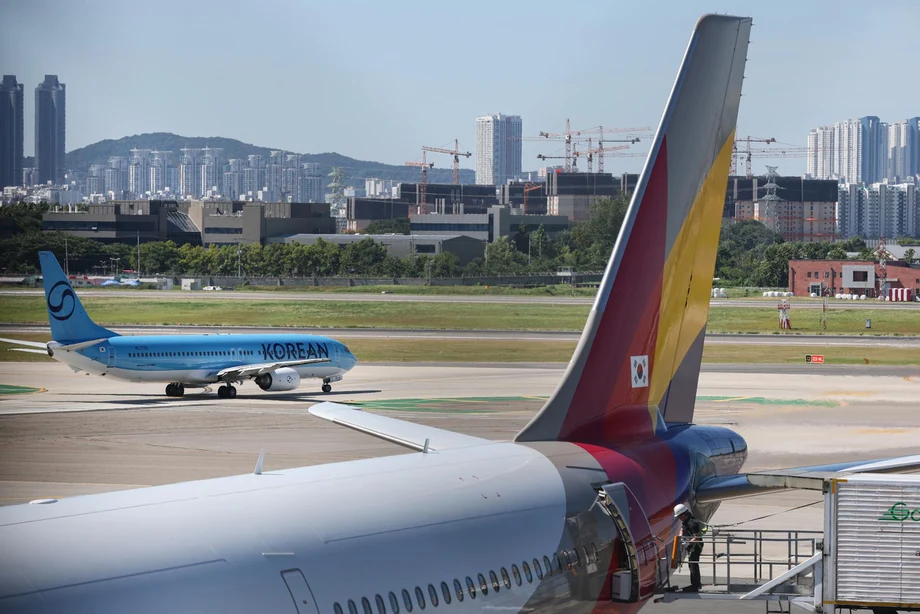
Jeju Island, South Korea's leading resort destination, is preparing to resume direct flights from Incheon International Airport in May after a suspension lasting ten years. The restored connection would remove the need for international visitors to transfer from Incheon to Gimpo International Airport before flying to the island.
The airport transfer typically adds approximately one hour to the journey. For travellers arriving from Europe, Africa and the Americas, removing that step would simplify access to Jeju's subtropical attractions. Previously, Jeju International Airport mainly operated short haul international routes, including services to Singapore, limiting convenient access for passengers arriving from more distant markets.
Research analysing tourism patterns identifies regional benefits from improvements to air transport, with a wider geographic reach than improvements to ground transport. These benefits are sometimes described as transport spillover effects: a better connection can bring spending to places beyond the airport itself. Jeju's renewed Incheon link would give the island a more direct route to international passengers already entering through Korea's main gateway.
Jeju became the first region in Korea to accept international payment cards on public buses in 2024. That change allows visitors to use a familiar payment method while exploring the island, reducing another practical barrier after arrival.
The island's tourism measures also included complimentary bus services for foreign visitors on April 3, marking the historical memorial date while encouraging travel to volcanic landscapes and coastal villages. Together, easier payments and targeted travel incentives are intended to help visitors explore more of Jeju and spend more time there.
Rural Tourist Taxis Fill Gaps Between Attractions
Uljin in North Gyeongsang Province launched a tourist taxi programme on a Wednesday, offering customised tours lasting four hours for 32,000 won, approximately $21. Local government funding covers roughly 60% of the actual operating cost, making the service more affordable for visitors.
The tours provide access to the scenic Nakdong River and nearby cultural sites. For smaller municipalities, the transport problem differs from that of major cities: buses may run infrequently, and attractions may be spread across a large area. A flexible taxi journey can connect stops that are difficult to combine using a fixed timetable.
Dangjin in South Chungcheong Province began a comparable programme earlier in the same week. Its subsidy covers approximately half of standard fares, helping visitors reach historical landmarks and natural sites that regular public transport does not serve.
Local taxi operators also act as tour guides, giving regional service providers an opportunity to earn income from tourism. The programmes offer flexible, multilingual transport and address the final segment of a journey, the distance between a bus or train stop and the attraction a visitor actually wants to see.
Transport research links accessibility with tourism demand. Studies of high speed rail networks identify improved regional connections as an important influence on visitor numbers, particularly in reducing the concentration of travel in particular seasons. Rural tourist taxis apply a similar principle on a smaller scale: making a place easier to reach can help spread visits across more locations and times of year.
The National Plan Targets 30 Million Visitors
President Lee Jaemyung chaired the 11th National Tourism Strategy Meeting in late February, when the administration set out its ambition to attract 30 million inbound tourists annually. Against the approximately 16.37 million arrivals recorded in 2024, that target represents about 13.63 million additional visitors, an increase of roughly 83%.
The Ministry of Culture, Sports and Tourism identified the current period as a golden time for tourism growth, citing the expanding influence of Korean culture and favourable external economic factors. The strategy calls for changes to immigration procedures, regional aviation capacity and accommodation systems, connecting national policy with the local transport improvements.
Proposed entry measures include a pilot allowing visa free entry for Indonesian tourist groups of at least three people. The plan also expands visas permitting multiple entries over five years for Chinese and Southeast Asian nationals who have previously visited Korea, alongside authorisation for multiple entries over ten years for residents of major cities.
A visa permitting multiple entries allows an eligible traveller to visit repeatedly during its period of validity, making return trips easier to arrange. The government's measures therefore address both new arrivals and visitors whose interest in Korean culture could bring them back.
Automated immigration clearance is to extend to European Union passport holders. Major airports will also gain more immigration counter capacity to reduce queues. These changes focus on the first stage of a visit, when lengthy processing or complicated entry arrangements can affect the rest of a traveller's schedule.
Airports, Rail and Cruises Form a Wider Network
Gimhae Airport, serving Busan, and Cheongju Airport are central to the effort to distribute international arrivals more widely. Authorities plan to strengthen their capacity through more direct international routes, lower facility usage fees and increased flight slot allocations. A slot is an allocated opportunity for a flight to use an airport, so additional slots can create room for more services.
Passengers entering through Incheon are also part of the regional strategy. Domestic flight frequencies are to increase, bus routes operating late at night are to expand, and travellers will be able to reserve Korea Train Express services further in advance. KTX is Korea's high speed rail service, providing another way to connect the main arrival gateway with destinations elsewhere in the country.
Busan's maritime tourism plans include a government review of a new cruise terminal at North Port and a pilot involving operations around the clock. These measures would extend the transport strategy beyond air and rail to visitors arriving by sea.
The government plans a Visit Korea Year campaign running from 2027 to 2029 through partnerships between public bodies and private businesses. Promotional activity will be coordinated with infrastructure improvements to increase visibility in key markets sending tourists to Korea.
The main dates described in the tourism programme span immediate travel changes and projects taking several years:
- 2024: International arrivals reached approximately 16.37 million, and Jeju began accepting international payment cards on public buses.
- Late February 2026: President Lee Jaemyung chaired the 11th National Tourism Strategy Meeting, setting out the target of 30 million annual visitors.
- April 3, 2026: Jeju's tourism measures included complimentary bus services for foreign visitors on the historical memorial date.
- May 2026: Direct flights between Incheon International Airport and Jeju are scheduled to resume after ten years.
- Late 2027: Completion is scheduled for Goseong's dinosaur themed digital playground.
- 2027 to 2029: The Visit Korea Year campaign is planned.
The timing for broader expansion of Busan's luggage trial has not been set; the city will first evaluate its results. Other measures, including the cruise terminal review, remain at the planning or assessment stage.
Digital Services Help Visitors Navigate and Pay
The Ministry of Culture, Sports and Tourism has prioritised artificial intelligence and big data alongside physical transport improvements. The aim is to make information easier to find and use, recognising that a visitor needs understandable directions and payment options as well as a functioning bus or train.
South Korea's tourism revenue reached 24.4 trillion won in 2023. Online travel agencies including Yanolja and GC Company, which operates Yeogi Eottae, have expanded rapidly alongside global platforms. Their growth forms part of the shift toward arranging travel through digital services.
Smart tourism initiatives include interactive maps, multilingual transport updates delivered in real time and automated visitor assistance centres. Incheon International Airport is implementing advanced digital verification systems to speed immigration processing, while cities are deploying guides using artificial intelligence and translation tools to reduce language barriers.
Tourism authorities are also preparing further smart city implementations across Seoul, Busan and Incheon for 2026. Integrated mobile platforms are intended to combine accommodation reservations, transport passes and attraction tickets, bringing several parts of a trip into one service.
The technology supports a broader move toward experiences connected with Korean cultural content. Food, wellness and entertainment activities are becoming part of that approach, extending tourism beyond conventional sightseeing. A useful digital service can help travellers find and book those experiences once they reach a region.
Cheongju Combines Visitor Services With Local Spending
North Chungcheong Province's C Square facility at Yongdu Temple Iron Flagpole Plaza in Cheongju brings several visitor services together in a travel lounge. It combines tourism information with hands on beauty product experiences, guidance on regional cuisine and luggage storage designed for international visitors.
The province also operates C Pass, a shopping voucher programme intended to encourage tourists arriving through Cheongju International Airport to spend at local retailers. The airport recorded approximately 100,000 foreign visitors last year, an increase of about 40,000 from the previous figure. Those numbers imply a rise from approximately 60,000, or around two thirds.
North Chungcheong is diversifying its attractions beyond conventional historical sites while experiencing a sharp increase in its international student population. International student enrolment grew 92.1% last year, the fastest growth nationally, reaching 10,537 students.
The students generate estimated annual economic ripple effects of 212.2 billion won, approximately $155 million. Economic ripple effects describe spending and activity spreading through an economy beyond the initial expenditure. The growing student population also creates demand for cultural and recreational facilities that can serve tourists visiting for shorter periods.
Cheongju's approach connects arrival numbers with services inside the destination. Luggage storage makes it easier to explore before checking into accommodation, food guidance directs visitors toward regional businesses, and shopping vouchers seek to turn airport arrivals into local spending.
New Attractions and Winter Visits Show Regional Demand
Goseong, identified in the tourism programme as being in Gangwon Province, is constructing a dinosaur themed digital playground costing 14.6 billion won at Sangjokam County Park. Its planned facilities include indoor centres offering experiences through multiple senses, outdoor adventure areas themed around volcanoes and observation points using augmented reality.
Augmented reality adds digital content to a view of the physical world. At an attraction, that can give visitors another way to explore what they are seeing. The Goseong project targets families and is scheduled for completion in late 2027, with the aim of making the southern coastal destination appealing throughout the year rather than only during a particular season.
Gangwon Province's ski resorts reported a 24.7% increase in international visitors during the 2025-2026 season. High1 Resort in Jeongseon welcomed approximately 43,000 foreign guests, a rise of 54% from the previous year. The figures show expanding demand for regional winter tourism, alongside improvements in access that help destinations reach visitors previously discouraged by travel difficulties.
Travel platforms have also recorded rapid growth in specialised regional excursions. DMZ tours in Paju increased by more than 3,400%, while Busan day tours rose by more than 2,600%. These increases reflect growing interest in destinations that visitors can reach within a limited travel schedule.
South Korea's regional tourism push brings these developments together: more appealing attractions, simpler connections and services that make it easier to spend time outside Seoul. Busan's luggage trial addresses a small but immediate obstacle, while airport expansion and national entry policies address larger ones. The common objective is to turn interest in Korea into longer visits, repeat trips and spending across more of the country.
Key Points
- South Korea recorded approximately 16.37 million foreign arrivals in 2024, or 94% of the level before the pandemic, and aims for 30 million annually.
- Approximately 45% of tourism businesses remain concentrated in the Seoul Metropolitan Area.
- Busan is trialling suitcases measuring 30 inches on Route No. 85 and developing better airport connections, overseas card payments and services at night.
- Direct flights between Incheon International Airport and Jeju are scheduled to return in May 2026 after a suspension lasting ten years.
- Uljin offers tourist taxi tours lasting four hours for 32,000 won, with roughly 60% of operating costs subsidised. Dangjin subsidises approximately half of standard fares.
- The national strategy includes easier entry arrangements, regional airport capacity, domestic connections and a Visit Korea Year campaign from 2027 to 2029.
- Digital travel services, Cheongju's C Square lounge and C Pass vouchers are intended to make regional visits easier and encourage local spending.
- Regional developments include Goseong's 14.6 billion won dinosaur attraction and rising foreign visitor numbers at Gangwon ski resorts.