The Goldilocks Era Ends
India’s benchmark Sensex has shed over 9% since hostilities erupted in the Middle East, wiping out billions in market value and sending shockwaves through one of the world’s most promising economies. For months, India enjoyed what economists call a “Goldilocks” phase: strong growth coupled with cooling prices, fiscal discipline, and robust currency reserves that positioned the nation as a safe harbor amid global turmoil. That advantage is now evaporating as the U.S.-Israeli war on Iran enters its second month, creating what officials describe as a perfect storm of energy shocks, trade disruptions, and financial market volatility.
The conflict has effectively closed the Strait of Hormuz, the narrow waterway through which roughly 20% of global oil shipments and significant liquefied natural gas flows pass. For India, the world’s third-largest oil consumer, this represents an existential economic threat. The Middle East accounts for roughly 40% of the country’s oil imports and 80% of its gas supplies. With Brent crude prices surging from approximately $70 per barrel before the war to over $100 currently, and the Indian crude basket hitting $157 per barrel according to recent data, the ripple effects are spreading rapidly through Asia’s largest economy.
The Energy Chokehold
The Strait of Hormuz closure has disrupted more than just shipping schedules. International Energy Agency officials described the situation as the largest supply disruption in the history of the global oil market, triggering volatility that has pushed retail fuel prices higher and sparked panic buying of liquefied petroleum gas cylinders across Indian cities. Hotels and restaurants are weighing closure amid fears of cooking gas shortages, despite government assurances that approximately one month of supply remains in strategic storage.
India’s reliance on Gulf energy is structural and deeply embedded in its economic architecture. The country imports over 80% of its gas and up to 60% of its oil through the strait, making it particularly vulnerable to Iranian retaliatory tactics that target commercial shipping. Most maritime insurers have cancelled war risk coverage for tankers in the region, forcing rerouting that adds weeks to delivery schedules and compounds cost pressures. The government has invoked emergency measures to discourage hoarding, urging calm even as the crisis threatens to upend the delicate balance between growth and inflation that policymakers have carefully maintained.
Harsh V Pant, vice president of the Observer Research Foundation think tank in New Delhi, warned that India’s energy security faces significant pressure from the ongoing volatility. “Energy markets are already volatile and costs are rising, which could eventually translate into broader economic and inflationary pressures,” Pant noted. The concern extends beyond immediate fuel costs to include fertilizer inputs, industrial petrochemicals, and transportation logistics that together determine price levels across the agricultural and manufacturing sectors.
The $50 Billion Human Pipeline
Beyond energy, the conflict threatens a financial lifeline that sustains millions of Indian families. India is the world’s largest recipient of remittances, receiving a record $135.4 billion in the most recent fiscal year. Approximately 38% of these inflows, totaling roughly $51.4 billion, originate from the nine million Indian workers employed across Gulf Cooperation Council countries including the United Arab Emirates, Saudi Arabia, Qatar, Oman, Kuwait, and Bahrain.
These workers, primarily employed in construction, hospitality, retail, and oil services sectors, support an estimated 40 to 50 million family members back home through their earnings. Talmiz Ahmad, a former Indian ambassador to Saudi Arabia, emphasized the human dimension of the economic risk. “Every Indian who works in the Gulf supports at least four to five people back home,” he explained. The remittance flows act as a crucial financial cushion, helping finance India’s merchandise trade deficit and providing foreign currency stability that complements export revenues.
The war has already inflicted casualties among South Asian workers in the region, with several Indian nationals killed by falling debris from Iranian drone and missile attacks across Gulf states. While mass evacuations have not yet occurred, the prospect of prolonged conflict raises alarming scenarios. Former ambassador Ahmad noted that evacuating nine million citizens would present a logistical nightmare unmatched in recent history, though he recalled India’s successful extraction of 200,000 nationals during the 1991 Gulf War as precedent for contingency planning.
Goldman Sachs and Citi analysts have warned that a prolonged conflict lasting six months or more could reduce remittance flows by 10% to 30%, translating to a $5 to $15 billion annual loss for the Indian economy. Alexandra Hermann, lead economist at Oxford Economics, cautioned that a sharp decline in remittances combined with higher oil prices would worsen India’s external position and pressure the rupee further.
Market Mayhem and Inflation Risks
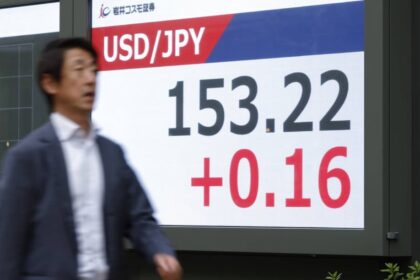
Financial markets have reacted swiftly to the deteriorating outlook. The Nifty 50 index dropped 1.24% to a one-month low of 24,865.70, while the BSE Sensex shed 1.29% to 80,238.85, its lowest level in six months. The Indian rupee has weakened to approximately 95 against the U.S. dollar, crossing the psychologically significant threshold for the first time and forcing the Reserve Bank of India to tighten foreign exchange limits to control volatility.
Government bond yields have risen sharply as investors demand higher returns to compensate for inflation risks and fiscal uncertainty. Morgan Stanley analysts have raised the specter of stagflation, a toxic economic condition combining stagnant growth with rising prices that could derail India’s expansion trajectory. The investment bank noted that while domestic demand remains resilient and high-frequency indicators show broad-based strength in auto sales and credit growth, prolonged disruption poses downside risks to growth and could worsen macroeconomic stability.
The inflation outlook has darkened considerably. Headline consumer price index inflation rose to 3.2% year-on-year in February from 2.7% in January, and economists warn it could reach the mid-6% range by June if energy prices remain elevated. Bernstein analysts Venugopal Garre and Nikhil Arela warned that as a large crude importer, India faces clear near-term headwinds. “The larger macro concern is a renewed burst of inflation that delays rate cuts and crimps consumption as prices rise,” they wrote in a recent note to clients.
Fiscal Firefighting
The government faces difficult choices as it attempts to shield households from the shock while maintaining fiscal discipline. Ratings agency ICRA warned that the conflict complicates India’s budget math for fiscal year 2027, potentially increasing subsidy burdens for fertilizers and liquefied petroleum gas while pressuring corporate tax collections and dividend receipts from state-owned enterprises.
Junior Finance Minister Pankaj Chaudhary told lawmakers that global developments are creating fresh challenges, with high commodity prices and changing trade patterns threatening growth projections. The government has established seven empowered groups of ministers and senior secretaries to coordinate responses across petroleum, gas, power, and fertilizer sectors, and is considering utilizing the Economic Stabilisation Fund to absorb fiscal shocks.
Prime Minister Narendra Modi has convened an all-party meeting to forge political consensus on the crisis, emphasizing that West Asia holds special importance for India due to the massive diaspora presence and shipping lane dependencies. Modi has spoken with Iranian President Masoud Pezeshkian and U.S. President Donald Trump, urging de-escalation and emphasizing that ensuring the Strait of Hormuz remains open is essential for global economic stability.
The Reserve Bank of India, which had maintained a neutral stance with policy rates at 5.25%, now faces the prospect of needing to raise rates to combat inflation despite slowing growth, a policy dilemma that could further constrain domestic investment and consumption.
The Essentials
- India’s benchmark Sensex has declined over 9% since the Iran conflict began, while the rupee has weakened to approximately 95 against the U.S. dollar
- The Middle East supplies roughly 40% of India’s oil imports and 80% of its gas, with the Strait of Hormuz closure disrupting these critical energy flows
- Nine million Indian workers in Gulf countries send approximately $51.4 billion annually in remittances, representing 38% of India’s total inflows and nearly 3.5% of GDP
- Brent crude prices have surged from $70 to over $100 per barrel since the conflict began, with the Indian crude basket reaching $157 per barrel
- Economists warn inflation could reach the mid-6% range by mid-year, potentially forcing the Reserve Bank of India to raise interest rates despite slowing growth
- The government has established seven empowered groups to manage energy security, supply chains, and fertilizer availability while preparing fiscal safeguards
- Goldman Sachs and Morgan Stanley have warned of stagflation risks, with growth forecasts facing downside risks of 0.3 to 0.7 percentage points if the conflict persists