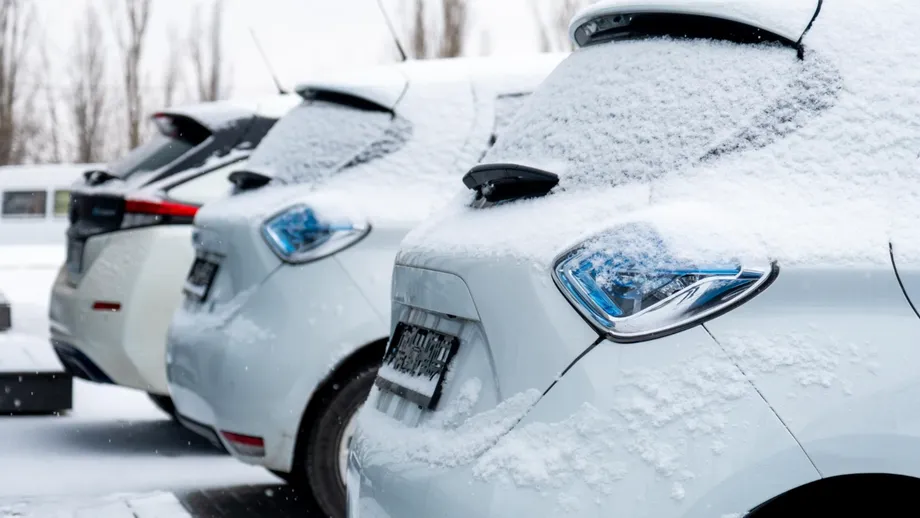
A Battery Breakthrough Built for Freezing Conditions
Chinese researchers have developed a hydrofluorocarbon electrolyte that allows lithium metal batteries to store more than 700 watt hours per kilogram at room temperature and operate at temperatures as low as minus 70 degrees Celsius, or minus 94 degrees Fahrenheit. Their findings, published in Nature on February 25, 2026, point toward lighter batteries with much longer driving range and better performance in severe winter weather.
Contents
- A Battery Breakthrough Built for Freezing Conditions
- Why Cold Weather Drains Batteries
- Replacing Oxygen Coordination With Fluorine
- What the Laboratory Measurements Show
- How Far Could an Electric Vehicle Travel?
- Spacecraft, Drones and Robots Could Benefit
- Keeping Portable Devices Working in Winter
- High Temperatures Remain a Development Task
- Turning University Research Into Production
- China's Wider Push Into Battery Technology
- What the Development Means for Buyers
- At a Glance
The team brings together Jun Chen and Qing Zhao at Nankai University and Yong Li at the Shanghai Institute of Space Power-Sources. Their central change concerns the electrolyte, the chemical medium that carries lithium ions between a battery's electrodes. By changing how that liquid interacts with lithium, the researchers aim to tackle two persistent problems at once: limited energy storage for a given battery weight and the loss of performance in the cold.
The reported results include approximately 400 watt hours per kilogram at minus 50 degrees Celsius, or minus 58 degrees Fahrenheit. The conventional lithium ion comparison given for the research is approximately 136 watt hours per kilogram at room temperature, falling below 68 watt hours per kilogram in subzero conditions.
For electric vehicles, the researchers describe the possibility of increasing range from 500 to 600 kilometers to more than 1,000 kilometers without increasing battery mass. Aerospace equipment, drones, robots and portable electronics could also benefit. Commercial production is being targeted for late 2026, although improving performance at high temperatures remains part of the development work.
Why Cold Weather Drains Batteries
Winter can leave a smartphone shutting down during a ski trip, a drone losing power in freezing air or an electric vehicle showing a sharply reduced range estimate. Conventional lithium ion batteries depend on the movement of charged particles inside the cell. Cold temperatures slow that movement, making it harder for the battery to deliver power.
Severe cold can reduce available capacity by half or more. Electric vehicles face a second demand because heating systems also draw energy from the battery. Drivers may therefore have less energy available for travel at the same time that the vehicle needs more power to keep its occupants and battery warm.
The electrolyte acts as the route along which lithium ions move between the positive and negative electrodes. Its chemistry affects how easily those particles travel and how readily they transfer charge at the electrode surfaces. A liquid that works well at room temperature can become much less effective as temperatures fall.
Nankai University and the Shanghai Institute of Space Power-Sources approached this problem by redesigning the solvent molecules within the electrolyte. Their work focuses on the chemical interactions that govern movement inside the cell, with the aim of preserving useful performance in conditions where conventional batteries struggle.
Replacing Oxygen Coordination With Fluorine
Traditional lithium battery electrolytes use carbonate solvents containing oxygen atoms. Those atoms interact strongly with lithium ions through what chemists call ion dipole interactions, an attraction between an electrically charged ion and a molecule with an uneven distribution of electrical charge. This helps dissolve lithium salts and keep them stable in the liquid.
Strong lithium oxygen interactions also bring costs. They can slow charge transfer at the boundary between the electrolyte and an electrode, especially in cold conditions. Conventional formulations also require substantial quantities of electrolyte, adding weight and bulk to a battery.
The Chinese team challenged the assumption that oxygen based ligands are essential for an effective electrolyte. A ligand is an atom or molecular group that coordinates with an ion. The researchers designed fluorinated hydrocarbon solvent molecules, using 1,3-difluoro-propane as a core component, to create a fluorine coordination system.
In this formulation, weaker lithium fluorine interactions replace the traditional lithium oxygen interaction. The weaker coordination allows ions to move more smoothly and reduces barriers associated with dissolution and charge transfer. The system can also work with smaller quantities of electrolyte material.
The solvent design includes steric hindrance, meaning that the arrangement of atoms affects how closely other particles can approach. The fluorine based ligands with this designed structure enable salt dissolution above 2 moles per liter. That result challenges previous assumptions about how effectively fluorinated hydrocarbons can dissolve lithium salts.
What the Laboratory Measurements Show
The Nature publication describes an electrolyte with a viscosity of 0.95 centipoise. Viscosity measures resistance to flow, so a lower value means the liquid flows more readily. That property supports the movement of ions and helps the electrolyte spread over the battery's internal surfaces.
The formulation also has oxidation stability above 4.9 volts. This describes its ability to resist chemical breakdown through oxidation at high voltage. At minus 70 degrees Celsius, its ionic conductivity is 0.29 millisiemens per centimeter, a measure of how effectively the electrolyte carries electrical charge through moving ions.
Lithium metal pouch cells using the electrolyte reached Coulombic efficiency of 99.7% at room temperature and 98% at minus 70 degrees Celsius. Coulombic efficiency compares the charge recovered during discharge with the charge supplied during charging. A value close to 100% means relatively little charge is lost to unwanted processes during a cycle.
The research connects these measurements with improved charge transfer, reduced electrolyte requirements and better performance under thermal stress. The reported energy storage above 700 watt hours per kilogram concerns room temperature operation, while approximately 400 watt hours per kilogram is reported at minus 50 degrees Celsius.
Using the stated comparison of 136 watt hours per kilogram, 700 watt hours per kilogram is more than five times that room temperature figure. The researchers separately describe a potential increase of two to three times in energy storage for batteries of the same mass when discussing practical applications.
How Far Could an Electric Vehicle Travel?
Electric vehicles commonly discussed in connection with this development offer ranges of about 310 to 370 miles, or 500 to 600 kilometers, under favorable conditions. Cold weather reduces those distances as battery chemistry slows and heating consumes additional power.
Li Yong, a researcher at the Shanghai Institute of Space Power-Sources, described the possible range increase in an interview with Science and Technology Daily, an official ministry newspaper. He linked the improvement to storing more energy without increasing battery mass.
"With a two- to threefold increase in room temperature energy storage capacity for batteries of the same mass, the range of electric vehicles can be extended from 500-600 kilometers to over 1,000 kilometers," Li stated.
A range exceeding 1,000 kilometers means roughly 620 miles on a charge, described as comparable to the distance between Denver and Dallas. Such a distance could make longer trips and travel between cities easier, reducing drivers' concern about finding a charging stop before the battery runs out.
The cold weather result matters alongside the room temperature range projection. Maintaining approximately 400 watt hours per kilogram at minus 58 degrees Fahrenheit could help vehicles retain useful range through harsh winters. The proposed benefit includes reducing dependence on battery warmers and other thermal management equipment that consumes energy.
The 99.7% Coulombic efficiency reported at room temperature also supports the team's case for efficient repeated operation. The research presents charge efficiency, energy storage and cold weather performance as connected advantages of the new electrolyte.
Spacecraft, Drones and Robots Could Benefit
The Shanghai Institute of Space Power-Sources operates under the China Aerospace Science and Technology Corporation. Its participation gives the research a direct connection to equipment designed for environments where temperature and weight are major engineering constraints.
Spacecraft, satellites and planetary probes encounter large temperature changes between sunlight and shadow, sometimes within a single orbit or during surface operations. Batteries with high energy storage and reliable performance in extreme cold could support longer operation while reducing the weight devoted to power systems.
Surveillance drones operating in Arctic conditions are another possible application. A lighter battery with greater energy storage could increase endurance or leave more capacity for equipment carried by the aircraft. Intelligent robots working through polar nights could also benefit from power systems requiring less thermal protection.
Scientific equipment at Antarctic research stations faces similar difficulties because conventional batteries can lose performance rapidly in severe cold. The proposed electrolyte offers a way to keep instruments operating while limiting the weight and power demands of equipment used to maintain battery temperature.
Moon and Mars surface missions are also potential uses. Their power systems must manage conditions ranging from intense heat to extreme cold, while thermal management adds weight. The combination of greater specific energy, meaning energy stored for each unit of mass, and operation across a wide temperature range is particularly attractive for aerospace work.
Keeping Portable Devices Working in Winter
Smartphones and other portable devices often struggle in cold weather, including unexpected shutdowns while the screen still shows some remaining charge. People in northern climates and winter sports participants encounter this problem when they need communication or navigation equipment away from reliable shelter.
The fluorine based chemistry could help portable devices continue functioning at temperatures that leave conventional batteries unable to deliver useful power. Possible applications include emergency beacons, GPS units and communication equipment used in wilderness settings.
The physical properties of the electrolyte support these proposed uses. Lower viscosity and improved wetting behavior allow the liquid to reach internal battery surfaces more effectively. Because less electrolyte is required, the battery can devote less of its weight to the liquid while improving performance across its operating temperature range.
The research therefore reaches beyond simply making a larger battery. Its aim is to improve how much energy a battery stores for its weight and how consistently that energy remains available in difficult conditions. Those benefits would matter both in a handheld device and in equipment where every gram affects endurance or payload.
High Temperatures Remain a Development Task
The research team acknowledges that high temperature stability needs further development. Although the electrolyte performs well in extreme cold, maintaining performance and safety above 100 degrees Celsius, or 212 degrees Fahrenheit, requires additional optimization.
Raising the boiling point of the hydrofluorocarbon compounds is one of the next technical tasks. Researchers need to improve their behavior at high temperatures while preserving the properties that allow ions to move efficiently in severe cold.
Heat also matters when considering use in hot desert environments and during rapid charging, which generates heat inside a battery. The proposed applications therefore depend on progress across the temperature range, alongside the cold weather results already reported.
Commercial development must also address engineering, production scale, supply chains and cost. A successful laboratory cell has to become a product that can be manufactured consistently and operate reliably in vehicles, electronics or aerospace equipment.
Lithium metal batteries have historically faced concerns about safety and cost despite their theoretical advantages over current lithium ion designs. Yan Zhenhua, a professor at Nankai University's College of Chemistry, said the team's independently developed composite electrolyte improves intrinsic safety and substantially improves cycle life. Those are important parts of the effort to make the chemistry practical.
Turning University Research Into Production
Chinese manufacturers, including the Shanghai Institute of Space Power-Sources, are targeting mass production capabilities by late 2026. The schedule is ambitious given the engineering and manufacturing work normally required to move an advanced battery material from publication into commercial use. An exact launch date for consumer products has not been given.
Chen Jun, an academician of the Chinese Academy of Sciences and vice president of Nankai University, has stressed the need to connect research with industrial problems. His team has established partnerships with automotive manufacturers to translate laboratory findings into drivetrain components able to withstand road conditions.
"We can't always stay in the ivory tower. Our goal is to address real industrial challenges," Chen stated.
University and industrial collaboration is central to that effort. Academic researchers can develop and test new chemistry, while manufacturers must determine how to produce it, integrate it into equipment and control costs at scale.
The involvement of aerospace and automotive organizations suggests resources could support pilot production lines and testing facilities. Even with that backing, manufacturing consistency, supply development and reliable operation remain part of the transition from a Nature publication to an assembly line.
The key dates and targets are:
- February 25, 2026: The researchers published their findings in Nature.
- March 31, 2026: The reported development remains focused on laboratory results and the transition toward commercial production.
- Late 2026: Chinese manufacturers are targeting mass production capabilities.
- 2027 or 2028: These years have been suggested as a possible window for consumers seeking vehicles with a new generation of battery performance.
China's Wider Push Into Battery Technology
China controls approximately 60% of global lithium ion manufacturing capacity and continues investing in research aimed at the next generation of energy storage. The hydrofluorocarbon electrolyte forms part of a broader push that combines fundamental chemistry with efforts to move developments into production quickly.
International competition involves both manufacturing capacity and the technologies that could replace or improve existing batteries. Some countries have focused on regulatory barriers and trade restrictions to protect domestic production, while China's approach includes laboratories backed by the state and close partnerships between universities and industry.
The electrolyte research represents a departure from established oxygen coordination chemistry. If it reaches production, it could give manufacturers a route to larger performance gains than incremental changes to existing designs, especially in markets where harsh winters make battery reliability a major concern.
Other Chinese battery developments target different uses. Aqueous batteries using tofu brine have been described as achieving 120,000 charge cycles for stationary grid storage. That approach sits alongside the lithium metal work within a wider effort to develop different chemistries for different energy storage needs.
Lu Tianjun, general manager of China Automotive New Energy Battery Technology, has described related advanced battery developments within China as delivering approximately a 50% improvement over technologies currently available to consumers. He placed that performance at a leading level domestically and internationally. The hydrofluorocarbon research adds another proposed route to improved energy storage within that broader effort.
What the Development Means for Buyers
Electric vehicle buyers often weigh both travel distance and winter reliability. The proposed combination of range exceeding 600 miles and useful operation in extreme cold addresses those concerns together, rather than improving one while leaving the other unchanged.
The suggestion that vehicles arriving in 2027 or 2028 could offer larger gains depends on successful commercial development. Manufacturers still need to carry the chemistry through production, improve high temperature performance and deliver reliable batteries at workable costs.
A successful transition could make electric vehicles more practical for long journeys and severe winter climates. The same chemistry could help spacecraft, drones, robots and portable devices carry more usable energy without adding weight. As of March 31, 2026, the central development is the reported laboratory performance and the effort to turn it into manufactured products.
At a Glance
- Nankai University and the Shanghai Institute of Space Power-Sources published the electrolyte research in Nature on February 25, 2026.
- Lithium metal batteries using the electrolyte exceeded 700 watt hours per kilogram at room temperature.
- The research reports operation at minus 70 degrees Celsius, or minus 94 degrees Fahrenheit, and approximately 400 watt hours per kilogram at minus 50 degrees Celsius.
- The formulation uses fluorine coordination, with 1,3-difluoro-propane as a core solvent component, in place of conventional oxygen coordination.
- Reported Coulombic efficiency reached 99.7% at room temperature and 98% at minus 70 degrees Celsius.
- The researchers project electric vehicle range above 1,000 kilometers, or roughly 620 miles, for batteries of the same mass.
- High temperature stability and commercial manufacturing remain development tasks, with mass production capabilities targeted for late 2026.
- Potential uses include electric vehicles, aerospace equipment, drones, robots and portable electronics.