A national fuel policy meets a consumer backlash
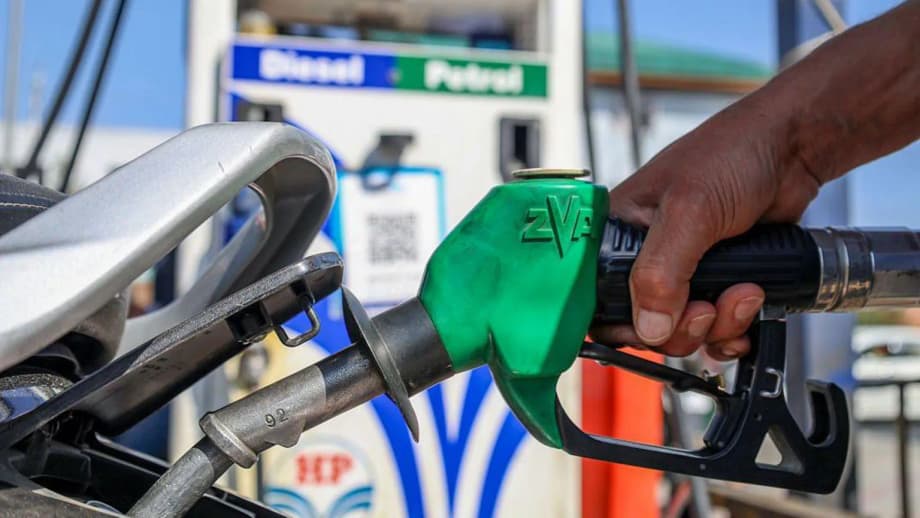
India’s rapid move to petrol blended with 20% ethanol has turned an energy security programme into a national dispute over cost, vehicle safety and consumer choice. E20 is now the standard petrol available at stations across the country, while millions of cars and two wheelers were designed for lower ethanol blends.
- A national fuel policy meets a consumer backlash
- Why did India move so quickly?
- What are drivers experiencing?
- Can E20 damage older vehicles?
- Why are prices at the centre of the dispute?
- What does the government say?
- Are the environmental and farm benefits guaranteed?
- How does India compare with Brazil and the United States?
- What do motorists want changed?
- The Bottom Line
The government says the fuel has passed extensive testing, cuts crude oil imports and supports farmers. Motorists, mechanics and opposition politicians say the rollout happened too quickly, leaving owners to absorb lower mileage, possible repair bills and uncertainty about warranties and insurance.
The dispute became louder after a protest in New Delhi and a series of Supreme Court hearings. It also gained attention when Attorney General R Venkataramani was reported to have described the E20 programme as an experiment. His office later said the remark referred to ethanol supply and had been misunderstood, not to the safety of the national fuel policy.
At the centre of the argument is a simple fact: ethanol contains less energy per litre than petrol. A vehicle may therefore need more E20 to travel the same distance, even when the engine suffers no mechanical damage.
Why did India move so quickly?
India began blending ethanol into petrol in the mid 2000s. The original National Policy on Biofuels target was 20% blending by 2030. In 2021, the government moved that goal forward to the 2025 to 2026 ethanol supply year.
Blending reached 10% in June 2022, followed by a rapid increase to about 14.6% in the 2023 to 2024 supply year and nearly 18% in the following year. E20 became widely available in 2025, five years earlier than the original target.
A 2021 NITI Aayog roadmap proposed a phased process. It expected E10 to remain available as a protection fuel for older vehicles while E20 was introduced gradually. It also called for E20 compatible vehicle materials from 2023 and fully calibrated E20 models from 2025.
Critics say the government followed the production schedule more closely than the consumer protection plan. Newer vehicles have increasingly been built for E20, while the existing fleet has had little time to adjust. Puneet Gupta of Mobility Global has estimated that more than 75% of vehicles on Indian roads are not E20 compliant. A separate analysis found that only about one in five new petrol vehicles sold during the previous 15 years was designed for the blend.
What are drivers experiencing?
Motorists generally notice E20 through mileage rather than an immediate engine failure. Krishna Kumar, a bank employee in New Delhi, said his sedan fell from about 18 to 20 kilometres per litre to roughly 16 to 17 kilometres after he began using the blend. He also described slower acceleration while overtaking, climbing hills or running the air conditioner.
Anas Khan, who owns a 2021 Maruti Suzuki Baleno, reported a fall from about 18 kilometres per litre to nearly 15. Other drivers have described sluggish city performance and more frequent visits to fuel stations.
Automakers that attended a government press conference accepted that E20 reduces fuel efficiency because ethanol has lower energy content. Their estimate was a 3% to 3.5% decline. Government backed studies have placed the effect at about 1% to 2% for newer E20 vehicles, while other estimates range from 4% to 12% in older cars and difficult driving conditions.
The 2021 NITI Aayog report estimated a 6% to 7% loss in four wheelers designed for pure petrol and calibrated for E10, and a 3% to 4% loss in similar two wheelers. It estimated a 1% to 2% reduction in newer four wheelers designed for E20.
Those figures are not necessarily contradictory. Laboratory tests use controlled conditions, while traffic, air conditioning, driving style, engine age and maintenance affect real world fuel consumption.
Can E20 damage older vehicles?
The scientific evidence is less settled on long term wear than on mileage. Ethanol can attract moisture, which may contribute to corrosion in fuel systems. It can also loosen deposits accumulated in older engines. Hoses, seals, gaskets, O rings and other rubber or plastic parts may deteriorate faster if they were made for lower ethanol levels.
Mohammed Arif, a motorcycle mechanic in Mumbai, said he had serviced older bikes with residue in their carburettors, which he linked to the higher ethanol content. Basil Jacob, who runs a car service centre, said customers were coming in with lower fuel economy and higher running costs.
Automotive journalist Hormazd Sorabjee has described the possible effect as a slow burn. He said corrosion in fuel delivery systems might appear after 10,000 to 20,000 kilometres, although regular maintenance could reduce the risk and long term costs might remain manageable.
"If you are going to force this on the public, you should be able to prove it is safe," a senior industry expert said, speaking anonymously.
That evidence gap has helped fuel the argument. The government and manufacturers point to tests that found no widespread engine damage. Consumer surveys and workshop accounts suggest that some owners are experiencing problems. Publicly available independent studies tracking a large sample of older Indian vehicles over many years are still limited.
A consumer court in Raipur recently ordered a vehicle manufacturer and dealer to reimburse a car owner who blamed E20 for repeated misfiring, poor performance and repair expenses. The manufacturer argued that the vehicle was compatible and that ordinary wear or maintenance could have caused the faults. The ruling applies to that case and does not prove that E20 damages all vehicles, though it adds pressure on companies to explain their responsibilities.
Why are prices at the centre of the dispute?
Ethanol is domestically produced and can cost less to make than imported petrol components. That does not mean motorists automatically receive cheaper fuel. E20 is usually sold at roughly the same price as petrol was before the change, while its lower energy content means drivers may buy more litres to cover the same distance.
Unblended petrol is still available in some places, though it can cost 40% to 50% more depending on the state. Union minister Nitin Gadkari has said motorists who do not want ethanol blended petrol can choose 100% petrol at a higher price. Many consumers say that is not a meaningful choice when the cheaper fuel is the national default and the alternative is difficult to find.
The government says procurement prices support farmers and distilleries, which limits the room for a lower pump price. An industry view has also rejected the idea that blending alone must reduce retail rates. Even so, the pricing structure has created a sense that the state receives the savings while households pay the mileage penalty.
For a country where two wheelers are the main form of personal transport, the burden can be especially heavy. A small reduction in mileage repeated across daily commuting, delivery work and rural travel becomes a direct increase in the cost of mobility.
What does the government say?
The Ministry of Petroleum and Natural Gas says claims that E20 substantially reduces mileage or harms engines are largely unsupported by scientific evidence. It cites testing by the Automotive Research Association of India, the Indian Institute of Petroleum and oil companies.
Automakers including Maruti Suzuki, Toyota, Hero MotoCorp and Mercedes Benz have backed the safety of compatible vehicles. Rahul Bharti of Maruti Suzuki said the company had serviced more than 15 million older vehicles without finding fuel related faults on a widespread scale. Mercedes Benz has said its petrol BS VI vehicles are materially compatible with E20. BMW has said its petrol models have been prepared for blends as high as E25.
The government also points to the blend’s higher octane rating, cleaner combustion and domestic supply. Officials estimate that ethanol blending has displaced millions of tonnes of crude oil imports, saved foreign exchange and directed large payments to farmers and rural businesses. The programme has encouraged investment in more than 200 distilleries.
Gadkari has rejected claims that E20 damages engines, calling the campaign against it misinformation. He has acknowledged that ethanol’s lower energy value can cause a modest mileage loss, especially during high speed driving.
"People who do not want ethanol blended fuel can go for 100% petrol, but they will have to pay more," Gadkari said.
The minister has also denied a conflict of interest after criticism of business connections involving members of his family and ethanol companies. He says the programme is administered by the Petroleum Ministry, prices are set collectively by the cabinet and his family linked businesses represent less than 0.5% of national ethanol production.
Are the environmental and farm benefits guaranteed?
Ethanol can reduce lifecycle greenhouse gas emissions compared with fossil petrol, especially when produced from efficient sugarcane or agricultural waste. It also gives farmers a market for sugarcane, maize, damaged rice and other feedstocks. India imports about 85% of the crude oil it consumes, so replacing part of that demand with domestic fuel has a strong energy security case.
The benefits carry costs that depend on how ethanol is produced. Sugarcane requires large amounts of water, and expanding cultivation in water stressed states such as Maharashtra, Karnataka and Uttar Pradesh can put pressure on groundwater. Maize expansion may raise feed costs and compete with food markets. Using subsidised grain for fuel can also create tension between energy policy and food security.
Environmental accounting becomes more complex when fertiliser, transport and land use are included. Ethanol generally lowers carbon emissions, carbon monoxide and some unburned hydrocarbons, though older engines may produce more aldehydes. The size of the climate gain depends on the crop, farming method, distillery technology and transport distance.
Maharashtra’s sugar industry has become central to the programme. Its cooperative mills and distilleries have strong links to regional politics, prompting questions about whether incentives and procurement benefits are distributed fairly. Those questions do not by themselves disprove the fuel’s energy benefits, yet they reinforce calls for public disclosure of production subsidies, contracts and ownership.
How does India compare with Brazil and the United States?
Government officials often cite Brazil, the United States and other countries to show that ethanol blending is common. The comparison is valid in one sense, since ethanol has been used safely in many markets. The way those programmes developed is different.
Brazil built its ethanol system over about four decades. It developed sugarcane production, fuel stations and flex fuel vehicles together. Most new Brazilian cars can use different blends, while drivers can choose between E27 petrol and pure ethanol. The price of ethanol is usually attractive when its cost per kilometre reflects its lower energy content.
The United States has long used E10 as standard petrol, with E15 and E85 available for approved vehicles. Several European countries continue to provide clear labelling and, in some cases, more than one blend.
India has moved from 10% blending in 2022 to a national E20 standard within three years. Its older fleet remains large, and most motorists have little practical access to ethanol free petrol. That makes the Indian policy less of a gradual market adjustment and more of a nationwide fuel switch.
What do motorists want changed?
Consumer groups and opposition leaders have called for clear labelling at every pump, blend information on receipts, a continuing supply of lower blend or pure petrol and an independent review of long term vehicle effects. They also want manufacturers and insurers to explain exactly how E20 related repairs will be treated.
Insurance normally covers accidental damage rather than gradual wear. An earlier statement by ICICI Lombard suggested that using E20 in a non compliant vehicle could affect a claim. The insurer later said motor policies remain valid when E20 is used. That clarification did not resolve the separate question of whether a failed fuel pump, hose or injector would be treated as wear, a defect or fuel damage.
Manufacturers have warranty duties for their vehicles, yet owners remain unsure how those duties apply when a car built for E10 is required to use E20. Clear records, standard testing and a public complaints database could help distinguish ordinary maintenance problems from fuel related failures.
The debate is now about more than ethanol chemistry. India’s programme has delivered supply without shortages and may reduce oil imports, yet its public acceptance depends on whether drivers believe the costs and benefits are being shared fairly. A lower energy fuel sold at nearly the same price, with limited alternatives and incomplete information, is likely to remain unpopular even when its national benefits are real.
The Bottom Line
- E20 petrol contains 20% ethanol and is now the standard fuel at Indian stations.
- India advanced its 20% blending target from 2030 to 2025 to 2026.
- Lower energy content means mileage usually falls, with the size of the loss varying by vehicle and driving conditions.
- Government and automakers report no widespread engine damage, while some mechanics and owners report possible long term fuel system problems.
- Ethanol can reduce oil imports, support farmers and cut emissions, though water use, food competition and farming emissions complicate the benefits.
- Motorists are seeking clearer labelling, fairer prices, warranty guidance and a practical choice of fuel blends.