When Packaging Becomes a Profit Killer: One Vendor’s Story
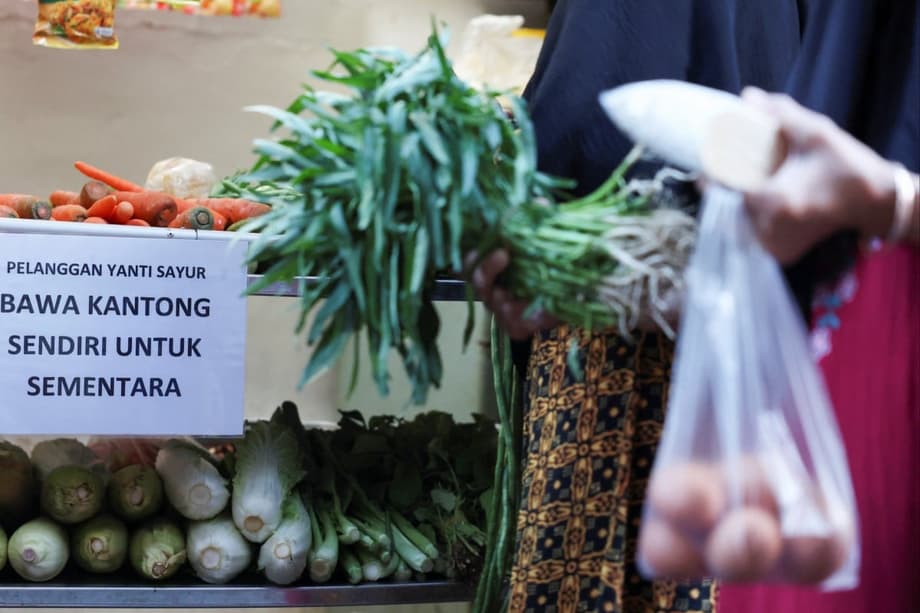
In the bustling market of Depok, south of Jakarta, Budi faces a daily calculation that grows more precarious by the week. The chicken vendor, who sells poultry for a maximum of 50,000 rupiah per kilogram, now spends nearly double what he once did on the simple plastic bags needed to package his goods. The price shift is stark and immediate. Previously, Budi set aside at least 10,000 rupiah (58 US cents) for plastic bags, but now he requires a minimum of 15,000 to 20,000 rupiah to purchase the same supplies.
- When Packaging Becomes a Profit Killer: One Vendor’s Story
- The Strait of Hormuz Ripple Effect
- From Food to Cars: A Supply Chain Under Strain
- The MSME Dilemma: Absorb or Pass On?
- Environmental Goals Meet Economic Reality
- Structural Vulnerabilities Exposed
- Global Context: An Asia-Pacific Crisis
- Searching for Solutions
- Key Points
For Budi, operating on razor-thin margins in Indonesia’s competitive informal economy, this represents more than an accounting inconvenience. It poses an existential business dilemma. The vendor described the impossible position facing small business owners across the archipelago.
If I do not raise the price, I will suffer a loss. If I raise the price, buyers will run away.
His predicament, multiplied across millions of street vendors, market traders, and small food businesses, reveals how a humble packaging item has become an unlikely symbol of Indonesia’s growing economic vulnerability. As the nation strives toward its ambitious 8 percent growth target, the soaring cost of plastic packaging threatens to derail those aspirations while squeezing the micro, small, and medium enterprises (MSMEs) that form the backbone of the national economy.
The Strait of Hormuz Ripple Effect
The root cause of Budi’s plastic bag crisis lies thousands of kilometers away, in the waters of the Persian Gulf. On February 28, 2026, the escalation of the United States-Israeli war on Iran triggered a cascade of economic disruptions that have reverberated through global supply chains. The effective closure of the Strait of Hormuz, a critical artery for global energy trade, has choked off the flow of oil and petrochemical feedstocks that fuel the modern packaging industry.
Global crude oil prices surged in response, with Brent crude climbing from around $70 per barrel to a peak of $111 on March 20. Although prices have since eased below $100, the downstream effects continue to build. Nearly 99 percent of global plastics derive from fossil fuels, making the industry highly sensitive to oil price fluctuations. Two of the most widely used raw materials, polyethylene (PE) and polypropylene (PP), rely heavily on Middle Eastern supply, accounting for roughly a quarter of global production.
According to data from Trading Economics, the price of naphtha, the primary raw material for PE and PP plastics, reached $901.9 per ton on April 10, 2026, an increase of 5.7 percent from late March. Since the conflict began in late February, naphtha prices have surged by more than 50 percent. For Indonesia, which imports 60 to 70 percent of its national petrochemical raw materials from the Middle East, this price spike has created immediate and severe supply constraints.
From Food to Cars: A Supply Chain Under Strain
The plastic shortage has spread far beyond street markets, infiltrating industries across the Indonesian economy. State food holding ID Food has begun facing difficulties in securing packaging for rice, cooking oil bottles, and fertilizer sacks. The price of 5-kilogram plastic bags has surged from Rp 2,560 to Rp 5,020 per sheet, contributing to a rise in rice prices of approximately Rp 1,000 per package. Premium rice now sells for Rp 16,850 to Rp 17,300 per kilogram, driven by both packaging costs and increases in harvested dry grain prices.
Cooking oil prices have similarly felt the pressure. Trade Minister Budi Santoso confirmed that recent upticks in cooking oil prices link directly to disruptions in plastic packaging supply. Premium cooking oil rose 0.06 percent to Rp 21,706 per liter, while bulk cooking oil increased 0.18 percent to Rp 19,437 per liter. The minister pointed to the ongoing Middle East conflict as the primary driver of these increases.
The automotive sector faces parallel challenges. PT Honda Prospect Motor reports monitoring logistics disruptions across the global supply chain, while PT Toyota Motor Manufacturing Indonesia has warned of potential shortages in plastic raw materials. Yusak Billy, Sales and Marketing Director at Honda Prospect Motor, explained that plastic materials appear throughout vehicle manufacturing, from interior dashboards to engine components. Prolonged disruptions could slow assembly lines and delay deliveries to customers.
The Indonesian Food and Beverage Entrepreneurs Association (Gapmmi) reports that plastic packaging prices in the retail market have increased by 30 to 100 percent. At the distributor level, packaged beverage products have already risen by Rp 1,000 to Rp 2,000 per unit. Major regional producers, including The Polyolefin Company, Rayong Olefins Company, and Chandra Asri Pacific, have scaled back production in response to rising costs and supply constraints.
The MSME Dilemma: Absorb or Pass On?
Micro, small, and medium enterprises find themselves caught in an impossible position. Unlike large corporations with pricing power and inventory buffers, small vendors must choose between absorbing higher costs, thereby eroding already thin profit margins, or passing expenses to customers who may simply walk away. In Surabaya, East Java, plastic goods distributors report wholesale price increases of 30 to 40 percent for products such as cups, mica containers, and plastic spoons.
Large distributors have begun limiting purchase quotas for medium-scale traders, creating a cascade of scarcity down the supply chain. In South Tangerang, Banten, sellers of side dishes report that plastic packaging prices have risen from Rp 8,000 to Rp 10,000 per pack. Despite these increases, many maintain selling prices to avoid losing customers during the critical Ramadan and Eid al-Fitr shopping season.
Edy Misero, Secretary General of the Indonesian MSME Association, warns that rising energy prices trigger chain effects on transportation costs and raw materials throughout the economy. The greatest challenge involves maintaining community purchasing power. If purchasing power declines, sectors dependent on secondary consumption, such as clothing and non-essential goods, will suffer harder hits than primary needs sectors.
Environmental Goals Meet Economic Reality
The current crisis creates a painful tension for Indonesian policymakers. The nation has committed to reducing marine debris by 70 percent by 2025 under its National Action Plan. Jakarta banned single-use plastic bags in traditional markets, supermarkets, and minimarkets in July 2020. The World Bank estimates that marine plastic pollution costs Indonesia over $450 million annually in damage to ocean economies, threatening tourism revenue exceeding $3 billion and impacting fisheries worth $26.9 billion.
World Bank data indicates Indonesia releases the equivalent of almost 2,000 Boeing 747 aircraft full of plastic into the ocean every year, totaling between 201,000 and 552,000 tons annually. With 70 percent of the population living in coastal areas and the ocean economy generating one quarter of GDP, plastic pollution poses severe ecological and economic threats to the archipelago.
Yet the current shortage forces a reckoning. While environmental groups urge authorities to use the shortage as momentum to accelerate reuse and refill systems, vendors like Budi require immediate solutions to stay in business. A WWF-commissioned report developed by Dalberg warns that the true cost of plastic on the environment, health, and economies can be as much as 10 times higher for low-income countries than for high-income ones, even though they consume almost three times less plastic per capita. This inequality places Indonesia in a particularly difficult position as it attempts to balance sustainability with economic survival.
Structural Vulnerabilities Exposed
The plastic crisis reveals deeper structural weaknesses in Indonesia’s economic architecture. The nation’s reliance on imported petrochemicals, primarily from China, Thailand, South Korea, and the Middle East, leaves it exposed to geopolitical disruptions beyond its control. Andry Satrio Nugroho, Head of the Indonesian Defence Industry Center, emphasizes the urgent need to strengthen the upstream sector through domestic naphtha cracker facilities to reduce import dependence and maintain manufacturing sector stability.
Indonesia’s vulnerability fits into a broader pattern affecting Asia-Pacific economies. The World Economic Forum estimates that ocean plastic leakage costs Indonesia IDR 225 trillion ($13.7 billion) annually. When combined with the current supply shock, these figures suggest that Indonesia’s economic model faces significant pressure from both environmental degradation and resource scarcity.
The Acting Director General of Agro Industry at the Ministry of Industry, Putu Juli Ardika, explains that food and beverage product cost structures remain highly sensitive to plastic prices. In bottled drinking water, packaging costs often exceed the value of the contents themselves, meaning upstream raw material price increases trigger multiplied impacts downstream. This dependence on petroleum-based packaging creates widespread risk when global oil markets fluctuate.
Global Context: An Asia-Pacific Crisis
Indonesia’s plastic shortage forms part of a wider economic shock radiating across the Asia-Pacific region. The International Monetary Fund has signaled intentions to reduce global growth forecasts while increasing inflation outlooks. Goldman Sachs has raised its recession probability for the United States to 30 percent, while the Organisation for Economic Cooperation and Development has sharply downgraded British growth forecasts.
In India, gas shortages linked to the Middle East conflict have closed dozens of aluminum extrusion plants, threatening global supply chains for construction materials and solar panel frames. In Taiwan, Environment Minister Peng Chi-ming faces similar challenges, balancing plastic reduction efforts against the needs of small vendors as panic buying and rationing take hold. The minister notes that policies must account for the realities faced by small-scale vendors, recognizing that plastic bags remain essential for traditional and night market operations.
Reuters reports that if the Middle East disruption persists, analysts forecast oil prices between $100 and $190 per barrel for the year. Such sustained high prices would likely trigger demand destruction, where economic activity contracts because energy costs become prohibitively expensive. For Indonesia, which relies on plastic packaging for everything from food distribution to agriculture, such a scenario threatens to disrupt daily economic life while complicating efforts to achieve the government’s 8 percent growth target.
Searching for Solutions
Government responses have focused on immediate stabilization and long-term structural reform. The Ministry of Industry ensures food security through Eid al-Fitr, while coordinating with ID Food to maintain distribution obligations. The government has committed to limiting rental rates for MSMEs in public spaces to 30 percent of commercial rates, while encouraging local governments to provide assistance, financing, and promotion to help small businesses survive global economic pressures.
Long-term solutions point toward supply chain diversification and circular economy transformation. Tiza Mafira, Executive Director of Dietplastik Indonesia, argues that the crisis offers strategic momentum to shift away from fossil-based materials. Implementing reuse and refill systems could reduce dependence on volatile petroleum supply chains while aligning with Indonesia’s environmental commitments.
The government is also exploring domestic production capacity expansion. Building domestic naphtha cracker facilities represents one approach to insulating the economy from future geopolitical shocks. Similarly, accelerating the implementation of the Minister of Environment and Forestry Regulation Number 75 of 2019 concerning the Roadmap for Waste Reduction by Producers could promote packaging innovations based on natural materials.
For vendors like Budi, the immediate future remains uncertain. The conflict in the Middle East shows no signs of quick resolution, and petrochemical supply chains face months of disruption even if peace were secured tomorrow. As Indonesia navigates this complex intersection of environmental sustainability, economic growth, and global geopolitics, the humble plastic bag has become an unlikely barometer of national economic health.
Key Points
- Plastic bag costs have nearly doubled for Indonesian vendors due to the US-Iran war disrupting petrochemical supplies through the Strait of Hormuz
- Naphtha prices, the raw material for plastic production, have surged over 50% since February 2026, affecting packaging for food, beverages, and automobiles
- Small vendors face impossible choices between absorbing higher costs or losing customers to price increases
- The crisis threatens Indonesia’s 8% growth target while exposing structural vulnerabilities in import-dependent supply chains
- Government responses include MSME rental protections, supply chain diversification efforts, and accelerated circular economy initiatives
- The shortage creates tension between Indonesia’s environmental goals (70% marine debris reduction by 2025) and immediate economic survival needs
- Global recession risks are rising as the oil shock affects manufacturing and consumer prices across the Asia-Pacific region