A Generation Losing Its School Memories
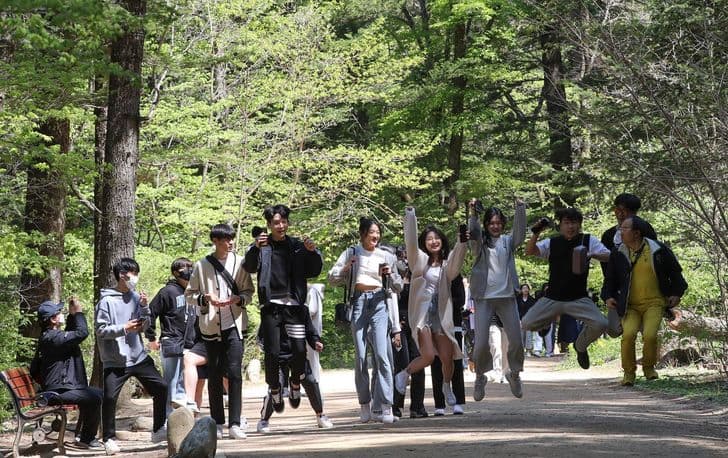
For decades, overnight field trips represented a cherished milestone in South Korean education. Students anticipated these excursions throughout their academic careers, whether journeying to the volcanic landscapes of Jeju Island, hiking the mountains of Gangwon Province, or exploring the ancient temples of Gyeongju. These experiences offered not merely recreation but crucial opportunities for independence, social bonding, and practical learning impossible to replicate within classroom walls. The trips developed peer relationships across class hierarchies and allowed children to experience limited freedom from the intense academic pressures defining South Korean schooling.
Yet this tradition is rapidly vanishing. Nearly half of the nation’s schools have abandoned overnight experiential learning programs entirely, replacing them with abbreviated day trips, sterile activities based at school, or nothing at all. The shift reflects not budget constraints, declining student interest, or pandemic precautions, but a climate of legal fear now permeating the teaching profession. Educators increasingly view these excursions through a lens of potential criminal jeopardy rather than educational opportunity, fundamentally altering how South Korean children experience their formative years and creating a generational divide in educational experiences.
The Data Reveals a Crisis
A comprehensive survey conducted by the Korean Teachers and Education Workers Union exposes the extent of this retreat from experiential learning. The union polled 789 branch heads nationwide between March 23 and 30, representing elementary schools (41.95 percent), middle schools (27.76 percent), and high schools (23.07 percent). The results paint a stark picture: only 53.4 percent of institutions organized overnight field trips during the past academic year. This marks a dramatic reduction from previous years, effectively halving the number of schools willing to undertake these educational journeys.
The remaining institutions opted for safer alternatives. Approximately 25.9 percent conducted only day trips, while 10.8 percent replaced external excursions with activities confined to school grounds. Most alarmingly, 7.2 percent of schools suspended all forms of experiential learning, denying students any structured opportunity for external site education. When questioned about their reluctance to organize overnight programs, 89.6 percent of teachers cited fear of criminal liability should an accident occur, with 54.8 percent describing this pressure as “very high.”
The Sokcho Ruling That Terrified a Profession
To understand why 89.6 percent of educators now fear criminal prosecution, one must examine a specific tragedy that has reshaped the legal landscape surrounding school trips. In November 2022, an elementary school student died during a field trip to Sokcho, Gangwon Province, when a chartered bus struck the child while reversing in a parking lot. The incident triggered not only profound grief but a criminal prosecution that sent shockwaves through every staff room in the nation.
Authorities charged both the homeroom teacher and an assistant chaperone with occupational negligence resulting in death, a serious criminal offense in South Korea that can carry significant prison sentences and permanent marks on professional records. The court of first instance found the homeroom teacher failed to exercise sufficient duty of care while supervising students, sentencing the educator to six months imprisonment suspended for two years. While the appellate court later reduced the sentence and granted a stay of execution allowing the teacher to avoid immediate incarceration and retain their position, the initial guilty verdict established a terrifying precedent. Teachers could face criminal conviction and jail time for accidents occurring during educational activities, even when the incident involved third party negligence, such as a bus driver reversing unsafely in a parking area.
This case introduced the aggressive application of “professional negligence” (업무상 과실치사) into routine educational contexts. Under South Korean criminal law, this charge applies to individuals who cause harm through failure to perform required duties in their professional capacity. For teachers, courts have interpreted this doctrine to extend criminal liability to supervisory responsibilities during field trips, meaning educators bear potential prison sentences for student safety even in circumstances where direct control seems limited or external contractors are involved. Previously, teachers might have faced civil lawsuits or professional disciplinary action for accidents. Now they confront potential criminal records, imprisonment, and the end of their teaching careers. The ruling transformed field trips from valuable educational opportunities into dangerous legal exposures, prompting educators nationwide to reconsider whether any experiential learning benefits justify the possibility of incarceration and professional ruin.
Buried in Paperwork Before the Journey Begins
Beyond the threat of criminal prosecution, teachers face crushing administrative burdens that consume time otherwise dedicated to instruction. According to the union survey, 84 percent of respondents identified excessive administrative requirements as a major obstacle to organizing field trips. These responsibilities include conducting mandatory prior site inspections, negotiating complex contracts with transportation companies and accommodation providers, preparing extensive safety documentation exceeding standard lesson planning, and securing multiple layers of administrative approval from principals and education boards.
Teachers report spending more hours on trip logistics than on curriculum development or direct student preparation for the educational content. Each potential destination requires physical inspection by faculty members who must personally verify safety conditions, photograph emergency exit routes, check facility compliance with educational standards, and assess food safety protocols. The paperwork extends to detailed liability waivers, comprehensive medical history reviews for all participants, and contingency planning documents addressing various emergency scenarios from natural disasters to student illnesses. This bureaucratic load falls on teachers already managing heavy course loads and preparation for critical examinations, effectively converting field trips from educational experiences into administrative nightmares that extend workdays into evenings and weekends.
The pressure manifests in additional ways. While 72.2 percent of surveyed teachers indicated their opinions are formally reflected in trip planning decisions, 35.5 percent reported feeling forced to participate against their better judgment or experiencing significant pressure to approve excursions they considered risky. This creates a toxic dynamic where teachers cannot refuse participation without professional repercussions, yet face devastating legal consequences if anything goes wrong.
When Safety Fears Meet Financial Reality
Recent controversies reveal that liability concerns are not the only pressure forcing schools to abandon traditional trips. In early April, an online post disclosed that a three day middle school excursion to Gangwon Province would cost each student 606,000 won (approximately $410 to $440). The price triggered immediate backlash from parents who considered the amount excessive for a domestic public school trip, leading the school to cancel the event entirely. The cancellation illustrates how modern field trips face scrutiny from multiple directions simultaneously, caught between teacher fears of imprisonment and parent concerns about household budgets.
This incident highlights inflationary pressures affecting educational travel across the nation. Rising accommodation costs, transportation fees, and insurance premiums have pushed trip prices beyond what many working families can afford. The financial burden creates a dual crisis that threatens the viability of school excursions regardless of safety protocols. Families struggle with expenses while teachers fear the legal ramifications of organizing the activity. Schools find themselves caught between providing enriching experiences and protecting both family budgets and teacher welfare, often concluding that cancellation serves all parties better than proceeding with expensive, high stress activities.
Some institutions have begun shifting toward class level experiential activities rather than traditional grade wide overnight trips. These smaller events reduce logistical complexity and liability exposure but sacrifice the broader social benefits of large group travel. Other schools have eliminated external activities entirely, substituting virtual tours or guest speakers for practical field experiences that once defined South Korean childhood memories.
Demands for Structural Change
The Korean Teachers and Education Workers Union has issued urgent demands for comprehensive institutional reform to preserve experiential learning while protecting educators from unjust legal consequences. Survey participants identified “strengthening immunity from criminal liability for teachers” as the most critical priority, with 80.9 percent supporting this measure. Teachers specifically request that authorities exclude the application of “professional negligence resulting in death or injury” charges for accidents occurring during legitimate educational activities, arguing that criminal prosecution should be reserved for cases of intentional harm or extreme recklessness rather than unavoidable accidents.
Additional reform priorities include establishing clear national safety standards that define exactly what precautions satisfy legal duty of care, thereby removing subjective judicial interpretation of teacher responsibility. Some 30.8 percent of respondents supported restricting or discontinuing overnight programs entirely if liability cannot be addressed, while 26.6 percent emphasized clarifying safety standards. Teachers also demand expanding professional safety personnel to handle supervision and emergency response rather than placing sole responsibility on homeroom teachers, and guaranteeing educators’ right to refuse trip participation without professional penalty or career damage.
The union argues that current structures treat educational activities as dangerous, burdensome work rather than valuable pedagogy essential for child development. They stress that the fear of criminal liability ultimately reduces educational quality and deprives students of essential learning experiences that build social skills and practical knowledge. Without fundamental changes that decriminalize accidents in educational contexts while maintaining reasonable safety standards, experiential learning will continue its rapid decline in South Korean schools, leaving future generations with diminished educational memories and reduced practical competencies.
The Educational Cost of Extreme Caution
The disappearance of overnight field trips represents more than the loss of recreational outings. These programs traditionally provided South Korean students with rare opportunities to practice independence, navigate unfamiliar environments, and build relationships outside hierarchical classroom structures. In an education system often criticized for excessive academic pressure and rigid discipline, field trips offered space for personal growth and informal learning that balanced the rigorous demands of examination preparation and standardized testing.
As schools retreat to campus grounds or cancel activities entirely, students lose access to experiential education that cannot be replicated through textbooks or digital presentations. The shift toward risk aversion, while protecting individual teachers from legal exposure, may ultimately disadvantage entire student generations who miss formative experiences previous age groups considered essential elements of their development. Whether South Korea can balance legitimate safety concerns with the educational value of field trips remains an open question requiring immediate policy attention and structural reform.
Key Points
- Only 53.4% of South Korean schools organized overnight field trips this year, down dramatically from previous years, with 7.2% canceling all experiential learning.
- 89.6% of teachers cite fear of criminal liability as the primary reason for avoiding trips, following a 2022 court case where a teacher received a suspended prison sentence after a student died in a bus accident during a Sokcho field trip.
- 84% of educators report excessive administrative burdens including mandatory site inspections, safety documentation, and contract negotiations that consume more time than curriculum preparation.
- Rising costs have created additional pressure, with one Gangwon Province trip costing 606,000 won ($440) per student, sparking parent backlash and trip cancellations.
- The teachers union demands exemption from “professional negligence” charges for educational accidents, clearer safety standards, and the right to refuse trip participation without penalty.