When Green Packaging Costs the Earth
An investigation has exposed how vast tracts of Indonesian rainforest home to critically endangered orangutans were cleared to produce supposedly carbon-neutral packaging for global pharmaceutical brands. British consumer healthcare giant Haleon, maker of Panadol and Sensodyne, announced it is severing ties with Asia Symbol after an AFP and The Gecko Project investigation traced wood from deforested Borneo plantations through the packaging firm supply chain. The findings reveal a troubling gap between corporate sustainability pledges and environmental reality, raising serious questions about the integrity of green finance and certification schemes designed to protect the world remaining tropical forests.
Investigators used satellite imagery, government audit documents, trade records, and ship-tracking data to follow timber from cleared rainforest in Central Kalimantan to Asia Symbol mills in China. The pulp and paper firm, a subsidiary of Singapore-headquartered conglomerate Royal Golden Eagle (RGE), has publicly committed to zero deforestation since 2015 and markets carbon-neutral packaging products. Yet the investigation found that plantations feeding Asia Symbol supply chain cleared nearly 30,000 hectares of forest between 2016 and 2024, an area almost three times the size of Paris, including critical orangutan habitat.
Following the Paper Trail
The investigation focused on the Phoenix Resources International (PRI) mill in Indonesia, which began supplying Asia Symbol in January 2025. Government audit reports showed the mill received timber from 12 concessions, with satellite analysis revealing significant deforestation in at least four. One major supplier, Industrial Forest Plantation (IFP), operates across more than 100,000 hectares in Central Kalimantan, one of the planet most biodiverse regions. Between 2016 and 2024, IFP concession saw approximately 21,827 hectares of forest loss, with deforestation peaking at 6,790 hectares in 2022 alone.
Ship-tracking data confirmed the route. The cargo vessel MV Sailboard arrived in Rugao, China, from Tarakan in Borneo last June, carrying PRI-marked pulp. Local reports celebrated the shipment with ceremonial cannons and official welcome committees beneath banners bearing Asia Symbol logo. Trade records from Import Genius and vessel tracking showed PRI sent over 800,000 tons of wood chips valued at more than $70 million to Asia Symbol facilities in Rizhao and Rugao in 2024 alone.
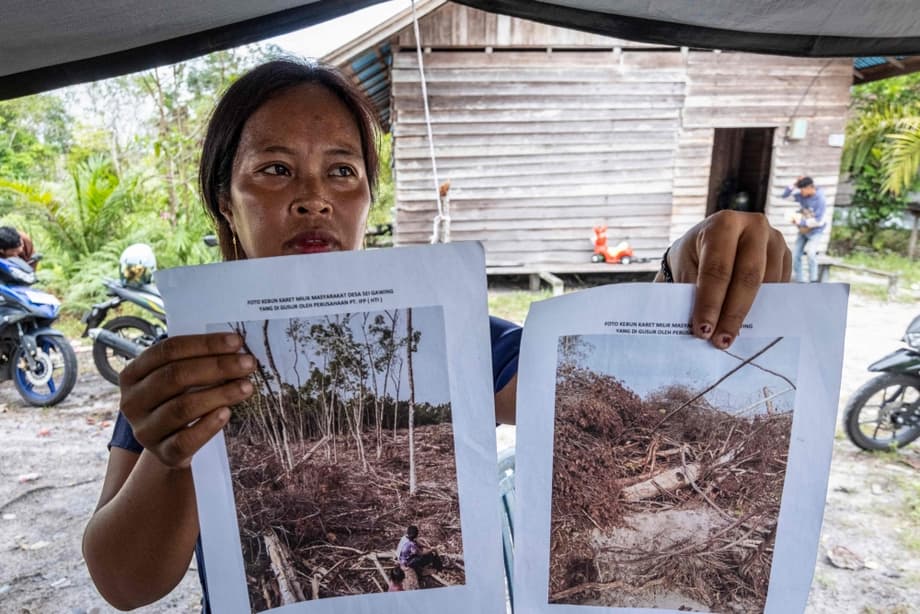
When AFP reporters visited IFP concession, the devastation was stark. On one side of a road, a biodiverse thicket of trees strung with vines. On the other, a ravaged landscape of ashy brown mud strewn with branches. Felling was actively underway during the visit, despite Asia Symbol previous pledge to stop using IFP wood indefinitely following earlier violations in 2023.
A History of Broken Promises
This is not the first time RGE and Asia Symbol have been caught sourcing from deforested lands. In July 2023, Asia Symbol acknowledged that supplier PT Balikpapan Chip Lestari (BCL) had been sourcing wood from plantations clearing rainforests in breach of no-deforestation commitments. The company promised enhanced due diligence and verification systems. Yet satellite analysis and field observations show BCL continued sourcing from PT Sendawar Adhi Karya and PT Bakayan Jaya Abadi, which cleared over 5,565 hectares of rainforest in East Kalimantan between 2020 and 2024.
The pattern extends beyond these suppliers. A 2024 investigation documented PT Mayawana Persada in West Kalimantan clearing more than 33,000 hectares of rainforest in just three years, destroying Bornean orangutan habitat and sparking conflicts with local Dayak communities. Corporate documents indicate links between Mayawana and RGE, though the conglomerate denies association. The company ownership chain leads to secrecy jurisdictions including the British Virgin Islands and Samoa, obscuring ultimate beneficial owners from public scrutiny.
RGE committed to eliminating deforestation from its supply chain in 2015. In 2024, its managing director Anderson Tanoto declared the entire supply chain 100 percent deforestation free while securing a $1 billion sustainability-linked loan. Yet the Forest Stewardship Council (FSC), the foremost body certifying sustainable forestry, maintains its suspension of RGE main pulp subsidiary APRIL. The suspension followed a 2020 FSC analysis finding APRIL suppliers had destroyed 435,877 hectares of forest, likely areas of high conservation value with irreversible loss.
Communities Face Flooding and Lost Livelihoods
Inside IFP concession in Humbang Raya village, 69-year-old village secretary Agau described the transformation with tears in his eyes. Animals and birds have disappeared. Locals who once relied on the forest for food and income have been forced to leave and find work elsewhere. The biodiversity that once defined the area has been replaced with fast-growing acacia and eucalyptus monocultures.
About 30 kilometers away in Sei Gawing, residents fear drinking water from the nearby river due to plantation run-off. Floods have become more frequent and severe since tree cover that absorbed rainwater vanished. Village head Dodie Kristiawan explained that unlike before, flooding now reaches people homes. Indonesia government acknowledged last year that deforestation worsened floods and landslides in Sumatra that killed over 1,000 people, yet permits for forest clearing continue elsewhere.
Ika Magdalena, a pregnant mother of three, lost her farmland when it was incorporated into IFP concession. Promised compensation never arrived. She now runs a small snack stall to survive. They have already damaged our crops, and they do not want to take responsibility, she said. It breaks our hearts, but they just stay silent. Environmental group WALHI Central Kalimantan notes that jobs at these plantations mostly go to outsiders, leaving local communities with no alternative options for sustenance.
Shell Companies and Shadow Operations
The investigation reveals a complex web of offshore shell companies that obscures responsibility for environmental destruction. While RGE denies owning or controlling suppliers like BCL and PRI, multiple indicators suggest common control. Shared addresses, management personnel, and exclusive supply relationships link these entities to the conglomerate. BCL president Lina Bustam formerly served as an executive at PT Toba Pulp Lestari, an RGE-related party. Another BCL executive lists an address at RGE pulp mill in Kerinci, Sumatra.
The Phoenix mill in North Kalimantan, currently under construction and expected to process 1.7 million metric tons annually, is formally owned by PT Phoenix Resources International. Its majority shareholder is a Malaysian company, which is itself owned by a firm registered in the Cayman Islands. This corporate secrecy prevents accountability and makes it difficult for auditors and certification bodies to verify supply chain claims. According to new FSC guidelines adopted in October 2025, mills under such financial control are considered part of the corporate group, potentially placing RGE in breach of FSC policies prohibiting destruction of High Conservation Value areas.
Rainforest Action Network forest programme director Robin Averbeck stated that the findings indicate RGE is still very much in the business of deforestation. The group has managed to access billions of dollars in green credit from banks including Mitsubishi UFJ Financial Group by public commitments to eliminate deforestation. Campaigners call this greenwashing, using sustainability pledges to convince buyers and financiers that operations are clean while continuing destructive practices.
Global Brands and Financial Backers React
Haleon, which used Asia Symbol carbon-neutral packaging for ibuprofen boxes in China, moved quickly to distance itself from the scandal. While the company own investigation found no direct evidence that deforestation-linked material entered its supply chain, it described the allegations as very concerning. We have therefore asked our suppliers to ensure that any material supplied to Haleon is not sourced from Asia Symbol or plantation companies associated with risk of deforestation, the company stated.
The financial sector faces growing pressure to scrutinize its exposure. Mitsubishi UFJ Financial Group has provided $222 million to RGE pulp operations between 2020 and July 2025, including $95 million toward a syndicated loan in 2024. The bank adopted a No Deforestation, No Peatland, No Exploitation policy for its pulp and paper clients in 2023, yet has not disclosed clear time-bound commitments to achieve a deforestation-free portfolio. Institutional investors increasingly demand that banks apply due diligence at the corporate group level rather than just specific subsidiaries, recognizing that shadow companies often continue destructive practices while parent companies claim plausible deniability.
Asia Symbol confirmed it has commenced a focused review of PRI-related sourcing and claimed it would immediately cease all supply from BCL. The company insists its carbon-neutral products for Haleon did not use PRI pulp, though it failed to explain how it separates pulp from different sources in practice. RGE maintains its supply chain is 100 percent deforestation free, despite mounting evidence to the contrary spanning multiple years and investigations.
The Stakes for Indonesia Forests
Indonesia has some of the world highest rates of tree cover loss, threatening not only endangered species like orangutans but also climate stability and community safety. The archipelago rainforests support 15 percent of all known species of flora and fauna, including elephants, tigers, and over 1,500 bird species. The Bornean orangutan population has declined by more than 50 percent, leaving an estimated 45,000 to 69,000 in the wild. The Mahakam River region in East Kalimantan, affected by BCL sourcing, is home to critically endangered Irrawaddy dolphins and served as habitat for Sumatran rhinos, previously thought extinct in the wild until detected there in recent years.
For communities like Humbang Raya, the solution is straightforward: stop issuing permits to companies that clear forests. Agau remains skeptical of replanting promises. You plant one tree, a million are lost. It is not balanced, he said. Our lives, our livelihood here, depend on the forest that we have. That is our only hope. The case underscores how carbon-neutral labels can mask deep environmental and social damage, and how green finance flows to companies whose operations devastate the very ecosystems they claim to protect.
What to Know
- An investigation by AFP and The Gecko Project found that Asia Symbol, which makes carbon-neutral packaging, sourced pulp from mills supplied by plantations that cleared nearly 30,000 hectares of Indonesian rainforest, including orangutan habitat, between 2016 and 2024.
- Pharmaceutical giant Haleon, maker of Panadol and Sensodyne, has cut ties with Asia Symbol following the investigation, asking suppliers to ensure no materials come from the company or associated plantation firms.
- Asia Symbol parent company Royal Golden Eagle (RGE) committed to zero deforestation in 2015 but has been repeatedly linked to forest clearing through complex supply chains involving shell companies in secrecy jurisdictions like the Cayman Islands and British Virgin Islands.
- Local communities in Central Kalimantan report devastating impacts including increased flooding, loss of wildlife, polluted water sources, and lost livelihoods, with little compensation or local employment from the plantations.
- RGE continues to seek Forest Stewardship Council certification while suspended, and has secured billions in sustainability-linked loans from banks including Mitsubishi UFJ despite ongoing deforestation allegations documented by satellite imagery and trade records.