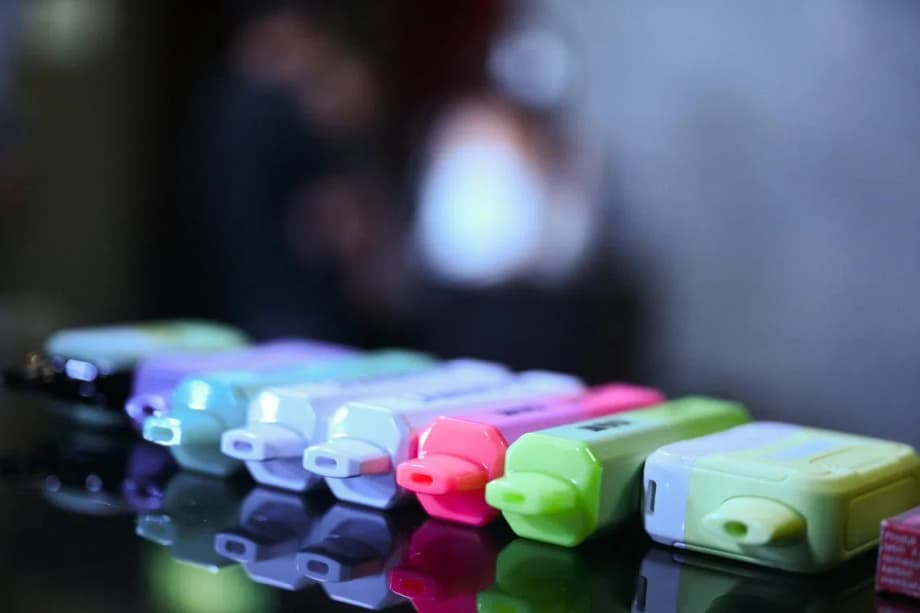
South Korea Reclassifies Vapes as Tobacco in Landmark Regulatory Shift
Starting April 24, South Korea will implement one of the most significant changes to its tobacco control framework in nearly four decades. Liquid electronic cigarettes, commonly known as vapes, will face the same stringent regulations as conventional combustible cigarettes under a comprehensive revision to the Tobacco Business Act. This legislative overhaul expands the legal definition of tobacco products for the first time in 37 years, closing regulatory gaps that have allowed synthetic nicotine products to flourish while youth vaping rates climbed steadily.
- South Korea Reclassifies Vapes as Tobacco in Landmark Regulatory Shift
- The Synthetic Nicotine Loophole Finally Closes
- Public Use Restrictions and Penalties Take Effect
- Packaging Standards and Marketing Restrictions
- Youth Vaping Statistics Drive Urgent Reform
- Drug Trafficking Concerns Add New Dimension
- Guidelines for International Travelers
- Market Evolution and Future Outlook
- Key Points
The revised law fundamentally alters how South Korea classifies nicotine delivery systems. Previously, the Tobacco Business Act defined tobacco products strictly as items made from tobacco leaves manufactured in forms suitable for smoking, sucking, inhaling vapor, chewing, or sniffing. This narrow definition created a significant loophole. Products containing synthetic nicotine, which is produced in laboratories rather than extracted from tobacco plants, technically fell outside the law’s scope. The amendment broadens the definition to encompass all products made from tobacco or nicotine, regardless of source, effectively placing liquid e-cigarettes under the full regulatory umbrella traditionally reserved for conventional cigarettes.
The Synthetic Nicotine Loophole Finally Closes
For years, South Korean regulators watched as synthetic nicotine products proliferated through unmanned retail stores and online platforms, largely escaping the taxes, licensing requirements, and advertising restrictions applied to traditional tobacco products. Because synthetic nicotine is not derived from tobacco leaves, manufacturers and retailers operated in a legal gray area that allowed them to sell flavored vaping products with minimal oversight while avoiding the heavy taxation applied to conventional cigarettes.
The revised Tobacco Business Act eliminates this distinction. Starting April 24, all nicotine-based products, whether derived from tobacco leaves or synthesized in laboratories, will be subject to the National Health Promotion Act. This change mandates graphic health warnings on packaging, imposes strict limits on advertising channels, and requires sellers to obtain specific tobacco retail licenses. The Ministry of Health and Welfare has indicated that compliance inspections will begin immediately upon the law’s effective date, targeting manufacturers, importers, and retail establishments to ensure adherence to the new standards.
Public Use Restrictions and Penalties Take Effect
Users of liquid e-cigarettes will face immediate changes to where they can legally vape. Under the expanded definition, all nicotine-based products are now prohibited in designated nonsmoking areas throughout South Korea. This aligns vaping restrictions with conventional cigarette bans that have been in place since 2015 in indoor spaces such as restaurants, cafes, workplaces, and public transportation systems.
The enforcement mechanism carries real financial consequences. Violators face fines of 100,000 won, approximately $68 to $86 depending on exchange rates. Until now, authorities frequently canceled these fines when they discovered the offender was using a vape rather than a conventional cigarette, as the previous legal definition did not explicitly cover liquid e-cigarettes. This enforcement gap ends April 24, when vaping in smoke-free zones will trigger the same penalties as traditional smoking. The Ministry of Health and Welfare will coordinate with local governments to strengthen patrols and ensure consistent implementation of smoke-free policies across jurisdictions.
Packaging Standards and Marketing Restrictions
The regulatory framework introduces specific requirements designed to reduce the appeal of vaping products to younger consumers. Manufacturers and importers must now display graphic health warnings and warning text on all packaging and in any permitted advertising. The law strictly limits where tobacco advertising can appear, confining it to periodicals such as magazines, event sponsorships, inside retail stores, and aboard international aircraft and passenger ships.
Flavor marketing faces particular scrutiny. The regulations explicitly prohibit flavor descriptors such as “mango,” “mint,” and “sweet” on e-liquid bottles and packaging when the product contains flavoring agents. Related imagery suggesting fruit, candy, or dessert flavors is similarly banned. These restrictions target marketing tactics that health officials say have made vaping products attractive to teenagers. Violations of these packaging and advertising rules carry substantial penalties, with fines reaching up to 5 million won ($3,472) or potentially imprisonment for up to one year for severe infractions. For businesses, this represents a fundamental shift in how vaping products can be presented and sold in the South Korean market.
Youth Vaping Statistics Drive Urgent Reform
Data from the Korea Disease Control and Prevention Agency reveals troubling trends that prompted the legislative response. Among female students in grades six through eleven, liquid e-cigarette usage reached 1.54 percent in 2025, surpassing conventional cigarette smoking at 1.33 percent and heat-not-burn tobacco products at 0.32 percent. This marks the first time that vaping has become the most commonly used tobacco product among female students in South Korea.
Adult usage patterns show a similar trajectory. Vape use among adults has climbed steadily from 2 percent in 2016 to 3.8 percent in 2024, even as conventional cigarette smoking rates declined from 23.2 percent in 2013 to 15.9 percent in 2024. The overall youth vaping rate reached 2.9 percent in 2025, approaching the 3.3 percent rate for conventional cigarettes among teenagers. Health officials note that 61.4 percent of youth smokers use both vaping products and conventional cigarettes, suggesting that e-cigarettes function as a gateway rather than a cessation tool for many young users.
The accessibility of vaping products through unmanned stores and online platforms has exacerbated these trends. Recent inspections found that 11 percent of e-cigarette vending machines lacked functioning age verification devices, while many unstaffed shops operated without proper retailer designation or adult certification systems. The revised law tightens controls on automated sales devices, restricting installation to licensed retailers and requiring placement in locations where minors are prohibited, such as designated smoking rooms or adult-only zones. All vending machines must now include functioning adult verification technology.
Drug Trafficking Concerns Add New Dimension
Beyond nicotine addiction, South Korean authorities are increasingly concerned about e-cigarettes serving as delivery mechanisms for illegal narcotics. Data from the National Forensic Service indicates that seizures of drug-laced e-cigarettes and liquid narcotics rose dramatically from 1,870 cases in 2022 to 3,713 in 2023 and 5,378 in 2024. Among teenage drug suspects in 2024, e-cigarettes and liquid-type narcotics accounted for 146 of 506 drug seizure cases, exceeding powdered drugs at 122 cases and syringes at 38 cases.
Traffickers are reportedly exploiting the accessibility of vaping hardware and the psychological barrier-lowering effect of e-cigarettes among teenagers. Synthetic cannabis and similar substances can resemble ordinary nicotine vaping products in appearance while lacking the distinctive smoke or odor associated with traditional marijuana, making them easier to conceal from parents and law enforcement. In one documented case, a 17-year-old high school student encountered synthetic cannabis after an adult offered her a “tasty liquid” to smoke through an e-cigarette device, later realizing she had been exposed to illegal drugs.
Critics note that while the Tobacco Business Act revision regulates nicotine-containing liquids, the amendment does not directly address the electronic devices themselves or other solvents that can be used as drug-delivery tools. This regulatory gap leaves teenagers able to obtain vaping hardware with relative ease, potentially pushing purchases of suspicious liquids into underground markets. Public health experts are calling for broader measures to raise barriers to e-cigarette use among adolescents through enhanced education and stricter sales controls.
Guidelines for International Travelers
Tourists and business visitors planning to bring vaping products into South Korea should be aware of strict customs regulations that carry significant consequences for noncompliance. Travelers may bring personal vape devices and e-liquids into the country, but duty free allowances are limited to less than 20 milliliters of total e-liquid volume, and all liquids must contain less than 1 percent nicotine concentration (10mg/ml).
Any traveler carrying 20 milliliters or more of e-liquid, or any liquid with 1 percent nicotine or higher, must declare these items to customs upon arrival. Failure to declare can result in confiscation, payment of taxes and duties, and potentially substantial fines. Authorities strongly discourage importing e-liquids with 1 percent nicotine or higher, as these may be classified as importing a “chemical substance” requiring complex procedures unsuitable for tourists. Liquids exceeding 2 percent nicotine face particularly high confiscation risks.
When packing for flights, all vaping devices containing lithium-ion batteries must be carried in hand luggage and are strictly prohibited in checked baggage due to fire safety regulations. E-liquids are best packed in checked luggage to avoid issues with hand luggage liquid limits, though travelers should ensure bottles are sealed in plastic bags to prevent leakage. Airport customs officials at major hubs like Incheon International, Gimhae, and Gimpo airports enforce these rules through random X-ray scans and inspections, with penalties increasing by 40 to 60 percent for “untruthful declaration” if travelers attempt to pass through the Green Channel (nothing to declare) while carrying restricted items.
Market Evolution and Future Outlook
The regulatory shift will fundamentally reshape South Korea’s tobacco market, which is valued at approximately $16 billion. E-cigarettes had captured 13 percent of the market by sales as of mid-2019, with the country representing the world’s second-largest market for heated tobacco products after Japan. The new classification means that manufacturers and retailers must now navigate the same licensing, taxation, and distribution controls applied to conventional cigarettes.
Online sales of nicotine-containing vaping products are now generally prohibited, restricting purchases to licensed physical retailers including convenience stores and specialty vape shops. Retailers must obtain specific tobacco sales licenses, and manufacturers face requirements to meet product standards under the Consumer Product Safety Act for non-nicotine items or tobacco product standards for nicotine-containing devices. Taxation rates on nicotine e-liquids already equal or exceed 50 percent of those applied to conventional cigarettes, with historical trends indicating these rates have increased over time.
The South Korean government has positioned these changes as aligning with the World Health Organization Framework Convention on Tobacco Control. Delegates at the 11th Conference of the Parties adopted resolutions last year to regulate all types of tobacco products, specifically addressing challenges posed by novel and emerging nicotine products. A health ministry official stated that the revision establishes a youth smoking prevention network meeting international standards, describing the legislation as a cornerstone to reduce tobacco exposure among future generations and to move toward a generation free of tobacco.
Key Points
- Liquid e-cigarettes are regulated as conventional tobacco products starting April 24 under the revised Tobacco Business Act
- The legal definition of tobacco expands for the first time in 37 years to include all nicotine-based products, closing the synthetic nicotine loophole
- Vaping is now prohibited in all designated nonsmoking areas with fines of 100,000 won for violations
- Travelers may bring less than 20ml of e-liquid with under 1% nicotine concentration duty free; higher amounts or concentrations require declaration
- Flavor descriptors such as “mango” and “mint” are banned from packaging, and graphic health warnings are mandatory
- Youth vaping rates among female students grades 6-11 reached 1.54 percent, surpassing conventional cigarette use at 1.33 percent
- Drug-laced e-cigarette seizures increased from 1,870 cases in 2022 to 5,378 cases in 2024
- Online sales of nicotine vaping products are prohibited; sales restricted to licensed retailers with age verification systems