One Economic Blueprint, Two Visions Across the Strait
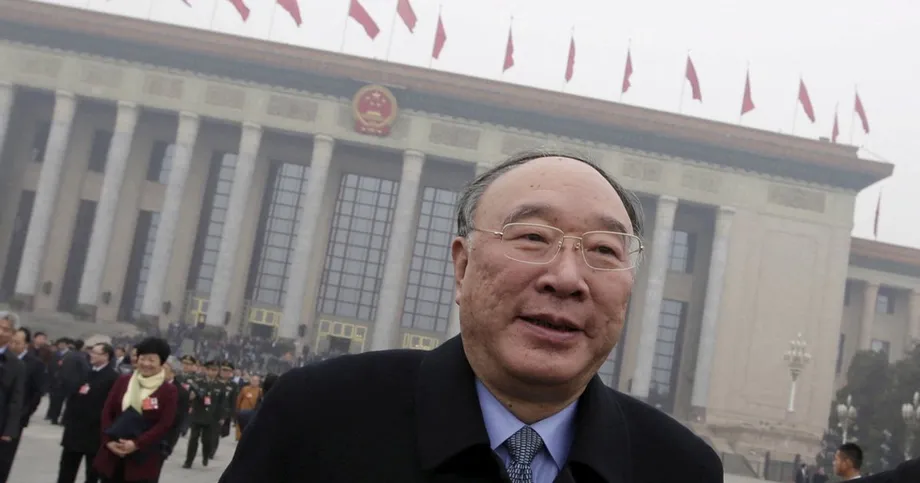
China's 15th Five-Year Plan for 2026-2030 is drawing sharply different responses from Taiwan business leaders and officials in Taipei. Entrepreneurs operating on the Chinese mainland see opportunities for investment, industrial cooperation and better public services. Taiwan security officials fear that the same measures could gradually give Beijing greater control over Taiwan territory, particularly the frontline islands of Kinmen and Matsu.
Contents
- One Economic Blueprint, Two Visions Across the Strait
- Business Leaders Look Beyond Low Costs
- Equal Treatment Reaches Into Family Life
- Pingtan Tests What a Common Market Could Mean
- Why Kinmen and Matsu Draw Security Scrutiny
- Bridges, an Airport and a Firm Territorial Claim
- A Strategy of Dependence or Peaceful Development?
- The Dates Behind the Debate
- Global Competition Meets a Short Ferry Crossing
- Key Points
Approved during the fourth session of the 14th National People's Congress earlier in April 2026, the plan sets China's development priorities for the next five years. Its ambitions range from technological self-reliance to expanding the domestic market. Taiwan policies occupy a substantial place in its economic strategy, combining closer commercial ties with promises of equal treatment for Taiwan residents living and working on the mainland.
The Taiwan Affairs Office of the State Council presents the coming years as an opportunity for people and companies from Taiwan to share in mainland development. Taipei's concern is that commercial cooperation, infrastructure connections and common rules could gradually blur the boundaries separating the two sides.
For businesses already established on the mainland, Beijing's approach offers continuity during global uncertainty. For security officials, the issue goes beyond who claims sovereignty, meaning ultimate authority over a territory. Their concern is jurisdiction: who actually makes decisions, applies rules and runs services in a particular place.
That divide will shape implementation through 2030. The same electricity connection, professional certificate or investment rule can look like practical assistance to a company or family and a source of political dependence to officials responsible for security. Economic cooperation and concern about political control are therefore developing together.
Business Leaders Look Beyond Low Costs
Thousands of Taiwan business owners operating on the mainland view the plan as a source of stability. Wu Chia-ying, vice president of the Association of Taiwan Investment Enterprises on the Mainland, described it as providing "a more comprehensive and clearer roadmap for integrated development across the Strait." His assessment reflects confidence among Taiwan entrepreneurs there that Beijing remains committed to economic cooperation despite political tensions.
Edward Lee, CEO of Johnson Health Tech Co Ltd China, identified industrial cooperation and a common market as priorities. A common market would go beyond buying and selling goods across the Strait, extending toward shared professional standards and regulatory arrangements that could help Taiwan firms compete on equal terms with mainland companies.
Lee explained his expectations for policy changes:
We expect further improvements in policies on cross-Strait integration, which can help build closer industrial cooperation and develop a common market across the Strait,
Lee Cheng-hung, chairman of the Association of Taiwan Investment Enterprises on the Mainland, linked business strategy to the plan's focus on "high-quality development." He said Taiwan companies increasingly seek "innovation dividends instead of only focusing on market size and cost advantages." In practical terms, firms want returns from new technology and products, rather than relying mainly on a large customer base or cheaper production.
Li Ming-hui, general manager of LIHPAO Life Science (Xiamen) Biotechnology Co Ltd, expects support from the plan's call to accelerate the building of a healthy China. His expectations show how a national policy goal can influence decisions within an individual industry.
Li described the opportunity for Taiwan companies:
The Plan provides industrial upgrading opportunities for Taiwan entrepreneurs and businesses, opening up a promising new market space for us,
Biotechnology, electric vehicles and artificial intelligence are among the technology sectors in which Beijing seeks Taiwan expertise. Taiwan businesses are positioning themselves as technology partners, extending a relationship previously associated more closely with manufacturing.
Equal Treatment Reaches Into Family Life
Taiwan residents living on the mainland also have practical reasons to watch the plan. It calls for full implementation of policies providing equal treatment with local residents, including access to children's education, medical care and financial services.
Wu Chia-ying said support for Taiwan families in Xiamen, particularly in education and healthcare, helps them concentrate on their longer term development without worries about domestic arrangements. For people raising children or building careers away from Taiwan, those services influence whether they can settle and remain.
Hung Chi-en, who has worked in environmental protection in Jiangsu Province since 2015, pointed to equal treatment in finance and human resources. He said those experiences strengthened his sense that "both sides of the Strait belong to one family." His response illustrates the personal and political meaning that Beijing attaches to policies presented as improvements to everyday life.
Chen Binhua, spokesperson for the Taiwan Affairs Office of the State Council, outlined implementation measures at a recent press briefing. These include support for the Fujian cross-Strait integrated development demonstration zone and cooperation hubs in Pingtan, Kunshan and Dongguan.
Qualified firms funded by Taiwan investors will be encouraged to list on mainland stock markets. Beijing also plans to develop financial markets operating at different levels to support capital moving across the Strait. For companies, access to those markets could provide more ways to raise money for investment and expansion.
Chen also described measures to make travel easier, restore tourism exchanges and promote contact among young people and local communities. Taiwan enterprises are encouraged to modernize traditional industries through digital technology and enter emerging sectors using the mainland's research, technology and business networks.
Chen presented the coming period in explicitly economic terms:
The next five years, a significant stage for the mainland's development, will also be a period of great opportunities for Taiwan residents and enterprises,
Pingtan Tests What a Common Market Could Mean
Pingtan Comprehensive Pilot Zone in Fujian Province sits at the forefront of Beijing's integration strategy. During the 2026-2030 plan, officials want it to serve as a testing ground for a cross-Strait "common market," with the greatest possible relaxation of restrictions on Taiwan capital in trade, investment and information services.
Wen Xuelin, deputy secretary of Pingtan's Party Working Committee, outlined plans for mutual recognition of professional qualifications, enterprise credentials and product certifications. Mutual recognition means accepting a qualification or approval issued elsewhere, reducing the need for a person or company to complete another approval process.
Pingtan's approach also seeks common standards in agriculture and construction. Those arrangements could make it easier for Taiwan businesses to operate under compatible rules, bringing integration into the practical details of who can work, which companies qualify and what products can be sold.
Cross-Strait trade through Pingtan grew by an average of 21.7 percent annually during the 14th Five-Year Plan period. The zone has become one of the mainland's largest entry points for Taiwan agricultural and fishery products, while its electronic commerce across borders ranks among the country's leading operations.
Huang Jianbo, director of the Pingtan Management Committee, said the Cross-Strait Professional Qualification Integrated Service Center has issued nearly 6,000 certificates recognized across multiple provinces. The figure shows that the effort to make qualifications usable beyond one location is already operating.
Pingtan has also introduced mutual recognition of Taiwan resident permits and travel passes and established the mainland's only cross-Strait arbitration center. Arbitration provides a way to resolve disputes outside ordinary court proceedings. These economic and social measures are intended to bring Taiwan residents more deeply into local life and social governance, creating a model Beijing hopes to reproduce in other coastal provinces.
Why Kinmen and Matsu Draw Security Scrutiny
Taiwan's government is watching the plan with particular concern for Kinmen and Matsu, islands controlled by Taiwan just off China's coast. Kinmen lies only two kilometers from Fujian Province at its closest point. That proximity makes economic connections convenient while exposing the islands to sustained mainland influence.
Officials familiar with security assessments said Taipei is paying close attention to language about deeper economic integration with these frontline islands. Beijing has combined frequent coast guard incursions into Kinmen's waters with offers of gas, electricity and water supplies, using pressure and incentives together.
A water supply deal secured under the previous Kuomintang government already links an essential service to the mainland. Current policymakers worry about dependence on infrastructure that provides necessities, because decisions affecting those services could also affect Taiwan's room to act.
A senior Taiwan official, speaking on condition of anonymity, described the concern as a change in the nature of the dispute:
Cross-strait relations could shift from past sovereignty disputes to a contest over jurisdiction.
The official's warning centers on the possibility that Beijing could gain practical administrative control over Kinmen without formally annexing it. A second regional official expressed a similar concern that China might use the economic blueprint to exercise "de facto administrative power" over the islands. In plain terms, the fear is that Beijing could increasingly influence how the islands function while their formal status stays unchanged.
Business leaders focus on easier commerce and more reliable services. Taiwan security officials focus on whether those connections could transfer decisions about local life toward Beijing. Kinmen and Matsu bring those competing assessments into a small geographical space, where infrastructure and administrative arrangements carry immediate political weight.
Bridges, an Airport and a Firm Territorial Claim
China's bridge to Kinmen, still under construction, is a particular concern for Taipei. The new Xiamen airport, scheduled to open in 2027, adds to those anxieties. At its closest point, the airport is about three kilometers from Kinmen.
Taiwan officials fear that deeper physical and economic connections could gradually weaken sovereignty. One official invoked Russia's annexation of Crimea, the Ukrainian territory seized in 2014, to describe the stakes of a possible attack on Kinmen.
The official warned:
If they dare to invade [Kinmen], we will become the next Crimea,
Jessica Chen, Kinmen's Kuomintang legislator, acknowledged China's desire for closer economic integration with the islands while asserting that territorial authority remains with the Republic of China, Taiwan's formal name.
Chen stated her position on jurisdiction:
Kinmen is the territory of the Republic of China. Its jurisdiction belongs to the Republic of China - this is beyond doubt.
Her statement captures the balance facing politicians who support practical economic connections while defending Taiwan's authority. The central disagreement concerns whether integration can remain a commercial arrangement or will gradually change who exercises power.
A Strategy of Dependence or Peaceful Development?
Ming Juzheng, honorary professor of political science at National Taiwan University, argues that the plan conceals an "integration to weaken" strategy. In his assessment, Beijing seeks to absorb Taiwan through economic dependence rather than military confrontation.
Ming described his warning in direct terms:
This isn't just propaganda - it's an economic entrapment designed to bind Taiwan to Beijing. Taiwan must be vigilant against this hidden poison.
Ming traces the approach to a 2023 directive supporting Fujian Province in building a cross-Strait integrated development demonstration zone. He sees a transition from traditional united-front economic outreach, aimed at building political support, toward an organized model using trade and investment to weaken Taiwan's autonomy from within.
The comparison he draws is with the Greater Bay Area initiative linking Hong Kong with Guangdong Province. Critics view that initiative as a way of bringing peripheral regions more firmly under central control. Ming warns that successful integration in Kinmen and Matsu could create a "Hong Kong-style showcase," weakening Taiwan's identity before the approach spreads to the main island.
The timing of any escalation is disputed. Some Western analysts have speculated that 2027, when China's military modernization goals are scheduled to peak, could serve as a deadline for unification. The 15th Five-Year Plan introduces no unification deadline, ultimatum or coercive timetable. Its stated approach stresses stability and peaceful reunification.
The Institute for China-America Studies offers a different assessment from Ming's warning. Its analysis describes the plan's language as "firm but deliberately non-escalatory, directly contradicting Western narratives of imminent conflict." The competing readings place the same economic measures within different expectations: sustained peaceful engagement on one side, growing political dependence on the other.
The Dates Behind the Debate
The policies and concerns surrounding the plan stretch across several years. Existing personal connections, an earlier Fujian directive and the new development period help explain why business expectations and security warnings have emerged together.
- 2014: Russia annexed Crimea, the event invoked by a Taiwan official warning about a possible invasion of Kinmen.
- 2015: Hung Chi-en began working in environmental protection in Jiangsu Province.
- 2023: A directive supported Fujian in building a cross-Strait integrated development demonstration zone.
- During the 14th Five-Year Plan period: Cross-Strait trade through Pingtan increased by an average of 21.7 percent annually.
- April 2026: The 15th Five-Year Plan was approved during the fourth session of the 14th National People's Congress.
- 2026-2030: The new plan's implementation period covers deeper economic integration and equal treatment measures.
- 2027: Xiamen's new airport is scheduled to open. Some Western analysts also focus on this year in debating China's military modernization and Taiwan policy.
The next five years will bring implementation decisions across investment, travel, public services and professional recognition. For companies and residents, those decisions will determine how the plan's broad promises operate in daily life.
Global Competition Meets a Short Ferry Crossing
Beijing is pursuing the plan amid intensifying strategic competition with the United States and the reorganization of supply chains worldwide. Its emphasis on domestic market development and technological self-reliance reflects a judgment that internal resilience offers a more dependable source of national strength than changing external conditions.
Taiwan policy fits both economic and political priorities. China's ambitions in artificial intelligence, quantum computing and advanced manufacturing connect with Taiwan's technology capabilities. Delta Electronics, which supplies components to companies including Apple and Tesla, is already exploring cooperation with mainland electric vehicle manufacturers, illustrating the industrial links Beijing wants to deepen.
The strategic imbalance between the two sides continues to widen. China's planning maintains continuity across political cycles, while Taiwan must balance engagement with its largest trading partner against security guarantees from partners including the United States. The plan's silence on the United States, despite Washington's central role in the wider geopolitical equation, suggests Beijing treats its Taiwan strategy as a domestic matter centered on internal consolidation rather than external negotiation.
Chang Yang-yang, a practitioner of Traditional Chinese Medicine at Xiamen Chang Gung Hospital, shows the personal side of those connections. He maintains family ties in Kinmen and travels between Xiamen and his hometown by ferry. The crossing now takes 20 minutes, compared with more than an hour during his childhood.
For residents such as Chang, closer connections bring tangible benefits that extend beyond political disputes. For Taipei, the unresolved issue is how to preserve political separation while economic ties deepen. Implementation of the 2026-2030 plan will test that relationship through concrete decisions about markets, infrastructure, public services and administrative authority.
Key Points
- China's 15th Five-Year Plan covers 2026-2030 and promotes economic integration with Taiwan alongside equal treatment for Taiwan residents on the mainland.
- Taiwan business leaders see opportunities in industrial cooperation, innovation, financial markets and public services.
- Pingtan aims to test a common market approach. Its cross-Strait trade grew by an average of 21.7 percent annually during the previous plan period.
- Pingtan's professional qualification center has issued nearly 6,000 certificates recognized across multiple provinces.
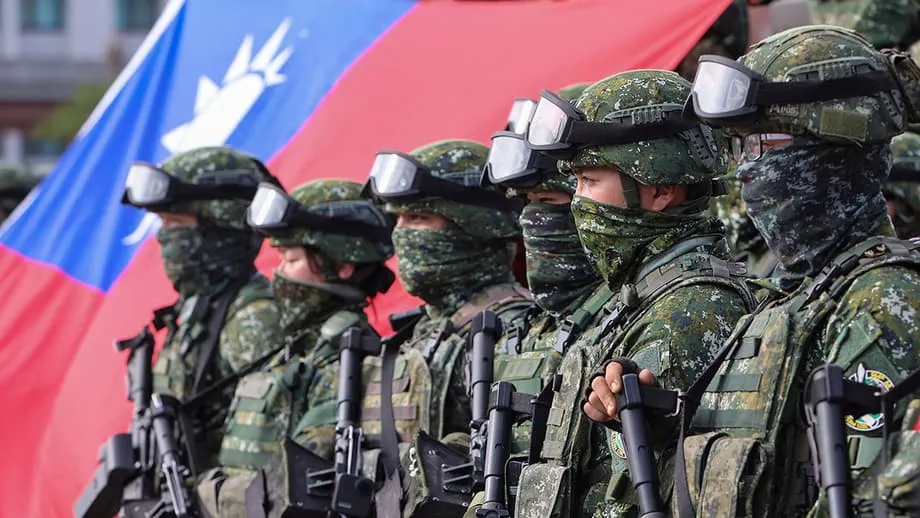
- Taiwan officials fear integration could give Beijing practical administrative influence over Kinmen and Matsu.
- Kinmen lies two kilometers from Fujian at its closest point. Xiamen's new airport, scheduled to open in 2027, is about three kilometers from Kinmen at its nearest point.
- Ming Juzheng warns of growing political dependence, while the Institute for China-America Studies describes the plan's language as deliberately restrained.
- The plan contains no deadline for unification and stresses stability and peaceful reunification.