Record March Arrivals Defy Geopolitical Headwinds
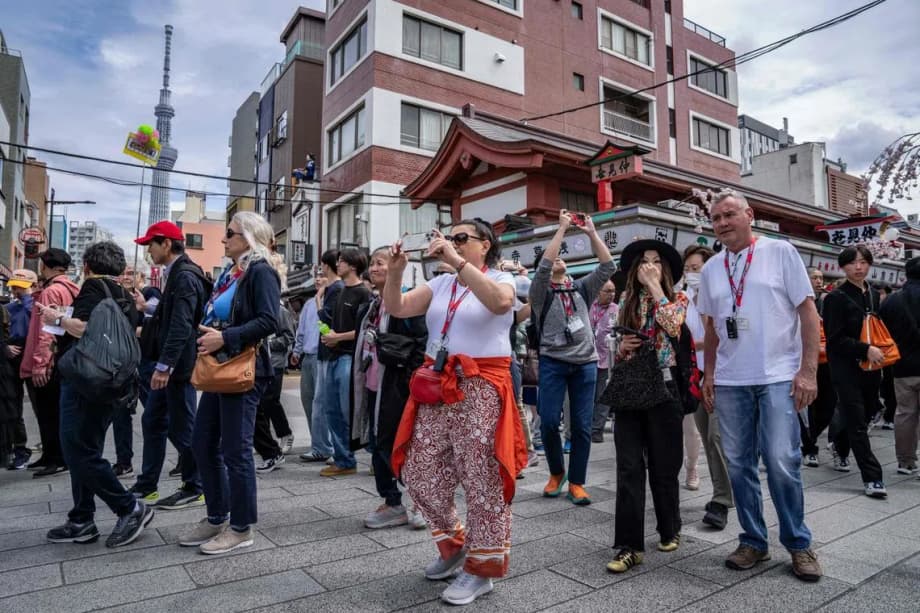
Japan welcomed 3.618 million international visitors in March 2026, setting a new monthly record for the third month of the year despite significant turbulence in global politics. The figure represents a 3.5 percent increase compared to March 2025, according to data released by the Japan National Tourism Organization on April 15. This milestone arrives as the country grapples with deteriorating relations with its former largest source market and escalating conflict in the Middle East disrupting travel corridors. The achievement underscores the resilience of Japan’s tourism sector, which has successfully pivoted toward alternative markets to compensate for steep declines from China and the Middle East.
The Japan Tourism Agency noted that seasonal factors played a crucial role in driving these numbers, with the famous cherry blossom season beginning in late March coinciding with Easter school holidays across many Western countries. The tiny white and pink petals of sakura trees herald the arrival of spring in Japan, traditionally prompting a brief period of outdoor celebrations as residents and visitors gather beneath the blooming canopy to enjoy food and drink in a custom known as hanami. Every month from April 2025 through March 2026 set new all time highs, with the exception of January, which marked the first decline in visitor numbers in four years. The fiscal year ending March 2026 recorded 42.829 million total arrivals, surpassing 40 million for the first time in history and marking a 3.97 million increase over the previous fiscal year.
The China Exodus: Diplomatic Tensions Ravage Former Top Market
Chinese visitor numbers collapsed by 55.9 percent in March, dropping to 291,600 arrivals compared to the previous year. This marks the fourth consecutive month of severe decline following a diplomatic rupture triggered by comments from Prime Minister Sanae Takaichi in November 2025. The Japanese leader suggested that a potential Chinese military action against Taiwan could constitute a threat to survival for Japan, potentially triggering a military response from Tokyo to defend the democratic island.
Beijing, which considers Taiwan part of its territory and has not ruled out force to annex it, reacted furiously to the remarks. Chinese authorities issued official travel advisories urging citizens to avoid visiting Japan, effectively weaponizing tourism in a geopolitical dispute. The impact was immediate and severe across Japan’s hospitality sector. Chinese arrivals plummeted 45 percent in December 2025, nosedived 61 percent in January 2026, and continued falling 45 percent in February before reaching the current 56 percent decline in March.
Operational realities have reinforced the diplomatic chill. Flight connections between China and Japan were reduced by approximately 60 percent during February and March 2026, according to industry data, making physical travel increasingly difficult even for those willing to ignore government warnings. Previously, Chinese tourists represented roughly one quarter of all visitors to Japan and contributed significantly to retail spending, particularly in luxury districts of Tokyo and Osaka. The absence has been felt acutely in department stores and high end shopping areas that previously relied on Chinese purchasing power.
Beijing warned people from visiting last year.
Middle East Travel Crumbles Amid Iran Conflict
While the China decline stems from diplomatic choice, the 30.6 percent drop in visitors from the Middle East reflects operational necessity amid regional warfare. Only 16,700 travelers from the region arrived in March, down sharply from previous levels, as the conflict involving Iran disrupted aviation routes and fueled security concerns. The downturn stems from flight cancellations and travel restrictions implemented as tensions escalated.
The war has created a bottleneck at the Strait of Hormuz, a critical passage for global energy supplies and aviation fuel. The International Energy Agency warned that Europe could face aviation fuel shortages within six weeks if oil flows remain restricted, with agency head Fatih Birol describing the situation as potentially the largest energy crisis ever faced. Airlines have responded by canceling or reducing services, while rising fuel costs have driven up airfares across routes connecting the Middle East to East Asia. Rising oil prices have led overseas carriers to increase fuel surcharges, adding another layer of financial burden for potential travelers.
Fatih Birol, head of the International Energy Agency, warned in April 2026 that the fuel crisis would soon affect aviation networks directly.
Soon we will hear the news that some flights from city A to city B might be canceled.
The crisis has also created uncertainty for travelers from the broader Middle East region, with many postponing or canceling long distance trips to East Asia while the conflict continues. Pakistan has attempted to mediate between Washington and Tehran, with diplomatic delegations shuttling messages as the blockade of Iranian ports continues. The situation remains volatile, with Iranian military officials threatening to shut down Red Sea trade unless the United States lifts its naval blockade on Iranian ports.
New Markets Rise to Fill the Void
Japan’s tourism infrastructure has demonstrated remarkable adaptability by attracting alternative source markets to offset the Chinese and Middle Eastern declines. South Korea has emerged as the new dominant source of visitors, contributing 795,600 arrivals in March, a 15 percent increase from the previous year. This marks the third consecutive month that South Korea has held the top position since January 2026. Taiwan followed closely with 653,300 visitors, representing a 24.9 percent surge that pushed the island to become Japan’s second largest market. Both markets achieved record highs for the month of March.
The growth extends across the Pacific and Southeast Asia. Mexico recorded a staggering 70 percent increase in visitors, while Malaysia posted a 44.2 percent rise to 76,600 arrivals and Vietnam jumped nearly 45 percent. Indonesia saw a 36.6 percent increase to 82,800 visitors. The United States contributed 375,900 travelers, up 9.7 percent, with the United Kingdom showing a robust 20.7 percent increase to 70,200 visitors. Hong Kong also recovered from previous declines, posting a 19.6 percent increase following tsunami rumors that had depressed travel in 2025.
Industry analysts note that Western visitors typically stay longer and spend more per day than the average Asian traveler, making them particularly valuable targets for Japan’s tourism strategy. The focus on extended stay travelers aligns with broader government objectives to increase per visitor spending rather than merely chasing raw arrival numbers. The weaker yen has amplified this effect, making Japan significantly more affordable for dollar and euro holders compared to previous years.
Economic Impact and Overtourism Concerns
Despite the shift in source markets, the financial performance remains strong. International visitors spent approximately 2.3 trillion yen ($15 billion) during the first quarter of 2026, marking a 2.5 percent increase and the third highest quarterly figure on record. Taiwanese tourists led spending with 388.4 billion yen, up 22.5 percent, while South Korean visitors contributed 318.2 billion yen, an increase of 12.7 percent. American spending jumped 16.6 percent to 259.2 billion yen, buoyed by favorable exchange rates. Total spending for fiscal year 2025 reached 9.5 trillion yen, establishing a new annual record.
Tokyo, Osaka and Kyoto remain the primary beneficiaries of inbound tourism, accounting for the majority of hotel stays and tourist spending. However, these cities have also borne the brunt of overtourism complaints, with residents in historic neighborhoods expressing frustration over noise pollution and congestion. Locations such as Ine in Kyoto and Shirakawa-go have experienced significant disruptions as tourists struggle to distinguish between historical sites and private residences. The ancient village of Shirakawa-go, a UNESCO World Heritage site known for its traditional farmhouses, has seen its tranquility shattered by visitors who treat residential areas as tourist attractions.
Travel behavior is also shifting toward experiential consumption. Visitors increasingly allocate budgets toward local cuisine, cultural activities, and traditional crafts rather than conventional retail shopping. This trend aligns with Japan’s long term tourism strategy, which focuses on increasing per visitor spending and encouraging travelers to explore regions beyond the primary metropolitan centers. Some municipalities have implemented dual pricing systems, charging higher fees for foreign visitors to help maintain infrastructure and manage crowds.
Policy Responses and Future Outlook
The Japanese government is preparing policy adjustments to manage both the opportunities and challenges of sustained high volume tourism. Beginning in July 2026, the International Tourist Tax, commonly known as the departure tax, will increase from 1,000 yen to 3,000 yen per traveler. Officials intend to use these funds to address infrastructure strain and promote lesser known destinations outside the primary tourist hubs. The revenue will support additional staff to manage crowds and maintain historical landmarks that have suffered from heavy foot traffic.
Campaigns now emphasize regional dispersal, encouraging visitors to explore cities like Kanazawa, Toyama, and Katsuyama where authentic experiences await without severe overcrowding. The strategy aims to distribute economic benefits more evenly across the country while reducing the friction between residents and tourists in congested areas. Locations like Kanazawa offer well preserved Edo period districts and renowned gardens that rival those of Kyoto but with significantly fewer visitors.
Prime Minister Takaichi’s administration maintains ambitious targets of attracting 60 million visitors annually and generating 15 trillion yen in inbound tourism spending by 2030. Achieving these goals will require maintaining current growth trajectories while resolving the diplomatic friction with China that has removed nearly 700,000 monthly visitors from the market. Looking forward, the tourism sector faces a complex calculus. While emerging markets show explosive growth, the loss of Chinese visitors represents a structural shift requiring long term strategic adjustment. Similarly, the Middle East conflict introduces volatility into global aviation networks that could affect travel patterns for months. JTB, a major Japanese travel agency, has forecast a 2.8 percent decline in overseas visitors for 2026 as the boom following pandemic restrictions normalizes and geopolitical tensions persist. Nevertheless, the record March performance suggests that Japan’s appeal remains strong across a diversified global market, positioning the country to potentially surpass 40 million visitors again in calendar year 2026 despite the headwinds.
The Bottom Line
- Japan recorded 3.618 million foreign visitors in March 2026, a new record for the month despite geopolitical challenges.
- Chinese arrivals collapsed 56 percent to 291,600 following diplomatic tensions over Taiwan and official travel warnings from Beijing.
- Visitors from the Middle East fell 30.6 percent to 16,700 amid the Iran conflict and aviation disruptions including flight cancellations.
- South Korea became the largest source market with 795,600 visitors, while Taiwan, Mexico, Malaysia, and Vietnam posted significant growth.
- International visitor spending reached 2.3 trillion yen in Q1 2026, the third highest quarterly total on record.
- The departure tax will increase to 3,000 yen in July 2026 to fund overtourism countermeasures and regional dispersal initiatives.