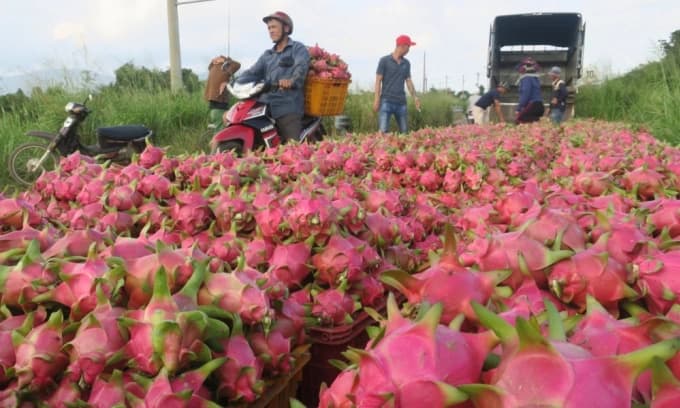
Early 2026 Export Surge Signals Potential Revival
Vietnam’s dragon fruit industry has recorded a striking rebound in the opening months of 2026, with export values climbing 14% year-on-year to reach $108.5 million during January and February. This acceleration represents a potential turning point for a sector that has suffered continuous decline since 2018, when annual exports regularly exceeded $1 billion and positioned Vietnam as the undisputed global leader in pitaya trade. The most dramatic shifts have occurred in emerging markets, where shipments to Thailand surged more than 2.7-fold to $9.2 million, while exports to the United Arab Emirates jumped 57% to $3.3 million, signaling a geographic rebalancing of trade flows.
- Early 2026 Export Surge Signals Potential Revival
- Thailand’s Appetite Grows Despite Being a Top Producer
- Middle East Markets Open New Avenues
- Supply Constraints and Price Pressures
- Artificial Lighting Bridges Seasonal Gaps
- Global Competitive Landscape Shifts
- Strategic Imperatives for Sustainable Growth
- Key Points
The recovery comes after years of contraction that erased nearly half the industry’s export value. Annual dragon fruit shipments fell steadily from their peak between 2014 and 2018, dropping to just $485.2 million in the first eleven months of 2025, the lowest level recorded since 2014. Industry analysts attribute the historic downturn to shifting consumption patterns in traditional markets, intensifying global competition from Latin American producers, and an over-reliance on the Chinese market, which traditionally absorbed the majority of Vietnamese production but has increasingly favored domestic cultivation.
Thailand’s Appetite Grows Despite Being a Top Producer
In an unusual trade dynamic that highlights the complexity of Southeast Asian agricultural supply chains, Thailand has emerged as one of the fastest-growing destinations for Vietnamese dragon fruit, despite ranking as the world’s third-largest exporter of the commodity. According to 2024 trade data, Thailand holds approximately 4.5% of global dragon fruit exports, valued at $200 million annually, making it a direct competitor to Vietnam in international markets. Yet Thai importers purchased nearly $9.2 million worth of Vietnamese fruit in early 2026, almost triple the value recorded during the same period in 2025, suggesting a maturing market with distinct segmentation between domestic and imported varieties.
This apparent paradox reflects distinct market segmentation and supply chain efficiencies rather than simple competition. Industry sources indicate that Thai businesses, including major supermarket chains, food processing facilities, and hospitality operators, increasingly source white-fleshed dragon fruit from Vietnam to supplement domestic production, which may focus on different varieties or quality tiers. Vietnamese exporters have developed sophisticated B2B supply mechanisms, offering certified quality under international standards including HACCP and ISO 22000, advanced post-harvest handling with professional sorting and grading systems, and flexible OEM packaging tailored to Thai retail requirements including Thai-language labeling.
Geographic proximity provides Vietnam with inherent logistical advantages over distant competitors. Shipments traveling by land or sea reach Thai destinations within days, reducing freight costs and spoilage risks compared to imports from Latin America or the Middle East. Dang Phuc Nguyen, general secretary of the Vietnam Fruit and Vegetable Association, observed that the Lunar New Year period drove exceptional demand across Southeast Asian markets, prompting Vietnamese farmers to employ artificial lighting techniques to stimulate off-season flowering and fruiting, ensuring supply during the traditional low season when Thai and other regional harvests remain limited.
Middle East Markets Open New Avenues
The Middle East has solidified its position as a strategic growth corridor for Vietnamese produce, with the United Arab Emirates leading the charge as a re-export hub and consumption center. Customs data confirms a 57% increase in shipments to the UAE, reaching $3.3 million in the first two months of 2026. This expansion occurs within a complex competitive environment where Israel traditionally serves as the primary dragon fruit supplier to Gulf markets and European destinations, utilizing advanced greenhouse technologies and organic cultivation methods to maintain premium positioning.
Regional food security strategies increasingly favor nutrient-dense, long-shelf-life tropical fruits, positioning dragon fruit as an attractive import category for Gulf distributors seeking to diversify beyond traditional date and citrus offerings. Consumer preferences in countries like the UAE and Saudi Arabia favor exotic yet healthy options, creating openings for Vietnamese exporters who can maintain quality through advanced cold chain management. Vietnamese suppliers now utilize blast freezing and IQF (Individual Quick Freezing) technology to preserve fruit for up to 12 months, enabling year-round availability despite the seasonal nature of production and allowing Thai partners to re-export processed products under their own brands.
The shift carries broader implications for Asian agricultural trade and investment patterns. As India pursues ambitious plans to reduce horticultural imports while boosting domestic production, Vietnam’s success in Middle Eastern markets demonstrates the value of targeting regions with less mature domestic cultivation sectors. Industry participants emphasize that maintaining this growth trajectory depends on rigorous adherence to international certifications and the development of cold storage infrastructure at both origin and destination ports to ensure optimal ripening protocols.
Supply Constraints and Price Pressures
Despite rising export values, production volumes face mounting constraints that threaten to limit sustainable growth. Growers across Binh Thuan Province, Vietnam’s primary dragon fruit cultivation region in the south-central coastal area, report declining supply availability as economic pressures drive farmers to convert orchards to higher-value crops. Climate challenges have further complicated the picture, with widespread flooding in late 2025 triggering fungal diseases that reduced yields in many growing areas and damaged plant health across extensive acreage.
These supply restrictions have driven sharp price increases at the farm gate, fundamentally altering the economics of cultivation. White-fleshed dragon fruit currently commands 10,000 to 15,000 Vietnamese dong ($0.38 to $0.57) per kilogram, while premium red-fleshed varieties fetch 15,000 to 25,000 dong. This represents a significant increase from previous years when oversupply often depressed local markets and discouraged investment in orchard maintenance. The price surge reflects both reduced domestic availability and strong international demand, though it raises questions about long-term competitiveness against lower-cost producers in Ecuador and Colombia who benefit from different seasonal windows.
Artificial Lighting Bridges Seasonal Gaps
The early-year export spike relies heavily on technological intervention that allows Vietnamese producers to circumvent natural growing cycles. Vietnam’s natural dragon fruit harvest peaks between May and September, yet the Lunar New Year period generates maximum demand across Asian markets during January and February. To bridge this gap, growers implement artificial lighting systems that force flowering outside natural cycles, creating an off-season harvest window that coincides with periods of limited global supply when competing countries cannot easily replicate production.
This cultivation strategy requires substantial capital investment in lighting infrastructure, energy systems, and precise timing technology to stimulate the plants during their natural dormancy. The technique allows Vietnamese exporters to capitalize on premium pricing during periods when global supply tightens, particularly in competing countries that rely solely on natural seasonal production. However, the additional production costs associated with artificial lighting, including electricity and extended care periods, may limit profit margins unless premium pricing persists in target markets or technology costs decrease through scale.
The seasonal timing of the 2026 surge suggests that Vietnamese producers successfully executed this strategy, capturing market share during a critical demand window when few alternative suppliers could respond. Whether this technical advantage can sustain export growth throughout the main harvest season remains uncertain, particularly as Ecuador and Colombia expand their counter-seasonal production capabilities and improve their own post-harvest handling systems to challenge Vietnam’s off-season dominance.
Global Competitive Landscape Shifts
Vietnam maintains dominance in the global dragon fruit trade, controlling approximately 85% of export market share with $600 million in annual shipments as of 2024, producing over 1 million tons annually with 80 to 85% destined for foreign markets. However, the competitive environment continues evolving rapidly. China ranks second globally with $221 million in exports, while Thailand holds third position at $200 million. Ecuador has emerged as a significant force with $172 million in exports, specializing in yellow pitahaya varieties that command premium prices in North American and European markets due to their distinctive sweetness and visual appeal.
The United States presents a contrasting picture in early 2026 that highlights shifting trade patterns. Vietnamese dragon fruit shipments to the U.S. plummeted 39% to $4 million, diverging sharply from the growth seen in Asian and Middle Eastern markets. This decline may reflect increased competition from Latin American suppliers, who benefit from shorter shipping distances and lower logistics costs to North American destinations. Colombia’s yellow dragon fruit, prized for superior sweetness and flavor characteristics compared to Asian red varieties, has gained particular traction among U.S. consumers seeking alternatives to Vietnamese imports. Meanwhile, Mexico and Central American producers leverage geographical advantages to capture market share in the growing North American exotic fruit sector.
China remains Vietnam’s largest single market, absorbing $66.5 million worth of dragon fruit during the first two months of 2026, a 5% increase year-on-year that suggests stabilization after a period of decline. This recovery follows years of contraction attributed to China’s expanding domestic production capacity in provinces like Hainan and Guangxi. Vietnamese exporters now face the strategic challenge of balancing traditional dependence on China against diversification into smaller but faster-growing markets in Southeast Asia and the Middle East, a strategy that requires different logistics networks and quality specifications.
Strategic Imperatives for Sustainable Growth
Industry analysts suggest that long-term recovery depends on addressing structural vulnerabilities rather than relying on seasonal price spikes and temporary market windows. Market diversification has already begun reducing vulnerability to demand fluctuations in any single country, yet infrastructure investments remain critical to maintaining quality through extended supply chains. Cold storage facilities, temperature-controlled logistics, and ripening protocols require continued development to ensure fruit reaches consumers in optimal condition, particularly as distances increase to Middle Eastern and European destinations.
Quality differentiation presents another essential pathway for maintaining Vietnam’s leadership position. While Vietnamese red dragon fruit generally receives positive marks for flavor compared to other Asian varieties, it often falls short of Latin American yellow varieties in sweetness and visual appeal in consumer assessments. Japanese consumers particularly value flavor over size, while Chinese buyers traditionally prioritize appearance for ceremonial purposes associated with the fruit’s auspicious name and dragon-like appearance. Meeting these divergent preferences requires targeted cultivation and grading strategies that may necessitate investment in breeding programs and specialized orchard management.
The juxtaposition of Vietnam’s export growth against Morocco’s recent halt to tomato exports illustrates the delicate balance between domestic food security and international trade commitments that all agricultural exporters must navigate. As Vietnamese domestic prices rise alongside export volumes, policymakers must monitor potential tensions between satisfying foreign buyers and maintaining affordable local access, ensuring that the current recovery does not trigger social pressures that could force disruptive export restrictions.
Key Points
- Vietnam’s dragon fruit exports reached $108.5 million in January-February 2026, marking a 14% increase compared to the previous year and suggesting recovery from historic lows
- Thailand emerged as the fastest-growing market with imports surging 270% to $9.2 million, despite being the world’s third-largest producer and exporter of the fruit
- United Arab Emirates imports grew 57% to $3.3 million, reflecting expanding Middle East demand and successful penetration of markets traditionally supplied by Israel
- China retained its position as the largest destination with $66.5 million in imports, though U.S. purchases declined 39% to $4 million amid competition from Latin America
- Farm-gate prices rose substantially due to supply constraints caused by farmers switching to higher-value crops and climate-related flooding that triggered fungal diseases
- Artificial lighting techniques enabled off-season production to meet Lunar New Year demand, supporting the early-year export spike through technological intervention
- Annual export values had fallen to $485.2 million in 2025, the lowest since 2014, after peaking above $1 billion annually between 2014-2018
- Market diversification into Thailand and the Middle East reduces reliance on China, where demand has stabilized but faces competition from growing domestic production