A $108.5 Million Start Offers Hope After Years of Decline
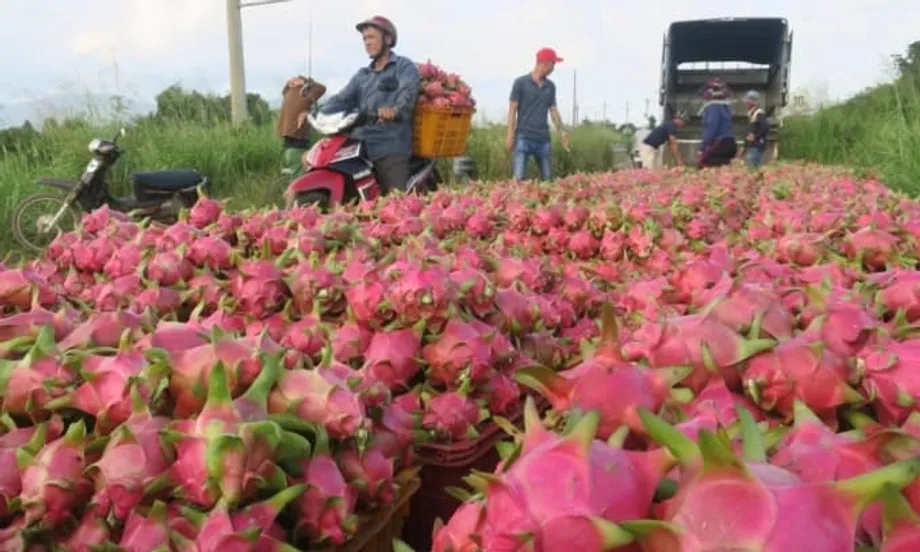
Vietnam exported $108.5 million worth of dragon fruit in January and February 2026, up 14% from the same period a year earlier, as stronger demand from Thailand and the United Arab Emirates helped revive a trade that has been shrinking since 2018. China remained the largest buyer, while sales to the United States fell sharply.
Contents
- A $108.5 Million Start Offers Hope After Years of Decline
- Thailand Buys More From a Regional Competitor
- Lunar New Year Demand Meets an Unusual Harvest Window
- The UAE Expands a Middle Eastern Route
- Frozen Fruit Creates Another Route to Buyers
- Flooding and Orchard Changes Tighten Supply
- China Still Determines Much of the Trade
- The United States Moves in the Opposite Direction
- Vietnam's Scale Meets More Demanding Buyers
- What Will Determine Whether the Recovery Lasts?
- Key Points
Thailand bought nearly $9.2 million worth of Vietnamese dragon fruit, more than 2.7 times the value a year earlier, or roughly 270% of the previous level. Shipments to the UAE increased 57% to $3.3 million. Those gains gave exporters a stronger start after years in which changing consumer preferences, competition and dependence on China weakened the industry.
The improvement comes from a much smaller base than Vietnam once enjoyed. During the peak period between 2014 and 2018, annual dragon fruit exports regularly exceeded $1 billion, making the country the leading supplier in international trade. Export earnings subsequently declined, reaching just $485.2 million in the first eleven months of 2025, the lowest level recorded since 2014.
As of April 16, 2026, the early recovery rests on several connected developments: demand around Lunar New Year, farmers using artificial lights to produce fruit outside the main season, and tighter supplies that have raised prices. Higher export earnings are welcome, but growers also face damaged orchards, rising production costs and competition from an expanding group of suppliers.
Thailand Buys More From a Regional Competitor
Thailand has become one of the fastest growing destinations for Vietnamese dragon fruit despite being a major supplier itself. Trade figures for 2024 put Thailand third among global exporters, with approximately 4.5% of exports and annual shipments valued at $200 million.
Thai purchases from Vietnam show how a country can grow and export a fruit while still importing it. Supermarkets, food processors and hospitality businesses need particular varieties, grades and delivery schedules. Vietnamese white fleshed dragon fruit can supplement Thai production, which may serve different varieties or quality levels.
Vietnamese exporters have built supply arrangements directly with businesses, commonly called business to business trade. Their services include certification under HACCP and ISO 22000, standards concerned with food safety management, alongside professional sorting, grading and handling after harvest.
Suppliers also provide packaging tailored to customer brands, known as OEM packaging, including labels in Thai. That allows a Thai retailer or processor to buy Vietnamese fruit in a form suited to its own customers and distribution system.
Vietnam's proximity adds a practical advantage. Deliveries by road or sea can reach Thailand within days, reducing freight costs and the risk of spoilage compared with shipments arriving from Latin America or the Middle East. A shorter journey is especially valuable for fresh fruit, whose condition can deteriorate during transport.
Lunar New Year Demand Meets an Unusual Harvest Window
Dang Phuc Nguyen, general secretary of the Vietnam Fruit and Vegetable Association, attributed exceptional demand across Southeast Asian markets to the Lunar New Year period. Vietnamese growers used artificial lighting to encourage flowering and fruiting outside the natural season, helping supply buyers when regional harvests were limited.
Vietnam's main dragon fruit harvest runs from May to September. The strongest Lunar New Year demand, however, comes during January and February. Producing fruit for that earlier window gives exporters access to buyers at a time when supplies from Thailand and other competing origins can be tighter.
Artificial lighting changes the conditions plants experience and stimulates flowering outside their normal cycle. Farmers can then schedule fruit production for a commercially attractive period instead of relying entirely on the natural harvest.
The industry's recent chronology shows why the opening months of 2026 matter:
- 2014 to 2018: Vietnam's peak export period included annual dragon fruit sales exceeding $1 billion.
- After 2018: Export earnings declined as competition increased and demand patterns changed.
- January to November 2025: Exports totaled $485.2 million, the lowest level recorded since 2014.
- Late 2025: Flooding triggered fungal diseases and damaged production in growing areas.
- January and February 2026: Export earnings rose 14% to $108.5 million.
The lighting strategy carries substantial costs. Growers need lighting equipment, energy systems and careful timing, as well as electricity and additional crop care. Premium prices help cover those expenses, but profits become harder to maintain if prices fall or production costs remain high.
The UAE Expands a Middle Eastern Route
The UAE imported $3.3 million worth of Vietnamese dragon fruit in the first two months of 2026, a 57% increase according to customs figures. The country serves both its own consumers and businesses that import goods before selling them onward to other markets.
That role makes the UAE a useful entry point for Vietnamese produce in the Middle East. Exporters are entering a competitive market where Israel has traditionally been a principal dragon fruit supplier to Gulf countries and European destinations, using advanced greenhouse cultivation and organic production to serve premium buyers.
Food security strategies in the region favor a more varied supply of imported food, including tropical fruits valued for nutrients and storage life. Distributors seeking products beyond dates and citrus have an opening for dragon fruit, while consumers in the UAE and Saudi Arabia are showing interest in unfamiliar fruits associated with healthy eating.
Vietnamese suppliers must keep fruit in good condition over longer journeys. Refrigerated transport and storage, together known as the cold chain, help control temperature from the production area to the buyer. Interruptions can leave fruit arriving too ripe or in poor condition.
Frozen Fruit Creates Another Route to Buyers
Vietnamese suppliers also use blast freezing and Individual Quick Freezing, or IQF, to preserve fruit for up to 12 months. IQF freezes individual pieces separately, supporting storage and handling of processed fruit beyond the fresh harvest period.
Frozen products allow businesses to maintain supplies throughout the year despite seasonal production. Thai partners can also buy processed Vietnamese fruit and export it again under their own brands, extending the relationship beyond direct sales of fresh produce.
Middle Eastern growth offers a useful contrast with India, which is pursuing plans to reduce horticultural imports while expanding domestic production. Vietnam's progress points to opportunities in destinations where local cultivation is less developed and imported fruit plays a larger role.
International certifications and cold storage at both departure and arrival ports remain central to serving these buyers. Exporters also need suitable ripening procedures so that fresh fruit reaches customers at the right stage. The commercial task is to deliver a consistent product, whether it travels to a nearby Thai supermarket or a distributor in the Gulf.
Flooding and Orchard Changes Tighten Supply
Growers in Binh Thuan Province, a principal dragon fruit production area on Vietnam's south central coast, report declining availability as farmers replace orchards with crops that promise higher returns. Years of weak prices have affected decisions about whether to maintain dragon fruit plants or use the land differently.
Flooding in late 2025 added to those pressures. Fungal diseases reduced yields in many growing areas and damaged plant health across extensive acreage, leaving fewer supplies available as export demand strengthened.
White fleshed dragon fruit now sells at the farm gate for 10,000 to 15,000 Vietnamese dong per kilogram, equivalent to $0.38 to $0.57. Premium varieties with red flesh fetch 15,000 to 25,000 dong per kilogram. The farm gate price is the amount paid to growers before the fruit moves through the rest of the distribution chain.
Those prices represent a substantial improvement from earlier periods when excess supply depressed local markets and discouraged orchard maintenance. Reduced availability and stronger overseas buying have changed the immediate economics for farmers who still have fruit to sell.
Higher prices also increase purchasing costs for exporters. Vietnam must compete with lower cost producers in Ecuador and Colombia, whose different growing seasons can give them opportunities to supply international buyers at other times of year.
China Still Determines Much of the Trade
China purchased $66.5 million worth of Vietnamese dragon fruit in January and February 2026, up 5% from a year earlier. That accounted for about 61% of Vietnam's $108.5 million total, showing how much the industry still depends on its largest destination even as smaller markets grow faster.
The increase suggests some stabilization after years of pressure from China's expanding domestic production, including cultivation in Hainan and Guangxi. Chinese growers have become stronger competitors in the market that traditionally absorbed most Vietnamese dragon fruit production.
Thailand and the UAE together bought $12.5 million in the opening two months, approximately 12% of Vietnam's total. Their growth helps spread commercial risk, but China still purchased more than five times their combined value.
Vietnamese exporters therefore face two simultaneous tasks: preserving business with established Chinese buyers and building sales elsewhere. Different destinations require different transport arrangements, packaging, quality specifications and customer relationships. A wider customer base can reduce exposure to a sudden change in demand from any one country.
The United States Moves in the Opposite Direction
Vietnam's dragon fruit exports to the United States fell 39% to $4 million in the first two months of 2026. The decline contrasted with the increases in China, Thailand and the UAE, showing that the recovery is uneven across destinations.
Competition from Latin America may help explain the weaker American sales. Suppliers closer to North America can benefit from shorter transport routes and lower logistics costs. Mexico and Central American producers also use their geographic proximity to compete in the market for less familiar fruits.
Colombian yellow dragon fruit has gained attention among American consumers for sweetness and flavor compared with Asian red varieties. Ecuador has become another major competitor, specializing in yellow pitahaya that attracts premium prices in North America and Europe because of its sweetness and appearance. Pitahaya is another name for dragon fruit.
Ecuador's dragon fruit exports were valued at $172 million in 2024. Ecuador and Colombia are also expanding production during seasonal windows that differ from those of other suppliers and improving their handling after harvest. Those developments increase competition for Vietnam's ability to earn premium prices when supplies elsewhere are limited.
Vietnam's Scale Meets More Demanding Buyers
Vietnam produces more than 1 million tons of dragon fruit annually, with 80% to 85% destined for foreign markets. Figures cited for 2024 put annual export earnings at approximately $600 million and Vietnam's share of the global export market at about 85%. China ranked second with $221 million in exports, followed by Thailand at $200 million.
The expanding competition makes quality differences more commercially important. Vietnamese red dragon fruit generally receives favorable assessments for flavor against other Asian varieties, while Latin American yellow varieties often receive stronger consumer assessments for sweetness and visual appeal.
Buyers also want different things. Japanese consumers place particular value on flavor rather than size. Chinese buyers have traditionally attached importance to appearance for ceremonial uses associated with the fruit's auspicious name and its resemblance to a dragon.
Exporters serving those markets need to match cultivation, sorting and grading to customer preferences. Breeding programs and more specialized orchard management may require investment, alongside the storage and transport systems needed to preserve quality.
What Will Determine Whether the Recovery Lasts?
Vietnam's strong opening to 2026 reflects a useful combination of demand, timing and production techniques. The main harvest between May and September will provide the next seasonal test of whether higher earnings can continue when more fruit becomes available. A result for the full year is not yet known.
Longer term growth depends on addressing the weaknesses that preceded the rebound: dependence on China, declining orchard investment, inconsistent supply and stronger international competition. Market diversification has begun, but reaching more distant customers requires continued spending on refrigerated storage, transport and ripening procedures.
Farmers using artificial lights also need selling prices that justify electricity and equipment costs. Larger scale use or cheaper technology could ease those expenses, while persistent premium prices would help preserve margins. Growers whose plants were damaged by flooding face the additional task of restoring production.
Domestic affordability is another consideration as prices rise alongside export demand. Morocco's recent halt to tomato exports illustrates the tension agricultural exporters can face between supplying foreign buyers and maintaining affordable food at home. Vietnamese policymakers must monitor local access as well as overseas sales to avoid pressures that could lead to disruptive export restrictions.
For Vietnam, the immediate gains are concrete: higher export earnings, stronger Thai and UAE purchases, and improved prices for available fruit. Turning those gains into a durable recovery will require dependable harvests and products suited to buyers with increasingly varied choices.
Key Points
- Vietnam exported $108.5 million worth of dragon fruit in January and February 2026, up 14% from a year earlier.
- Thailand bought nearly $9.2 million, more than 2.7 times the previous value, while UAE purchases rose 57% to $3.3 million.
- China remained the largest destination at $66.5 million, up 5% and accounting for about 61% of total export earnings.
- Sales to the United States fell 39% to $4 million amid stronger competition from Latin American suppliers.
- Artificial lighting helped growers supply Lunar New Year demand outside the main May to September harvest.
- Crop switching, flooding and fungal disease tightened supplies and pushed farm gate prices higher.
- The $485.2 million recorded in the first eleven months of 2025 shows how far the industry had fallen from annual earnings exceeding $1 billion during its earlier peak.
- Cold storage, consistent quality and a broader customer base are central to sustaining the recovery.