

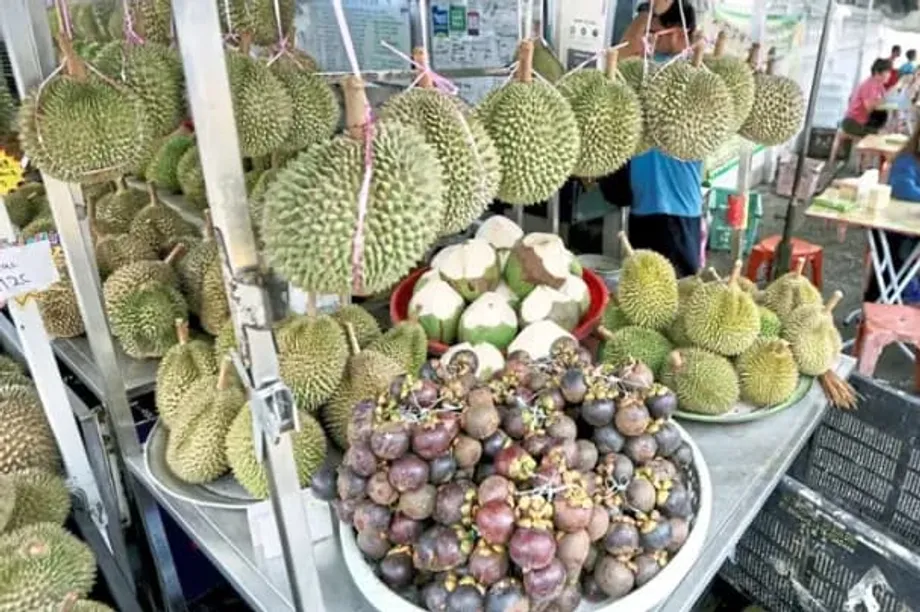
RM20 Mangosteens Meet RM16.80 Musang King
Malaysia's Mesta mangosteens are selling for RM20 per kilogram while Musang King durians, once priced at RM100 per kilogram, can be bought for as little as RM16.80. The reversal, which began around December 2025, has put the fruit known as the Queen of Fruits above the celebrated King of Fruits at some stalls.
Contents
- RM20 Mangosteens Meet RM16.80 Musang King
- A Short Harvest Brings Bargain Durians
- Why Local Mangosteens Are Harder to Find
- Orchard Owners Choose Durians Over Mixed Planting
- How Far Mangosteen Prices Have Climbed
- Singapore and Hong Kong Add Demand
- The Costs of Relying on One Crop
- Seasonal Supply Does Not Move in One Direction
- The Dates Behind the Reversal
- The Bottom Line
Fruit seller Yong Boon Sing, who operates shops in Johor, gave the RM20 price for Mesta, a locally grown variety commonly called the Japanese mangosteen. Mangosteens that consumers could buy for roughly RM15 per kilogram just months ago have become a more expensive purchase, while a short durian harvest has brought unusually cheap fruit to market.
The former RM100 price for Musang King was equivalent to S$32.17. Its fall to RM16.80 represents a reduction of about 83 per cent, consistent with the roughly 80 per cent decline described in the market. The RM20 Mesta price is RM3.20 above that discounted durian price.
Prices vary by variety, origin and seller. Another trader, Walter Chew, sells local mangosteens for about RM12 per kilogram when he can obtain them, while mangosteens from Thailand can cost around RM5 per kilogram. The striking reversal involves premium Mesta mangosteens and discounted Musang King, alongside a wider shortage of Malaysian mangosteens.
As of April 16, 2026, two changes are moving prices in opposite directions: a brief burst of durian supply in Johor and a reduction in mangosteen trees as orchard owners concentrate on durians. Export demand adds pressure to the mangosteen market, leaving consumers facing a mixture of cheap durians, expensive local mangosteens and imported alternatives.
A Short Harvest Brings Bargain Durians
Johor's current durian mini season began approximately two weeks before April 16, bringing fruit from Muar, Tangkak, Jementah and Yong Peng. A mini season is a short harvest period outside the main season, which traders expect to return in June and July.
Chew described plentiful supplies of D13 and Red Prawn durians, with sellers using low prices and promotions to move stock. Each fruit weighs about 800 grams to one kilogram, making the price per fruit different from the prices quoted per kilogram for Musang King and mangosteens.
Walter Chew, a fruit seller in the area, explained the offers available during this short harvest:
Varieties such as D13 and Red Prawn are widely available currently, with prices as low as RM5 per fruit. We are even offering buy one get one free promotions. Each fruit weighs about 800g to 1kg,
Office workers have responded by visiting durian stalls during lunch breaks. They eat their meals first, then share fruit and sample different varieties. Durian, often associated with family gatherings, festivals and special occasions, has become an affordable communal dessert for these groups.
Chew described how the lunch crowds are buying and eating the fruit:
They have their meals first and then share durians for dessert, trying different varieties in groups,
The bargains come with a difference in taste. Much of the current supply comes from younger trees, whose fruit is sweeter but has a less powerful flavour. Experienced durian enthusiasts often prefer fruit from older trees for its stronger, more bitter notes. Chew said the current crop offers value while lacking some of the intensity associated with Musang King's reputation.
Why Local Mangosteens Are Harder to Find
Yong's Johor shops illustrate the shortage on the other side of the market. He has no local mangosteens available, and most of the mangosteens currently on sale are imported from Thailand and Indonesia. For him, that means losing access to the flavour he values in Malaysian fruit.
Yong Boon Sing, the Johor fruit retailer, described his disappointment with the absence of domestic stock:
I do not have local mangosteens at my shops. This is a shame because Malaysian mangosteens are tastier, juicier and sweeter,
His preference for Malaysian mangosteens helps explain why scarce local fruit can attract a premium even when cheaper imports are available. Consumers face different choices depending on the stall: pay more for the local fruit they prefer, buy imported mangosteens, or leave without them.
Chew's prices show the range. He sells Malaysian mangosteens for about RM12 per kilogram when supplies arrive, compared with approximately RM5 per kilogram for Thai fruit. Yong's RM20 Mesta price sits above both. Domestic availability remains scarce and unstable, so a lower quoted price offers little help when a shop cannot obtain the fruit.
The mangosteen season, which occurs twice a year in regions including Perak, has begun. Vendors nevertheless report premium prices for fresh crops because seasonal harvesting is taking place against a smaller supply base. A harvest can bring more fruit to market, but the number of trees left to produce it also matters.
Orchard Owners Choose Durians Over Mixed Planting
Malaysian durian orchards traditionally included mangosteen trees and other crops among the durians. This mixed planting gave farmers more than one product to sell and provided income outside durian harvest periods. It also maintained a more varied orchard environment.
New owners have increasingly moved towards monoculture, meaning cultivation centred on a single crop. In these orchards, mangosteen trees are being removed to give durian trees more space and access to rainfall and sunlight.
Yong explained the reason owners give for cutting down the trees and the effect he sees on supply:
Many new durian orchard owners have cut down mangosteen trees, as they are leafy and block sunlight and rain from reaching the durian roots. This has reduced mangosteen supply and pushed up prices,
The change links today's mangosteen shortage to farming decisions made over several years. Removing a mature tree removes its future harvests as well as its current production. Without replanting mangosteens or protecting mixed cultivation, domestic supply may stay constrained even when the usual fruiting season arrives.
Durian's reputation for high prices helped draw owners towards the crop. The present mini season shows the financial risk of that concentration: durians are selling cheaply just as the alternative crop that once supplied another income stream has become harder to find.
How Far Mangosteen Prices Have Climbed
Chew recalled a much cheaper mangosteen market before the COVID-19 pandemic. Customers then paid RM10 for three kilograms, equivalent to roughly RM3.33 per kilogram. The present RM20 Mesta price is about six times that earlier rate, although the comparison spans different periods and fruit being sold.
Chew described both the historical price and the recent increase:
Mangosteens used to be cheap. Before the Covid-19 pandemic, customers paid RM10 for 3kg. Prices have gone up in the past two years. Mangosteens from Thailand are cheaper, about RM5 per kg,
The more recent move from around RM15 to RM20 per kilogram amounts to an increase of about one third. For shoppers accustomed to mangosteens as an accessible tropical treat, that change is substantial even before comparing it with the much lower prices remembered from before the pandemic.
Malaysian and imported fruit occupy different positions in this market. Sellers favour the taste, juiciness and sweetness of domestic mangosteens, while Thai fruit offers a cheaper option. Some consumers still encounter expensive imported stock because the price and selection depend on what individual traders can secure.
The shortage therefore affects both affordability and choice. A customer may find Thai mangosteens at RM5 per kilogram at one stall, local fruit at RM12 when available at another, and Mesta at RM20 elsewhere. The national story is a squeeze on local supply, with considerable variation at the point of sale.
Singapore and Hong Kong Add Demand
Export demand was already being cited as a cause of mangosteen shortages in December 2024, before the price reversal that began around December 2025. Consumer posts at that time described competition for fruit from buyers in Singapore and Hong Kong.
One shopper encountered mangosteens at RM18 per kilogram at a stall near Kilat Club in Perak, three weeks into the season. The vendor attributed the price to a massive shortage caused by high demand from Singapore and Hong Kong. The shopper later found mangosteens elsewhere at RM10 per kilogram.
The episode shows how export demand and local price variation can exist together. Buyers seeking premium Malaysian fruit overseas compete for a limited harvest, while domestic shoppers may need to search several stalls for a price they can afford.
Malaysia consequently faces an awkward trade pattern: premium domestic mangosteens go to export markets while retailers bring in fruit from Thailand and Indonesia to fill local shortages. Yong's empty local stock and his preference for Malaysian fruit capture the effect on shoppers who want produce grown at home.
Singapore and Hong Kong consumers' willingness to pay premium prices gives growers an incentive to favour export contracts. Growing regional demand for premium fruit adds to the pressure created by fewer mangosteen trees. The amount exported and the share of the domestic shortage attributable to exports were not specified.
Strong export demand, combined with declining domestic production, could keep local supplies tight. Consumers then face the consequences of two decisions beyond the stall: what farmers plant and where their harvest is sold.
The Costs of Relying on One Crop
Malaysia's durian boom has reshaped land use and farming priorities. Owners seeking the returns associated with premium durians have removed other trees, reducing the variety of crops that previously helped spread their financial risk.
Mangosteens once provided income during periods without a durian harvest. Their removal leaves an orchard more dependent on durian prices, including periods such as the current mini season when sellers offer cheap fruit and promotions to clear supplies.
Online discussion has reflected frustration with this rush towards durians. One unnamed commenter accused farmers of having "rushed into durian craze" and being "always looking at money", while local consumers were left to eat imported fruit. The criticism expresses concern that immediate commercial gains are taking precedence over domestic access to fruit and established farming practices.
Environmental concerns sit alongside the income risk. Recent accounts of parched orchards affecting northern durian growers point to pressure from dry conditions. Mangosteen trees, with their dense canopies, historically contributed ground cover and moisture retention within mixed orchards.
Removing that cover may expose more soil and allow more water to escape, potentially worsening drought conditions for the remaining durian trees. The same leafy canopy that some owners regard as an obstacle to durian growth also formed part of the orchard's protection from drying.
Dependence on a single crop also makes farmers more vulnerable when pests or disease attack that crop. A farm with several crops has more sources of production and income to draw on. The concern echoes the lesson of historical agricultural failures in which reliance on one crop left growers exposed to a damaging pest or blight.
Seasonal Supply Does Not Move in One Direction
June and July are expected to bring the main durian season, following Johor's short current harvest. Different growing regions have different calendars, so cheap fruit in one area does not mean the same supply conditions apply across Malaysia throughout the year.
Penang has a second durian season running from November through December. The Penang Island City Council's seasonal arrangements include online applications for temporary stall permits covering November 1 to December 15, with a fee of RM1 per day for every 40 square feet of space.
Those arrangements provide space for seasonal sales and reflect expectations of substantial trading during the northern harvest. The permit dates belong to that seasonal window, separate from Johor's current mini season and the main harvest expected in June and July.
June 2025 brought a different durian market. Unfavourable weather and smaller harvests made fruit more expensive, and community durian parties helped people share the cost when buying individually had become costly.
Penang's state government also launched a Track and Trace system to prevent imported durians from being misrepresented as local produce. The system addresses the origin of fruit being sold, an issue that becomes more important when buyers pay for a particular region's durians and local supplies are limited.
The contrast between dearer durians in June 2025 and today's discounted Johor fruit shows how weather, harvest size, origin and season affect prices. Mangosteens face those seasonal changes too, alongside the lasting loss of productive trees.
The Dates Behind the Reversal
The price changes developed over several periods, rather than during a single harvest. The sequence puts the current bargains alongside the earlier signs of pressure on mangosteens:
- Before the COVID-19 pandemic, Chew recalled mangosteens selling for RM10 for three kilograms.
- December 2024: consumer posts described shortages linked to demand from Singapore and Hong Kong, including RM18 per kilogram near Kilat Club in Perak.
- June 2025: unfavourable weather and smaller harvests pushed durian prices up, encouraging shared community purchases.
- Around December 2025: the reversal between premium mangosteen prices and discounted durian prices began.
- Approximately two weeks before April 16, 2026: Johor's current durian mini season began.
- June and July: traders expect the main durian season to return.
- November through December: Penang has its second durian season, with the cited temporary stall permit window running from November 1 to December 15.
Consumers may see durian prices change again as later harvests arrive. The present low prices are tied to a brief supply window, while previous weather problems show how quickly a smaller crop can make the fruit more expensive.
Mangosteens face a less easily resolved constraint. Replanting trees or retaining mixed orchards would address the production base, while a new season alone cannot replace mature trees that have been cut down. No programme or timetable for such intervention was identified.
A return to RM10 for three kilograms may therefore be difficult while local supply remains limited and export demand stays strong. The Queen of Fruits could retain a premium for years, although future prices will depend on harvests, orchard decisions and demand rather than the royal nicknames attached to the two fruits.
The Bottom Line
- Mesta mangosteens cost RM20 per kilogram, above the lowest quoted Musang King price of RM16.80 per kilogram.
- Musang King's fall from RM100 per kilogram is about 83 per cent; the current Johor harvest also offers D13 and Red Prawn from RM5 per fruit.
- Yong Boon Sing links declining mangosteen supply to orchard owners cutting down trees to prioritise durians.
- Local mangosteens can sell for about RM12 per kilogram when available, while Thai fruit can cost around RM5.
- Demand from Singapore and Hong Kong adds pressure to domestic supplies, with Malaysian shops also relying on imports from Thailand and Indonesia.
- The main durian season is expected in June and July; Penang's second season runs from November through December.
- Mixed planting once supplied additional income and orchard cover. Greater dependence on durians brings concerns about price swings, drought, pests and disease.