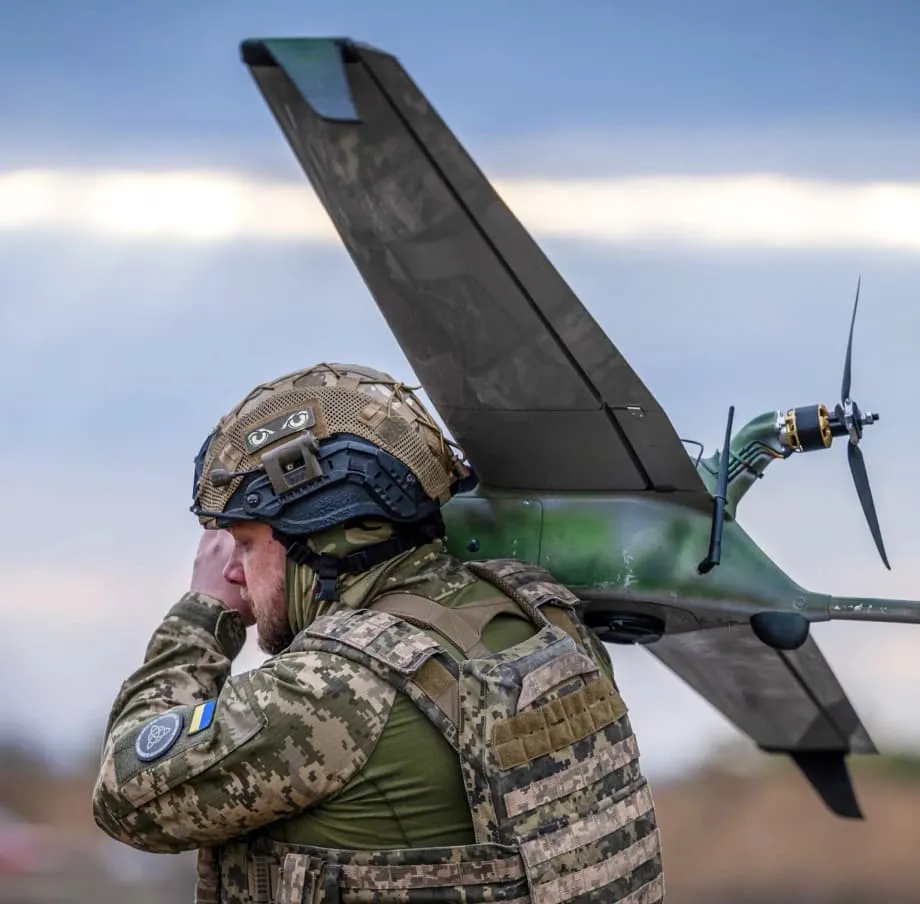
A Japanese investment reaches Ukraine's combat zones
Japanese technology company Terra Drone Corporation has sent engineers into active combat zones in Ukraine to test and refine an interceptor drone costing about $2,500. Its partnership with Ukrainian startup Amazing Drones combines a $10 million strategic investment with a practical goal: destroying inexpensive attack drones without spending millions of dollars on each interception.
Contents
- A Japanese investment reaches Ukraine's combat zones
- Why the price of an interception matters
- Tokyo's industrial scale meets Kharkiv's workshops
- Tokushige's commitment extends beyond funding
- What the Terra A1 is designed to do
- Autonomy and production under attack
- Why Western militaries are watching Ukraine
- Ukraine's production capacity still needs money
- Japan's rules and the next manufacturing decisions
- Key Points
The deployment marks the first public investment by a Japanese company in Ukraine's defense sector. As of April 12, 2026, the engineers are working directly under combat conditions, putting the Terra A1 interceptor through the same threats that Ukrainian defenders face every day.
The Terra A1 has a stated range of 32 kilometers, a maximum speed of 300 kilometers per hour and a flight time of 15 minutes. It uses electric propulsion and is intended to detect and destroy a target during a single flight. The partnership places Japanese manufacturing experience alongside Ukrainian engineering developed through years of fighting Russia's invasion.
The immediate problem is financial as well as military. Iranian designed Shahed attack drones cost an estimated $30,000 to $40,000 each, while conventional air defense missiles used against such threats can cost $1 million to $4 million per shot. Russia's use of large numbers of inexpensive aircraft creates pressure on both Ukrainian defenses and the budgets needed to sustain them.
Terra Drone founder and chief executive Toru Tokushige has made that arithmetic central to the company's case for interceptor drones. Saudi Arabia and the United Arab Emirates are also exploring the Ukrainian technology as they seek ways to counter Iranian drone attacks without exhausting expensive missile stocks supplied by the United States.
Why the price of an interception matters
Russia's full scale invasion has exposed a weakness in conventional air defense: the weapon used to stop an attack can cost much more than the aircraft attacking. Shahed drones have struck Ukrainian cities and infrastructure, forcing defenders to balance immediate protection against the cost and availability of their ammunition.
A $2,500 interceptor costs about one twelfth to one sixteenth as much as a Shahed priced at $30,000 to $40,000. A missile priced at $1 million to $4 million costs 400 to 1,600 times as much as that interceptor. Those figures explain why a relatively small aircraft has attracted interest beyond Ukraine.
Tokushige, Terra Drone's founder and chief executive, described the frequency of attacks and the potential savings:
Every day in Ukraine, there are multiple drone and missile attacks, three or four times a day, even at night. Initially, air defense relied on expensive missiles. But interceptor drones can cost as little as $2,000 to $3,000. This changes everything.
The $2,500 price attached to the Terra A1 sits within the $2,000 to $3,000 range Tokushige cited for interceptor drones. The economic aim is to give defenders a less expensive weapon for targets that attackers can manufacture and launch in large numbers.
Saudi Arabia and the United Arab Emirates face a similar calculation because of threats from Iranian drones. Their interest creates a potential market for Ukrainian designs tested in combat, although no purchase quantities or delivery dates have been announced.
Tokyo's industrial scale meets Kharkiv's workshops
Terra Drone and Amazing Drones come from very different working environments. Terra Drone operates from Tokyo, has approximately 650 employees and is listed on the stock exchange. International industrial drone and traffic management systems account for 60% of its revenue.
Amazing Drones operates from Kharkiv, a Ukrainian city regularly struck by Russian missiles. Its origins lie in volunteer engineers assembling their first aircraft in improvised workshops. The business has grown from that effort into a manufacturing operation focused on national defense.
Maksym Klymenko, chief executive of Amazing Drones, described how a modest initial plan became a much larger undertaking:
What began as a volunteer initiative by engineers and soldiers has now evolved into a manufacturing hub dedicated to defending our nation. We thought we would assemble maybe 10 drones, and that would be it. But the situation changed.
The companies finalized their $10 million strategic investment through Terra Drone's subsidiary Terra Inspectioneering. The arrangement brings Japanese manufacturing expertise and investment capital into a Ukrainian company whose engineering decisions are shaped by combat.
Financing is a central part of the partnership. Ukrainian defense startups face domestic bank interest rates near 20%, while Japanese capital operates at roughly 2%. At those approximate rates, the Ukrainian borrowing rate is ten times the Japanese rate. Access to less expensive capital can allow a manufacturer to invest more money in equipment and production instead of interest payments.
Tokushige's commitment extends beyond funding
Tokushige has personally visited Ukraine eight times, traveling overland from Poland through hours of difficult transit to meet engineers and government officials. His visits connect the investment to the immediate needs of a country still at war.
The Terra Drone chief executive explained why he chose to engage during the fighting rather than wait for reconstruction:
Many Japanese companies say they want to support Ukraine, but often they talk about doing so after the war. However, Ukraine needs support right now. That is why I am here, this is my commitment.
The deployment of Japanese engineers gives the partnership a practical role beyond financing. They are testing and refining the interceptor under combat conditions, where design problems can quickly become operational failures.
The developments span several periods, although the investment and deployment have no precise dates attached:
- Since 2022, former CIA Director David Petraeus has visited Ukraine ten times while examining changes in warfare.
- In March, President Volodymyr Zelenskyy said Ukraine had the capacity to produce 2,000 interceptor drones a day if funding became available.
- By April 12, 2026, Terra Drone had finalized its $10 million strategic investment and deployed engineers to Ukraine to refine the Terra A1.
What the Terra A1 is designed to do
The Terra A1's 300 kilometer per hour maximum speed is higher than the typical Shahed cruising speed of 200 kilometers per hour. That difference gives the interceptor a speed advantage when pursuing the type of aircraft it is intended to destroy.
Its 32 kilometer range and 15 minute flight window are intended to support a single sortie, meaning one operational flight. The design focuses on finding and destroying a target within that limited period, rather than remaining airborne for long patrols.
Electric propulsion helps reduce the drone's acoustic and heat signatures. In simple terms, it is intended to produce less noise and less heat that could reveal its approach. The interceptor is designed to counter Group 3 unmanned aerial systems, the classification that includes the Shahed type threats described in the program.
The aircraft is also being developed for an environment filled with electronic interference. GPS jamming disrupts satellite navigation signals, while radio frequency spoofing uses deceptive signals to interfere with equipment. Signal denial can prevent a drone from receiving the information or instructions it needs.
Amazing Drones has built its technical foundation in conditions described by engineers as the harshest drone operating environment on Earth. In Ukraine, these forms of electronic warfare are daily obstacles, making combat testing a demanding measure of whether an aircraft can function reliably.
Autonomy and production under attack
The Terra A1 prioritizes autonomy, reducing its dependence on continuous instructions from an operator. A drone that can carry out more of its flight independently has less need for an uninterrupted communications link, which enemy jamming can disrupt.
The development team's stated priority is to use the intelligence of the aircraft to address limits on available personnel:
The key is not the number of operators, but the intelligence of the drone itself. We cannot respond to Russia by simply increasing manpower. We do not have that capacity. Our only option is to be smarter, to stay one step ahead. That is why autonomy is our main priority.
Ukrainian engineers work through a rapid cycle of testing and revision. When Russian forces introduce new countermeasures, engineers adapt within days rather than months. Japanese specialists are studying that process as part of their work in Ukraine.
Tokushige's teams are also examining decentralized manufacturing. Instead of placing production in one large factory, Ukrainian manufacturers use multiple smaller facilities. A large conventional factory can become an obvious target for a cruise missile, while distributing production changes how a company operates under attack.
Tokushige observed that Ukrainian engineers already have practical knowledge of how to spread manufacturing across facilities and keep working under constant threat. The partnership therefore involves learning how to sustain production as well as how to build an interceptor.
Why Western militaries are watching Ukraine
David Petraeus, the former CIA director who has visited Ukraine ten times since 2022, argues that Western militaries need a whole new concept of warfare based on Ukrainian innovations. His concern extends beyond individual drones to the way multiple systems work together.
Petraeus described Ukrainian integration of these technologies and the gaps in Western defenses:
What's the real genius is how they're pulling it all together. We don't have systems yet that could effectively defend against drone swarms. We need to learn a lot more, much more rapidly than we are.
Autonomous drone swarms present a threat because defenders may have to respond to many aircraft acting together. Petraeus warns that current Western arsenals lack the defensive capabilities needed for that challenge.
The Terra Drone partnership reflects the rapid adaptation he is calling for: Ukrainian experience from combat is being paired with Japanese manufacturing scale. Its commercial logic is to help democratic countries respond to inexpensive threats produced in large quantities without placing unsustainable demands on defense budgets.
Russian origin drones have entered Polish, Estonian, Lithuanian, Latvian and Romanian airspace, triggering NATO intercepts and disrupting civil aviation. Those incidents have extended concern about the threat beyond Ukraine and into the wider European security environment.
The Terra A1 would provide a kinetic component within an integrated air defense network. Kinetic means physically striking or destroying a target. Detection and tracking systems locate an incoming aircraft and follow its movement; an interceptor supplies the means to attack it.
Ukraine's production capacity still needs money
Ukraine's defense technology sector has expanded rapidly from improvised beginnings. The Kyiv School of Economics values the market at $6.8 billion, six times its level before the war.
President Volodymyr Zelenskyy said in March that Ukraine could produce 2,000 interceptor drones daily if funding became available. That stated capacity dwarfs Western capabilities, but turning production capacity into aircraft requires money for components, workers and manufacturing.
Terra Drone's investment addresses part of that financing problem. The difference between borrowing rates near 20% in Ukraine and roughly 2% for Japanese capital helps explain why overseas investment can matter to manufacturers trying to grow quickly.
Components present another constraint. Ukraine relies on European suppliers for critical miniature jet engines used in other drone programs. Czech company PBS Group has increased production fivefold yet still struggles to meet demand.
The Terra A1 uses electric propulsion, avoiding the miniature jet engine supply bottleneck that threatens other programs for strikes deep inside enemy territory. Its design links the choice of propulsion to both its interception role and the availability of essential parts.
Japan's rules and the next manufacturing decisions
Japan has pledged approximately $20 billion in assistance to Ukraine through humanitarian, financial and reconstruction support rather than direct military exports. That approach reflects constraints associated with the country's Constitution, which renounces war.
Terra Drone's investment operates through commercial channels, allowing Japanese technology to reach the battlefield within the legal restrictions on weapons exports. The arrangement represents a shift in economic engagement with Kyiv while remaining distinct from direct government military assistance.
Terra Drone and Amazing Drones envision expanding cooperation into maritime unmanned systems and broader defense applications. Tokushige has also confirmed that Terra Drone is considering production of Ukrainian drone technologies in Japan.
Manufacturing in Japan could connect Asian industrial capacity with engineering developed in Eastern European combat conditions. For now, the immediate work remains the Terra A1: improving an inexpensive interceptor in Ukraine while learning how to maintain production under attack.
The partnership brings together three pressures visible throughout Ukraine's drone sector: the need to reduce the cost of defending against mass attacks, the need to revise technology quickly and the need to finance production. Its $10 million investment and engineering deployment address each of those pressures through the same collaboration.
Key Points
- Terra Drone has deployed Japanese engineers to active combat zones in Ukraine to test and refine the Terra A1 interceptor, priced at about $2,500.
- The partnership with Kharkiv startup Amazing Drones includes a $10 million strategic investment through Terra Inspectioneering and marks the first public Japanese company investment in Ukraine's defense sector.
- Shahed drones cost an estimated $30,000 to $40,000 each, compared with $1 million to $4 million for conventional air defense missiles.
- The Terra A1 has a stated range of 32 kilometers, a maximum speed of 300 kilometers per hour and a flight time of 15 minutes.
- Electric propulsion, greater autonomy and testing under electronic warfare conditions are central to its development.
- Saudi Arabia and the United Arab Emirates are exploring the interceptor technology to address threats from Iranian drones.
- Ukraine's defense technology market is valued at $6.8 billion, six times its level before the war, while financing and component shortages constrain production.
- Terra Drone is studying Ukraine's distributed manufacturing methods and considering production of Ukrainian drone technologies in Japan.