A Village Powered by Sunshine
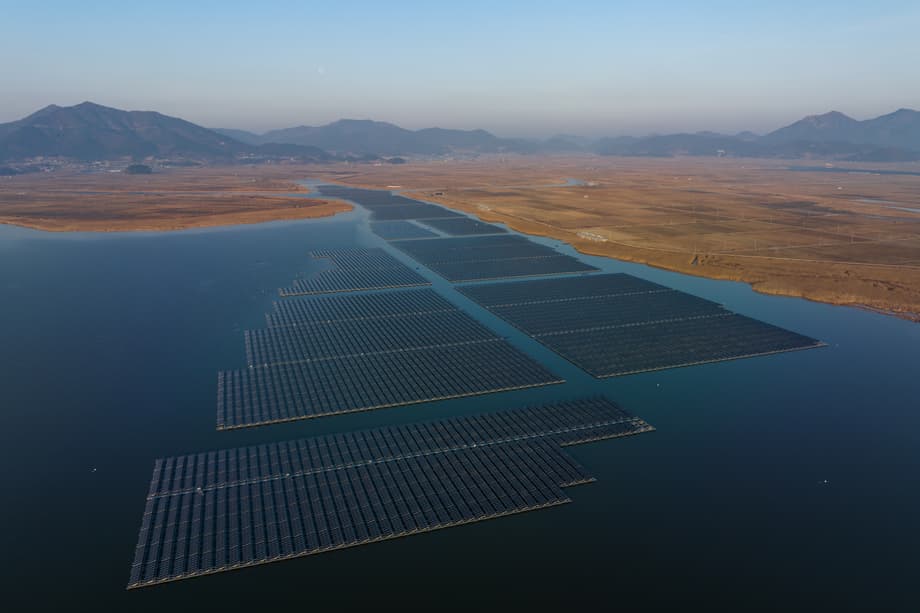
In Guyang-ri, a farming community of roughly 130 residents situated ninety minutes south-east of Seoul, the rhythms of daily life have transformed since 2022. Six days each week, villagers gather for communal lunches that cost nothing. The meals are not funded by government welfare or charitable donations, but by the steady output of a one-megawatt solar installation that generates approximately ten million won ($6,800) in net profit monthly. Village chief Jeon Joo-young explains the social revolution this energy independence has created.
“Residents eat lunch together every day, so we see each other’s faces, talk together. Bonds and solidarity between residents become much stronger. Life becomes more enjoyable. If you divide money as individual income, people feel disconnected. People who didn’t know each other for years now get to know each other within days through the restaurant.”
Before the solar project launched, Guyang-ri possessed no restaurant, limited transportation options for elderly residents, and minimal communal infrastructure. Today, the solar revenue funds not only the free lunches but also a “happiness bus” for seniors, a table-tennis facility, and cultural activities. The village deliberately chose to invest solar income into collective welfare rather than individual dividends, a decision Jeon says residents made themselves.
The Strait of Hormuz Awakening
Guyang-ri now serves as the national prototype for South Korea’s rapidly expanding “solar income village” program, which targets 2,500 villages by 2030. The government aims to create 700 such villages this year alone, a dramatic acceleration from the roughly 150 established previously. This urgency reflects President Lee Jae Myung’s strategic framing of the Iran crisis as an existential catalyst for energy transition.
South Korea imports more than 90% of its primary energy, including approximately 70% of its crude oil through the Strait of Hormuz. When conflict disrupted traffic through this maritime chokepoint, the vulnerability of this arrangement became starkly apparent. Lee has repeatedly warned his cabinet that fossil fuel dependency represents a dangerous strategic liability, stating that the “nation’s fate” depends on accelerating the transition to domestically generated power.
Kim Sung-whan, the minister of climate, energy and environment, connects this urgency to global trends.
“Around the world, the Middle East war is driving even faster acceleration of renewable energy transition, so Korea too must pick up the pace.”
The Iran conflict, which erupted in late February 2026, sent crude oil prices surging by 50% and nearly doubled spot liquefied natural gas (LNG) prices. While immediate emergency measures included fuel price caps and strategic petroleum reserve releases, the crisis exposed structural weaknesses that temporary fixes cannot resolve.
Scaling from Prototype to National Infrastructure
The government has unveiled an accelerated roadmap targeting 100 gigawatts of renewable capacity by 2030, aiming to increase the renewable share of electricity generation from roughly 10% to over 20%. A supplementary budget allocates approximately 500 billion won to energy transition initiatives, while annual support for renewable projects reaches a record 1.1 trillion won ($670 million). Additionally, 400 billion won in low-interest loans will flow specifically to the solar villages program.
Analysis from the Institute for Energy Economics and Financial Analysis (IEEFA) suggests these targets have strong economic justification. Although current solar and wind costs in South Korea remain 80% to 250% above global averages because of permitting challenges and limited deployment scale, the levelized cost of electricity for renewables can already compete with or undercut the marginal fuel costs of LNG generation. With LNG prices doubling to approximately $20 per million British thermal units, solar generation costs ranging from $0.07 to $0.11 per kilowatt-hour now present a competitive alternative.
The strategy extends beyond rural villages to industrial transformation. The government proposes developing RE100 industrial complexes where renewable sources meet most or all energy demand, co-locating generation with consumption to reduce costs. Public sector entities are expected to lead rooftop solar adoption across commercial, residential, and agricultural buildings.
Semiconductors and the Energy Security Nexus
The crisis has revealed that South Korea’s energy vulnerability extends beyond household electricity to the industrial foundations of its economy. The country’s semiconductor sector, dominated by Samsung Electronics and SK Hynix, accounts for nearly 40% of the stock market’s capitalization and 80% of global high-bandwidth memory production. These facilities require vast amounts of stable electricity.
The massive new semiconductor complex under construction in Yongin, Gyeonggi Province, scheduled to partially open in 2027, will require 16 gigawatts of energy to operate. This represents roughly 17% of national peak electricity demand. Energy already accounts for a growing share of chip fabrication costs, and sustained price spikes could erode South Korea’s competitive edge in advanced memory technologies essential for artificial intelligence systems.
Unlike South Korea, Taiwan’s leading chipmaker TSMC has committed to sourcing 100% renewable electricity by 2040, treating clean power as strategic infrastructure for semiconductor competitiveness. Hong Jong Ho, an energy economist at Seoul National University, argues that South Korea’s energy crisis began long before the Iran war, rooted in decades of artificially low electricity prices maintained by the state utility Korea Electric Power Corporation (KEPCO).
“Decades of government-subsidised electricity have led many Koreans to view power as a public good that the government should provide cheaply and abundantly, which erodes public acceptance of the costs of transition.”
Atomic Options and Regional Divergence
While renewable expansion accelerates, South Korea’s energy strategy remains complex. The government has delayed some coal plant closures and accelerated nuclear reactor restarts, which officials describe as temporary measures to maintain grid stability. A recent cabinet meeting confirmed that “capacity payments” (guaranteed income streams) will continue flowing to 21 coal-fired power plants beyond 2040 as emergency reserves.
Meanwhile, Japan under Prime Minister Sanae Takaichi has taken a divergent path, restricting mega-solar projects while accelerating nuclear restarts. Japan possesses nuclear latency (the capability to rapidly develop weapons without actually building them) and maintains 45 tons of weapons-grade plutonium. Takejiro Sueyoshi, Vice-Chair of the Renewable Energy Institute in Tokyo, notes the different regional responses.
“In Japan we don’t have any sense of crisis. The war, although it is an unhappy development, we should take that as an opportunity to fully go for energy transition in this country.”
South Korea faces its own nuclear crossroads. The 1974 nuclear cooperation agreement with the United States prohibited domestic uranium enrichment, but recent amendments now allow enrichment up to 20% for civilian purposes. This shift has prompted warnings from North Korea and China, with Beijing cautioning that even civilian enrichment could trigger economic coercion or military escalation.
Gridlocks and Fossil Fuel Paradoxes
Despite political momentum, technical barriers threaten to stall the renewable revolution. Large portions of South Korea’s south and south-west, where solar and wind development has concentrated, already face grid capacity limits. Gigawatts of renewable projects wait for grid connection, meaning some clean energy capacity currently goes to waste.
KEPCO’s plans to build high-voltage transmission lines from renewable-rich southern regions to Seoul face growing local resistance. Rural residents question why their land should sacrifice scenery and safety to supply the capital, particularly under South Korea’s uniform national pricing system that offers them no price benefit. Construction of such infrastructure typically requires over a decade, far longer than the urgent timeline the Iran crisis demands.
Environmental groups highlight a deeper contradiction in government policy. While approximately 500 billion won supports energy transition, around 5 trillion won simultaneously absorbs fossil fuel price hikes through direct subsidies to oil refineries and electricity price caps. Gahee Han, from Solutions for Our Climate, identifies the institutional tension.
“The government that suppresses price signals is the same government asking the public to conserve energy. This contradiction reflects a deeper institutional mindset that continues to shield fossil fuel incumbents from market reality. The window for transformative change is open now. Whether this government has the institutional courage to use it is the question that will define Korea’s energy future.”
The solar expansion also exposes dependence on Chinese supply chains. China provides most solar panels installed in South Korea, reflecting global manufacturing dominance and lower costs. Seoul has responded with domestic module requirements for solar villages and plans for carbon footprint certification on imports.
Asia’s Green Acceleration
South Korea’s pivot forms part of a broader regional shift triggered by Hormuz disruptions. Pakistan, which imports 99% of its LNG from the Gulf, has seen solar’s share of its energy mix surge from 2.9% in 2020 to 32.3% in 2025, saving over $12 billion in avoided oil and gas imports. Like Guyang-ri, Pakistan’s expansion began with affluent households and businesses installing rooftop panels, then spread to poorer communities pooling resources for shared installations.
Spain demonstrates how early renewable investment creates crisis resilience. With approximately half of electricity already coming from renewable sources, the Iberian country has maintained lower fuel prices than many European neighbors. France has responded to the crisis by nearly doubling electrification funding to cut fossil fuel dependency from 60% to 40% by 2030.
However, some Asian economies have turned to coal as a bridge fuel during the LNG shortage. India and China have drawn down domestic coal stockpiles, while Indonesia has boosted mining output. Vietnam has revived abandoned nuclear power plans, and Bangladesh faces severe fuel rationing. Wood Mackenzie analysts suggest that if disruptions persist, Asian LNG demand growth may never resurge even if prices eventually fall, as countries permanently restructure toward domestic energy sources.
For South Korea, the path forward requires navigating between immediate grid stability needs and long-term energy sovereignty. The country possesses world-class battery storage capabilities (second only to China) that could pair with solar to boost autonomy. Recent legislative amendments removing local distance restrictions on solar deployment offer regulatory pathways for faster rollout.
Key Points
- South Korea targets 100 gigawatts of renewable capacity by 2030, accelerating from 10% to over 20% of electricity generation
- The “solar income village” program aims for 2,500 villages by 2030, with 700 new installations planned for 2026 alone
- President Lee Jae Myung frames fossil fuel dependency as a national security risk, with 70% of crude oil imports transiting the vulnerable Strait of Hormuz
- Guyang-ri village serves as the prototype, using solar profits to fund communal welfare including free meals and elderly transportation
- Grid capacity constraints in southern regions and KEPCO’s transmission line plans face local resistance and decade-long construction timelines
- Despite renewable push, the government maintains 5 trillion won in fossil fuel subsidies compared to 500 billion won for clean energy transition
- Coal plants will receive capacity payments beyond 2040 as emergency reserves while five nuclear reactors undergo accelerated restarts
- The semiconductor industry (Samsung and SK Hynix) faces energy cost pressures that threaten global supply chains for AI memory chips
- Regional peers show divergent responses: Japan restricts solar in favor of nuclear restarts, while Pakistan’s solar share has reached 32.3%