A Program of Unprecedented Scale
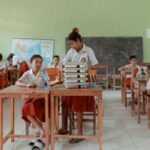
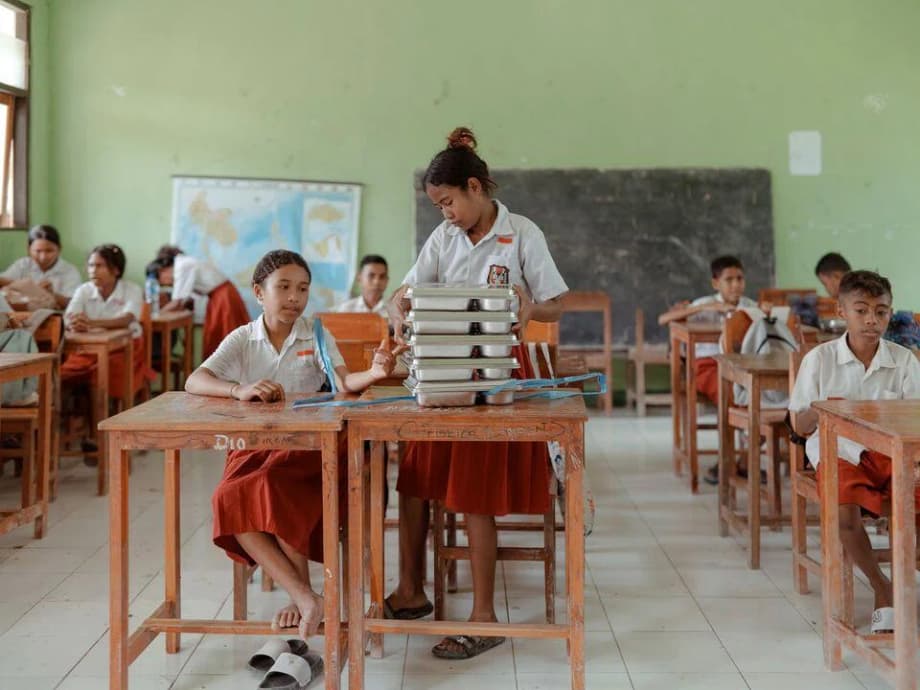
At dawn in Indonesia’s southernmost province, the clatter of pots and pans echoes through a small blue-and-white building in Toineke. Workers prepare 2,500 meals daily for local schools and health hubs, operating in shifts that begin at 2:00 am and continue through the afternoon. This remote Timor village lies closer to Australia than Jakarta, yet it serves as one speck in a vast nationwide initiative that President Prabowo Subianto is pushing at breakneck speed. The program aims to provide free nutritious meals to every child across Indonesia’s thousands of islands, regardless of individual need or economic status.
“The work goes on continuously, day after day,” said Yufrianti Hautias, 24, a former teacher who now manages the kitchen. “As one team finishes, the next takes over. Sundays are a bit quieter, but even then, we have to prepare for Monday distribution. There is essentially no time for us to rest.”
The free meals initiative served as a pillar of Prabowo’s 2024 presidential campaign and has rapidly become one of the largest social programs of its kind globally. The government allocated Rp 51.5 trillion (S$3.8 billion) in 2025, but plans to spend Rp 335 trillion (approximately US$19.7 billion) in 2026, representing roughly 11 percent of total government spending. The program targets nearly 83 million beneficiaries, including schoolchildren, toddlers, pregnant women, and breastfeeding mothers. Dadan Hindayana, who heads the National Nutrition Agency (BGN) overseeing the initiative, says he speaks with the president several times weekly. The guidance remains consistent: accelerate implementation regardless of logistical constraints.
Prabowo, a retired army general, views the meals as a pathway to better nutrition and school retention, while simultaneously helping farmers, creating jobs, and boosting consumption. The initiative promises well-balanced meals on weekdays for students, plus six days weekly for toddlers and mothers. Yet critics argue the universal approach wastes resources on those who do not need assistance, while straining an already tight budget.
Fiscal Pressures and Credit Rating Warnings
The massive outlay arrives at a precarious moment for Indonesia’s public finances. Moody’s Ratings and Fitch Ratings have both cut Indonesia’s credit outlook to negative, citing concerns that the nation may breach its long-held statutory budget deficit ceiling of 3 percent of GDP. This ceiling, one of the few surviving legacies of the 1997 Asian financial crisis, has served as a cornerstone of Indonesia’s macroeconomic discipline for decades.
Global geopolitical tensions are compounding these constraints. The Iran war has driven oil prices above $100 per barrel, well above the $70 assumption in Indonesia’s 2026 budget. Coordinating Minister for Economic Affairs Airlangga Hartarto warned that under high oil price scenarios of $115-$120 per barrel, the deficit could widen to approximately 4.06 percent of GDP. Finance Minister Purbaya Yudhi Sadewa acknowledged the strain but defended current measures, noting that the average crude price remains near budget assumptions.
Purbaya outlined potential austerity measures, including a proposal to reduce the free meals program from six days to five days weekly. This adjustment could generate savings of roughly Rp 40 trillion (US$2.4 billion) annually. Additional efficiency measures targeting non-essential travel and meetings aim to save another Rp 80 trillion.
“If oil reaches $200 per barrel, then the entire global economy, not just Indonesia, would face a recession,” Purbaya said.
S&P Global Ratings has also flagged Indonesia’s vulnerability relative to other Southeast Asian economies. In an April 2026 report, the agency highlighted that higher energy prices increase budgetary subsidy payments, weighing on deficits. It noted that government interest payments could rise if inflation triggers higher market interest rates, while more expensive oil imports widen the current account deficit. Although higher commodity prices for palm oil and nickel may offset some pressures, the overall fiscal picture remains precarious.
Implementation Failures and Health Crises
Despite presidential urgency, the program’s rollout has exposed severe operational weaknesses. By late September 2025, government figures recorded over 5,900 food-poisoning incidents linked to free meals, while independent monitors placed the toll closer to 6,500. The crisis has sparked scrutiny of the BGN’s leadership structure, which relies heavily on retired military and police officers rather than trained nutritionists or public health experts.
The agency’s internal planning documents reveal a reliance on military logistics networks, with retired officers integrated into the organizational hierarchy. This approach reflects a fundamental misunderstanding of public health management, treating meal distribution as a military operation rather than a complex nutritional intervention requiring specialized expertise.
In remote areas like East Nusa Tenggara, logistics present formidable barriers. Fresh ingredients require four-hour round trips because local farmers cannot supply sufficient quantities. Delivery trucks frequently get stuck in mud, forcing workers to carry trays by hand to small health hubs serving just 10 or 20 people.
Hautias described the daily obstacles her team faces. “The distances are long and some delivery points serve just 10 or 20 people. With muddy roads and frequent flooding, getting meals to them is often a real challenge.”
Compounding these issues, the BGN faces criticism for questionable spending priorities. Procurement reports revealed Rp 113.9 billion (US$6.65 million) allocated to 16 event management companies for activities ranging from headquarters office operations to a fun run for International Anticorruption Day. This revelation fueled public anger over wasteful spending while the program cuts nutritional corners and struggles to deliver safe food.
Economic Returns and Opportunity Costs
Prabowo has framed the meals as economic stimulus, claiming they generate jobs, boost farmer incomes, and increase consumption. Yet independent analysis suggests the returns remain meager compared to the costs. Economic modeling by the National Research and Innovation Agency estimates the program could add Rp 14.5 trillion to 26 trillion to GDP, but this represents only a fraction of the Rp 335 trillion annual outlay. Other projections suggest a GDP boost of merely 0.06 percent, or roughly Rp 7.2 trillion.
Bhima Yudhistira Adhinegara, executive director of the Jakarta-based Center of Economic and Law Studies (Celios), delivered a harsh assessment of the program’s efficiency.
“I would give it an ‘F’. The free meals programme is quite problematic in the fiscal space but also on the ground.”
Investors share these concerns. Louis Lau, a portfolio manager at Brandes Investment Partners, described the program’s scale as “a net negative development” that raises questions about fiscal priorities. He warned of sustained high spending levels continuing through 2027 and beyond, potentially compromising other critical investments.
The program has also created significant opportunity costs. Nearly all initial funding came from cuts to education and health sectors, diverting resources from teacher salaries and school operations. Analysts estimate this reallocation could eliminate some 723,000 education-sector jobs. At one Kupang elementary school, the headmistress noted that while free meals help, funds for better facilities, including a library, would prove more effective for student retention. The school operates with a single projector and three laptops shared among hundreds of students.
Local farmers have similarly failed to see promised benefits. Rinto Jami, 26, who rents four vegetable plots near Kupang, rejected a kitchen’s supply offer because the proposed price barely covered production costs. His mother, Dina Udju Edo, questioned the logic while working in their fields.
“If we were making losses, who exactly is feeding the children, the farmers or the government?”
Additionally, the program has displaced existing small businesses. Staff at kitchens are classified as volunteers paid hourly wages, while pre-existing canteens and small enterprises that once supplied school meals have seen their markets substituted by government provision.
Political Loyalty Versus Economic Reality
Despite mounting criticism, Prabowo remains politically committed to the program. In a March 2026 interview, he declared his unwillingness to compromise on the initiative, framing it as essential for grassroots prosperity. Days later, the government announced a partial concession, reducing distribution from six days to five days weekly to trim Rp 20 trillion to Rp 40 trillion from the budget.
The president’s stance reflects both personal conviction and political calculation. Polls show Prabowo maintains nearly 80 percent public satisfaction ratings, with strongest support in rural villages that form his electoral base. The free meals fulfill a core campaign promise, positioning him as a father figure providing for his people. Dadan Hindayana confirmed that the president frequently urges him to accelerate implementation, with expansion to the elderly already under consideration.
However, the administration’s governance style raises structural concerns. Prabowo’s cabinet comprises 48 ministers and 56 vice-ministers, Indonesia’s largest since the 1960s, with several new coordinating ministries increasing fiscal overheads without clear efficiency gains. Critics note that partisan loyalty and military backgrounds increasingly dictate appointments, sidelining professional qualifications. The BGN leadership exemplifies this pattern, with patronage appointments undermining technical capacity.
Policy analysts have observed that this trend extends across government. “Patronage appointments undermine the crucial link between responsibility and expertise, leaving critical programs in the hands of those unprepared to manage them,” they noted. “This pattern compromises policy design and implementation, leaving crucial programs vulnerable to inefficiency, corruption or outright failure.”
The formation of Danantara, a new sovereign wealth fund controlling state-owned enterprises, further complicates the fiscal landscape. While officially modeled on Singapore’s Temasek, the fund reports directly to the president with limited independent oversight, raising transparency concerns. Ray Dalio’s May 2025 exit from Danantara’s advisory board signaled international apprehension about governance safeguards.
With the program legally challenged at the Constitutional Court and activists lobbying for targeted rather than universal coverage, Indonesia faces a stark choice between maintaining political momentum and ensuring fiscal sustainability. The coming months will determine whether Prabowo’s flagship initiative nourishes the nation’s future or merely consumes its resources.
The Bottom Line
- Indonesia’s free meals program targets 83 million beneficiaries with a Rp 335 trillion budget for 2026, consuming approximately 11 percent of total government spending.
- Credit rating agencies Moody’s and Fitch have cut Indonesia’s outlook to negative, citing risks of breaching the 3 percent deficit ceiling amid rising oil prices from Middle East conflicts.
- Over 5,900 food-poisoning incidents have been linked to the program since its January 2025 launch, exposing weaknesses in military-led management lacking public health expertise.
- The government reduced meal distribution from six to five days weekly to save Rp 40 trillion, while continuing to reject broader cuts despite fiscal strain.
- Independent economists question the program’s economic returns, noting minimal GDP impact while diverting funds from education and health sectors that face 723,000 potential job losses.