The End of the All-Night Hoesik
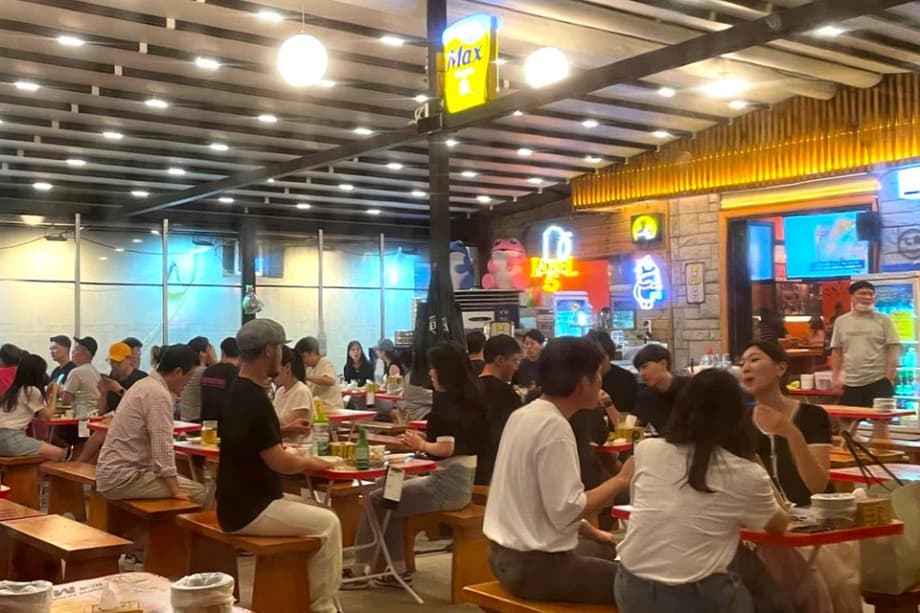
For decades, the streets of Seoul transformed after sunset. Neon-lit alleyways buzzed with office workers stumbling between restaurants, beer halls, and singing rooms, fueled by rounds of soju and beer consumed during hours-long company dinners. This ritual, known as hoesik, represented more than mere socializing; it formed the backbone of South Korea’s corporate hierarchy, where drinking stamina often equated to professional dedication.
Today, that culture is evaporating. Hwang Sang-pyo, a 34-year-old office worker, has observed this transformation firsthand.
“Hoesik used to last until 2 or 3am. But now, if the clock hits midnight or even 11pm, people feel they should head home. Drinking until the morning is no longer usual.”
A 31-year-old marketer surnamed Kim attributes this shift to habits formed during the COVID-19 pandemic.
“After COVID-19, the whole culture changed. When there were curfews, people got used to going home early.”
The statistics confirm this anecdotal evidence. According to the Korea Disease Control and Prevention Agency (KDCA), the median monthly binge drinking rate across South Korea’s 17 provinces and major cities stood at 33.8 percent in 2025, marking the second consecutive year of decline after peaking at 35.8 percent in 2023. Binge drinking is defined as consuming seven or more drinks for men or five or more drinks for women on a single occasion at least once a month. Regional variations were observed, with Ulsan recording the highest rate at 39.2 percent, while Sejong posted the lowest at 28.2 percent. The sharpest decline was seen in North Jeolla Province, where the rate fell from 34 percent to 28.9 percent. The monthly drinking rate, measuring the proportion of people who consumed alcohol at least once a month, also declined across all 17 regions over the past year.
A Generation Without Drinking Habits
For South Korea’s Generation Z, heavy drinking has never been part of their social vocabulary. Choi Seung-yeon, a 25-year-old, represents this demographic shift.
“I spent my freshman year during COVID-19, so I never experienced drinking late with friends. When we gather, we usually go to cafes. Most of my friends don’t drink either.”
This generational rupture stems from pandemic disruptions that prevented the formation of traditional social bonds. Sociology professor Kim Sang-hag at Hanyang University explained that many people in their 20s entered university during COVID-19 and missed traditional group drinking events.
“Many people in their 20s entered university during COVID-19 and missed traditional group drinking events such as freshman orientations and retreats. As a result, they did not form the same drinking habits as previous generations.”
The KDCA’s National Health and Nutrition Examination Survey found that 56 percent of individuals in their 20s either abstain from alcohol or drink less than once a month. This figure surpasses the rates for people in their 30s at 47.6 percent, 40s at 44.4 percent, and 50s at 52.8 percent. The shift is particularly pronounced in specific regions. In Sejong, where government employees constitute a large share of the population, the drinking rate among people in their 20s fell sharply from 68.3 percent to 50.5 percent, a decrease of nearly 20 percentage points.
Economic Ripple Effects Across the Nation
The cultural shift has delivered a crushing blow to South Korea’s nightlife economy. According to the National Tax Statistics Portal, the number of casual bars and beer pubs stood at 28,443 as of February 2026, down 3,065 establishments (9.7 percent) from a year earlier. This marks the steepest decline since the 12.8 percent drop recorded during the peak pandemic year of 2021.
For 77-year-old pub owner Jun Jung-sook, Seoul’s once-vibrant Nokdu Street tells the story.
“I don’t see anyone drunk anymore. The streets here used to be packed…that’s long gone.”
Her bindaeddeok restaurant, operating since 1993, has been up for lease since 2022 without a single offer. She observed the financial transformation as well.
“Some people used to pay for other tables just because they went to the same university, even if they are total strangers. That culture is gone, it’s all go Dutch now.”
The consumption downturn reflects broader economic challenges. South Korea has one of the world’s highest proportions of self-employed people, approximately 25 percent of the job market compared to the OECD average of 15 percent. This makes the economy particularly vulnerable to changing consumer habits. Robust external demand for South Korean exports isn’t feeding into broader domestic strength, complicating the Bank of Korea’s efforts to manage economic growth. Lee Jin-kook, an economist at the Korea Development Institute, analyzed the spending patterns.
“Weaker domestic spending goes to show that people are less well off. Retail sales show consumers increasingly spend more money on convenience stores for takeaways and are cutting back on restaurants.”
The Health Consciousness Movement
Beyond economic factors, a fundamental redefinition of wellness is driving the abstention trend. Professor Lee Eun-hee, a consumer studies expert, points to the rise of healthy pleasure, a lifestyle movement emphasizing enjoyment without compromising health.
“Healthy pleasure refers to seeking enjoyment without compromising one’s health, while there is a growing interest in reducing or eliminating alcohol consumption. Rather than completely abstaining, many young people are choosing to regulate their drinking based on their physical condition and daily routines.”
This transformation signals a broader societal shift in how alcohol is viewed. Lee noted the fundamental change in social questioning.
“In the past, the key question was ‘How much did you drink?’ Now it has shifted to ‘Why are you drinking?’ People are prioritizing their wellbeing and personal schedules over habitual or socially driven drinking.”
Medical research underscores the urgency of this cultural pivot. A study published in BMC Public Health utilizing National Health Insurance Service data revealed that high-risk drinking significantly correlates with alcoholic liver disease (ALD). The prevalence of ALD among high-risk drinkers stood at 0.97 percent, significantly higher than the 0.16 percent observed among social drinkers. Women face particular vulnerability. The study found that female high-risk drinkers had a higher risk ratio for developing ALD (6.08) compared to men (4.18), likely due to physiological factors including higher body fat percentages and lower levels of alcohol dehydrogenase, the enzyme responsible for metabolizing alcohol.
Industry Innovation in a Changing Market
Beverage companies are racing to adapt to the new landscape of moderation. Major brands have pivoted aggressively toward low alcohol and non alcoholic alternatives. According to Emart data, while total beer sales dropped 6.4 percent in 2025, sales of low calorie light beers surged 32 percent, and non alcoholic beers grew by 21 percent.
Lotte Chilsung launched Cloud Crush, a 4 percent ABV beer containing just 25 kcal per 100ml, designed for consumers who want flavor without caloric guilt. OB Beer expanded its Cass portfolio to include Cass 0.0, Cass Lemon Squeeze 0.0, and Cass All Zero, the latter boasting zero alcohol, sugar, calories, and gluten. These products now appear in approximately 55,000 restaurants nationwide. Traditional soju manufacturers have similarly reduced alcohol content. Seven years ago, most soju exceeded 17 percent alcohol by volume. Today, market leaders offer products at 15.7 to 16 percent ABV, packaged in convenient 200ml bottles for outdoor activities.
Market research firm Euromonitor forecasts that the domestic non alcoholic and low alcohol beer market will grow by 46.9 percent from 64.4 billion KRW in 2023 to 94.6 billion KRW by 2027. This growth mirrors global trends, where light beers now account for more than half of all beer sales in the United States.
Women Redefine Workplace Norms
Perhaps nowhere is the cultural shift more pronounced than in workplace gender dynamics. For decades, female employees faced intense pressure to participate in drinking rituals that often extended into early morning hours, creating risks of harassment and preventing work-life balance. A 2007 ruling by the Seoul High Court deemed it an offense to force subordinates to drink alcohol, empowering a new generation of women to refuse.
Hailey Kim, a 40-year-old office worker at an auto parts company, attributes the fading of after-work gatherings to changing demographics.
“There used to be a pattern: starting with grilled pork, then a second round at a beer place, followed by holding hands and singing at a Noraebang. We definitely don’t do that anymore, just stop at the barbecue, thank God.”
The introduction of an anticorruption law in 2016, which placed caps on meal expenses for public officials, further eroded the institutional support for marathon drinking sessions. The cumulative effect has transformed office culture from one where drinking ability was a job interview question to one where performance and results determine professional success. This stands in sharp contrast to neighboring countries where pressure persists. In 2020, a Chinese bank executive slapped an employee for refusing to drink at a company dinner, sparking national outrage and highlighting the freedom South Korean workers now enjoy to abstain without professional penalty.
Key Points
- South Korea’s monthly binge drinking rate fell to 33.8% in 2025, declining for two consecutive years after peaking in 2023.
- Approximately 56% of South Koreans in their 20s abstain from alcohol or drink less than once monthly, the highest rate among all adult age groups.
- The COVID-19 pandemic disrupted traditional university drinking rituals for Generation Z, preventing formation of habitual drinking behaviors.
- One in 10 bars closed in the past year as nightlife revenues decline, with independent pubs particularly affected by the shift toward splitting bills equally.
- Beverage companies are responding with low alcohol beers, non alcoholic alternatives, and reduced ABV soju products to capture the healthy pleasure market.
- Women increasingly refuse workplace drinking obligations, supported by a 2007 court ruling prohibiting forced drinking and shifting corporate values prioritizing performance over alcohol tolerance.