A Rooftop Video Triggers a Rare Diplomatic Rupture
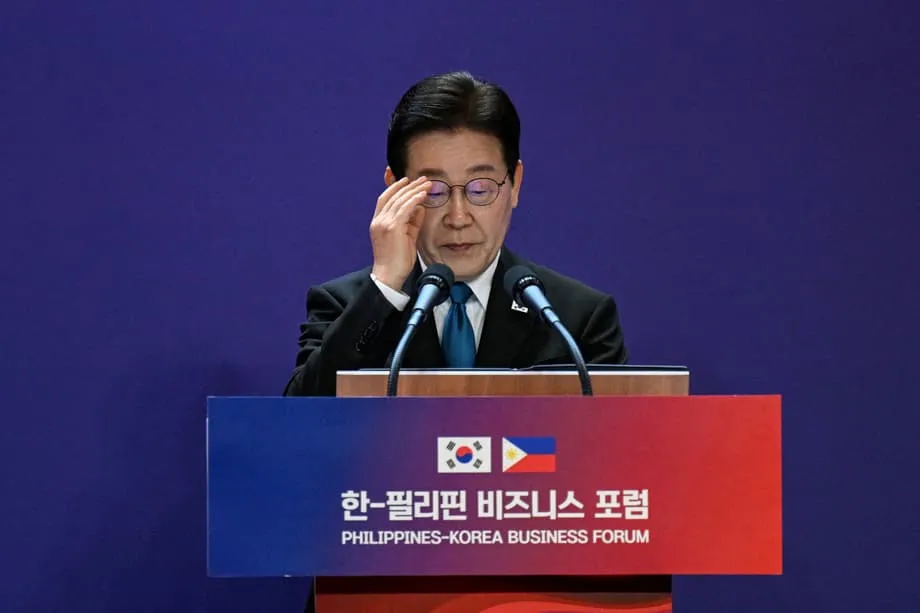
South Korean President Lee Jae Myung's decision to share footage of Israeli soldiers pushing Palestinian bodies from a rooftop has opened a rare public confrontation with Israel, bringing together arguments over human rights, historical suffering and South Korea's growing exposure to a Middle East energy crisis.
Contents
- A Rooftop Video Triggers a Rare Diplomatic Rupture
- What Happened in Qabatiya?
- Lee's Comparison and His Clarification
- Israel Condemns the Remarks
- Four Days of Escalation
- Seoul Tries to Contain the Damage
- Why the Strait of Hormuz Matters to Seoul
- Two Interpretations of Lee's Strategy
- An Earlier Dispute Over an Embassy Video
- Hyundai Machinery and West Bank Demolitions
- A Divided Political Response at Home
- At a Glance
Lee shared the video on Friday, April 10, 2026. It showed an incident recorded in September 2024 during an Israeli military operation in Qabatiya, near Jenin in the occupied West Bank. His comments compared wartime killings with the Holocaust and the forced sexual slavery of Korean women under Japanese colonial rule, prompting an unusually forceful response from Israel's Foreign Ministry.
Israel accused Lee of trivializing the murder of Jews and circulating misleading material. Lee acknowledged the age of the footage but continued to criticize the conduct it showed. South Korea's Foreign Ministry then tried to ease the dispute, expressing regret over Israel's interpretation while reaffirming sympathy for Holocaust victims.
By Monday, April 13, Israeli officials had not answered Lee's latest message. As of April 14, the confrontation remained unresolved, marking an unusual breach between countries that have maintained diplomatic relations for more than 60 years.
The quarrel also coincides with a practical emergency for Seoul. Security analyst Nam Sung-wook says approximately 26 South Korean tankers are stranded near the Strait of Hormuz, a shipping route through which roughly 70 percent of South Korea's imported crude oil and up to 30 percent of its natural gas pass. The diplomatic argument is unfolding alongside urgent efforts to protect those supplies.
What Happened in Qabatiya?
Residents of Qabatiya recorded the footage in September 2024 while Israeli soldiers were operating in the town. It shows soldiers pushing apparently lifeless bodies from a building rooftop. One soldier appears to use his foot to force a body over the edge.
The Israel Defense Forces, known as the IDF, confirmed at the time that the incident occurred during a counterterrorism operation in which four militants were killed. The military described the footage as showing a serious incident that did not align with IDF values and launched an investigation.
International humanitarian law, the rules governing conduct during armed conflict, requires military forces to treat enemy dead with dignity and return bodies to their families. That obligation explains why the handling of the bodies became an issue beyond the military operation itself.
A Palestinian politician described the treatment shown in the footage as barbaric. The White House called the images deeply disturbing and demanded an explanation from Israeli authorities.
Israel's Foreign Ministry now says the incident was thoroughly investigated and addressed two years earlier. Details of the findings, disciplinary measures or other outcomes have not been publicly disclosed. That leaves readers with an acknowledged incident and an official assurance that action was taken, but no public account of what that action involved.
Lee's Comparison and His Clarification
Lee initially shared the video alongside a caption presenting it as a current event. He wrote that he needed to verify whether the depiction of soldiers torturing and pushing a Palestinian off a roof was accurate and, if so, what measures had been taken.
The most contentious part of his commentary was the comparison with the Holocaust and the comfort women system. The Holocaust refers here to the murder of six million Jews by Nazi Germany. The comfort women system involved thousands of Korean women forced into sexual slavery by Japanese forces during Japan's colonial rule of Korea between 1910 and 1945.
Lee's comparison therefore brought together the suffering of Jews in Europe and a deeply painful part of Korean history. Israel's objection focused on his use of the Holocaust, while the reference to Korean women gave his message a direct connection to historical suffering familiar to South Koreans.
On Friday evening, Lee clarified that the footage came from September 2024. He acknowledged that the incident had been condemned by the United States and investigated by Israeli authorities. He nevertheless maintained that the treatment of human remains shown in the video violated international law, regardless of when it happened.
Lee did not delete the post or offer a full retraction. His clarification corrected the timing while preserving his criticism of the conduct depicted, allowing the dispute over both the historical comparison and his public judgment of Israel to continue.
Israel Condemns the Remarks
Israel's Foreign Ministry issued its public condemnation on X on Saturday, April 11. The ministry linked its objection to Holocaust Remembrance Day, describing Lee's comments as coming on the eve of Israel's commemoration of the six million Jews murdered by Nazi Germany.
The ministry's statement directly named the South Korean president and condemned his comparison:
The remarks by the President of Korea, Lee Jae Myung, including the trivialization of the massacre of Jews on the eve of Holocaust Remembrance Day in Israel, are unacceptable and warrant strong condemnation.
Israeli officials also accused Lee of obtaining the material from a fake account notorious for spreading disinformation against Israel. The account was identified as belonging to a user who described themselves as an unapologetic Muslim Palestinian. It had presented the footage from 2024 as a live, current event.
The Foreign Ministry questioned why Lee had revived the incident and why he had not spoken about recent Iranian and Hezbollah attacks against Israeli citizens. Its response widened the dispute from the treatment of bodies in Qabatiya to the president's choice of which events to address publicly.
In a pointed advisory directed at Lee, Israeli officials said:
Mr. President, it is always better to check before posting.
The unusually sharp tone stood out against the generally quiet relationship between Seoul and Israel. A disagreement over a social media post had quickly become an official exchange between a president and another country's foreign ministry.
Four Days of Escalation
Lee's response on Saturday moved beyond the video's date. He challenged Israel to reflect on criticism from people affected by its actions and continued to frame his position around human rights and international law.
The South Korean president wrote:
It is disappointing that you do not even once reflect on the criticisms from people around the world who are suffering and struggling due to relentless anti-human rights and anti-international law actions. When I am in pain, others feel that pain just as deeply.
On Sunday, April 12, Lee issued another message, this time stressing sovereignty, universal rights and opposition to aggressive war:
The sovereignty of every nation and universal human rights must be respected, and aggressive war must be rejected. Respect must be earned through respect.
The sequence shows how quickly the confrontation developed:
- September 2024: Residents recorded the Qabatiya rooftop incident. The IDF acknowledged it and launched an investigation.
- Friday, April 10, 2026: Lee shared the footage, made his historical comparison and later acknowledged the video's date.
- Saturday, April 11: Israel's Foreign Ministry condemned his remarks. Lee responded, and South Korea's Foreign Ministry issued a clarification.
- Sunday, April 12: Lee posted his message on sovereignty, human rights and aggressive war.
- Monday, April 13: Israeli officials had not answered that final message.
Lee's repeated statements kept his criticism in public view even as South Korean diplomats sought to reduce the tension. The result was a dual message from Seoul: the president continued his challenge, while the ministry tried to explain it in less confrontational terms.
Seoul Tries to Contain the Damage
South Korea's Foreign Ministry intervened on Saturday afternoon, expressing regret that the Israeli government had misunderstood the intent of Lee's remarks. It presented his comments as an expression of convictions about universal human rights rather than an opinion on a particular issue or conflict.
The ministry also reaffirmed South Korea's opposition to all forms of violence and acts against humanitarian principles, including terrorism. It concluded by expressing profound condolences to Holocaust victims and deep empathy for the suffering of the Jewish people.
Seoul's statement attempted to preserve Lee's stated principles while reassuring Israel that South Korea recognized Jewish suffering and condemned terrorism. The intervention did not fully satisfy Israeli officials or Lee's domestic political opponents.
South Korea occupies a delicate diplomatic position as a key ally of the United States, Israel's most important international backer. Seoul also seeks credibility as a voice for human rights in international forums. The exchange put those two priorities under public pressure at the same time.
Why the Strait of Hormuz Matters to Seoul
Nam Sung-wook, a security analyst and former head of the South Korean Institute for National Security Strategy, says approximately 26 South Korean tankers are stranded near the Strait of Hormuz. Their situation gives the controversy an immediate economic dimension.
The strait is a passage used by ships carrying energy supplies from the Gulf. Roughly 70 percent of South Korea's imported crude oil and up to 30 percent of its natural gas travel through it. Those figures mean disruption affects a much larger share of the country's imported oil than its gas, while threatening both supplies.
South Korea, described as the world's tenth largest economy, faces the prospect of rapid economic disruption if the interruption lasts. The concern is straightforward: when ships carrying essential fuel cannot move, the country risks losing access to supplies on which its economy depends.
Lee dispatched a special envoy to Iran on April 10, the same day he shared the controversial footage. He also established a dedicated Middle East peace representative position that day. Those steps placed the president's public criticism of Israel alongside diplomatic efforts involving Iran and the wider region.
The energy crisis helps explain why the dispute is attracting attention beyond the historical comparison. Seoul needs to protect shipping and maintain workable relationships in a region where its fuel supplies are exposed to conflict.
Two Interpretations of Lee's Strategy
Dr. Kobby Barda, a senior researcher at the Jewish People Policy Institute, suggests that the strategic story begins in Tehran and the Gulf rather than Jerusalem. His interpretation centers on South Korea's need for Iranian cooperation to keep oil shipments moving.
South Korea also has unresolved financial disputes with Iran involving billions of dollars in frozen funds. In Barda's reading, Lee's criticism of Israel, combined with exploration of humanitarian assistance channels to Iran, may be an attempt to gain a more favorable position with Tehran without explicitly aligning against Washington.
Professor Jhee Byong-kuen of Chosun University offers a different explanation. He suggests Lee was indirectly signaling to the Trump administration that South Korea would not be drawn into a war it does not want.
Jhee's interpretation places sovereignty at the center of the exchange. It connects Lee's insistence that aggressive war must be rejected with Seoul's interest in retaining control over its own involvement in Middle East conflicts.
Barda and Jhee are offering explanations of Lee's possible strategy, rather than announcing a policy decision by the president. Their readings connect the same public statements to different immediate concerns: securing Iranian cooperation over energy shipments and communicating limits to Washington.
The practical stakes depend partly on what happens to the tankers. A resolution through negotiations with Iran could support the view that Lee's rhetoric served a strategic purpose. A deeper crisis could leave Seoul facing pressure from an offended Israel, a demanding Washington and an unpredictable Tehran.
An Earlier Dispute Over an Embassy Video
Social media had already caused friction between the two countries before Lee's posts. In December 2023, the Israeli Embassy in Korea published a dramatized video titled Imagine if this happened to you.
Released on Boxing Day, December 26, the clip imagined a scenario taking place on Christmas morning. It recast the October 7 Hamas attack within a Korean geopolitical setting, aiming to raise awareness and gather support for Israel.
The video received a mixed response. Many Korean viewers argued that the embassy had gone too far in using a Korean setting to advance Israel's message.
The two episodes involved different messages and different speakers, but both brought a distant conflict into Korean public debate through social media. In 2023, the Israeli Embassy sought sympathy through an imagined Korean experience. In April 2026, South Korea's president invoked Korean historical suffering while condemning conduct shown in the West Bank.
Hyundai Machinery and West Bank Demolitions
South Korean connections to the West Bank also extend to corporate equipment. A March 2025 investigation by Amnesty International Korea documented extensive use of HD Hyundai heavy machinery in the demolition of structures owned by Palestinians in the occupied territory.
Researchers verified 59 demolitions involving Hyundai equipment between September 2019 and February 2025. Those demolitions resulted in the forced displacement of approximately 250 Palestinians.
Testimonies collected by Amnesty and the Israeli human rights organization B'Tselem described Hyundai excavators destroying homes in less than 20 minutes. Plumber Yaaqoub Barqan was among the residents who described watching his home and life reduced to rubble, while family members required psychiatric treatment for the trauma.
Hyundai denies direct involvement. Shipping records nevertheless confirmed at least 32 shipments of heavy machinery to Israeli distributors between 2021 and 2023. The company's position and the documented movement and use of its equipment have brought scrutiny to South Korean commercial connections with activities in the West Bank.
The demolition investigation adds a material dimension to Seoul's debate about neutrality. South Korean machinery, as well as statements by South Korean officials, has become part of the discussion about Palestinian rights and responsibility for events in the occupied territory.
A Divided Political Response at Home
South Korea's conservative People Power Party accused Lee of showing off over a conflict thousands of kilometers away while ignoring human rights violations in North Korea. It described the tension with Israel as a diplomatic disaster and challenged the president's priorities.
Lee's ruling Democratic Party defended his statements. It pointed to South Korea's recent sponsorship, alongside other countries, of a United Nations Human Rights Council resolution concerning North Korea as evidence that his human rights position was consistent across different situations.
The Democratic Party framed Lee's criticism as a necessary stand against violations of international law, regardless of diplomatic cost. The domestic argument therefore concerns both what the president said and whether publicly confronting Israel serves South Korea's interests.
A June 2025 Pew Research Center survey found that 60 percent of South Korean adults viewed Israel unfavorably. That result suggests Lee's stance may reflect changing public sentiment as well as strategic calculations.
Another development points to a different response within South Korea. In 2025, a group of Christian Zionists opened the country's first Holocaust museum. Organizers described the project as a response to growing extremism in the country during the Gaza war.
Lee's confrontation also represents a departure from the generally quiet approach taken by East Asian nations toward the Israeli and Palestinian conflict. European countries have been more outspoken in criticizing Israeli military actions, while Asian leaders have typically sought to preserve trade relationships and avoid becoming entangled in Middle East disputes.
The episode brings that caution into tension with public human rights advocacy. It also shows how a president's social media post can trigger an immediate diplomatic crisis, bypassing traditional channels and leaving foreign ministries to respond after the argument has already become public.
At a Glance
- Lee Jae Myung shared footage on April 10, 2026, showing Israeli soldiers pushing Palestinian bodies from a rooftop in Qabatiya in September 2024.
- His comparison with the Holocaust and the comfort women system prompted Israel's Foreign Ministry to condemn his remarks and accuse him of spreading misleading material.
- Lee acknowledged the video's date but maintained his criticism. His Sunday message remained unanswered by Israeli officials as of Monday.
- South Korea's Foreign Ministry expressed regret over Israel's interpretation, condemned violence and terrorism, and reaffirmed sympathy for Holocaust victims.
- Approximately 26 South Korean tankers are stranded near the Strait of Hormuz, according to Nam Sung-wook. The route carries roughly 70 percent of South Korea's imported crude oil and up to 30 percent of its natural gas.
- Named researchers suggest Lee's statements may relate to securing Iranian cooperation or signaling opposition to unwanted involvement in war.
- The dispute has divided South Korean political parties and reopened debate about a relationship maintained for more than 60 years.