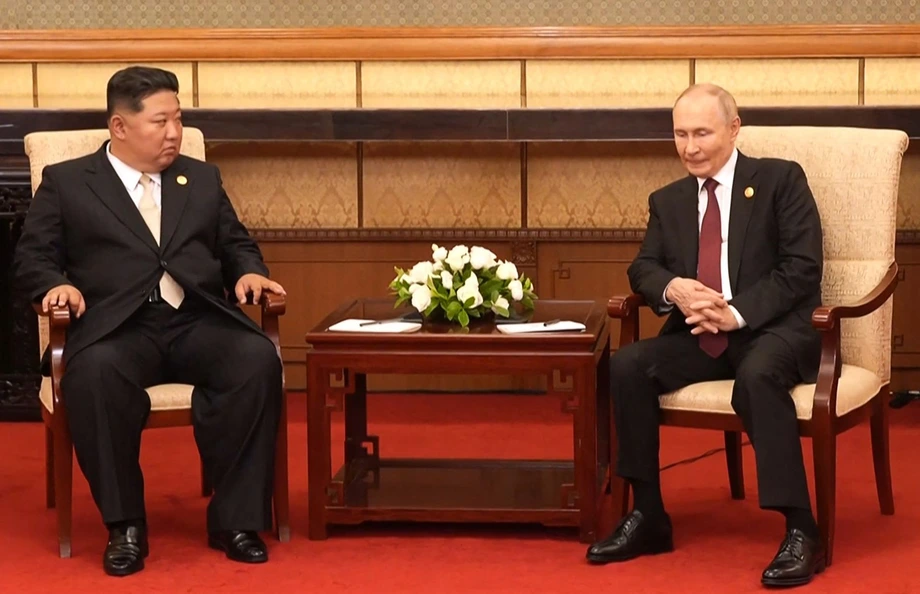
A Temporary Halt With No End Date
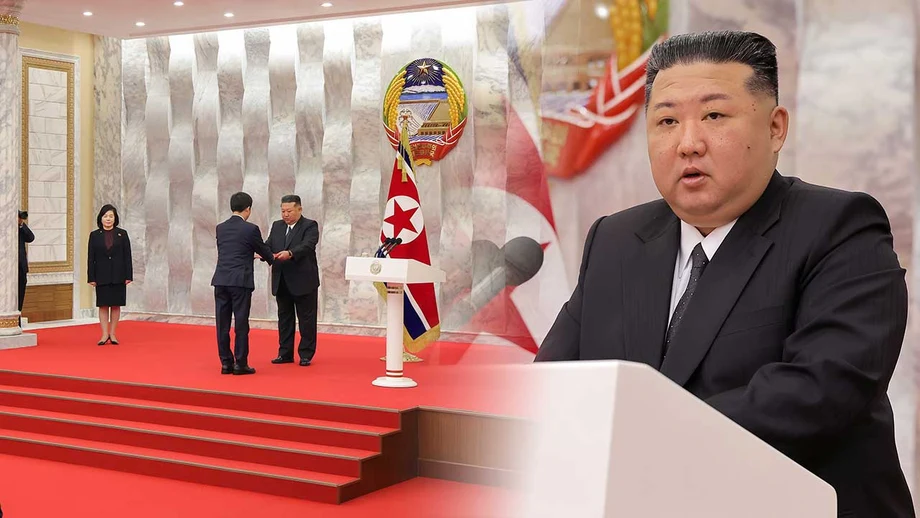
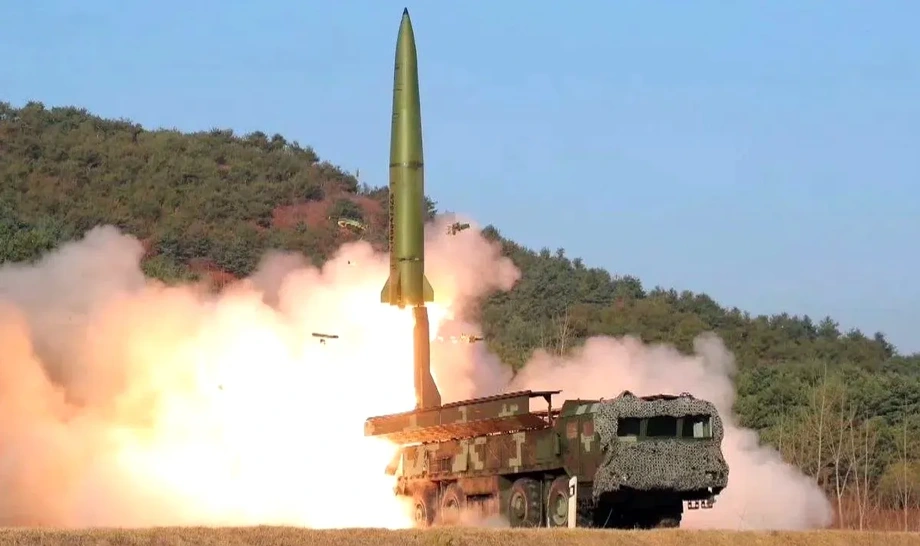
Ukraine's Main Intelligence Directorate (HUR) said on November 26, 2026, that North Korean leader Kim Jong Un had personally ordered a temporary suspension of military support for Russia. The measures include stopping deliveries of KN-23 ballistic missiles and another batch of artillery ammunition, as well as barring Russian military transport aircraft from North Korean airspace.
Contents
- A Temporary Halt With No End Date
- The Remark About Seoul That Angered Pyongyang
- What Has Stopped and What Continues
- The Dates That Explain the Alliance
- The Weapons Pipeline in Numbers
- Why the KN-23 Matters to Ukraine
- Casualties and Practical Friction Are Slowing Cooperation
- Why Seoul Is Central to the Argument
- Why Both Sides Still Have Reasons to Continue
- What Is Confirmed and What Is Still Missing
- What to Know
HUR attributed the decision to a diplomatic dispute over Russia's approach to South Korea. It also said Pyongyang was delaying a Russian request to increase the North Korean contingent inside Russia from about 8,500 personnel to 50,000. Existing North Korean units have not been withdrawn.
The Ukrainian Defense Ministry agency making the claim described Kim's role and the initial restrictions in these terms:
According to available information, the decision was personally made by North Korean leader Kim Jong Un. The restrictions include a ban on Russian military transport aircraft using North Korean airspace, as well as the suspension of supplies of KN-23 ballistic missiles and another batch of artillery ammunition.
Neither Moscow nor Pyongyang has confirmed the restrictions, and the claims have not been independently verified. HUR did not disclose how it obtained its information. The November 26 note behind the reported shipment halt described the measures as temporary but gave neither a resumption date nor the conditions that would allow deliveries to restart.
The Remark About Seoul That Angered Pyongyang
Andrei Rudenko, the Russian deputy foreign minister who oversees relations with Asia, stands at the center of the dispute. In public remarks on October 20, he said Moscow would welcome practical steps by South Korea to restore relations. He also said aviation officials were discussing a resumption of direct flights, while Seoul believed full normalization would have to wait until the end of the war in Ukraine.
HUR described Rudenko's message in different terms. According to its account, he said the Kremlin would eventually help reduce tension between Seoul and Pyongyang. North Korean Foreign Minister Choe Son Hui responded near the end of October that such statements were inconsistent with the nature of the alliance agreements between Russia and North Korea. She demanded clarification of Russian policy toward South Korea and then announced the temporary suspension, HUR said.
The public remarks and HUR's description are not identical. It has not been established that Rudenko publicly offered to mediate between the two Koreas, and no public announcement by Choe confirming a shipment freeze has been produced. HUR did not answer questions about where either official made the statements described in its account.
In that account, Pyongyang objected to the idea that Moscow could pursue better relations with Seoul while presenting itself as North Korea's military ally. The dispute therefore concerns diplomatic loyalty as much as weapons: North Korea appears to be using valuable supplies to demand a clearer Russian position.
What Has Stopped and What Continues
The restrictions described by HUR are limited to particular forms of cooperation rather than every part of the relationship:
- Deliveries of KN-23 ballistic missiles are suspended.
- The next batch of artillery ammunition is being held back.
- Russian military transport aircraft cannot use North Korean airspace under the alleged restrictions.
- Pyongyang is deferring the proposed expansion of its contingent in Russia from 8,500 to 50,000 personnel.
North Korean soldiers remain in Russia's Kursk region. HUR said units of the 11th Special Operations Corps were serving there in a second echelon role, meaning behind the leading elements of the Russian force. North Korean troops previously fought Ukrainian forces that entered Kursk during the war.
A combined North Korean missile unit also remains in the Voronezh region, where it has operated since the middle of summer. HUR identified it as part of Russia's 112th Missile Brigade, within the 1st Tank Army of the Moscow Military District, and said Russian forces used it for strikes against Ukraine. An August assessment said the North Korean formation in western Russia could operate 120 ballistic missiles. HUR did not say how many launchers or missiles would be affected by the new restrictions.
The distinction matters for Ukraine. Suspended shipments can reduce future arrivals, but soldiers already deployed, missiles already delivered and units already operating inside Russia remain in place.
The Dates That Explain the Alliance
North Korea's role developed from ammunition supplies into a partnership involving missiles, combat troops, transportation projects and technology. The main stages place the alleged October dispute in context:
- Second half of 2023: North Korea began regular artillery ammunition deliveries to Russia, according to Ukrainian accounts.
- June 2024: Kim Jong Un and Vladimir Putin signed the Treaty on Comprehensive Strategic Partnership during Putin's visit to Pyongyang. Its mutual defense provision committed the countries to support each other under its terms.
- October 2024: South Korea's Defense Intelligence Agency dates the start of North Korean troop deployments to this period. Pyongyang officially acknowledged their participation in combat in April 2025.
- July and August 2026: Ukrainian President Volodymyr Zelensky said Russia was seeking 30,000 additional North Korean troops. HUR later warned that a request could involve as many as 50,000 more personnel, followed by missiles, drone operators and technical brigades. Putin also met Choe in Moscow in July and praised North Korean support.
- September 7, 2026: Russian Prime Minister Mikhail Mishustin and North Korean Premier Pak Thae Song opened the first road bridge across the Tumen River. The bridge was expected to become an important logistics route.
- September 9, 2026: Putin and Chinese President Xi Jinping sent messages marking the 78th anniversary of North Korea's founding. Putin pledged continued cooperation under the strategic partnership.
- October 20 and late October 2026: Rudenko made his remarks about South Korea, followed by Choe's alleged protest and announcement of the pause.
- November 26, 2026: HUR published its account of the restrictions.
The troop figures require careful reading. HUR's latest statement describes a possible increase to 50,000 in total, while its August warning concerned a possible request for up to 50,000 additional personnel. No date was given for the Russian request now said to be delayed.
The Weapons Pipeline in Numbers
South Korea's Defense Intelligence Agency estimated in March 2026 that Pyongyang had sent approximately 33,000 containers of military supplies to Russia. It assessed that the contents could amount to more than 15 million 152 mm artillery shells, a caliber used extensively by Russian forces.
The shipments were not limited to shells. North Korea was also assessed to have supplied 170 mm artillery systems, 240 mm multiple rocket launchers, weapons for fighting armored vehicles, and KN-23 and KN-24 ballistic missiles. HUR has separately estimated that North Korea provides between 25% and 40% of the ammunition used by Russian forces.
HUR's earlier running tally placed about 150 KN-23 and KN-24 missiles in Russia by September 2026, after an earlier assessment put deliveries above 100. Russia has launched at least several dozen North Korean ballistic missiles at Ukrainian territory since 2024. Ukrainian officials have linked KN-23 weapons to recent attacks on the energy system.
These figures explain why even a temporary interruption matters. North Korean factories had become a major outside source for a war in which artillery consumption and missile attacks place continuous pressure on Russian stocks.
Why the KN-23 Matters to Ukraine
The KN-23 is a ballistic missile designed for distances of several hundred kilometers. A rocket motor powers its launch before it follows an arcing path and descends toward its target at high speed. That flight pattern can give air defenses little time to respond. North Korean missiles used by Russia vary in type, but Ukrainian and Western assessments generally describe them as more powerful and less accurate than comparable Russian weapons.
On November 16, Zelensky said Russia was receiving dozens of North Korean missiles every month. His warning about monthly missile deliveries followed preliminary findings that a KN-23 was used against a major energy facility on November 7. During the wider assault overnight on November 6 and 7, Ukraine recorded 36 ballistic missiles and said it intercepted four. Four interceptions out of 36 amount to about 11% during that attack.
Zelensky returned to the immediate danger on November 26, warning that Russia was completing preparations for another large strike on energy infrastructure, logistics and essential services. He said repair crews were working in six regions after overnight missile and drone attacks damaged an apartment building, a hospital and businesses. He also renewed his appeal for Patriot interceptor missiles from the United States.
Ukraine's Defense Ministry cautioned that the pause would not immediately reduce the missile threat. Russia retains the North Korean weapons already delivered, manufactures its own ammunition and has other suppliers. The practical effect for Ukrainian cities will depend on how long any delivery halt lasts and whether existing stocks are sufficient to sustain the current pace of attacks.
Casualties and Practical Friction Are Slowing Cooperation
HUR estimated that North Korean forces had suffered 7,058 casualties in the Kursk region. It classified 2,251 as killed or otherwise irrecoverable losses and said the remainder were wounded. The agency presented those losses as an important reason for slower military cooperation.
Earlier estimates covered different groups and periods. South Korean, Ukrainian and Western officials previously estimated that about 14,000 North Korean troops had been sent to fight in Kursk and that more than 6,000 had been killed. South Korea's Defense Intelligence Agency separately estimated in March that more than 16,000 troops had been sent to Russia since October 2024. HUR did not reconcile those earlier figures with its own Kursk casualty tally.
The human cost had already become visible in Pyongyang. Kim publicly confronted it through promises to bereaved families and ceremonies for dead soldiers in August 2025, an unusual acknowledgment of losses by a state that normally keeps military casualties secret.
HUR also listed practical obstacles. It said Russian and North Korean forces had low interoperability, meaning their communications, procedures and military practices did not work smoothly together. It cited language barriers, a shortage of interpreters and inadequate North Korean logistical support. The agency further claimed that senior Russian commanders openly treated North Korean soldiers with contempt and regarded them as a politically imposed burden.
Why Seoul Is Central to the Argument
Relations between Moscow and Seoul have been strained since Russia's 2022 invasion of Ukraine. South Korea supported Kyiv and imposed export controls on Russia, but commercial contact did not disappear. South Korea imported 18 million metric tons of Russian coal during the first eight months of 2026, a 34% increase from 2025. More than 176,000 metric tons of fuel were also loaded at South Korean ports onto tankers bound for Russia in July and August 2026.
Those figures help explain why Rudenko's comments about restoring relations and direct flights were plausible as a matter of Russian diplomacy. They do not confirm HUR's claim that he offered to reduce tension between the two Koreas, which remains the disputed part of the account.
A senior South Korean official addressed the wider military relationship without commenting on HUR's specific claims:
Military cooperation between North Korea and Russia remains a matter of serious concern for the Republic of Korea and the international community.
The official said cooperation that violates relevant UN Security Council resolutions must cease immediately. Those resolutions include restrictions on arms transfers and military cooperation involving North Korea. Seoul's response therefore condemned the underlying partnership while leaving the alleged pause unconfirmed.
Why Both Sides Still Have Reasons to Continue
North Korea receives valuable returns from the relationship. An economic estimate published earlier in 2026 put its earnings from cooperation with the Kremlin at as much as $13 billion during the three years after Russia's 2022 invasion. Military assistance also offers access to hard currency, meaning money that can be used in international trade and is especially valuable to a country under extensive sanctions.
Pyongyang seeks equipment, raw materials, technology, funding and experience of modern warfare. Its personnel can observe drones, electronic warfare and air defense in combat. Previous accounts of Russian technology transfers described combat feedback that helped North Korea improve missile performance and supported its efforts to expand attack drone production.
Moscow, for its part, has received ammunition, missiles, artillery and personnel. HUR described the current situation as a slowdown in cooperation rather than a complete breakdown. The bridge project, the strategic treaty and the value of the trade on both sides give the two governments reasons to contain the dispute.
Public diplomacy has also continued. Putin recently received Jo Yong Won, one of Kim's closest aides, at the Kremlin, and both sides praised bilateral cooperation. North Korean state media continued to cover visiting Russian delegations and North Korean visits to Moscow. Rudenko said a visit by Kim to Russia was constantly on the agenda, without announcing a date.
What Is Confirmed and What Is Still Missing
Russia's Foreign Ministry recorded an October 23 meeting between Rudenko and North Korean ambassador Sin Hong-chol but published no details of their discussion. Rudenko met South Korean ambassador Lee Seok-bae on November 24, with bilateral relations identified as the subject. Official Russian and North Korean channels have made no public mention of the disagreement described by HUR.
Russia's Defense Ministry and North Korean diplomatic missions in Russia, London and New York did not respond to requests for comment. South Korea's Unification Ministry also did not respond immediately. Independent checks could not verify the restrictions or confirm the alleged public statements by Rudenko and Choe.
Several facts consequently remain open: when the last affected shipment moved, whether Russian transport flights have actually changed their routes, how long Kim intends the pause to last and what clarification would satisfy Pyongyang. HUR has said only that the restrictions are temporary. For Ukraine, the measurable test will be a sustained decline in missile and shell arrivals, while North Korean troops and the Voronezh missile unit remain deployed.
What to Know
- HUR said on November 26, 2026, that Kim Jong Un personally ordered a temporary halt to KN-23 missile deliveries and another batch of artillery ammunition for Russia.
- The alleged measures also close North Korean airspace to Russian military transport aircraft and delay expanding the North Korean contingent from 8,500 to 50,000 personnel.
- HUR traced the dispute to Rudenko's October remarks about South Korea and Choe's subsequent demand that Moscow clarify its policy.
- North Korean units remain in Kursk, and a missile unit continues to operate in Voronezh as part of Russia's 112th Missile Brigade.
- HUR estimates 7,058 North Korean casualties in Kursk, including 2,251 killed or otherwise irrecoverable losses; earlier official estimates used different totals and scopes.
- Already delivered weapons, Russian production and remaining North Korean units mean the alleged pause would not immediately end the threat to Ukraine.
- Neither Russia nor North Korea has confirmed the restrictions, HUR has not disclosed its sourcing, and no date or conditions for resuming deliveries have been announced.