A regular service across three countries returns
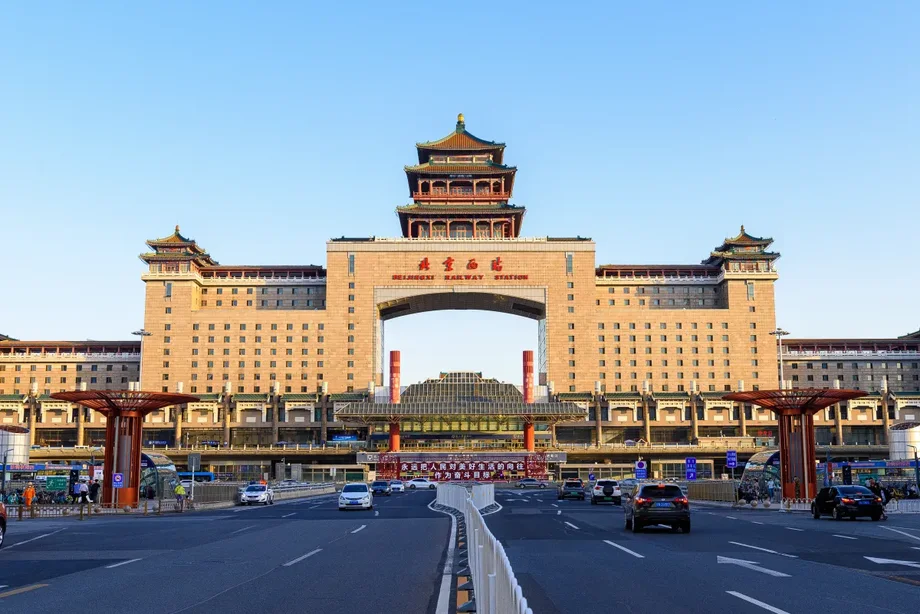
At 7:27 a.m. on Wednesday, November 25, 2026, train V3 left Beijing Station with nearly 200 passengers, opening a weekly rail service through Mongolia to Irkutsk in Russia. The journey covers 2,666 kilometres, about 1,657 miles, and takes roughly 55 hours. Passengers can leave the train in Ulaanbaatar or continue across a second international border without changing carriages.
Contents
- A regular service across three countries returns
- How does the weekly timetable work?
- Which stations and border checks shape the journey?
- What is life like during 55 hours on board?
- What did the first passengers experience?
- How can travellers buy tickets and prepare documents?
- Why is Lake Baikal central to the appeal?
- How did the historic route return?
- What could the train change for regional travel?
- Key Points
The inaugural train reached Ulaanbaatar Railway Station at 2:35 p.m. local time on Thursday, November 26. It was scheduled to arrive at Irkutsk Station at 2:55 p.m. on Friday, November 27. The first return service was due to leave Irkutsk on Saturday, November 28, and reach Beijing on Monday, November 30.
The launch restores a through journey that disappeared when the former K3/4 service stopped in 2020 during the pandemic. That train connected Beijing with Moscow through Ulaanbaatar and Irkutsk. The revived service terminates at Irkutsk, so travellers continuing to Moscow must arrange a separate connection.
For Beijing, the train establishes a regular passenger route directly into the Siberian interior. A journey that previously required several transfers and more than three days can now be made on one train. China's State Railway Group coordinated with Mongolian and Russian railway departments, inspected locomotives and carriages, and selected experienced crews for professional, safety and foreign affairs training before the launch.
How does the weekly timetable work?
V3/4 is the collective name for the service, but the train number changes as it crosses borders. V3 becomes train 3 after entering Mongolia. On the return journey, train 4 leaves Russia and becomes V4 after reentering China. These administrative changes do not require passengers to move to another train.
- Wednesday: V3 departs Beijing Station at 7:27 a.m. Beijing time, exits China at Erenhot and enters Mongolia at Zamyn-Uud.
- Thursday: The train arrives in Ulaanbaatar at 2:35 p.m., then continues towards the Sukhbaatar and Naushki border crossings.
- Friday: It reaches Irkutsk at 2:55 p.m., approximately 55 hours after leaving Beijing.
- Saturday to Monday: Train 4 leaves Irkutsk at 6:58 a.m. on Saturday, reaches Ulaanbaatar at 6:38 a.m. on Sunday and arrives in Beijing at 2:35 p.m. on Monday.
The operating timetable gives 6:58 a.m. for the Saturday departure from Irkutsk. A Beijing municipal notice listed 6:58 p.m., so passengers should check the time printed on their ticket before travelling.
There is only one departure in each direction each week. Missing a train can therefore mean waiting seven days. A passenger who leaves the train in Ulaanbaatar on Thursday can resume the journey on the next northbound service a week later, but should confirm that a berth is available before arranging accommodation.
Which stations and border checks shape the journey?
Stations listed for international passenger business include Beijing, Jining South and Erlian in China; Zamyn-Uud, Sainshand, Choir, Ulaanbaatar, Zuunkharaa, Darkhan and Sukhbaatar in Mongolia; and Naushki, Ulan-Ude, Slyudyanka and Irkutsk in Russia. Additional stops serve local operational needs.
Immigration and customs procedures take place at four designated posts: Erenhot in China, Zamyn-Uud and Sukhbaatar in Mongolia, and Naushki in Russia. Northbound passengers leave China at Erenhot and enter Mongolia at Zamyn-Uud. They later leave Mongolia at Sukhbaatar and enter Russia at Naushki. The sequence reverses on the journey back to Beijing.
Through passengers complete Mongolian entry formalities even if they intend to remain in their compartments. Each traveller therefore needs documentation that covers every country entered, not merely the final destination.
Erenhot also hosts a mechanical operation that explains how the same carriage can cross two railway systems. Chinese tracks are narrower than those used in Mongolia and Russia. Crews change the wheelsets, the wheel and axle assemblies beneath the carriages, so the train can continue on the wider track. Passengers can keep the same berth while this work and the separate border checks take place.
What is life like during 55 hours on board?
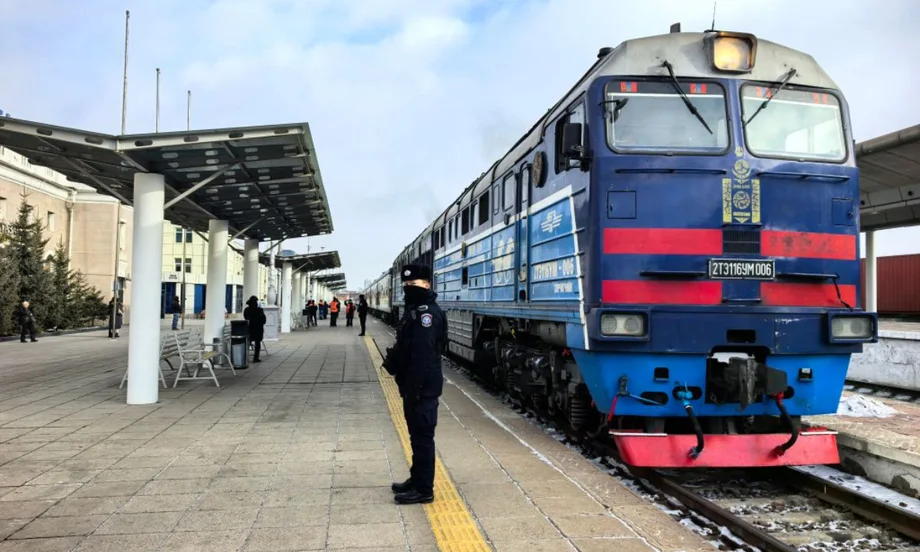
The main set of 16 carriages uses Chinese 25G stock with air conditioning and is configured for 242 passengers. Its accommodation includes eight hard sleeper carriages and two deluxe soft sleeper carriages, alongside a generator van, a dining car and auxiliary vehicles. Three additional hard sleeper carriages run only as far as Erenhot and are detached there.
Hard sleeper compartments have four berths, while deluxe soft sleeper compartments have two. The train has shower facilities, and the deluxe accommodation includes private washing facilities. Power sockets, upgraded bedding and interior equipment are intended to make the two nights on board more comfortable.
The Chinese dining car remains attached for the entire international journey, a first for a Chinese international passenger train. It serves Chinese and Western dishes around the clock. Earlier international services generally relied on Mongolian or Russian dining cars after leaving China.
Liu Haijun, an experienced international train chief with China Railway Beijing Bureau, described the new rolling stock and the changes to its catering and decoration.
This train uses new 25G carriages with air conditioning and can meet the diverse travel needs of passengers. The dining car has also been upgraded, with more varied and appealing dishes, and the carriage decoration has a stronger artistic feel.
A multilingual crew of 16 attendants rotates in two teams, and 13 members have previous international experience. Interpreters assist passengers throughout the journey. Safety notices and service signs in the carriages appear in Chinese, English and Russian.
The decoration draws on the historic Ten Thousand Li Tea Road. Details include Han dynasty cloud patterns, paper cut zodiac designs, blue and white porcelain panels, and paintings or photographs devoted to the culture, architecture and landscapes of the three countries.
What did the first passengers experience?
Lin Cuili, a traveller from Kuala Lumpur, Malaysia, found the train through artificial intelligence software after spending more than 20 days touring China with a friend. Their trip had already included driving through Yunnan and Sichuan. She contacted a travel agency after discovering the service and secured a ticket for the inaugural departure.
Jia Yipeng, another passenger on the first train, had previously visited Moscow and St Petersburg by air. He explained why the rail journey offered a different experience.
This is my first time travelling abroad by train. I have been to Russia many times, including Moscow and St Petersburg, but always by plane. I have looked forward to travelling to Irkutsk by train for a long time.
At 8 a.m., the Chinese song By Lake Baikal played in the dining car while passengers ate breakfast and drank coffee. Landscape photographs from China, Mongolia and Russia hung on the carriage walls. Beijing Station also provided an international waiting area, a dedicated entrance channel, manual ticket inspection and announcements and safety instructions in Chinese and Russian.
How can travellers buy tickets and prepare documents?
A single journey from Beijing to Irkutsk costs 2,411 yuan for a hard sleeper berth and 3,763 yuan for a deluxe soft sleeper berth. The deluxe fare is 1,352 yuan higher, approximately 56% above the hard sleeper price.
Tickets are not sold through the 12306 online platform. Buyers must use designated offices in person: the China Travel Service International Train Ticket Office in Beijing's Dongcheng District, or the Erenhot China International Travel Agency in the Inner Mongolia Autonomous Region. Booking information lists a deposit of 100 yuan per ticket, with stated advance booking periods of 60 days for groups and seven days for individuals. Russian sales information allows reservations up to 60 days ahead and says offices in Russia handle departures from Russia and Mongolia.
Entry requirements depend on nationality, itinerary and the date of crossing the border. Passports and the necessary entry permissions must be presented when buying tickets.
- Chinese citizens with ordinary passports can currently enter Russia without a visa. Chinese nationals travelling to Mongolia by rail still need an electronic tourist visa.
- British tourists can visit Mongolia without a visa for up to 30 days through December 31, 2026. China's tourism exemption for eligible British and Canadian citizens with ordinary passports also permits stays of up to 30 days through that date.
- Indian citizens can apply for Russia's unified electronic visa. Applications open 86 days before entry and close four days before. It permits one entry and a stay of up to 30 days within its validity period of 120 days. British citizens require a Russian visa in advance.
Travellers considering the Russian section should also consult official safety advice. The United Kingdom advises against all travel to Russia. The United States maintains a Level 4 advisory, citing wrongful detention and limited consular assistance outside Moscow. Journeys around New Year require particular attention because some temporary entry exemptions expire on December 31.
Why is Lake Baikal central to the appeal?
After entering Russia, the train spends roughly five hours following the shore of Lake Baikal, the world's deepest freshwater lake. On some sections near the southern shore, the track passes just over 10 metres from the water. Liu said passengers could see clear blue water at around 7:30 a.m. Beijing time on Friday.
Irkutsk Station lies about 70 kilometres from the lake and provides access to the lakeside settlement of Listvyanka. The approach adds forests and open water to a journey that has already crossed cities, the Gobi Desert and Mongolian grasslands. Local authorities expect ticket demand to increase as the winter blue ice season approaches, when clear ice on parts of the lake takes on an intense blue colour.
The timetable leaves limited time for an immediate return. Arrival at 2:55 p.m. on Friday and departure at 6:58 a.m. on Saturday create a turnaround of 16 hours and three minutes. A traveller taking the first train back has one night in Irkutsk. Anyone planning a longer exploration of the Baikal region needs a later return arrangement.
How did the historic route return?
The November launch was the final stage of a gradual restoration rather than the first rail movement across the border since 2020. The route developed over several decades:
- 1975: Passenger carriages for Ulaanbaatar began travelling with the Beijing to Moscow train.
- May 1985: The service between the Chinese and Mongolian capitals started operating independently.
- February 2020: International passenger services stopped during the pandemic, ending the through K3/4 operation.
- August 2023: A train from Ulaanbaatar carried 74 passengers into Erenhot as the border reopened to rail passengers.
- June 2025: Direct passenger service between Beijing and Ulaanbaatar returned.
- November 25, 2026: V3 extended the through journey to Irkutsk, followed by the first scheduled return on November 28.
The former K3/4 gained wider public recognition through the film Lost in Russia. A ticket agent said the new service reaches Irkutsk only 18 minutes later than the old K3 schedule did, although the restored train does not continue to Moscow.
What could the train change for regional travel?
Cao Li, chargé d'affaires ad interim of the Chinese Embassy in Mongolia, welcomed the service and connected it with trade, personal contacts and the economic corridor shared by the three countries.
The new passenger service promises a fresh travel experience while boosting cross-border trade, people-to-people ties and the China-Mongolia-Russia Economic Corridor.
Mongolia's visitor figures show the scale of the two neighbouring travel markets before the train began. The country recorded 925,857 tourist arrivals from January through October 2026. Russia supplied 309,471 and China supplied 224,345. Together, those 533,816 arrivals represented 57.7% of the total.
Demand from abroad was already growing. Mongolia received 841,246 tourist arrivals from January through September, an increase of 23% over the same nine months of 2025. These figures cover every means of arrival and provide a picture of the travel market before the weekly train started.
A predictable weekly service gives tourists, business travellers, families and students a new way to move between the three countries while carrying their accommodation with them for two nights. It also gives intermediate destinations such as Darkhan and Ulan-Ude a place on an international itinerary. No figure has yet been published for new trade or tourism spending generated by the service, and no date or destination has been announced for another international route. The firm commitment for now is one departure from Beijing each Wednesday and one from Irkutsk each Saturday.
Key Points
- The inaugural V3 train left Beijing at 7:27 a.m. on November 25, 2026, carrying nearly 200 passengers.
- The weekly service covers 2,666 kilometres in about 55 hours and links China, Mongolia and Russia.
- The first train reached Ulaanbaatar on November 26 and was scheduled to arrive in Irkutsk on November 27.
- The main set of 16 carriages has space for 242 passengers and includes sleeper accommodation, showers and a dining car operating throughout the journey.
- Beijing to Irkutsk fares are 2,411 yuan for a hard sleeper and 3,763 yuan for a deluxe soft sleeper, with tickets sold offline through designated agencies.
- Border procedures take place at Erenhot, Zamyn-Uud, Sukhbaatar and Naushki, while wheelsets are changed at Erenhot to accommodate different track widths.
- The launch restores a through journey suspended in 2020, but Irkutsk is the terminus and travellers to Moscow need another connection.
- Russia and China supplied 57.7% of Mongolia's tourist arrivals in the first 10 months of 2026; the new train's economic effect has not yet been measured.