A NT$10 billion target and a larger US factory
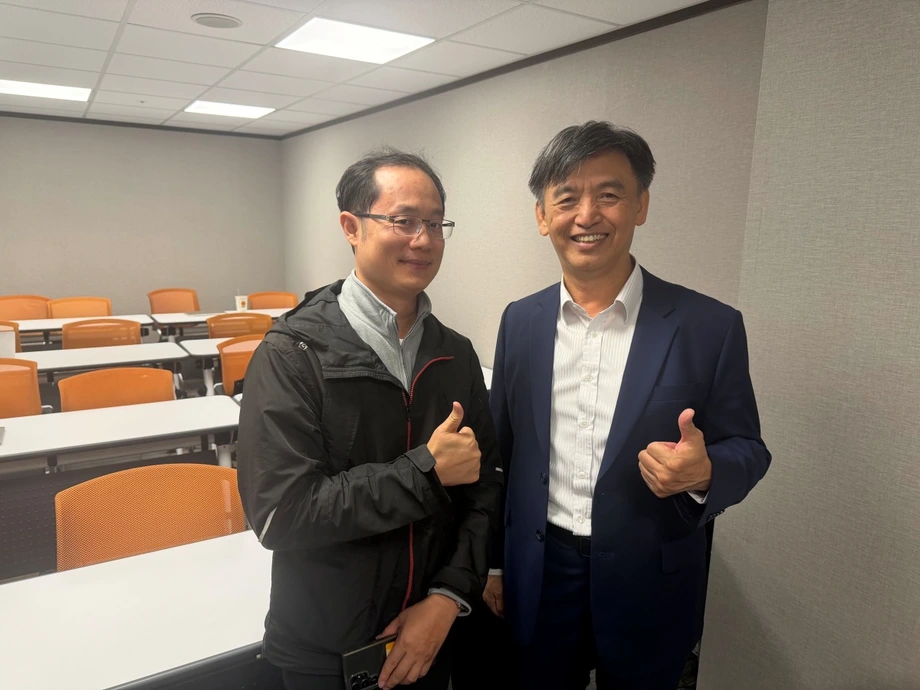
Giga Solar Materials Corp. (3691) expects revenue to exceed NT$10 billion in 2026, supported by a recovery in its solar materials business and an ambitious expansion in the United States. General Manager Huang Wen-jui told an investor briefing on Nov. 27 that manufacturing capacity at the American solar module plant should rise from 500 MW this year to 1 GW in 2027. New production lines are being installed, and orders have already been received.
Contents
- A NT$10 billion target and a larger US factory
- The financial turnaround, measured against 2025
- Why are India and the United States so important?
- AI power demand strengthens the case for US solar
- Green power assets move toward a listing application
- Drone batteries target a return to profit
- AI cooling adds another route for materials growth
- What the share rally is pricing in
- Dates to watch
- Key Points
Huang identified solar modules, green electricity and conductive paste as the three principal growth engines for 2027. He presented the revenue goal as part of a broader recovery for the company, which also has interests in battery materials, semiconductors and cooling equipment for artificial intelligence servers.
This year is an important operating turning point for Giga Solar in nearly a decade, and revenue for the full year is expected to exceed NT$10 billion.
Revenue for the first three quarters reached NT$7.715 billion. Passing the annual target therefore requires more than NT$2.285 billion in the fourth quarter. Huang did not provide a quarterly revenue forecast, but he expects the additional American capacity and orders already secured to lift profit further next year.
The American expansion runs through Amerisun, in which Giga Solar holds 49.08%. One gigawatt (GW) equals 1,000 megawatts (MW). Amerisun began contributing revenue and moved into profit in the fourth quarter of 2025, giving the group an operating base before the planned increase in capacity. Giga Solar did not identify the customers behind the new orders or disclose their value.
The financial turnaround, measured against 2025
The latest figures show how much the earnings picture has changed. Gross profit for the first three quarters of 2026 was NT$1.196 billion, producing a gross margin of 15.50%. Operating profit reached NT$485 million, while net profit attributable to the parent company was NT$346 million. Earnings per share stood at NT$3.77.
Solar and green energy activities account for roughly 70% of revenue. Huang expects the group gross margin to retain room for improvement because conductive paste sold in the United States and India earns better margins than products sold in China. Profit from the American module factory provides another source of support.
The comparison with the first nine months of 2025 is striking. Revenue in that earlier period was NT$3.6435 billion, less than half the latest figure. Gross profit was NT$275.114 million and the gross margin was 7%. The company recorded an operating loss of NT$416.386 million and a net loss of NT$854.479 million, including a loss of NT$748.902 million attributable to the parent. Loss per share was NT$8.15.
The earlier balance sheet also supplies context for the expansion. On Sept. 30, 2025, Giga Solar had total assets of about NT$12.14 billion and cash of approximately NT$1.67 billion. Operating activities generated NT$310.431 million of cash during the first nine months of 2025, reversing an outflow of NT$2.641 billion in the corresponding period of 2024.
Why are India and the United States so important?
Conductive paste remains the largest part of the business. The material is printed onto solar cells to create the contacts that collect and carry electricity. Silver is a central ingredient, so changes in silver prices can affect sales values and production economics. Giga Solar supplies silver pastes for TOPCon and back contact (BC) cells, two technologies designed to convert sunlight into electricity more efficiently.
Several policy shifts are working in favour of the group. China has adjusted export tax rebates, India is promoting domestic solar cell manufacturing, and the United States restricts ownership arrangements for Chinese manufacturers establishing factories there. Giga Solar is responding by expanding its presence beyond China rather than relying on a single market.
Gigarenew India, wholly owned by Giga Solar, is the vehicle for producing paste locally in India. Local manufacturing is intended to improve access to Indian customers, take advantage of tariff arrangements and reduce exposure to geopolitical disruption. Monthly paste volumes in both India and the United States have been increasing.
That shipment growth supported revenue even when silver prices declined during the second and third quarters of 2026. The combination of rising volumes and better margins explains why these two markets matter more to earnings than their shipment figures alone would suggest.
AI power demand strengthens the case for US solar
Huang connected the American solar opportunity directly to the rapid construction of AI data centers. Their computing equipment requires large amounts of electricity, while the United States faces constraints in grid construction and power supply. Huang argued that solar projects can be installed in less time than nuclear or fuel cell generation, allowing them to add supply more quickly.
American module prices provide a second attraction. Giga Solar said prices in the United States are close to four times those in China, giving manufacturers operating locally greater room for profit. This price gap helps explain why the company is investing in module capacity while also pursuing higher paste sales.
International Energy Agency (IEA) projections used by Giga Solar point to a much larger market through the end of the decade. Global renewable capacity additions from 2025 through 2030 are forecast at about 4,600 GW, twice the amount added during 2019 through 2024. Utility solar projects and distributed solar installations together are expected to account for nearly 80% of the additions.
The projected 4,600 GW is comparable to the current combined generating capacity of China, the European Union and Japan. For Giga Solar, that forecast links demand for conductive paste and modules with the development of power plants and electricity services for computing customers.
Green power assets move toward a listing application
Wholesun, the green power unit in which Giga Solar holds 98.5%, built a 60 MW solar plant in the Philippines in 2026. During 2027, the unit will assess possible sales of solar and energy storage projects. Its overseas development will increasingly concentrate on supplying electricity to computing centers.
Wholesun also plans to apply for the Taiwan Innovation Board in the second quarter of 2027. The board is intended for companies developing newer technologies and business models. Giga Solar sees a potential listing as a way to increase the visibility of its power assets while continued development in Southeast Asia supports cash flow and the asset base.
The company has not announced a listing date or received approval. The immediate milestones are the application planned for the second quarter and decisions about which solar or storage projects could be sold.
Drone batteries target a return to profit
Battery materials provide a separate possible turnaround. Huang said a company in the United States has adopted Giga Solar silicon anode material for drones that require batteries with high energy density. Orders are expected to begin increasing in December 2026, and the business could move from loss to profit during 2027. The customer was not named, and no order value or shipment volume was disclosed.
An anode is one of the main components inside a rechargeable battery. Silicon has a higher specific capacity than the graphite commonly used in anodes, meaning it can store more energy for a given amount of material. In a drone, that can translate into longer flight time without a matching increase in battery weight.
Giga Solar has spent roughly a decade developing battery materials. Its portfolio also includes lithium iron phosphate (LFP), silicon oxide, silicon carbide, nano silicon binders and electrolytes. The anticipated drone orders offer a practical test of whether that development work can become a profitable commercial business.
AI cooling adds another route for materials growth
AI servers are also creating demand beyond electricity generation. Power consumption for each server rack is rising from roughly 20 to 30 kW toward 60 to 100 kW or more. Conventional air cooling becomes less effective at those levels. Liquid cooling removes heat by circulating fluid through the equipment, and the associated market is expected to grow at a compound annual rate of approximately 25% to 35%.
Giga Solar has disclosed a 34.46% interest in Huahsu and a holding of between 17.64% and 25% in CerTone. Huahsu derives much of its revenue from processing and selling reclaimed wafers, which can be reused by semiconductor factories for equipment testing and process monitoring. It also works on silicon carbide wafer cutting, grinding, polishing and epitaxy.
CerTone provides an entry into AI cooling components, including tubes, quick connectors, cold plates, liquid cooling modules and coolant distribution units. A coolant distribution unit (CDU) controls and circulates the liquid used to cool servers. Giga Solar has included public listing planning in its strategy for this area, but it has not provided a timetable or a revenue target.
What the share rally is pricing in
Giga Solar shares reached NT$114 at 9:02 a.m. on Nov. 27, 2026, rising NT$10, or 9.62%, to their upper daily limit. A total of 1,152 lots had traded, with each lot representing 1,000 shares. Over the preceding five sessions, the stock gained 10.52%, compared with a 1.58% rise in the TPEx benchmark.
Institutional trading had been less enthusiastic than the price movement. The three main institutional categories were net sellers of 1,301 lots over five sessions, including net sales of 1,013 lots by foreign investors and 288 lots by dealers. Investment trusts had no net purchase or sale. Margin positions increased by 2,828 lots, while short positions declined by 1,160 lots.
The stock had recently rebounded from around NT$90. Traders were watching price and volume behaviour between NT$110 and NT$120, with earlier selling pressure concentrated above NT$120. One institutional estimate placed earnings per share for the full year at NT$4.51, compared with the NT$3.77 already earned in the first three quarters.
Monthly revenue remained strong between June and October. October revenue rose about 59% year on year and 6.91% from September, reaching its highest level in three months. Giga Solar is among the five largest solar conductive paste suppliers globally, but the financial test now is to sustain that revenue growth while completing the American expansion and converting newer battery and cooling activities into earnings and cash.
Dates to watch
Several disclosed dates show how the recovery is expected to develop:
- Fourth quarter of 2025: Amerisun began contributing revenue and moved into profit.
- Nov. 27, 2026: Huang presented the revenue target and the plan to double American module capacity.
- December 2026: Silicon anode orders for drone batteries are expected to begin increasing.
- During 2027: American module capacity is targeted at 1 GW, while possible sales of solar and storage projects will be assessed.
- Second quarter of 2027: Wholesun plans to apply for the Taiwan Innovation Board.
- During 2027: The battery materials business aims to move from loss to profit.
Key Points
- Giga Solar expects 2026 revenue to exceed NT$10 billion, after recording NT$7.715 billion in the first three quarters.
- Earnings per share reached NT$3.77, with a gross margin of 15.50%.
- American module capacity is planned to rise from 500 MW in 2026 to 1 GW in 2027, with new lines being installed and orders received.
- Rising paste volumes and better margins in India and the United States are supporting the recovery.
- Wholesun built a 60 MW solar plant in the Philippines and plans an Innovation Board application in the second quarter of 2027.
- A US customer has adopted silicon anode material for drones, with orders expected to increase from December 2026.
- Shares closed the morning move at the NT$114 daily limit on Nov. 27, up 9.62%.