Putrajaya draws a line for Malaysian businesses
Malaysia has instructed its companies not to do business with firms on Washington's trade blacklist, turning a US action against Megaspeed International into a direct compliance warning for Malaysian suppliers, landlords, lenders and data centre operators. Communications Minister Datuk Seri Fahmi Fadzil delivered the message in Putrajaya on Friday, Nov 27, 2026, after the Cabinet was briefed on American semiconductor export restrictions.
Contents
- Putrajaya draws a line for Malaysian businesses
- The seven names, and the money behind two Malaysian firms
- Two years of scrutiny, political pressure and denials
- What Washington's new rules actually change
- Malaysia moves beyond checks at the border
- A vast investment programme meets a sudden chill
- Shipment freezes and financing delays test the boom
- Chip controls run alongside tariff negotiations
- Fahmi separates the Google lawsuits from investment
- Key Points
The announcement came four days after the United States added Megaspeed, a cloud company based in Singapore, and six affiliates to its Entity List. Washington cited the risk that advanced computing equipment could be diverted to unauthorised users or uses. The companies are spread across Singapore, Malaysia, Indonesia and Thailand, and the case concerns suspected diversion of Nvidia artificial intelligence chips to China.
Fahmi, who is also the government spokesperson, said Investment, Trade and Industry Minister Datuk Seri Johari Abdul Ghani had conveyed the instruction at the Cabinet meeting. Fahmi told his weekly press conference:
The Miti minister informed the Cabinet that Malaysian companies had been directed not to conduct any transactions with companies blacklisted by the US to avoid complications in their business and trade dealings.
The Cabinet instruction used broad language covering companies blacklisted by the United States. A separate notice planned for Malaysian data centre operators focuses on the seven entities connected to the Megaspeed case. For a local business, the immediate task is to check whether a customer, tenant or supplier appears on the US list before completing a transaction. Megaspeed has denied wrongdoing.
The seven names, and the money behind two Malaysian firms
The Entity List is administered by the US Bureau of Industry and Security (BIS), part of the Commerce Department. Placement on it creates licensing barriers to American exports and can also affect financing, insurance, property leases and commercial relationships. The seven entities added in the Megaspeed action are:
- Megaspeed International, Swiftdata Pte Ltd and Apex Enterprise Solutions in Singapore.
- Speedmatrix Sdn Bhd and MSFusion Sdn Bhd, both registered in Malaysia.
- PT Megaspeed International, which appeared under Malaysia in the US document but is registered in Indonesia.
- Megaspeed (Thailand) Co Ltd.
Speedmatrix and MSFusion are private companies, not companies listed on Bursa Malaysia. Malaysia's Investment, Trade and Industry Ministry, known as Miti, clarified that PT Megaspeed International is neither registered nor operating as a data centre operator or tenant in Malaysia, according to records held by the Malaysian Investment Development Authority (Mida). Megaspeed's website identifies it as an Indonesian subsidiary.
Corporate documents nevertheless show extensive connections among the businesses. Speedmatrix and PT Megaspeed International are subsidiaries of Megaspeed, whose ownership passed to Swiftdata. Speedmatrix and MSFusion both named Tan Yong Pong, a Megaspeed chairman and chief executive who is also a Swiftdata director, as a director. The companies have shared addresses in Iskandar Puteri, Johor, while Speedmatrix and PT Megaspeed International also shared addresses in Klang.
Speedmatrix's accounts reveal the scale of the operation behind its modest RM2.5 million capital base. In its first financial period, the 11 months ending Dec 31, 2024, it recorded RM8.53 billion in additions to property, plant and equipment, including RM6.61 billion of server equipment. Megaspeed advanced it RM7.99 billion, of which RM7.90 billion remained outstanding at year end. The advance was unsecured, carried no interest and was repayable on demand.
All of Speedmatrix's RM522.31 million revenue came from its parent. It posted a RM103.16 million net loss, held only RM2.47 million in cash and ended the period with RM8.86 billion in assets against RM8.96 billion in liabilities. Auditor SFAI Malaysia PLT flagged material uncertainty about its ability to continue as a going concern, an accounting term for remaining operational, while still giving an unmodified audit opinion.
MSFusion reported just RM6,433 in assets and RM22,581 in liabilities for 2024. Yet in August 2025 it agreed to pay RM263.21 million cash for 52.54 acres in Bandar Cemerlang Industrial Park. Crescendo Corp later issued a default notice over RM225.91 million in overdue payments; MSFusion settled the balance and late payment interest on Sept 9. An annual return dated March 7, 2026 named WFCT Cayman Holdings Ltd as MSFusion's sole shareholder, replacing its earlier ownership by Megaspeed.
Two years of scrutiny, political pressure and denials
Megaspeed was incorporated in 2015 as 7Road International and adopted its current name in March 2023. It became an Nvidia cloud partner for the Asia Pacific region in November 2023. US authorities opened an investigation into possible export control violations in 2024. American and Singapore officials conducted a site check in Singapore in June 2025 and interviewed Alice Huang, then its chief executive. Nvidia says it stopped selling to Megaspeed that month.
Singapore has separately investigated Megaspeed and six individuals since February 2025 over possible false declarations connected to server purchases and related offences. Prime Minister Lawrence Wong said Singapore was conducting its own inquiry rather than participating in the American investigation. He said companies found breaching Singapore's laws would face firm enforcement action, and that a previous investigation of Alice Huang had found no basis for prosecution.
The commercial investigation became a wider political scandal after allegations concerning a personal relationship between Nvidia chief executive Jensen Huang and Alice Huang, Megaspeed's former controlling shareholder, and claims that she acted for Chinese intelligence. China called the spying accusation groundless. Jensen Huang temporarily stepped down and was subsequently reinstated. Megaspeed says Alice Huang formally left the company in August 2025, after transferring her ownership to Swiftdata in late 2023.
US Treasury Secretary Scott Bessent said the Treasury, Pentagon, State Department and US Trade Representative had wanted Megaspeed blacklisted for months, while the Commerce Department controlled the final decision. Senator Pete Ricketts demanded an explanation for the delay. The Justice and Commerce departments also pledged to apply the full extent of the law to any criminal conduct that may have occurred.
Megaspeed said on Nov 12 that it conducted legitimate and lawful business, complied with US export controls and had cooperated with BIS. Alibaba rejected the listing of Apex Enterprise Solutions, its Singapore subsidiary, calling it erroneous and denying that Apex had diverted restricted chips. Apex had paid Megaspeed and other companies about US$4.2 billion in advance to rent computing capacity in Southeast Asia. Speedmatrix pledged assets as collateral under the arrangements, and a fixed charge in Apex's favour was registered against Speedmatrix on June 25, 2024.
The allegations sharpened on Nov 27, when Nvidia Blackwell GB200 and GB300 chips were reported to have been installed in at least two data centres in China with links to Megaspeed. Those chips were not approved for export to China. Nvidia recently formed an export control committee to oversee trade compliance and national security risks.
What Washington's new rules actually change
Washington began sweeping restrictions on advanced chip exports to China in October 2022. Companies in Southeast Asia could subsequently buy advanced processors for local data centres without the same licensing requirements, while Chinese customers rented computing power remotely. That allowed computing services to cross borders even when the physical chips did not. The latest measures attempt to control both routes.
- Nov 19: US rules began requiring licences for certain advanced chips and servers sent to, or transferred within, Malaysia, Singapore, Indonesia, Thailand and Brazil.
- Nov 23: BIS added Megaspeed and six affiliated entities to the Entity List.
- Nov 24: Miti said Mida would notify Malaysian data centre operators not to host, lease space to or serve the seven entities.
- Nov 26: Nvidia was reported to have instructed manufacturing partners to freeze AI server shipments to Malaysia, Singapore, Thailand and Indonesia.
- Nov 27: Fahmi announced the broader instruction to Malaysian companies after the Cabinet briefing.
Applications involving the five countries will be assessed individually, with Washington considering each country's export controls and enforcement cooperation. US companies and their subsidiaries, including firms such as Google and Microsoft, receive exemptions under parts of the new country rules. Overseas data centres supplying large volumes of computing power to companies headquartered in China, Macau and other designated jurisdictions can also require licences, regardless of where their facilities are located.
For the seven listed entities, exports, re-exports and transfers involving items subject to the US Export Administration Regulations require a BIS licence. Applications face a presumption of denial, meaning officials begin from a position of refusal. Cloud providers affected by the wider rules have 90 days to obtain licences by verifying that their customers exclude restricted Chinese entities. An executive at one regional provider said companies had received no guidance on how to apply.
A technical dispute concerns what the listing leaves outside its reach. Chris McGuire, a Council on Foreign Relations fellow and former National Security Council official, observed that none of the seven entities received a Footnote 4 designation. That designation would bring more goods made abroad with American technology under US jurisdiction, an important point because TSMC manufactures most Nvidia chips in Taiwan.
Advanced AMD and Nvidia accelerators are already covered worldwide by a separate Advanced Computing Foreign Direct Product Rule in §734.9(h) of the Export Administration Regulations. BIS retained that coverage in its Nov 19 amendments, so the Entity List action still restricts qualifying advanced processors. The omission of Footnote 4 could instead leave room for certain less advanced graphics processors, networking chips and other data centre hardware made abroad and outside US jurisdiction. The Commerce Department has not said whether the narrower approach was deliberate.
Malaysia moves beyond checks at the border
Miti's response is aimed at the buildings and services that allow computing equipment to operate, not just shipments crossing Malaysia's borders. Mida will tell operators not to host the seven entities, rent space to them or provide them with services. The ministry set out its position in a statement:
Malaysia remains committed to a secure, transparent and rules-based trading environment and will not allow itself to be used as a channel to circumvent export controls. Action will be taken against parties found to have contravened any laws.
Since July 2025, companies have needed a strategic trade permit under Malaysia's Strategic Trade Act 2010 to export, re-export, tranship or transit advanced AI chips originating in the United States through Malaysia. Transhipment means moving goods through the country on the way to another destination. Miti said it had never cleared Megaspeed or Speedmatrix and that its site visits were routine monitoring.
Speedmatrix, a tenant in Malaysian data centres, brought in its own servers and AI chips. Those imports did not require an import permit under the rules described by the ministry. Miti is working with customs to establish whether any equipment was subsequently re-exported and whether those movements complied with Malaysian law.
Johari also announced on Nov 12 that the government planned legislation requiring data centres to disclose their locations, operators, hyperscaler customers, imports of graphics processing units and electricity consumption. A hyperscaler is a very large cloud provider that rents computing capacity on a global scale. No date was given for the bill. Johari's message to the industry was that operators unwilling to comply with US rules should not operate in Malaysia.
A vast investment programme meets a sudden chill
The restrictions reach an industry that has become central to Malaysia's investment plans. Mida said on Nov 17 that data centre and cloud computing projects worth RM123.5 billion were approved in the first nine months of 2026. The 86 projects represented 35.2 percent of all approved investment, meaning this single sector attracted more than one ringgit out of every three approved.
Mida also identified the United States as Malaysia's largest foreign investor, contributing about RM60 billion, followed by China and Singapore at around RM38 billion each. That gives Putrajaya a strong reason to preserve access to American capital and technology while demonstrating that Malaysian infrastructure cannot be used to evade US controls.
Johari told reporters on Nov 4 that Malaysia had 117 approved data centres with combined maximum electricity demand of about 23,500MW. He said on Nov 12 that 55 were already operational. Johor accounts for roughly 60 percent of the national total, making the state especially sensitive to changes in customer demand, financing and power commitments.
Samuel Tan, chief executive of Olive Tree Property Consultants, said investors in Johor had shifted from rushing to secure sites to examining customer and compliance risks. He described the change in these terms:
Capital has not fled the market, but has become more selective. Projects that depend heavily on Chinese customers, or have no clear way to comply with US rules, could face trouble securing funding.
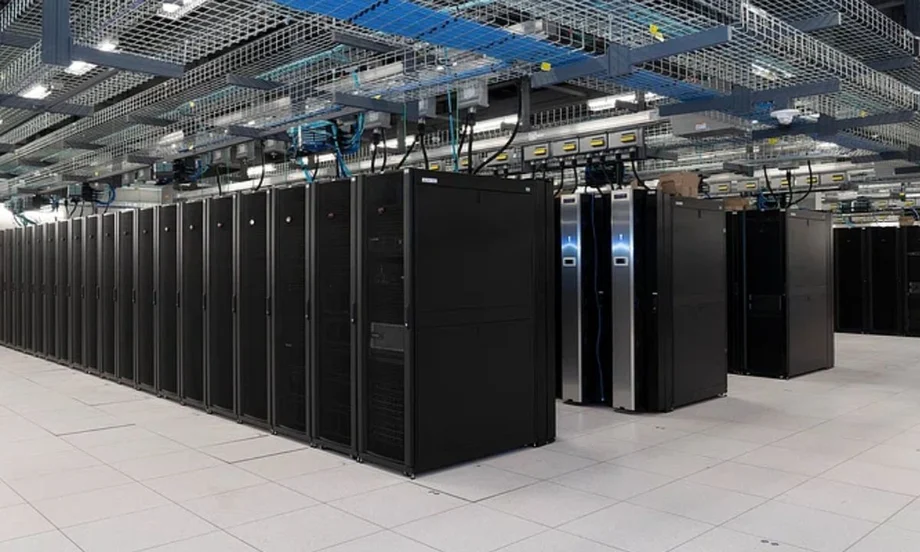
The exposure varies because data centres do different work. Some lease space and power to many customers, while others provide cloud storage, social media services or computing for online commerce. Advanced AI training relies heavily on graphics processing units, including restricted Nvidia Blackwell chips. Other facilities mainly run central processing units, which handle general computing tasks and are not affected in the same way.
Shipment freezes and financing delays test the boom
Nvidia was reported on Nov 26 to have told its principal manufacturing partners to freeze AI server shipments to Malaysia, Singapore, Thailand and Indonesia. Dell Technologies and Super Micro Computer, which assemble Nvidia processors into server racks, notified buyers that pending orders could not leave factories. It remained unclear whether this was a temporary pause while manufacturers interpreted the rules. Nvidia declined to comment on the reported freeze.
The commercial stakes extend well beyond Megaspeed. Nvidia recorded US$104 billion of revenue through its Singapore operating subsidiary in 2025, a 72 percent increase from a year earlier, although that figure also includes regional billing for Taiwan and China. In Singapore, cloud company Aolani had about US$500 million in credit facilities withheld after arranging leases to supply computing capacity to TikTok parent ByteDance.
Other financing plans have slowed. DayOne Data Centres and Australian firm Firmus Grid put public listing plans on hold. AirTrunk, a provider associated with Blackstone and with more than 420MW of capacity in Malaysia, postponed an attempt to raise US$1.5 billion through a Singapore real estate investment trust. A banking executive based in Kuala Lumpur said his institution was reviewing its exposure and pausing new transactions, and expected the industry to need three to six months to gain greater clarity.
Some operators argue that their customer mix provides protection. A person familiar with DayOne said less than 40 percent of its 2.3GW customer bookings pipeline was leased to TikTok, which uses those facilities for central processing units rather than AI workloads. Four of DayOne's five largest customers were companies based outside Asia, including Oracle in Texas. YTL International also rejected an allegation that it helped transfer US chips to China, saying its arrangements with global customers comply with Malaysian and US rules.
Lee Ting Han, Johor's executive councillor for investment, trade and consumer affairs, said it was too early to measure the full impact and that cloud operators were not affected at that stage. He expected approved projects to fare differently according to their business models, financing and technology needs. While some could be delayed, he said he did not foresee widespread cancellations. He could not say how much of Johor's computing capacity was leased to firms barred by the United States.
Chip controls run alongside tariff negotiations
The same Cabinet meeting heard that Miti was discussing American concerns about excess production capacity, forced labour and tariffs on Malaysian goods. Johari said Malaysia would continue negotiations with Washington until the first quarter of 2027, seeking to keep the total tariff on Malaysian goods at no more than 19 percent under the Agreement on Reciprocal Trade.
A central issue is US concern about structural and production overcapacity under Section 301 of the US Trade Act, a provision that allows Washington to respond to trading practices it considers unfair or damaging. Malaysia will continue presenting its position to the US Trade Representative in an effort to prevent tariffs above the agreed ceiling.
Asked whether ministers had discussed financial assistance or other contingency support for exporters if additional tariffs were imposed, Fahmi said Friday's meeting had not specifically considered that question. He referred the matter to Miti. The first quarter of 2027 is now the next stated negotiating milestone.
Fahmi separates the Google lawsuits from investment
Fahmi also addressed another dispute involving an American technology company. He said legal action by the Malaysian Communications and Multimedia Commission against Google would not jeopardise Google's planned US$15 billion investment in Malaysia, equivalent to about RM61 billion. He described regulatory compliance and foreign investment as separate matters and said Putrajaya hoped to resolve the dispute amicably.
The commission disclosed earlier in the week that it had filed two lawsuits against Google LLC seeking combined damages of RM600 million over harmful content on YouTube. The first concerns alleged failures to address online gambling, scams and fraud. The second concerns the republication of material by blogger Wan Muhammad Azri Wan Deris, better known as Papagomo, despite an interim injunction granted by the High Court on June 19.
Fahmi linked the government's position to the Online Safety Act 2025 and the protection of Malaysian users:
Our position is that Malaysians should not be exposed to harmful content. This is a regulatory matter and has nothing to do with investment.
Key Points
- Fahmi announced on Nov 27, 2026 that Malaysian companies had been instructed not to transact with firms blacklisted by the United States.
- The warning followed the Nov 23 listing of Megaspeed International and six affiliates over the risk of advanced computing equipment being diverted to unauthorised users.
- Speedmatrix and MSFusion are registered in Malaysia; Miti clarified that PT Megaspeed International is an Indonesian company and does not operate a Malaysian data centre.
- Mida will tell data centre operators not to host, lease space to or provide services to the seven entities.
- New US rules also require licences for certain advanced chips and servers sent to Malaysia and four other countries, and can cover remote computing supplied to Chinese customers.
- Malaysia approved RM123.5 billion in data centre and cloud projects in the first nine months of 2026, equal to 35.2 percent of approved investment.
- Reported shipment freezes and delayed financing have increased uncertainty, although operators with broader customer bases expect differing effects.
- Malaysia aims to keep US tariffs at or below 19 percent through negotiations continuing until the first quarter of 2027.