Minerals and manufacturing lead the agenda
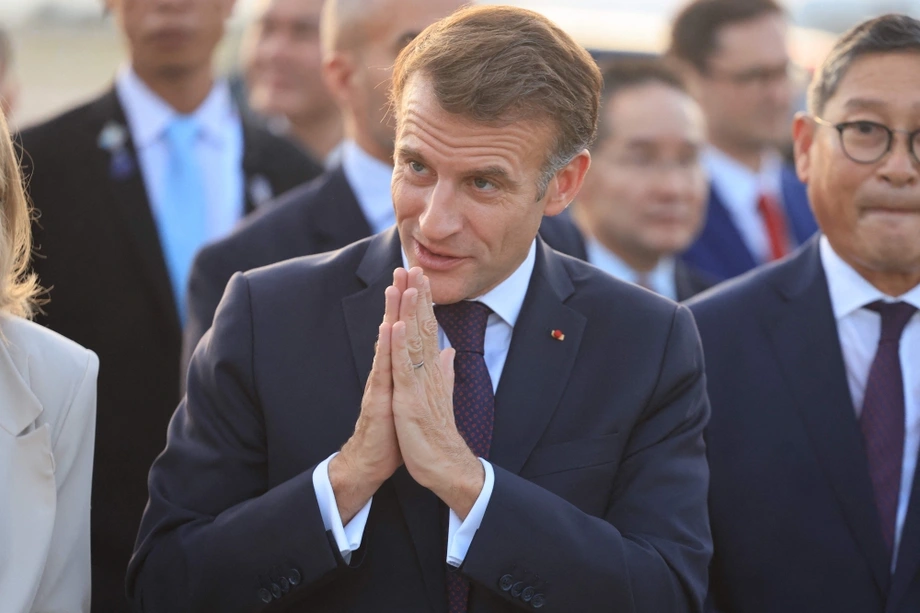
French President Emmanuel Macron is putting rare earth supplies at the centre of his November 16 and 17 visit to Malaysia, as the two countries prepare a strategic partnership covering defence, energy, aerospace and advanced technology. The trip follows an industrial agreement between France's Carester and Malaysia's Malaco Mining signed during Prime Minister Anwar Ibrahim's visit to Paris in July 2025.
Contents
- Minerals and manufacturing lead the agenda
- Why France wants more suppliers
- Malaysia seeks a larger role in mineral processing
- A partnership built on existing business
- Chips and energy widen the relationship
- Defence brings an immediate procurement issue
- European trade talks run alongside the visit
- How the diplomatic calendar fits together
- Cambodia adds markets, culture and healthcare
- Key Points
For France, the immediate goal is to give manufacturers more places to obtain materials used in essential components. For Malaysia, the proposed cooperation offers a route to develop mining and mineral processing alongside an existing relationship supporting about 30,000 jobs.
Macron, the French president, explained the purpose of the Malaysia visit in a post on X:
"In Malaysia, I am coming in particular to diversify our supplies of rare earths. We rarely talk about them, yet they are essential to making the magnets used in certain electric motors and electronic devices," he said.
The proposed strategic partnership reaches beyond minerals. The French Presidency has identified defence and security, the energy transition, aeronautics and space, artificial intelligence, cybersecurity and semiconductors as areas for closer cooperation. Both governments are preparing to give these activities a broader diplomatic framework.
Why France wants more suppliers
Rare earths are a group of metallic elements used in specialised products, including powerful magnets. Those magnets help some electric motors operate and are used in certain electronic devices. A shortage of a small component can interrupt production of a much larger product.
Macron linked access to these materials directly to factory operations, employment and investment in France. His argument is straightforward: manufacturers have more options when their supplies come from several countries rather than a narrow group of sources.
The French president described the practical benefit for manufacturers:
"For our factories, having several sources of supply means reducing the risk of having to shut down a production line for lack of parts. It also means being able to invest and produce in France with greater certainty about the future," he said.
Malaysia therefore fits into a French effort to protect industrial production through international partnerships. Macron has presented the visits to Malaysia and Cambodia as a way to strengthen economic relationships while protecting jobs and industries in France and its regions.
Malaysia seeks a larger role in mineral processing
Malaysia's industry for nonradioactive rare earth elements has an estimated market potential of RM747.2 billion to RM809 billion. Turning that potential into business requires investment in extracting the minerals and separating the elements into materials manufacturers can use.
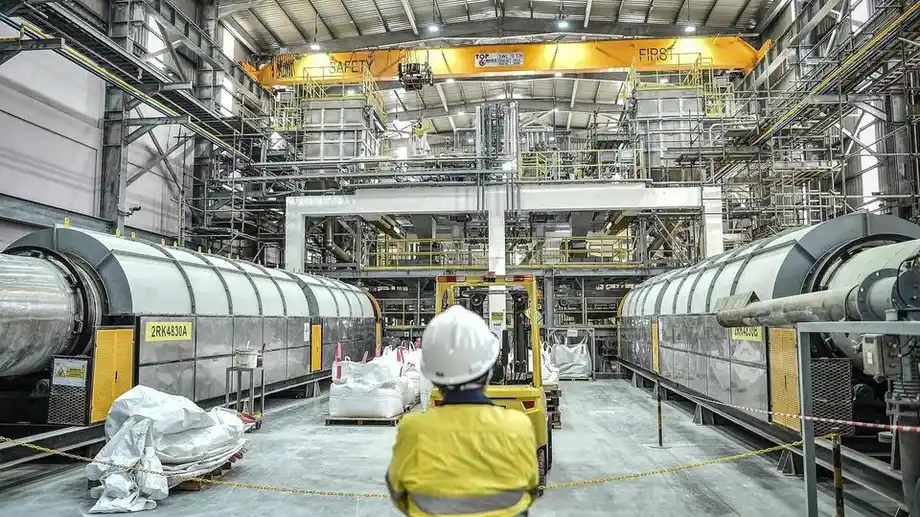
Carester and Malaco Mining's partnership addresses those stages. According to the French Presidency, the agreement aims to develop local mining and separation capabilities while meeting the highest environmental and social standards.
Separation is the process of isolating individual rare earth elements from a mixture. Developing this capability locally would give Malaysia a role beyond supplying mined material, allowing more of the processing activity to take place inside the country.
The Presidency described the broader ambition as securing and diversifying strategic supplies across the entire value chain. In simple terms, that means strengthening the connected steps from extracting a resource to preparing it for industrial use. The briefing gave no production start date, output target or investment value for the Carester and Malaco project.
A partnership built on existing business
French companies already have a substantial presence in Malaysia. The French Presidency counted around 300 subsidiaries of French companies and another 300 French owned businesses registered under Malaysian law, employing some 30,000 people.
The Presidency said bilateral trade reached €4.7 billion, approximately RM21.23 billion, in 2025, an increase of 11 per cent from 2024. A figure accompanying the October 30 visit announcement put 2025 trade at RM22.5 billion. UN Comtrade merchandise figures cited in discussion of the partnership put goods trade at US$4.27 billion, comprising US$1.53 billion in Malaysian exports and US$2.74 billion in imports from France.
Those merchandise figures leave Malaysia with a deficit of US$1.21 billion. Malaysian imports from France were about 1.8 times its exports to France, showing why access to French markets and opportunities for Malaysian suppliers matter alongside new purchases.
The French Presidency ranked France as Malaysia's 10th largest economic partner, third among European Union members, and its second largest European investor in 2025. France's investment value in Malaysia has grown 190 per cent over a decade, according to figures presented with the visit announcement. Companies operating locally include Airbus, TotalEnergies, Michelin and Decathlon.
Chips and energy widen the relationship
Malaysia's semiconductor manufacturing and packaging capabilities are another focus of the proposed partnership. Packaging is the stage in which a chip is protected and connected so it can function inside an electronic product.
The French Presidency said these capabilities complement French strengths in research, design and specialised technologies. Cooperation would connect different stages of chip production, giving companies more options for organising their supplies and manufacturing.
Energy discussions cover civil nuclear energy, sustainable aviation fuel and carbon capture projects. Sustainable aviation fuel is an alternative to conventional jet fuel intended to reduce emissions over its production and use. Carbon capture involves collecting carbon dioxide from industrial processes for storage or other uses.
Aeronautics, space, artificial intelligence and cybersecurity also feature in the proposed framework. Together, these priorities connect the minerals needed for manufacturing with the energy, digital systems and technical expertise that factories require.
Defence brings an immediate procurement issue
Malaysia's search for missiles for its littoral combat ships gives the defence relationship a concrete commercial dimension. Norway revoked the export licence for Naval Strike Missiles ordered under a €124 million contract, after Malaysia had paid about 95 per cent of its value. Malaysia is seeking US$260.6 million in compensation from manufacturer Kongsberg.
France, South Korea and Turkey have been identified as replacement candidates, with Italy previously considered. France already supplies a different missile system for the ships: Malaysia issued a letter of acceptance to MBDA in July for 29 VL MICA surface to air missiles. The deal was valued at US$124 million when its letter of intent was signed in April.
Azmi Hassan, a defence analyst at the Nusantara Academy for Strategic Research, said Macron could use that existing purchase to promote a French missile designed to attack ships:
"I think there is a good chance that Macron will use this opportunity to highlight that we have already signed a deal to get surface-to-air missiles for our LCS. Then why not the anti-ship missile as well?" he said.
Malaysia's first littoral combat ship, originally scheduled for delivery in 2019, is now expected in April 2027 without its planned Naval Strike Missile capability. The programme has moved from six ships costing RM9.128 billion to five costing RM11.227 billion, making delivery schedules and the cost of weapons, maintenance and support central concerns.
Dr Nur Surayya Mohd Saudi, a defence economist at the National Defence University of Malaysia, has called for procurement spending to support technology transfer, research and local manufacturing. Those activities would give Malaysian companies a larger role in maintaining and supplying equipment after the initial purchase.
European trade talks run alongside the visit
Malaysia is also negotiating a free trade agreement with the European Union. Investment, Trade and Industry Minister Johari Abdul Ghani has said nearly 80 per cent of negotiations are complete, with Malaysia targeting a final agreement by June 2027.
Deputy Investment, Trade and Industry Minister Sim Tze Tzin confirmed that the latest negotiating round concluded in Brussels in September. He announced Macron's visit at the Malaysian French Chamber of Commerce and Industry gala on October 30.
French Ambassador to Malaysia Marc Abensour told the gala that the visit would bring Malaysia into the same strategic partnership framework as several other regional partners:
"This visit will allow us to elevate our bilateral relations to a strategic partnership, aligning Malaysia with our key regional commitments alongside Indonesia, Singapore, and Vietnam," he said.
France has described Malaysia as a key partner within ASEAN, pointing to Malaysia's chairmanship of the regional bloc in 2025. The French Presidency said both countries support cooperation through international institutions, compliance with international law, and peace and stability in Southeast Asia and the wider Indo-Pacific.
How the diplomatic calendar fits together
Anwar's July 2025 trip to France was the first by a Malaysian head of government in 15 years. Macron's visit builds on that meeting and the Carester and Malaco agreement signed during it.
The last French presidential visit to Malaysia was François Hollande's state visit in March 2017, which coincided with the 60th anniversary of diplomatic relations. Macron is making his first visit as president; descriptions of his personal travel history vary, with several accounts referring to a previous Malaysia trip in 2017.
The main dates connecting the relationship and the current regional tour are:
- March 2017: Hollande visits Malaysia as the countries mark 60 years of diplomatic ties.
- July 2025: Anwar visits France, where Carester and Malaco Mining sign their industrial partnership.
- October 30: Sim confirms Macron's visit, and Abensour outlines the proposed strategic partnership.
- November 14 to 16: Macron's scheduled state visit to Cambodia.
- November 15 and 16: The 20th Francophonie Summit in Phnom Penh.
- November 16 and 17: Macron's scheduled official visit to Malaysia.
Cambodia adds markets, culture and healthcare
Cambodia is the first stop on the regional itinerary. Macron is due to attend the 20th Francophonie Summit in Phnom Penh, bringing together representatives of 90 states and governments under the theme "Reinvest in Peace for Shared Prosperity and Sustainable Stability".
Macron said business leaders would accompany him to explore markets through existing economic ties and the French speaking community. He highlighted Cambodia's interest in drawing on the experience of Rungis International Market, the world's largest fresh produce wholesale market, to develop its own wholesale facility.
The Cambodian agenda includes infrastructure, energy, healthcare, transport, agriculture, culture and heritage preservation. France has placed the visit within a longstanding relationship connected to the 1991 Paris Peace Agreements.
The two stops give the regional tour distinct economic purposes. Cambodia offers opportunities for French businesses in services, infrastructure and market development. Malaysia offers an established industrial base and potential mineral supplies that Macron has directly linked to the reliability of French manufacturing.
Key Points
- Macron's November 16 and 17 Malaysia visit is intended to advance a strategic partnership covering defence, minerals, energy and technology.
- Macron says more rare earth suppliers would reduce the risk of French factories stopping production because of missing components.
- Carester and Malaco Mining signed a partnership in July 2025 to develop Malaysian rare earth mining and separation capabilities.
- French businesses in Malaysia support about 30,000 jobs, while Malaysia's goods trade with France shows a substantial deficit.
- Malaysia's missile replacement needs give defence discussions an immediate procurement focus.
- Malaysia is targeting June 2027 for a final free trade agreement with the European Union.
- The Malaysia visit follows Macron's Cambodia programme and the Francophonie Summit in Phnom Penh.