A smaller Lower House, a wider parliamentary fight
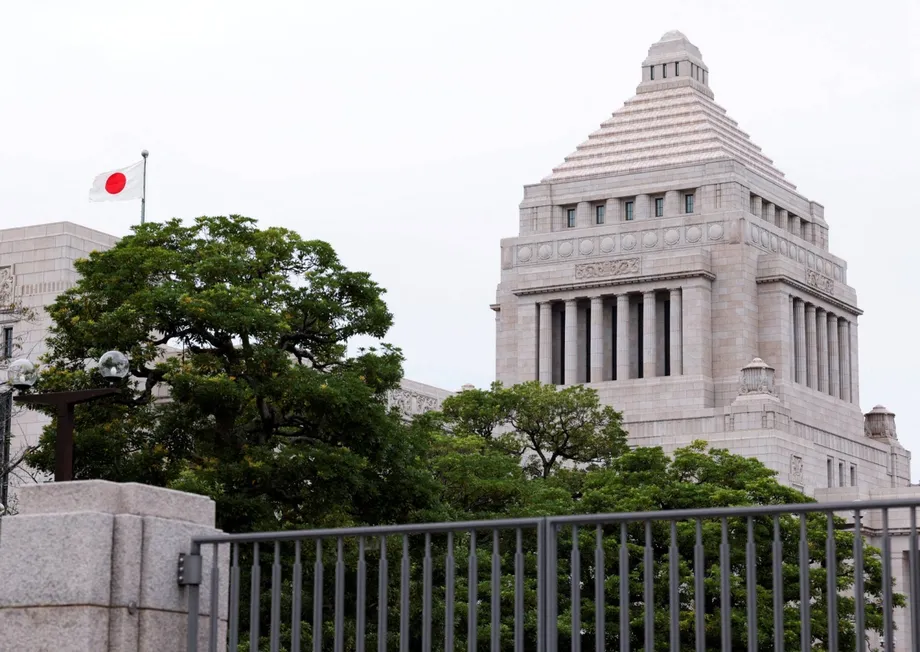
Japan's ruling parties want to remove 31 seats from the House of Representatives, reducing its membership from 465 to 434, and secure passage through the chamber before the end of November 2026. Every seat would come from proportional representation, the part of the election system that allocates seats according to votes cast for parties.
Contents
- A smaller Lower House, a wider parliamentary fight
- What the bill would change
- Why the voting formula matters
- Shared lists and tougher rules for candidates
- The DPP and Ishin disagree over the next cut
- Why opponents say representation would suffer
- Political donations compete for committee time
- Food tax relief becomes part of the standoff
- The dates that will shape the outcome
- Key Points
The Liberal Democratic Party (LDP), its coalition partner the Japan Innovation Party, also known as Nippon Ishin no Kai, and the opposition Democratic Party for the People (DPP) submitted the bill on November 12. Their agreement gives the proposal a potential majority in both chambers of parliament, despite strong resistance from other opposition parties.
The dispute reaches beyond the number of lawmakers. Three bills on corporate and organizational political donations are already awaiting deliberation in the same Lower House committee. Opposition parties object to closing that debate to make room for changes to election rules.
A confrontation could also delay an unrelated bill to cut consumption tax on eligible food and beverages from 8% to 1% for two years beginning in April 2027. That legislation is before the House of Councillors, Japan's upper chamber, where the governing coalition needs opposition support.
The ruling bloc is seeking to open debate on the seat reduction as early as November 17. Some LDP members want to send it to the upper chamber by November 27, ahead of the parliamentary session's December 12 deadline. Those are political targets, with committee scheduling still under negotiation.
What the bill would change
The proposal would amend the Public Offices Election Act to reduce proportional representation seats from 176 to 145. Seats elected through constituencies choosing one representative would remain unchanged. It would also merge the Chugoku and Shikoku proportional representation blocs, reducing the nationwide number of regional blocs from 11 to 10.
The LDP's bill announcement ties the reduction to a projected population decline of 6.7% by 2030. The calculation compares the 2015 census population with the projection for 2030. Applying 6.7% to the current 465 seats produces approximately 31 seats.
The effect on proportional representation would be much larger than the headline percentage. Removing 31 of 465 seats cuts the whole chamber by about 6.7%, while removing 31 of 176 proportional seats cuts that part by about 17.6%.
Proportional representation would consequently account for about 33.4% of the smaller chamber, compared with about 37.8% now. For voters, the change means fewer representatives would be chosen through party votes, while the number chosen through individual constituency contests would stay the same.
The bill is intended to take effect alongside separate changes to constituency boundaries addressing differences in voting power between districts. Implementation is expected during 2027, although an exact date has not been set.
Why the voting formula matters
Japan's Lower House combines two routes to election: constituency contests that choose one winner and regional proportional representation contests based on party votes. The second route gives parties a way to win seats even where their candidates cannot finish first locally.
The LDP says the bill would put greater weight on gathering public preferences through constituency elections. Alongside the reduction, it proposes changing how party votes are converted into proportional seats, replacing the D'Hondt method with a modified Sainte-Laguë method.
Both methods use a sequence of mathematical divisions to distribute whole seats among parties. The choice matters because votes rarely divide neatly into an exact number of representatives. Modified Sainte-Laguë generally gives smaller parties a better chance than D'Hondt. The LDP presents the change as a way to prevent large parties from receiving too much advantage.
The package therefore changes both the number of proportional seats and the rules for distributing them. A party's result would depend on its votes, the seats available in its regional bloc and the new allocation formula.
Shared lists and tougher rules for candidates
Multiple parties would be allowed to submit a shared proportional representation candidate list, a change sought by the DPP. By combining votes behind one roster, participating parties could improve their chances of securing seats rather than competing with separate lists.
The LDP says further consideration is needed on election campaigning and the treatment of public subsidies for parties using joint lists. The proposal sets a direction for cooperation between parties, while leaving important operating details to be worked through.
Candidates standing both in a constituency and on a proportional list would face a higher minimum vote requirement to win through the list after losing locally. The threshold would rise from one tenth to one sixth of valid votes in their constituency, or from 10% to about 16.7%.
The bill would also change what happens when a party wins more proportional seats than it has eligible candidates to fill. Those seats would remain vacant instead of being allocated to another party. That could leave the chamber with fewer serving lawmakers than its legal maximum.
The DPP and Ishin disagree over the next cut
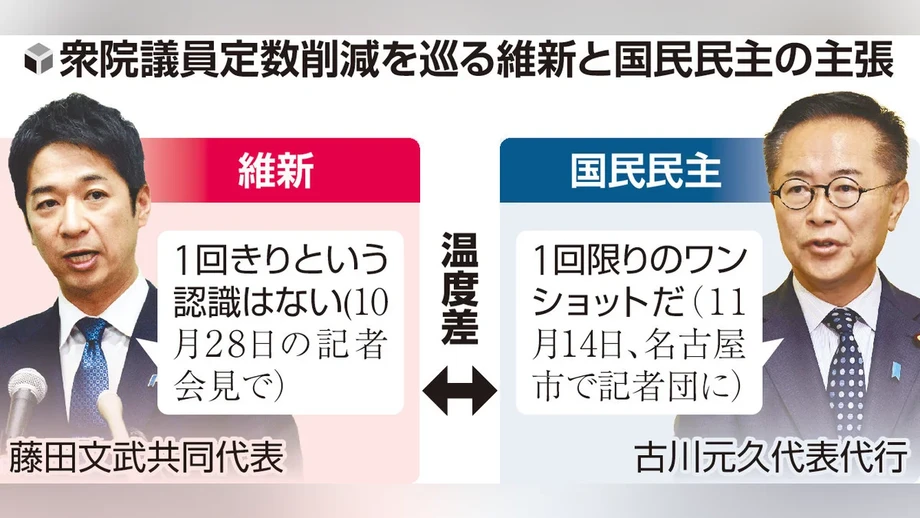
The three sponsors agree on removing 31 seats, but they disagree over whether further reductions should follow. The DPP treats the bill as an interim arrangement before a broader redesign of the election system. Ishin continues to pursue a larger reduction.
The DPP's October 28 agreement followed LDP concessions on shared candidate lists and the Chugoku and Shikoku bloc merger. The DPP had proposed removing 19 seats, while Ishin had sought 45. The compromise brought the DPP into a package it regarded as closer to its preferred election rules.
Motohisa Furukawa, the DPP's acting leader, described the October compromise in terms of the wider changes his party had secured:
would bring about a major change along the lines of our party's thinking as well as the current political situation.
On November 14, Furukawa said the reduction should happen only once. The DPP wants early discussion of constituencies electing roughly three to five representatives, with voters able to select multiple candidates.
Ishin co-leader Fumitake Fujita has taken the opposite position on further reductions. His party still seeks 45 fewer seats under its October 2025 coalition agreement with the LDP, which set a target of cutting membership by about 10%. The current bill falls 14 seats short of that demand.
Why opponents say representation would suffer
Komeito policy chief Hiromasa Nakano argues that cutting only proportional seats would increase votes that do not contribute to electing a representative. In a constituency choosing one member, supporters of every losing candidate receive no seat from that contest. Proportional representation provides another route for those political preferences to enter parliament.
Democratic Reform Association leader Junya Ogawa has objected to changing the electoral framework without wider agreement. Other opposition parties similarly argue that the rules deciding how votes become seats require broader consent than an ordinary policy bill.
Former Prime Minister Shigeru Ishiba has also questioned the approach within the LDP, pointing to proportional representation's role in respecting minority opinions. Resistance to reducing seats existed inside the governing party during the coalition negotiations, even as its leadership accepted the commitment.
Opposition has spread beyond parliament. An online petition launched in early October had collected more than 54,000 signatures by 5 p.m. on November 13. Its organizers argue that reducing proportional representation would make it harder for diverse public views to reach the Diet.
The sponsors describe the legislation as an interim measure before fundamental reform. The parties have agreed to establish a body of outside experts and seek a conclusion on wider election reform around November 2027. That timetable puts the immediate seat reduction ahead of the broader review.
Political donations compete for committee time
The Lower House Special Committee on Political Reform already has three bills dealing with corporate and organizational donations carried over for further consideration. The fight over which legislation comes first has become an immediate obstacle to starting debate on seat numbers.
At a November 13 meeting of committee directors, the ruling bloc proposed voting on donation reform before beginning the seat bill debate on November 16. The Lower House group known as Chudo rejected that sequence, arguing that it would bring discussion of donations to an end.
The ruling parties subsequently sought a November 17 start and planned further talks with the opposition. Keitaro Ono, the LDP's lead representative on the committee's governing board, pressed on November 13 for deliberations to begin as soon as possible.
The donation debate follows the scandal over unreported political funds involving LDP factions. Opposition parties, including the DPP, have proposed limiting recipients of corporate and organizational donations to party headquarters and prefectural branches. The DPP therefore supports the governing parties on seat reductions while pursuing a different position on political money.
Food tax relief becomes part of the standoff
The Lower House's November 6 tax vote sent the proposed temporary food tax reduction to the House of Councillors. The plan would lower the rate on eligible food and nonalcoholic beverages from 8% to 1% for two years starting in April 2027.
A purchase priced at 1,000 yen before tax illustrates the household effect. With an unchanged base price, the checkout total would fall from 1,080 yen to 1,010 yen, saving 70 yen. Alcohol and dining out would remain outside the proposed reduction.
The tax package also includes payments linked to income. Its Lower House debate ended with questions unresolved about how the government would replace roughly 10 trillion yen in lost revenue. Upper House scrutiny therefore concerns both the proposed relief and how it would be financed.
Constitutional Democratic Party upper chamber affairs chief Yoshitaka Saito warned on November 13 that the handling of the seat bill could affect tax deliberations. Opposition resistance to a previous attempt to move seat reduction legislation into committee led to a boycott and disrupted parliamentary business.
Some governing party members favor completing the tax legislation in early December and then moving rapidly on the seat bill before the session ends. That sequence depends on opposition cooperation over the tax timetable, despite the worsening dispute over election rules.
The dates that will shape the outcome
The ruling coalition has more than two thirds of Lower House seats, giving it considerable strength in that chamber. It lacks an Upper House majority on its own, but the DPP's support would give the three bill sponsors enough seats there to pass the election legislation.
Former Finance Minister Katsunobu Kato, an LDP representative involved in the reform discussions, expressed the sponsors' determination before submission:
We will join forces and work toward the bill's passage.
The key developments and targets are:
- October 28, 2026: Ishin and the DPP backed the LDP compromise to remove 31 seats.
- November 12: The three parties jointly submitted the bill to the Lower House.
- November 13: Committee directors discussed when deliberations should begin, while opposition parties resisted the proposed sequence.
- November 17: The ruling bloc's proposed start date for debate.
- November 27: The date some LDP members want to send the bill to the upper chamber.
- December 12: The scheduled end of the parliamentary session.
- Around November 2027: The target for a conclusion on fundamental electoral reform.
The central negotiation is now over how those parliamentary numbers translate into an agreed timetable. The sponsors have enough potential votes, while opponents can contest committee proceedings and cooperation on other legislation. Households awaiting food tax relief and voters concerned about representation are consequently tied to the same December deadline.
Key Points
- The bill would reduce Lower House membership from 465 to 434, cutting proportional representation seats from 176 to 145.
- The package also changes seat allocation, permits shared party lists and raises the threshold for losing constituency candidates to win through proportional representation.
- The LDP, Ishin and the DPP support passage, but the DPP and Ishin disagree over further seat reductions.
- Opponents argue that fewer proportional seats would weaken representation of minority views and want continued debate on political donations.
- The confrontation could delay Upper House consideration of a temporary food tax cut scheduled to begin in April 2027.
- The sponsors want enactment before the parliamentary session ends on December 12.