The Blockade at Hormuz
The war in Iran, which erupted in late February when the United States and Israel launched strikes against Iranian targets, has triggered the most severe energy crisis since the 1970s Arab oil embargo. Within days of the initial attacks, Iran effectively closed the Strait of Hormuz, a narrow maritime chokepoint barely 33 kilometers wide at its narrowest point that handles roughly 20 percent of the world oil consumption. Tanker traffic through this critical artery has plummeted from approximately 100 to 150 vessels per day to single digits on some days, with eighteen ships already struck by military attacks in or near the strait.
The economic shockwaves have been immediate and brutal. Brent crude oil prices surged from approximately $71 per barrel before the conflict to more than $100 in the weeks that followed, briefly touching peaks not seen in years. The International Energy Agency responded by coordinating the largest ever release of strategic petroleum reserves, with member states drawing down up to 400 million barrels to calm markets. Yet even this unprecedented intervention has provided only temporary relief, as the physical disruption of supplies continues to outpace the emergency releases.
While the missiles fly in the Middle East, the economic consequences have landed with particular force in Asia. According to International Energy Agency figures from 2025, approximately 80 percent of the oil and petroleum products and nearly 90 percent of the liquefied natural gas that transited the Strait of Hormuz were destined for Asian markets. This geographic reality has transformed a regional conflict into a continent-wide economic emergency, forcing governments into what experts call energy triage, the painful process of deciding which sectors receive fuel and which must go without.
The vulnerability is not evenly distributed. Asia wealthiest economies, including Japan, South Korea, Singapore and Hong Kong, possess substantial foreign exchange reserves and strategic stockpiles that provide buffers against immediate collapse. Japan maintains roughly 254 days of oil supplies, while South Korea has released 22.46 million barrels from its reserves under the IEA program. Yet these stockpiles were never designed to offset prolonged disruptions, and both countries have only approximately 200 days of national reserves before exhaustion.
It is the non-rich nations of Asia that face existential threats to their economic stability. Countries such as Pakistan, Bangladesh, Sri Lanka, and Myanmar share a dangerous combination of heavy reliance on imported fossil fuels, severely limited fiscal space, and energy systems that lack the flexibility to switch to alternatives quickly. For these nations, the closure of Hormuz represents not merely an economic challenge but a potential trigger for social unrest, food insecurity, and political instability reminiscent of the crises that toppled governments during the 1997 Asian Financial Crisis.
Human Cost on the Streets
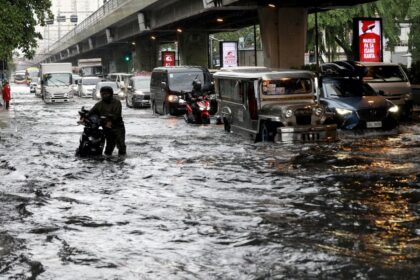
The statistics mask a profound human suffering that unfolds daily across the continent. In the Philippines, where the government has declared a national energy emergency, the iconic jeepney drivers who serve as the backbone of public transportation are watching their livelihoods evaporate. Carlos Bragal Jr., who has spent years behind the wheel of one of these colorfully decorated vehicles, has seen his daily income collapse from 1,000 to 1,200 pesos for a twelve-hour shift to just 200 to 500 pesos. The fuel subsidies offered by the government, he explains, cover barely two days of driving.
I have sent my daughters to school because of this job, one just graduated and the other one is a graduating student. We had a good life. But now, we do not know what will happen to us in the next few weeks. If this continues, it will definitely kill us and our family.
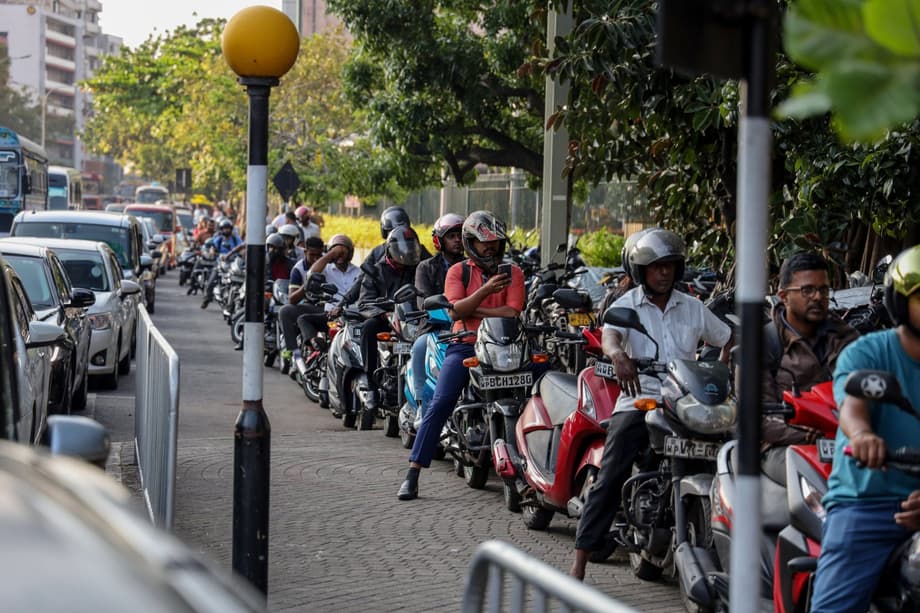
In Sri Lanka, where the government has declared Wednesdays a public holiday to conserve fuel, the irony is not lost on workers who remember the 2022 financial crisis that left the country without foreign reserves to buy fuel. During the previous time, the country did not have money to buy fuel. Now, the country has money, but there is no fuel for us to buy, noted one Colombo resident. Nimal, a lawnmower operator, waits in snaking queues at petrol stations for so long that he loses work opportunities to competitors. We are fulfilling our daily needs with great difficulty, he explained. By the time I get back to work after getting fuel, someone else may be there as a replacement for the job.
Thailand has adopted measures that would seem surreal under normal circumstances. News presenters at public broadcaster Thai PBS removed their blazers on air to promote energy conservation, while government offices now maintain temperatures of 26 to 27 degrees Celsius and officials are urged to take stairs rather than elevators. Sirima Songklin, a news anchor who participated in the on-air dress code change, described the situation as unbelievable that something so small could reflect the clear impact of the current conflict on us.
In India, where the ceramics industry in Gujarat has shut down for weeks due to gas shortages, migrant workers face immediate hunger. I will have to go hungry if I continue staying here without work, said Sachin Parashar, one of approximately 400,000 workers idled by the factory closures. The shortage of liquefied petroleum gas, used extensively for cooking across the subcontinent, has forced restaurants in Mumbai to remove slow-cooked curries and deep-fried items from menus, while hotels report occupancy rates as low as ten percent due to soaring jet fuel costs and frightened travelers.
Emergency Measures and Rationing
Faced with the prospect of economic collapse, Asian governments have implemented draconian conservation measures that recall the societal adaptations required during the COVID-19 pandemic. The Philippines has shifted government employees to a four-day workweek and ordered computers switched off during lunch breaks. Pakistan has closed schools for two weeks and implemented hybrid working arrangements for public sector employees. Bangladesh brought forward university holidays to coincide with Ramadan, while Sri Lanka introduced a four-day week for schools and public sector operations.
Myanmar military authorities have imposed strict fuel rationing based on license plate numbers, allowing private vehicles on alternating days only. Vietnam has urged widespread adoption of remote work, while Indonesia faces the dilemma of maintaining fuel subsidies through the massive Eid al-Fitr travel period, when 143.9 million journeys are anticipated, even as the cost threatens to push the national budget deficit above its legal cap of three percent of GDP.
The subsidy dilemma encapsulates the impossible choices facing poorer Asian nations. Indonesia has allocated tens of billions of dollars to maintain affordable fuel and electricity prices, but fiscal constraints limit how long such support can continue. Pakistan initially introduced targeted subsidies for farmers and transport workers but has been forced to scale them back as the crisis persisted. In Thailand, officials face a stark choice: ending subsidies risks sparking public panic if reserves fall further, while maintaining them drains limited fiscal resources. There is no clarity about what will happen after that, noted Putra Adhiguna of the Energy Shift Institute regarding Indonesian post-Eid fuel pricing.
The Great Divide: Reserves Versus Bankruptcy
The crisis has exposed a fundamental divide between Asia wealthy and developing nations. Japan and South Korea possess the foreign exchange reserves and institutional capacity to weather months of disruption, though even these nations face stagflation risks and industrial slowdowns. China, sitting atop vast stockpiles equivalent to 130 days of consumption plus additional supply from Russian pipelines, has prohibited petroleum exports to protect domestic supply while making strategic exceptions for key trading partners in Southeast Asia and Australia.
For crisis-scarred nations like Pakistan, Bangladesh, and Sri Lanka, the situation is dire. Pakistan foreign reserves, while standing at $16.4 billion on a gross basis, are effectively negative when foreign currency liabilities are considered. The country must repay a $3.5 billion loan to the United Arab Emirates while maintaining a $7 billion IMF program, even as fuel prices have risen forty percent and remittances from Gulf-based workers are expected to decline. Sri Lanka has negotiated temporary easing of IMF bailout terms and reintroduced fuel subsidies, but tourism operators like Sanoj Weeratunge report business down a third despite hopes for post-COVID recovery.
The International Monetary Fund has indicated it stands ready to provide between $20 billion and $50 billion in emergency support to affected nations, with Managing Director Kristalina Georgieva acknowledging that it is in no one interest to be rigid in the conditionality and allow these countries to fail. Former Pakistan central bank governor Reza Baqir emphasized the need for a credible statement from institutions like the IMF and others that they are ready to backstop these countries, and I think the sooner, the better.
Economists note that while the current crisis echoes the 1997 Asian Financial Crisis in terms of currency pressure and capital outflows, the fundamental nature differs. The 1997 episode was driven by a toxic mixture of fixed exchange rates, high levels of short-term foreign debt, and low foreign exchange reserves. Today, Asian economies hold significantly larger reserves and operate more flexible exchange rate regimes, providing buffers that did not exist three decades ago. However, the current shock is physical rather than financial, a supply disruption that attacks the current account rather than the capital account, creating stagflation risks that monetary policy struggles to address.
Industrial Fallout and the Return of Coal
Perhaps the most consequential response has occurred in Asia power sector, where the crisis has forced a temporary abandonment of climate commitments. Thailand has restarted two decommissioned units at the Mae Moh coal-fired power plant. South Korea and Japan have lifted restrictions on coal generation, allowing older plants to operate at higher capacity. India has ordered coal-fired plants to run at full capacity and avoid planned outages. Even China, while less exposed due to its domestic energy production, is burning more coal and deploying renewables to replace natural gas wherever possible.
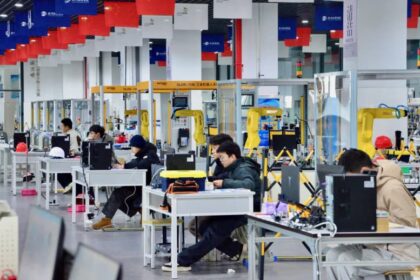
The industrial impacts extend beyond electricity. The shortage of naphtha, a petrochemical feedstock derived from crude oil, has created what experts term a near-immediate crisis for semiconductor and advanced electronics production across Asia. South Korean households have stockpiled plastic rubbish bags amid fears of naphtha shortages, while Japanese hospitals worry about depleting supplies of syringes, gloves, and dialysis equipment made from petroleum-derived materials. The ceramics industry in India Gujarat state has shut down entirely due to gas shortages, idling hundreds of thousands of workers.
Fertilizer shortages pose an equally grave threat to food security. Roughly 30 percent of global fertilizer trade transits the Strait of Hormuz, and prices have risen 35 percent since the war began. With the Northern Hemisphere planting season underway, reduced fertilizer application rates threaten lower crop yields across South Asia, where populations spend nearly half their income on food. The World Food Programme reports that rerouted shipping is already slowing humanitarian responses in food-insecure regions like South Sudan and Somalia. In Myanmar, Gwyn Lewis, UN Resident and Humanitarian Coordinator ad interim, noted that prices are rising, essential goods are harder to find, and families purchasing power continues to fall.
Geopolitical Realignments and Clean Tech Dominance
While the immediate crisis wreaks havoc on traditional energy importers, it has simultaneously sharpened China strategic advantage in clean technologies. Beijing dominates global manufacturing of solar panels, electric vehicle batteries, and EVs themselves, accounting for over 70 percent of EV manufacturing and 85 percent of battery cell production worldwide. As Asian nations confront the fragility of fossil fuel supply chains, demand for Chinese clean tech is accelerating.
Pakistan offers a case study. Despite still importing a third of its energy, the country renewable rollout since 2017 has installed over 50 gigawatts of Chinese solar panels. Analysis suggests solar could save Pakistan $6.3 billion in fossil fuel imports over the next year if prices remain elevated. In the United Kingdom, EV leasing demand jumped more than a third in the first three weeks of March, while rooftop solar sales have surged. Vietnamese EV maker VinFast is offering discounts to offset fuel price shocks, and Indonesian President Prabowo Subianto has announced a major push into electric vehicle production.
The crisis is simultaneously creating opportunities for Western Hemisphere energy producers. The United States, Canada, Brazil, and Guyana stand to benefit from renewed emphasis on energy security and supply diversification, as their output is not dependent on the vulnerable Hormuz route. However, analysts note that Mexico and Venezuela, despite their resources, remain too politically uncertain and operationally challenged to attract the investment surge benefiting other American producers. As the world reimagines energy security after the Iran war crisis, the Western Hemisphere has much to offer, but the groundwork for doing so must be laid now.
Key Points
- The Iran war, which began in late February, has effectively blocked the Strait of Hormuz, causing oil prices to surge above $100 per barrel and disrupting 20 percent of global oil supplies.
- Asian economies receive approximately 80 percent of oil and 90 percent of LNG that transits the strait, making the region disproportionately vulnerable to the blockade.
- Poorer Asian nations including Pakistan, Bangladesh, and Sri Lanka face severe fiscal constraints as they lack foreign reserves to secure energy supplies in volatile markets.
- Emergency measures across the continent include four-day workweeks in the Philippines, Pakistan, and Sri Lanka; fuel rationing in Myanmar based on license plates; and school closures from Bangladesh to Pakistan.
- Wealthier nations like Japan and South Korea have released record amounts from strategic reserves, but these stockpiles offer only approximately 200 days of coverage and are not designed for prolonged disruptions.
- Several Asian countries have restarted coal-fired power plants or lifted restrictions on coal generation, threatening to entrench fossil fuel use and hinder climate goals despite the long-term opportunity to accelerate renewable adoption.
- The crisis has created a strategic advantage for China in clean technologies, as Asian nations facing fossil fuel shortages increasingly turn to Chinese solar panels, batteries, and electric vehicles to enhance energy security.
- The International Monetary Fund has indicated readiness to provide $20 billion to $50 billion in emergency support to crisis-affected nations as they face trade-offs between energy access, inflation control, and fiscal stability.