A Streaming Sensation Confronts a Legal Void
When the Hindi web series Chiraiya premiered on JioHotstar in March, few anticipated that a six-episode drama about marital rape would become one of the platform’s most-watched Hindi programs in months. Yet the series, whose title translates to “small birds,” has attracted millions of viewers while igniting a national conversation about consent, patriarchy, and a colonial-era legal loophole that continues to leave millions of women without recourse against sexual violence within marriage. The show arrives at a critical moment. Despite years of activism and multiple petitions before the Supreme Court, India remains one of approximately three dozen countries, alongside Pakistan, Afghanistan, and Saudi Arabia, where marital rape is not explicitly criminalized. Government data indicates that 6.1% of ever-married Indian women have experienced sexual violence, though activists argue the true figure is significantly higher due to underreporting and the profound social stigma that silences victims.
- A Streaming Sensation Confronts a Legal Void
- The Narrative Arc: From Complicity to Solidarity
- The Legal Framework: 163 Years of Exception
- Adaptation and Authenticity: From Bengal to the Heartland
- Backlash and Defense: Navigating the Anti-Men Accusation
- Psychological Realities and Structural Violence
- The Unfinished Revolution: Change Begins at Home
- Key Points
The Narrative Arc: From Complicity to Solidarity
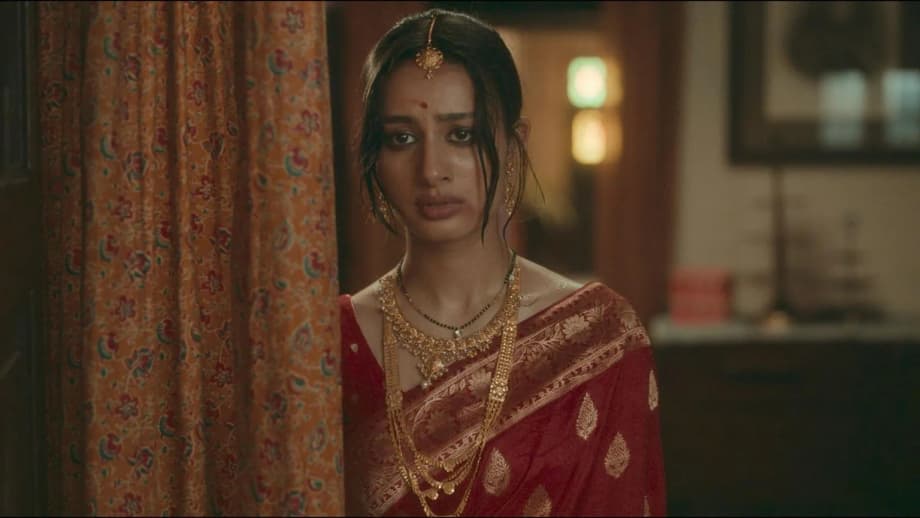
At the heart of Chiraiya lies the volatile relationship between two women navigating the treacherous waters of a traditional North Indian joint family. Kamlesh, portrayed by veteran actress Divya Dutta, embodies the archetype of the devoted middle-aged homemaker who believes women should focus on cooking and housework. Her worldview, shaped by decades of patriarchal conditioning, faces an unprecedented challenge when Pooja, played by Prasanna Bisht, enters the household. Pooja represents a generational shift, educated and socially conscious, speaking openly about gender equality and bodily autonomy. She marries Arun, Kamlesh’s brother-in-law whom she had raised as her own son, expecting a partnership based on mutual respect. The narrative fractures on their wedding night when Arun rapes her, later dismissing her trauma with chilling entitlement.
Scriptwriter Divy Nidhi Sharma, who also co-wrote the acclaimed film Laapataa Ladies, crafted this scene to reflect a common legal defense. In the series, Arun tells his victim,
I just took what’s mine. Why do you keep repeating that I raped you? Marital rape is not a crime in India and there is no law to deal with it.
What follows is not a simple tale of heroism but a painful examination of internalized misogyny. When a battered Pooja seeks support, her own mother advises her to adjust, warning that speaking out brings shame to the family. Kamlesh initially concurs, slapping Pooja in disbelief and arguing that consent is implicit in the marriage contract. Her gradual transformation forms the series’ emotional core, as she must choose between her comfortable complicity and solidarity with a woman she initially dismissed. Divya Dutta describes the character’s journey as moving from ignorance to awareness, noting that Kamlesh “doesn’t even know the spelling of misogyny, she’s so steeped in patriarchal conditioning.”
The Legal Framework: 163 Years of Exception
The dialogue Arun delivers reflects a harrowing legal reality that has persisted for 163 years. Section 375 of the Indian Penal Code, first enacted in 1860 during British colonial rule, defines rape but contains Exception 2, which states that sexual acts by a husband with his wife, provided she is over 18 years of age, do not constitute rape. This exemption, retained in the 2023 Bharatiya Nyaya Sanhita, effectively renders marital rape legal in India except in cases where the couple is legally separated.
The consequences of this legislative void are stark and documented in recent judicial history. In 2025, a man convicted of raping his wife, who died within hours of the alleged assault, was acquitted on appeal because the judge ruled that India does not recognize marital rape as a criminal offense. The Allahabad High Court has previously ruled that a wife’s denial of sex constitutes mental cruelty, reinforcing the notion that marriage grants automatic sexual access to the husband. As legal analyst Abha Singh explains, the exemption persists partly due to evidentiary concerns. “It is very difficult to prove whether it is enjoyment of conjugal rights or it is something else,” she notes. However, critics argue that evidentiary challenges exist for all crimes, yet do not prevent criminalization. The exception remains a structural barrier that denies married women the same bodily autonomy protections afforded to unmarried women under Indian law.
Adaptation and Authenticity: From Bengal to the Heartland
Chiraiya represents a cultural translation of the Bengali series Sampoorna, reimagined for North India’s more rigidly patriarchal landscape. Where Sampoorna featured an explicitly feminist protagonist, Chiraiya presents Kamlesh as a woman who begins as an enabler of the very system that harms her. Director Shashant Shah explains that the creative team wanted to present a woman that millions of women across India could relate to, someone who has faith in the family system but slowly realizes it is often a facade where people suffer behind closed doors.
Writer Divy Nidhi Sharma deliberately crafted this approach to reach beyond urban, elite audiences. “We are not making content for the Sundance festival,” he states. “There is no point in preaching to the choir. We are addressing that woman in Meerut, the girl in Lucknow.” This strategy avoids the metropolitan perspective that often dominates feminist discourse, instead presenting a character who must unlearn decades of conditioning before she can recognize injustice. The setting shifts the story from Bengal to the Hindi heartland, where rivers and regressiveness coexist under the garb of tradition. The series maintains that the family, rather than the courts, must deliver justice in the absence of legal recourse, arguing that parents must raise sons better or correct them when they go astray.
Backlash and Defense: Navigating the Anti-Men Accusation
The series’ success has generated significant controversy across social media platforms. Reddit communities and Twitter have hosted heated debates, with some male viewers labeling the show “propaganda against men,” an “attempt to undermine the sanctity of marriage,” and “anti-men” content. Some commentators have gone further, justifying rape as a marital right or accusing the series of portraying all men as villains. This backlash reflects a defensive reaction to the show’s unflinching portrayal of entitlement within ordinary families.
The creative team has responded firmly to these criticisms. Cast member Anjuman Saxena, who plays Pooja’s mother, rejects the gender-bias allegations. “The intention of the series is not to target any gender but to create awareness,” she states. “It is not anti-men. It is anti-rape.” This distinction highlights a central tension in the public discourse: the conflation of accountability with attack. Divya Dutta has chosen to focus on the overwhelming positive response rather than the negative minority. “I would rather not read that 1% and thrive on the 99% who are giving it their love,” she says, noting that she has received midnight messages, poems, and even sarees from viewers thanking her for telling this story. Scriptwriter Sharma acknowledges the triggering effect but maintains that the aim was simply to start a conversation. “We are artists, we can’t make laws, we can’t curb crimes, but we can use art to make a taboo topic mainstream,” he explains.
Psychological Realities and Structural Violence
Beyond the legal and narrative dimensions, Chiraiya illuminates the psychological mechanisms that sustain marital rape across generations. Clinical psychologist Nupur Dhakephalkar identifies the phenomenon as “intergenerational transmission of trauma,” where children learn relational templates from caregivers. When control and coercion become normalized within marital dynamics, they establish the default script for the next generation. The series depicts what Dhakephalkar terms “identification with the aggressor,” where women align with patriarchal power as a survival strategy.
Kamlesh’s initial defense of Arun, arguing that a husband taking what belongs to him is no thief, reflects internalized patriarchy that reduces women to property. This conditioning is reinforced by social pressure to preserve family harmony at all costs. As Divya Dutta notes, “Every woman who goes through it thinks it’s just her story. She thinks if she speaks about it, there will be social stigma, the harmony of the house will be disrupted.” Actor Siddharth Shaw, who plays Arun, invokes writer Saadat Hasan Manto’s observation that art reflects society. “Cinema is a reflection of society,” he states. “Whatever is happening in society, he was writing it.” Shaw reports receiving direct messages from viewers sharing their own marital rape experiences, underscoring the gap between fictional narrative and lived reality. The series argues that the silence of good men enables the violence of others, placing responsibility not only on perpetrators but on the family members who look away.
The Unfinished Revolution: Change Begins at Home
While Chiraiya has undeniably succeeded in bringing marital rape into mainstream discourse, questions remain about whether cultural representation can catalyze legislative change. The series concludes not with a courtroom victory, which remains impossible under current Indian law, but with a domestic reckoning. The final episodes suggest that justice does not always begin in courtrooms but in the values practiced at home, in the conversations families do not avoid, and in the courage to call out wrongdoing even when it involves loved ones.
This narrative choice reflects a pragmatic reality: until Parliament amends the penal code, victims must rely on family intervention. The series advocates for evolution rather than revolution, suggesting that change need not be dramatic to be meaningful. As Kamlesh notes, dissent can be as simple as cooking a dish of one’s own choice rather than abandoning the kitchen entirely. Divya Dutta remains optimistic about the series’ impact. “I think this will make a difference in more ways than one because it is telling us where we are going wrong,” she reflects. “Rather than just putting the onus on the outside, for someone else to do something for us, this show emphasizes that let’s start from home first. And that is a first step, but it is a very strong step.”
Key Points
- Chiraiya, a six-episode Hindi web series streaming on JioHotstar since March 2026, has become one of the platform’s most-watched shows by addressing marital rape, a practice that remains legal in India under the marital rape exception.
- India remains one of approximately 36 countries where marital rape is not criminalized under Section 375 of the Indian Penal Code, a colonial-era law retained in the 2023 Bharatiya Nyaya Sanhita, which exempts husbands from prosecution for forced sex with wives over 18.
- The series stars Divya Dutta as Kamlesh, a traditionally minded homemaker who transforms from enabler to ally after her sister-in-law Pooja, played by Prasanna Bisht, is raped by her husband on their wedding night.
- Government data indicates 6.1% of ever-married Indian women experience sexual violence, though activists believe underreporting makes the actual figure significantly higher due to social stigma and lack of legal recourse.
- The show has generated both critical acclaim and controversy, with some male viewers labeling it “anti-men” or “propaganda,” while supporters argue it reflects reality and necessary conversations about consent.
- Creator Divy Nidhi Sharma adapted the series from the Bengali show Sampoorna, shifting the setting to North India to explore more rigid patriarchal structures and reach audiences outside metropolitan elite circles.
- The series argues that in the absence of legal remedies, families must take responsibility for raising sons who respect consent and for correcting entitled behavior before it becomes violence.