Toxic Allegations in Contested Waters
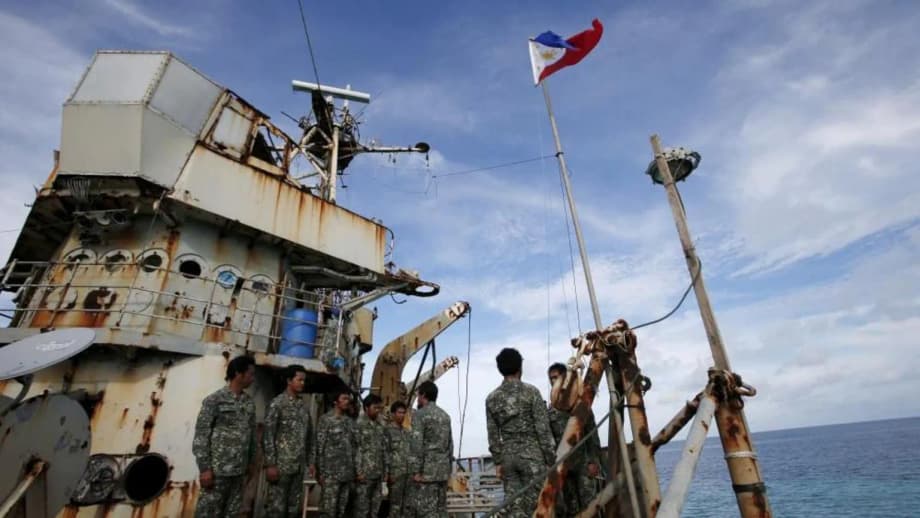
The Philippines has leveled explosive charges against Beijing, accusing Chinese fishermen of using cyanide as a weapon of environmental sabotage in the disputed South China Sea. On Monday, Manila announced that laboratory tests conducted by the National Bureau of Investigation confirmed the presence of the deadly chemical in bottles seized from small wooden boats operating near Second Thomas Shoal, a submerged reef where Filipino troops maintain a precarious outpost aboard a rusting World War II-era warship.
Cornelio Valencia, assistant director-general of the Philippine National Security Council, described the alleged poisoning as a calculated act of sabotage designed to destroy marine ecosystems and starve Filipino navy personnel of their primary food source. The accusations mark a dramatic escalation in the long-running territorial dispute, introducing environmental warfare concerns into an already volatile maritime flashpoint that has witnessed violent confrontations between rival coast guard vessels.
According to Philippine military officials, the cyanide discovery represents more than an ecological threat. Valencia warned that the toxic substance poses direct health risks to troops stationed on the BRP Sierra Madre, a vessel deliberately grounded in 1999 to assert Manila’s sovereignty over the atoll. The poison could contaminate both the water supply and the fish that soldiers rely upon for sustenance during extended deployments in this remote corner of the Spratly Islands.
Rear Admiral Roy Vincent Trinidad, spokesperson for the Philippine Navy, revealed that troops had seized ten yellow plastic bottles containing cyanide during three separate operations in February, July, and October of last year. The bottles were recovered from sampan boats deployed by larger Chinese Maritime Militia vessels operating within the Philippines’ exclusive economic zone. In a particularly alarming development, soldiers observed another Chinese crew poisoning waters near the outpost last month, with subsequent water samples testing positive for the chemical compound.
The revelations emerged during a high-stakes press conference in Manila where security officials presented what they described as irrefutable evidence of deliberate environmental destruction. The timing coincides with preparations for annual joint military exercises involving the United States, Australia, and Japan, underscoring the increasingly international dimension of this bilateral confrontation.
The Poison and the Prize
Cyanide fishing represents one of the most destructive practices in marine harvesting. The method involves dumping sodium cyanide near coral reefs to stun fish, making them easy to capture for the live reef fish trade or aquarium markets. While the technique has historical roots in Southeast Asian fishing communities dating back decades, it has been widely banned across the region because of its devastating ecological impact. The poison indiscriminately kills marine life, destroys coral polyps, and can render entire reef systems barren for years.
In the context of Second Thomas Shoal, however, Philippine officials argue the chemical serves a darker strategic purpose. Valencia stressed that the deliberate contamination of Ayungin Shoal (the Philippine name for the atoll) aims to deprive navy personnel aboard the BRP Sierra Madre of fish, which constitute a vital protein source for the isolated garrison. Troops stationed on the decrepit vessel typically supplement supplied rations with fresh catch from the surrounding waters, making the local marine population essential for their survival.
The threat extends beyond simple food deprivation. As a corrosive substance, cyanide could gradually weaken the coral reef structure that supports the Sierra Madre’s physical foundations. The ship, already deteriorating from decades of exposure to salt and sun, relies partially on the reef structure to maintain its position. Should the coral foundations crumble, the vessel could shift or break apart, potentially forcing the abandonment of this strategic outpost.
Philippine officials documented four specific incidents between February 2025 and March 2026 where Chinese Maritime Militia ships deployed sampans close to the warship. In each case, the smaller vessels approached within one nautical mile of the Sierra Madre, with crews observed engaging in diving activities before Philippine boarding teams intercepted them. Laboratory analysis confirmed cyanide in bottles seized during the February and October 2025 operations, while similar containers recovered in July remain under examination.
Beijing Dismisses Manila’s Claims
Chinese officials have vehemently rejected the cyanide allegations, describing them as a manufactured crisis designed to discredit Beijing. Foreign Ministry spokesperson Guo Jiakun dismissed the Philippine presentation as a theatrical stunt devoid of credibility. Speaking at a regular press briefing, he accused Manila of illegally harassing Chinese fishing vessels engaged in legitimate maritime activities and staging what he termed a farce to justify increased international intervention.
The rebuttal referenced a November 2025 report from China’s Ministry of Ecology and Environment regarding Scarborough Shoal (known as Huangyan Island in China), which found no cyanide traces in seawater, sediment, or fish samples. Beijing used this earlier study to suggest Manila has developed a pattern of fabricating environmental accusations against Chinese maritime operations. Guo insisted that Philippine forces had illegally seized fishing supplies from Chinese boats, framing the cyanide bottles as planted evidence or misrepresented materials.
Strategic analysts affiliated with Chinese state media suggested the timing of the accusations serves domestic political purposes. Ding Duo, a researcher at the National Institute for South China Sea Studies, portrayed the cyanide narrative as a recycled story reintroduced to distract from pressing domestic challenges, including energy shortages plaguing the Philippines. This interpretation frames the environmental claims as a cynical maneuver to rally public support for a more confrontational maritime policy while deflecting attention from governance failures.
The diplomatic sparring occurs against a backdrop of recently renewed dialogue. In late March, Vice Foreign Minister Sun Weidong hosted Philippine Undersecretary Leo Herrera-Lim in Quanzhou for the 24th round of bilateral consultations. Both sides discussed potential oil and gas cooperation and confidence-building measures, including coast guard communication protocols. However, the Philippine Foreign Ministry subsequently clarified that such cooperation would exclude sensitive operational areas, suggesting the thaw in relations remains strictly limited.
A Rusting Warship at the Center of Storms
The BRP Sierra Madre stands as perhaps the most unusual military installation in the Pacific. Deliberately grounded on Second Thomas Shoal in 1999, the former US Navy tank landing ship serves as a makeshift fortress for a small contingent of Philippine marines. Manila beached the vessel in response to China establishing a presence on nearby Mischief Reef, which has since been transformed into a militarized artificial island complete with runways and naval facilities. The Sierra Madre’s presence prevents China from claiming unchallenged sovereignty over the entire reef system.
For twenty-six years, the rusting hulk has required constant resupply to remain habitable. Philippine supply missions have become increasingly hazardous as Chinese Coast Guard and Maritime Militia vessels implement aggressive interdiction tactics. In June 2024, these tensions culminated in a violent confrontation where Chinese personnel armed with knives, sticks, and an axe boarded Philippine navy boats. The clash resulted in injuries to several Filipino sailors, including one who lost a finger, and temporarily prevented the delivery of essential supplies including food and medicine.
The incident prompted negotiations for a provisional understanding regarding resupply missions, though the agreement remains fragile. Philippine officials allege that Chinese Maritime Militia vessels continue to swarm the area, serving as force multipliers for Beijing’s official coast guard. These gray-zone tactics allow China to maintain pressure on the Philippine outpost without triggering direct military confrontation that might activate mutual defense treaties with the United States.
Recent weeks have seen heightened international involvement in the region. The Philippines conducted joint maritime exercises with the United States and Australia ahead of the annual Balikatan war games scheduled for late April. Japan will participate as a full partner in these exercises for the first time, signaling expanding security cooperation among nations concerned about Chinese expansionism. Senior Captain Zhai Shichen, spokesperson for the People’s Liberation Army Southern Theater Command, criticized these patrols as destabilizing provocations that undermine regional peace.
International Law and Ecological Stakes
Second Thomas Shoal sits within the Philippines’ exclusive economic zone, extending two hundred nautical miles from the archipelago’s baseline. Under the United Nations Convention on the Law of the Sea (UNCLOS), Manila enjoys sovereign rights to explore and exploit marine resources in these waters. The 2016 Permanent Court of Arbitration ruling in The Hague explicitly invalidated China’s sweeping historical claims to the South China Sea, including the nine-dash line that encompasses nearly the entire waterway. Beijing has refused to recognize this judgment.
Environmental considerations complicate the strategic calculations. The South China Sea serves as a critical fishing ground supporting millions of livelihoods across Southeast Asia, with more than half of the world’s fishing vessels operating in these waters. The region also hosts shipping lanes carrying over three trillion dollars in annual commerce. Cyanide contamination threatens not only the immediate reef ecosystem but could disrupt food security for coastal communities throughout the region.
Maritime security experts note that the use of cyanide in contested waters represents a novel escalation in gray-zone warfare. Unlike traditional blockades or direct military confrontation, environmental sabotage offers plausible deniability while achieving strategic objectives through resource denial. If proven, such tactics could establish a dangerous precedent for maritime disputes worldwide, transforming ecological weapons into standard tools of territorial coercion.
Manila Mobilizes Diplomatic and Military Response
In response to the confirmed cyanide discoveries, Philippine authorities have ordered enhanced naval and coast guard patrols throughout the Spratly Islands. The increased surveillance aims to prevent further environmental damage and protect resupply missions to the Sierra Madre. Military officials have also been instructed to document any additional instances of chemical contamination for potential use in international arbitration.
The United States has intensified support for Philippine maritime operations, revealing the existence of Task Force Ayungin (named for the Philippine term for the shoal) dedicated to assisting Manila in the South China Sea. Washington has provided unmanned surface vessels, intelligence sharing, and specialized training to help Philippine forces navigate the challenging operational environment. This assistance underscores the strategic importance Washington attaches to maintaining Philippine control of the outpost as a bulwark against Chinese expansion.
As tensions simmer, both nations remain locked in a delicate balance between diplomatic engagement and maritime confrontation. The upcoming Balikatan exercises will demonstrate the Philippines’ expanding security partnerships, while Chinese vessels continue to maintain a persistent presence around the disputed shoal. Whether the cyanide accusations will harden into formal international litigation or become another footnote in the long history of South China Sea disputes depends on Manila’s next diplomatic moves and Beijing’s response to increased international scrutiny.
Key Points
- Philippine authorities confirmed cyanide presence in bottles seized from Chinese boats near Second Thomas Shoal during operations in February and October 2025
- Manila alleges the toxic chemical serves as a sabotage weapon to kill fish stocks, depriving Filipino troops of food and undermining the coral reef supporting the BRP Sierra Madre outpost
- Chinese Foreign Ministry dismissed the claims as a staged stunt and accused Philippine forces of harassing legitimate fishing operations
- The BRP Sierra Madre, a grounded World War II warship, serves as a makeshift Philippine military outpost to assert sovereignty over the disputed atoll
- Previous violent confrontations include a June 2024 clash where Chinese personnel armed with melee weapons injured Filipino sailors
- The Philippines has ordered increased naval patrols and may file formal diplomatic protests or international legal action regarding the environmental allegations