A Strategic Shift in Economic Architecture
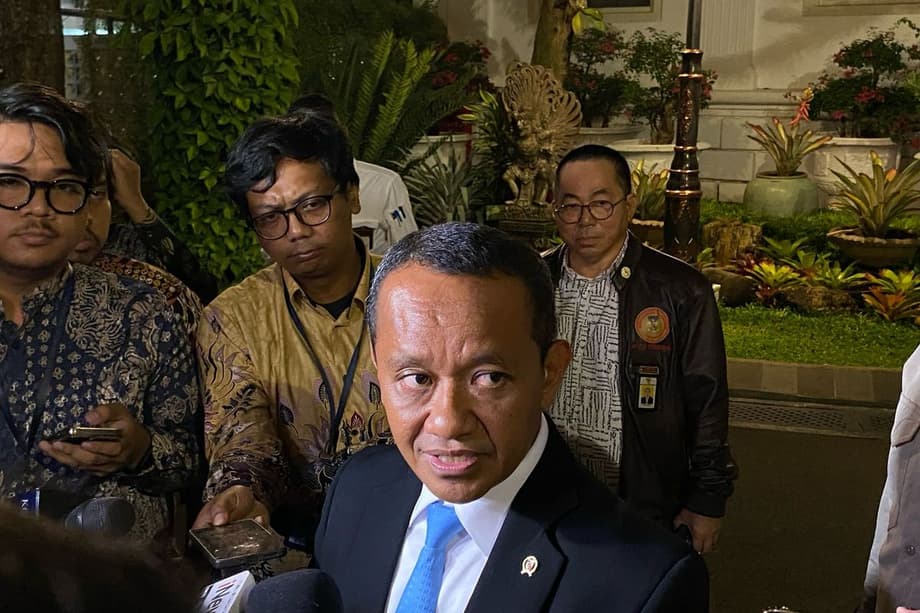
Indonesia is accelerating its economic transformation with a fresh wave of industrial investments totaling Rp 239 trillion ($14 billion), as the government moves aggressively to convert raw natural resources into high-value manufactured goods. Energy and Mineral Resources Minister Bahlil Lahadalia announced the new funding pipeline following a high-level meeting with President Prabowo Subianto at the presidential residence in Bogor, West Java, marking a significant expansion of the administration’s downstream industrialization agenda.
- A Strategic Shift in Economic Architecture
- The $14 Billion Project Pipeline
- Construction Underway on Priority Projects
- Strengthening Domestic Refining Capacity
- Electric Vehicle Supply Chain Dominance
- Global Compliance and Trade Advantages
- Understanding the Downstream Revolution
- Infrastructure and Clean Energy Challenges
- Key Points
The announcement represents the latest phase of a broader strategy designed to reduce dependence on raw commodity exports while strengthening domestic energy security and food production capacity. By processing minerals, agricultural products, and energy resources within its borders rather than shipping unprocessed materials overseas, Southeast Asia’s largest economy aims to capture greater value from its abundant natural endowments.
The $14 Billion Project Pipeline
Following the Bogor meeting, Minister Bahlil outlined the scope of the new investments to waiting reporters.
“We are adding 13 downstream projects with a total investment of around Rp 239 trillion.”
The $14 billion commitment builds upon an initial portfolio of 20 downstream industrialization projects valued at approximately $26 billion, which are currently overseen by Danantara, Indonesia’s sovereign wealth fund established to manage strategic state investments. Danantara, created to consolidate oversight of major state enterprises, now coordinates industrial initiatives previously managed by separate ministries. This centralized approach allows faster decision-making for complex projects requiring cross-sector coordination.
The combined $40 billion investment across both project waves represents one of the most ambitious industrialization programs in Southeast Asia, targeting sectors ranging from mining and energy to agriculture and advanced manufacturing. The timing of this announcement reflects growing urgency to move beyond raw material extraction. Indonesia possesses the world’s largest nickel reserves, vast bauxite deposits, and abundant agricultural land, yet historically exported these resources in unprocessed forms. The new projects aim to retain both the economic value and industrial expertise within the country, creating skilled employment while boosting state revenues through higher-value exports.
Construction Underway on Priority Projects
Several initiatives from the initial $26 billion portfolio have already entered construction phases, demonstrating tangible progress toward Indonesia’s industrial goals. In Mempawah, West Kalimantan, an aluminum smelter is taking shape, adding value to the nation’s bauxite reserves rather than exporting raw ore. Central Java hosts an aviation biofuel facility in Cilacap, while East Java’s Banyuwangi district is home to a developing bioethanol plant.
These facilities illustrate the practical application of Indonesia’s downstream philosophy. Rather than exporting raw agricultural commodities or unprocessed minerals, the country is building capacity to produce finished fuels, refined metals, and other value-added products that command higher prices in international markets while creating skilled employment opportunities domestically. The geographic distribution of these projects reflects a deliberate strategy to spread industrial development beyond Java, bringing economic opportunities to resource-rich outer islands.
The biofuel initiatives specifically target energy self-sufficiency, reducing dependence on imported fuels while creating sustainable alternatives for the domestic aviation and automotive sectors. By converting agricultural feedstocks into refined bioethanol and aviation fuel within the country, Indonesia reduces its exposure to global oil price volatility while supporting domestic farmers through increased demand for crops.
Strengthening Domestic Refining Capacity
The industrial push coincides with critical developments in Indonesia’s energy infrastructure. The Balikpapan refinery in East Kalimantan, inaugurated in January, now produces 5.6 million kiloliters of gasoline and 4.5 million kiloliters of diesel annually, substantially strengthening national fuel reserves. Minister Bahlil provided specific details regarding current stockpile levels during a subsequent press briefing.
“Our fuel reserves are above national standards for diesel, gasoline, aviation fuel, and LPG.”
This increased refining capacity allows Indonesia to modify its import structure, shifting from expensive refined fuel products toward cheaper crude oil that can be processed domestically. The change promises major savings for the national budget, which currently allocates approximately $50 billion annually to energy subsidies including both direct fuel subsidies and indirect costs associated with distribution logistics.
Complementing the Balikpapan facility, Indonesia has secured an $8 billion partnership with American engineering firms to construct 17 modular refineries throughout the archipelago. Coordinating Minister for Economic Affairs Airlangga Hartarto confirmed that these projects, spanning Sumatra, Kalimantan, Java, and eastern Indonesia, will involve Danantara and an unnamed Texas-based engineering, procurement, and construction company. The modular approach allows smaller-scale processing facilities to serve regional markets directly, reducing transportation expenses across the vast island nation while cutting the logistics costs that currently inflate consumer prices.
Electric Vehicle Supply Chain Dominance
Perhaps the most transformative element of Indonesia’s downstream strategy involves electric vehicle supply chains. The government is advancing an IDR 96.04 trillion ($5.9 billion) EV battery project featuring a lithium-ion manufacturing facility in Karawang, West Java, with planned capacity expanding from 10 gigawatt-hours to 20 gigawatt-hours annually, sufficient to produce more than 32.6 million battery cells each year.
Chinese recycling specialist GEM Company plans to invest up to $8 billion in a battery recycling hub within the Indonesia Green Industrial Park in Morowali, Central Sulawesi. The first phase, valued at $2 billion, focuses on zero-emissions recycling of lithium, cobalt, and rare earth materials recovered from used EV batteries. GEM already operates in the region through its QMB joint venture, which has established track record recycling over 10% of China’s used batteries and electronic waste.
This circular economy approach ensures Indonesia maintains access to critical minerals even as global demand surges. Presidential Regulation No. 109/2025 has established new frameworks for battery waste management, addressing concerns that 60.99% of national waste currently goes unmanaged. The regulations create emission standards for lithium battery recycling facilities while formalizing collection and sorting protocols across the archipelago, ensuring that end-of-life batteries become valuable feedstock rather than environmental hazards.
Global Compliance and Trade Advantages
Indonesia’s move into advanced processing serves international strategic purposes beyond domestic economic growth. The United States Inflation Reduction Act grants $7,500 tax credits for electric vehicles whose battery minerals are processed in the US or in free-trade partners such as Indonesia, or whose components are partly North American-made. By developing domestic recycling and refining capacity, Indonesian producers improve traceability documentation, helping their products qualify for these lucrative incentives while meeting strict clean-energy supply chain requirements.
The trade advantages extend beyond battery materials. During recent negotiations with Washington, Indonesian officials utilized planned investments in American energy infrastructure as leverage to secure favorable trade terms. While US President Donald Trump initially threatened 32% tariffs on Indonesian goods, the final agreement settled on a reduced 19% rate. As part of this arrangement, Indonesia committed to purchasing $15 billion worth of American energy products including crude oil, liquefied petroleum gas, and gasoline to help balance bilateral trade.
Indonesian petrochemical giant Indorama is preparing a $2 billion investment in a blue ammonia facility in Louisiana, creating reciprocal investment flows that strengthen diplomatic ties. State energy company Pertamina has signed cooperation agreements with ExxonMobil and Chevron to secure feedstock supplies and explore additional downstream investment opportunities, creating long-term supply partnerships that extend beyond simple commodity trading.
Understanding the Downstream Revolution
The downstream strategy represents a fundamental reorientation of Indonesia’s economic model. Historically, the nation exported raw commodities such as nickel ore, bauxite, and agricultural products, capturing only a fraction of the final product value. By constructing smelters, refineries, battery plants, and biofuel facilities domestically, Indonesia seeks to retain the full value chain within its borders, boosting export revenues while reducing vulnerability to volatile commodity price swings.
This approach requires massive capital investment in infrastructure and technology transfer, which explains the government’s reliance on Danantara to coordinate state resources and attract foreign partners. The sovereign wealth fund now oversees major state enterprises including Pertamina, creating streamlined decision-making for strategic industrial projects that previous bureaucratic structures struggled to execute efficiently.
Foreign automakers are responding to these incentives with substantial manufacturing commitments. Hyundai, BYD, and Wuling have established or expanded local production facilities, drawn by the nation’s nickel reserves and supportive policies including VAT and luxury sales tax exemptions for electric vehicles. Indonesia aims to host 2 million electric vehicles by 2025, scaling to 12 million two-wheelers and 2 million battery-electric vehicles by 2030, creating guaranteed domestic demand for locally produced batteries and components.
Infrastructure and Clean Energy Challenges
Supporting the industrial expansion requires parallel investments in power generation and distribution. Indonesia maintains over 400 gigawatts of renewable energy potential, including 200 gigawatts from solar, 75 gigawatts from hydropower, and 29 gigawatts from geothermal sources. However, only 11% of the nation’s 23.6 gigawatt geothermal capacity is currently utilized, indicating substantial room for clean energy growth that remains largely untapped.
The government targets 2,500 electric vehicle charging stations by 2025, scaling to 7,000 by 2030, up from just 961 battery swap stations in 2022. Each public charging installation requires over IDR 342 million ($21,859) in capital expenditure, with user fees capped to encourage adoption. Coal still generates 43% of national electricity, presenting ongoing challenges for the green energy transition despite ambitious net-zero targets for 2060, with some officials pushing to accelerate this deadline to 2050.
Rural electrification remains another obstacle, with over 10,000 villages still lacking grid connections. As Indonesia pursues its renewable energy ambitions, ensuring equitable energy access across the archipelago’s 17,000 islands will test the government’s implementation capacity while providing the foundational power infrastructure needed for new industrial facilities.
Key Points
- The Indonesian government announced 13 new downstream industrial projects worth $14 billion (Rp 239 trillion), adding to an existing $26 billion portfolio overseen by sovereign wealth fund Danantara.
- Construction is already underway on several priority projects including an aluminum smelter in Mempawah, an aviation biofuel facility in Cilacap, and a bioethanol plant in Banyuwangi.
- The Balikpapan refinery now produces 5.6 million kiloliters of gasoline and 4.5 million kiloliters of diesel annually, strengthening national fuel reserves above safety standards while allowing a shift from refined fuel imports to crude oil processing.
- An $8 billion partnership with US engineering firms will build 17 modular refineries across Sumatra, Kalimantan, Java, and eastern Indonesia to reduce the $50 billion annual fuel subsidy burden.
- Indonesia is advancing a $5.9 billion EV battery project in Karawang with 10-20 GWh capacity, while Chinese firm GEM plans an $8 billion battery recycling hub in Morowali to create a circular supply chain.
- Foreign automakers including Hyundai, BYD, and Wuling are establishing local manufacturing facilities to capitalize on Indonesia’s nickel reserves and EV incentives targeting 2 million vehicles by 2025.
- The downstream strategy aims to convert Indonesia from a raw commodity exporter to a value-added manufacturer, boosting export revenues while strengthening energy and food self-sufficiency.