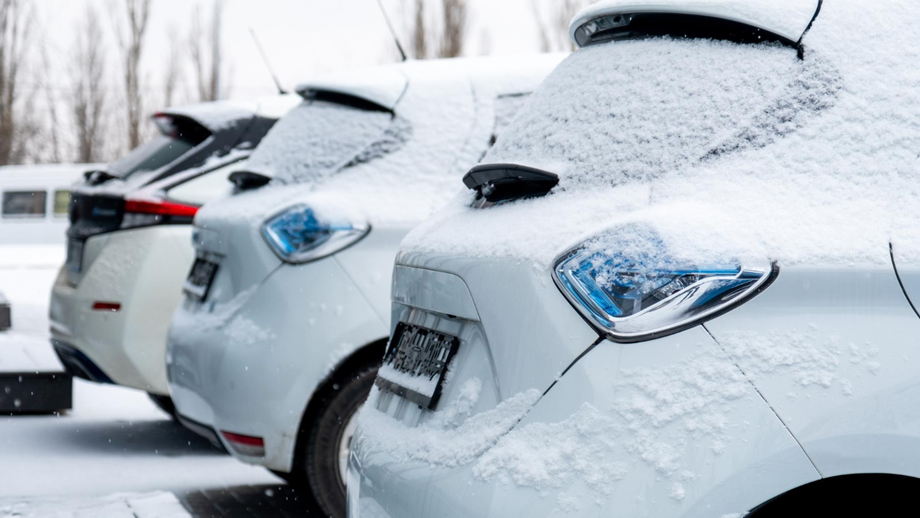
The Subzero Solution
Winter weather has long been the nemesis of battery-powered devices. Smartphones die unexpectedly during ski trips, drones plummet from frozen skies, and electric vehicle drivers watch their range estimates plummet as temperatures drop. These failures stem from fundamental limitations in conventional lithium-ion battery chemistry, where cold temperatures slow the ionic movement essential for power delivery and reduce available capacity by half or more in severe conditions. For residents of northern climates, the frustration of devices failing just when they are needed most has become an accepted seasonal annoyance. Now, a team of Chinese researchers claims to have overcome these constraints with a radical redesign of the battery electrolyte, the critical chemical medium that shuttles ions between electrodes and serves as the highway for energy transfer within the cell.
In a study published last month in the prestigious journal Nature, scientists from Nankai University and the Shanghai Institute of Space Power-Sources detailed a new hydrofluorocarbon-based electrolyte that enables lithium metal batteries to achieve energy densities exceeding 700 watt hours per kilogram at room temperature while maintaining stable operation at temperatures as low as minus 94 degrees Fahrenheit. For context, conventional lithium-ion batteries typically deliver approximately 136 watt hours per kilogram at room temperature, with performance dropping below 68 watt hours per kilogram in subzero conditions. The advance represents a potential doubling or tripling of energy storage capacity for the same battery weight, addressing two of the most persistent obstacles in energy storage technology: density and cold weather reliability. The research challenges decades of assumptions about electrolyte chemistry while offering a scalable solution for next generation energy storage.
Rethinking Molecular Coordination
At the heart of every battery lies the electrolyte, the substance that allows charged particles to flow between the positive and negative electrodes. Traditional lithium battery electrolytes rely on carbonate solvents containing oxygen atoms, which effectively dissolve lithium salts through strong ion dipole interactions. While this oxygen coordination chemistry has dominated the industry for decades because it stabilizes the dissolved salts, it creates significant trade-offs that limit overall performance. The strong interaction between lithium and oxygen hinders charge transfer at the electrode interface and limits performance in cold environments, effectively creating a bottleneck for both energy density and low temperature operation. These materials also require large quantities to function effectively, adding weight and bulk while failing to transfer charge efficiently under thermal stress.
The research team, led by Jun Chen and Qing Zhao at Nankai University alongside Yong Li at the Shanghai Institute of Space Power-Sources, challenged the longstanding assumption that oxygen-based ligands are indispensable for effective electrolytes. They designed and synthesized novel fluorinated hydrocarbon solvent molecules, specifically utilizing 1,3-difluoro-propane as a core component. This compound creates a fluorine coordination system that replaces the traditional lithium oxygen interaction with weaker lithium fluorine bonds. The weaker coordination enables smoother ion flow and reduces dissolution barriers, allowing faster charge transfer even under extreme thermal stress while allowing the system to operate with smaller quantities of electrolyte material.
Technical specifications detailed in the Nature publication reveal the magnitude of this chemical shift. The hydrofluorocarbon electrolyte demonstrates exceptionally low viscosity at 0.95 centipoise, high oxidation stability above 4.9 volts, and maintains ionic conductivity of 0.29 millisiemens per centimeter at minus 70 degrees Celsius. These properties allow lithium metal pouch cells to achieve Coulombic efficiency, a measure of charge transfer efficiency during cycling, reaching 99.7% at room temperature and 98% at minus 70 degrees Celsius. The fluorine-based ligands with designed steric hindrance enable salt dissolution above 2 moles per liter, challenging previous assumptions about fluorinated hydrocarbon capabilities.
Range Anxiety Meets Its Match
The practical consequences for electric transportation are substantial and immediately apparent to anyone who has hesitated to purchase an electric vehicle due to concerns about long distance travel or winter performance. Current EV batteries typically enable ranges between 310 and 370 miles on a single charge under optimal conditions, with these figures dropping significantly in cold weather when heating systems draw power and chemical reactions slow. According to Li Yong, a researcher at the Shanghai Institute of Space Power-Sources, the new technology could extend this range dramatically while maintaining performance in freezing conditions. In an interview with Science and Technology Daily, an official ministry newspaper, Li explained the transformative potential of the breakthrough for consumer applications.
“With a two- to threefold increase in room temperature energy storage capacity for batteries of the same mass, the range of electric vehicles can be extended from 500-600 kilometers to over 1,000 kilometers,” Li stated. This increase would allow a single charge to cover roughly 620 miles, comparable to the distance between Denver and Dallas, effectively eliminating range anxiety for long distance travel and intercity commutes.
Beyond the raw distance capabilities, the technology addresses the seasonal performance degradation that currently plagues EV adoption in colder climates. Conventional batteries lose substantial capacity in winter conditions, sometimes retaining less than half their rated range in freezing temperatures while requiring energy-intensive heating systems to maintain operation. The hydrofluorocarbon electrolyte maintains approximately 400 watt hours per kilogram at minus 58 degrees Fahrenheit, ensuring that vehicles retain their usability during harsh winters without requiring battery warmers or thermal management systems that consume additional power. The 99.7% charging efficiency demonstrated in laboratory conditions suggests these batteries actually improve at holding power over extended use cycles.
Applications Beyond the Road
While automotive applications capture immediate public attention, the researchers emphasize that the technology extends far beyond passenger vehicles into specialized industrial and scientific domains. The Shanghai Institute of Space Power-Sources operates under the China Aerospace Science and Technology Corporation, suggesting immediate applications for spacecraft, satellites, and planetary probes operating in extreme thermal environments where temperature fluctuations can range from intense heat to cryogenic cold within single orbits or surface operations. High energy batteries utilizing this electrolyte could improve the endurance and payload capacity of surveillance drones operating in Arctic conditions, enable intelligent robotic systems to function through polar nights without thermal protection, and power scientific equipment in Antarctic research stations where conventional batteries fail rapidly.
Consumer electronics stand to benefit equally from the cold weather capabilities. Current smartphones and portable devices struggle with battery life in cold weather, a common complaint among users in northern climates and winter sports enthusiasts who find their devices shutting down unexpectedly despite showing partial charge. The fluorine-based chemistry could enable devices that maintain full functionality at temperatures that would render conventional batteries inert, potentially extending operational time for emergency beacons, GPS units, and communication equipment in wilderness settings. Space exploration missions, which face temperature swings from extreme heat to cryogenic cold, could utilize these cells for surface operations on the Moon or Mars where thermal stability is essential for mission success and conventional thermal management adds prohibitive weight.
The versatility stems from the electrolyte’s fundamental physical redesign. By reducing solvent viscosity and improving wetting behavior, the system requires less electrolyte material overall, reducing battery weight while improving performance across the entire temperature spectrum. This combination of high specific energy and wide temperature operation remains elusive in current commercial battery systems, making the hydrofluorocarbon approach particularly valuable for aerospace applications where every gram matters and thermal conditions vary dramatically between sun exposure and shadow.
From Laboratory to Assembly Line
Despite the promising results published in the peer-reviewed literature, significant engineering challenges remain before these batteries appear in commercial products available to consumers. The research team acknowledges that high temperature stability requires additional development and optimization. While the electrolyte excels in extreme cold, maintaining performance and safety above 212 degrees Fahrenheit needs improvement for true all climate operation in hot desert environments or during rapid charging scenarios that generate significant heat. Raising the boiling point of the hydrofluorocarbon compounds without compromising the low temperature advantages represents the next technical barrier for researchers to overcome.
The timeline for commercialization remains aggressive compared to typical battery development cycles. Industry sources indicate that Chinese manufacturers, including the Shanghai Institute of Space Power-Sources, are targeting mass production capabilities by late 2026, an ambitious schedule that reflects China’s broader strategy to maintain dominance in global battery production and clean energy technology. The country currently controls approximately 60% of global lithium-ion manufacturing capacity and continues investing heavily in fundamental research to capture next generation technologies. This development complements other recent Chinese innovations, including aqueous batteries utilizing tofu brine that achieve 120,000 charge cycles for stationary grid storage applications, suggesting a comprehensive approach to energy storage advancement across multiple chemistries and use cases.
Collaboration between academic institutions and industrial partners appears central to the commercialization strategy. Chen Jun, an academician of the Chinese Academy of Sciences and vice president of Nankai University, stressed the importance of practical application over theoretical discovery in recent statements regarding the technology transfer process.
“We can’t always stay in the ivory tower. Our goal is to address real industrial challenges,” Chen stated. His team has already established partnerships with automotive manufacturers to translate the laboratory findings into drivetrain components capable of withstanding real-world road conditions.
Yan Zhenhua, a professor at Nankai University’s College of Chemistry, noted that the technology addresses both safety and cost concerns historically associated with lithium metal batteries. The self-developed composite electrolyte improves intrinsic safety while substantially improving cycle life, potentially solving the high-risk reputation that has previously limited lithium metal commercialization despite its theoretical advantages over current lithium ion architectures.
The Global Battery Race
This breakthrough arrives amid intensifying international competition for battery technology supremacy that will likely determine the economic winners of the energy transition. While some nations have focused on regulatory barriers and trade restrictions to protect domestic manufacturing capabilities, China has concentrated on fundamental research and rapid commercialization through state backed laboratories and close university-industry partnerships. The hydrofluorocarbon electrolyte represents a fundamental departure from established chemistry, potentially allowing Chinese manufacturers to leapfrog current generation technologies rather than simply matching existing capabilities through incremental improvements. The involvement of the Shanghai Institute of Space Power-Sources, a major state backed aerospace research facility, indicates substantial government support for scaling these innovations.
The innovation highlights the persistent gap between academic publication and mass production that characterizes advanced materials science. As battery researchers universally acknowledge, a Nature paper and a factory assembly line remain separated by years of engineering challenges, scaling difficulties, supply chain development, and cost optimization. However, the involvement of state backed aerospace and automotive entities suggests substantial resources will flow toward overcoming these barriers, including the establishment of pilot production lines and testing facilities. If successful, the technology could shift the competitive landscape for electric vehicles, particularly in markets with severe winter climates where current battery technologies struggle and consumer adoption faces natural resistance.
For consumers considering the transition to electric vehicles, the development suggests that waiting until 2027 or 2028 for the next generation of vehicles might deliver genuinely transformative range and reliability improvements rather than incremental gains. The combination of 600-mile range capabilities and cold weather resilience addresses the two most common objections to EV adoption among mainstream buyers. As Lu Tianjun, general manager of China Automotive New Energy Battery Technology, noted regarding related advanced battery developments within the Chinese ecosystem, the performance represents approximately a 50% improvement over current technologies available to consumers, positioning these batteries at a leading level both domestically and internationally while potentially making electric vehicles genuinely superior to internal combustion for long distance travel.
At a Glance
- Chinese researchers developed a hydrofluorocarbon-based electrolyte that enables lithium metal batteries to achieve over 700 watt hours per kilogram energy density, more than double conventional lithium-ion cells.
- The technology maintains operation at temperatures as low as minus 94 degrees Fahrenheit while retaining approximately 400 watt hours per kilogram at minus 58 degrees Fahrenheit.
- Electric vehicles using these batteries could achieve ranges exceeding 620 miles on a single charge, compared to current averages of 310 to 370 miles.
- The breakthrough replaces traditional oxygen-coordination chemistry with fluorine-based ligands, specifically using 1,3-difluoro-propane as a core solvent component.
- Research teams from Nankai University and the Shanghai Institute of Space Power-Sources published their findings in the journal Nature on February 25, 2026.
- High temperature stability remains a limitation requiring additional research before the technology can achieve true all climate capability.
- Mass production timelines target late 2026, with applications extending from electric vehicles to aerospace, drones, robotics, and deep-space exploration.