A New Wave of Chinese Dining Takes Seoul
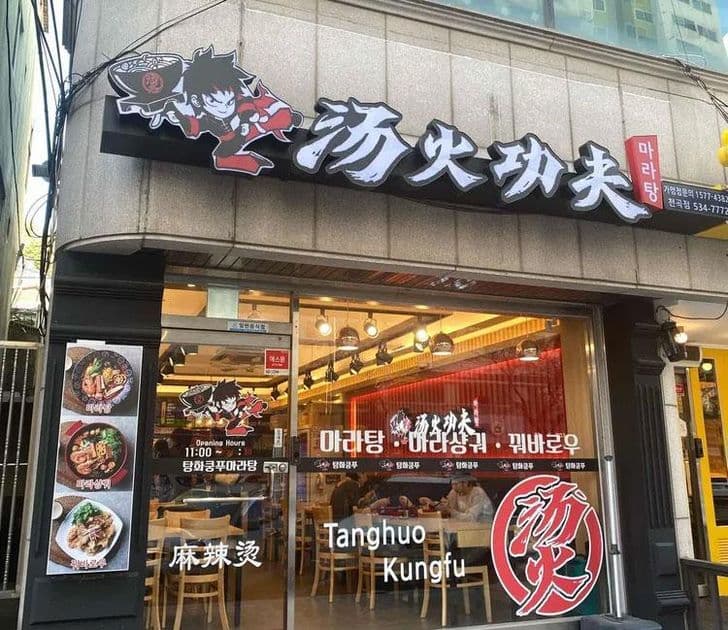
Chinese food brands are reshaping the restaurant landscape across South Korea, transforming neighborhoods from Gangnam to Hongdae with authentic flavors and ambitious expansion strategies. Tanghuo Kungfu Malatang, a mala hot pot chain, now operates more than 560 locations throughout the country, a dramatic increase from its single franchise opening in Suwon back in 2012. The company generated 22.2 billion won in sales during 2024, more than doubling its 2023 revenue of 18.3 billion won, while operating profit jumped from 943 million won to 10.5 billion won in the same period.
The success extends beyond sheer numbers. Tanghuo Kungfu has established a dominant presence in Seoul’s most prominent tourism and commercial districts, including Gangnam Station, Myeong-dong, Hongdae, Seongsu, and Daehangno. The brand recently announced plans to accelerate growth by waiving franchise, training, and royalty fees for new franchisees while providing complimentary food-serving bowls, a strategy designed to capture greater market share in Korea’s expanding malatang sector. An official from Tanghuo Kungfu Korea expressed hope that local restaurateurs would participate actively to lead the malatang market growth together.
Hot pot competitor Haidilao has achieved even greater financial success despite maintaining a smaller footprint. With only ten locations in Korea, the chain generated 78.1 billion won in sales during 2024, up from 13.9 billion won in 2020. Industry estimates suggest the brand surpassed 100 billion won in sales last year. Haidilao distinguishes itself through entertainment-focused service, offering free nail art, snacks, and board games to customers waiting for tables.
Other Chinese dining concepts are following similar trajectories. Bantianyao Grilled Fish has grown to six locations since entering Korea in 2020, while Haihai Kaochuan, a barbecued skewer brand operated by Haidilao, opened its first outlet in Myeong-dong this January.
Milk Tea Chains Challenge Korea’s Coffee Culture
Parallel to the restaurant expansion, Chinese beverage chains are mounting a serious challenge to Korea’s coffee-dominated drink market. Chagee, a premium milk tea brand inspired by traditional Chinese culture, plans to open three Seoul locations by the end of June, marking its first East Asian expansion outside China. The company already operates over 7,300 teahouses globally and has built substantial presence across Southeast Asia.
Chagee is not alone. Chabaido now operates approximately 20 stores in Korea, while HeyTea and Mixue have established six and fourteen outlets respectively. Mixue’s scale is particularly notable, with nearly 53,000 locations in China alone, illustrating the intense domestic competition driving these brands abroad. For years, Taiwan’s Gong Cha dominated Korea’s milk tea market after entering Seoul in 2012. The brand became Korean-owned in 2017 and now operates 836 outlets nationwide.
The expansion coincides with shifting consumer habits among Korean youth. Visa-free travel policies have enabled more Koreans to visit China and experience local products firsthand, creating familiarity with brands before they arrive domestically. Choi Yong-hee, a graduate student in Seoul’s Sinchon district, first encountered Chagee during a family trip to Shanghai last October. “What I liked about Chagee was that the milk tea was not too strong and was fragrant, making it easy to enjoy. I have not been able to find milk tea like this in Korea,” he explained. Google Trends data shows searches for “Chagee tea” in Korea have risen 110 percent over the past three months.
Korean Brands Mount Return to Chinese Market
While Chinese companies enter Korea, a simultaneous wave of Korean brands is returning to China after years of restricted access. Fried chicken chains are leading this charge, with BBQ signing master franchise agreements covering eight Chinese regions including Beijing, Qingdao, and Jinan. The brand, which first entered China in 2003 and once operated over 400 locations, aims to expand beyond 1,000 stores after establishing a directly managed flagship in Chengdu.
Kyochon Chicken has resumed its China expansion by establishing a corporate entity in Shenzhen and opening a store in the Qianhai MixC shopping mall. The company currently operates 18 locations and plans to expand from major cities into provincial capitals, targeting Chinese consumers with distinctly Korean flavor profiles built on three decades of sauce expertise. BHC Group is also weighing entry into mainland China beginning with its Hong Kong presence, while Tous Les Jours maintains about 200 franchised locations across China.
This renewed interest follows a period of unofficial restrictions on Korean cultural exports after the 2017 THAAD missile defense system deployment. Kang Jun-young, a professor at Hankuk University of Foreign Studies, observed that demand for K-food remains strong among young Chinese consumers, and Beijing’s approach has softened since last year. Domestic economic stagnation in Korea, where consumer sentiment remains below neutral levels, has also prompted companies to seek growth abroad. China now promotes a “first-launch economy” policy offering subsidies to companies debuting new products or locations.
Changing Perceptions Elevate Chinese Brands
The influx of Chinese brands marks a significant shift in how Korean consumers view products from their neighbor. Where Chinese goods were once seen primarily as inexpensive alternatives, many now command premium pricing based on quality and design. Flower Knows, a Chinese cosmetics brand known for ornate princess-style packaging, entered Korean retail stores in March with products priced higher than comparable Korean alternatives. The Bunny Garden 6-Color Makeup Palette retails for 37,000 won, compared to 27,000 won for similar items from domestic brand Clio.
The products are not cheap, but the pigmentation and application are good, and the design is very pretty and different from Korean cosmetics.
Lee Ga-hyeon, a 29-year-old consumer from Incheon, previously purchased Flower Knows products through overseas direct purchases but welcomed the opportunity to examine items in person before buying. This shift reflects broader changes in bilateral commerce, with Chinese companies now seeking to establish brand value comparable to established global luxury markers.
Industry analysts view Korea as a strategic testing ground for Chinese brands seeking international validation. The country’s sophisticated consumers and rapidly changing trends make it an ideal environment for refining products before entering broader global markets. Jung Yeon-sung, a professor of business administration at Dankook University, noted that Korea attracts attention because of its cultural influence and demanding customer base. The domestic Chinese market has reached saturation in many sectors, with annual growth in the tea market slowing from 44 percent in 2023 to projected 12.4 percent in 2025, making overseas expansion essential.
Bilateral Trade Extends Beyond Restaurants
The restaurant expansion occurs within a broader context of strengthening bilateral trade. Korean instant noodles have become a staple comfort food in China, with export value rising 266 percent between 2017 and 2025. China remains the world’s largest consumer of instant noodles at 43.8 billion servings annually, and Korean brands occupy premium positions in this market. Buldak Original and its carbonara variant ranked eighth and ninth respectively on Taobao’s bestseller list, while Nongshim’s Shin Ramyun placed 17th.
South Korean seafood exports to China surged 18 percent in 2025, reaching $3.33 billion in total. The two countries signed memoranda on food safety and aquatic product trade in January 2026, streamlining export procedures and waiving certain sanitary assessments. China has remained South Korea’s largest trading partner, with bilateral trade reaching $298.9 billion in the first eleven months of 2025.
This economic interdependence creates favorable conditions for restaurant brands crossing borders in both directions. As Chinese consumers develop appetite for K-food and Korean consumers embrace authentic Chinese dining concepts, the lines between the two markets continue to blur. Samyang Foods is currently building its first overseas factory in China’s Zhejiang province, while Orion has increased utilization rates at its five Chinese factories and invested 25 billion won in new production lines for jelly and potato flakes.
Key Points
- Tanghuo Kungfu Malatang now operates over 560 locations in Korea, with sales reaching 22.2 billion won in 2024
- Haidilao generated approximately 100 billion won in Korean sales in 2024 with just ten locations
- Chinese milk tea brands including Chagee, Chabaido, HeyTea, and Mixue are opening dozens of stores across Seoul
- Korean fried chicken chains BBQ and Kyochon are simultaneously expanding back into China after years of trade restrictions
- Korean instant noodle exports to China increased 266 percent between 2017 and 2025
- Visa-free travel policies have improved Korean consumer perceptions of Chinese brands
- China’s domestic market saturation is driving brands to seek growth in Korea as a strategic testing ground
- Bilateral food trade between the two countries reached $9.01 billion in 2024