More Ships, but a Different Strategic Test
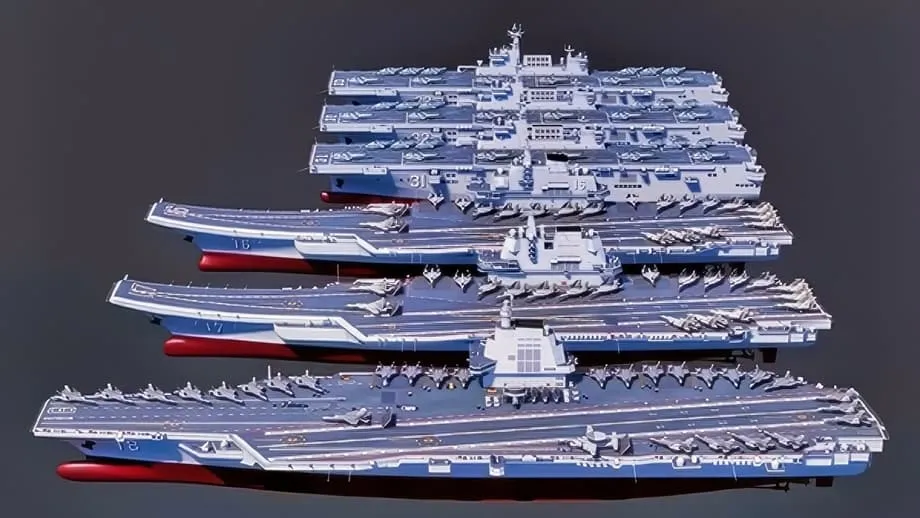
China fields more than 370 battle force ships, compared with 296 in the United States Navy, according to figures attributed to the Congressional Research Service. Projections put the Chinese fleet at 435 ships against 294 American vessels by 2030. Those numbers make China the world's largest navy by hull count, but the central challenge for Washington is whether its forces can reach a crisis in the Western Pacific quickly enough to influence its outcome.
Contents
- More Ships, but a Different Strategic Test
- Why Delaying Intervention Matters
- How China's Defensive Network Works
- The DF-27 Extends the Threat
- The Growing Threat Beneath the Surface
- America Spreads Out Its Forces
- Missiles on Land and Choices in the Budget
- Breaking the Chain from Detection to Attack
- Allies Add Pressure from More Directions
- China's Exposure at the Strait of Malacca
- Combat Experience and Regional Trust
- The Bottom Line
As of March 31, 2026, that challenge extends far beyond the number of ships each country can deploy. China has assembled a network of missiles, surveillance systems, submarines and island installations intended to make American intervention difficult, costly and slow. A larger fleet adds strength to that network, but ships are only one part of it.
The figures also point to different trajectories. China's projected fleet would grow from more than 370 vessels to 435, while the American total would move from 296 to 294. Even so, a count of hulls gives only a partial picture of the forces available and the tasks they must perform.
Why Delaying Intervention Matters
Beijing's approach centres on sea denial, a concept associated with naval strategist Julian Corbett, rather than the sea command associated with Alfred Thayer Mahan. In simple terms, sea denial means preventing an opponent from using a stretch of ocean effectively. Sea command means securing the ability to use it yourself.
China's objective under this approach is to make American forces arrive too late to shape a crisis, rather than seek a decisive fleet battle of the kind associated with classical naval warfare. A temporary zone in which intervention becomes prohibitively dangerous could give Beijing time to secure political objectives involving Taiwan or contested territory in the South China Sea.
That strategy does not require China to match or exceed the United States in every category of naval strength. It requires a system capable of detecting, tracking and threatening approaching American forces. Additional Chinese ships provide mass, complicate American movement and increase the risks commanders must weigh before entering contested waters.
How China's Defensive Network Works
China's anti access and area denial system, commonly abbreviated as A2/AD, combines missiles with long reach, surveillance equipment, electronic warfare tools and submarines. Its purpose is to prevent an adversary from entering an area or restrict its freedom of movement once inside. Beijing has built this defensive network outward from the mainland, across the South China Sea and toward the first island chain.
Two sets of capabilities sit at its centre: sensors and shooters. Sensors locate and follow potential targets. Shooters are the weapons and platforms that can attack them. A missile's range matters, but the system also needs information about where a moving ship is and where it will be when the weapon arrives.
China's sensors include airborne early warning aircraft, radars that can look beyond the horizon, satellite constellations and surveillance assets on artificial islands in the South China Sea. Together, they seek to build a picture of maritime activity and track American ships and aircraft moving toward potential flashpoints.
Ground launched ballistic and cruise missiles supply much of the striking power. The DF-21D and DF-26, often called carrier killers, threaten large surface combatants at ranges exceeding 1,500 kilometres. Their role is to put approaching naval forces at risk before those forces can operate freely near a crisis.
The DF-27 Extends the Threat
The Pentagon's 2025 report on Chinese military power confirmed the operational deployment of the DF-27, a conventional intercontinental ballistic missile with the ability to attack ships. Its reported range of 5,000 to 8,000 kilometres potentially brings Hawaii, Alaska and even the continental United States within reach, while also allowing attacks on naval vessels at sea.
A hypersonic glide vehicle, if fitted to the DF-27, would add another challenge for missile defences. Such a vehicle can manoeuvre during flight, making its path harder to predict. The weapon therefore combines the prospect of very long reach with a potentially more difficult interception problem.
Woody Island, Fiery Cross Reef and Mischief Reef extend China's military presence into maritime Southeast Asia. Infrastructure on these disputed territories includes airfields, submarine pens and communication arrays. Fixed island installations and mobile missile batteries together create successive layers of defence that American forces would need to penetrate during a regional contingency.
The Growing Threat Beneath the Surface
China launched ten submarines powered by nuclear reactors between 2021 and 2025, with a combined displacement of approximately 79,000 tonnes. The United States launched seven during the same period, totalling 55,500 tonnes. China's production surge, centred at the Bohai Shipbuilding Heavy Industry facility in Huludao, has expanded its nuclear submarine fleet to roughly 32 vessels.
Those figures put China ahead by three launches and about 23,500 tonnes over the period. They also direct attention beneath the surface, where submarines create a different problem from the visible growth of a surface fleet: finding an approaching threat before it can attack.
China's fleet includes Type 094 Jin class submarines carrying ballistic missiles and newer Type 093B submarines carrying guided missiles, with vertical launch systems. The Type 093B carries advanced weapons for attacking ships, including the YJ-19 hypersonic missile. The Type 094, armed with JL-3 ballistic missiles launched from submarines, provides the maritime component of China's nuclear deterrent.
Beijing is therefore pursuing two objectives at once: strengthening conventional sea denial and making its nuclear forces more able to survive an attack. Western analysts assess that Chinese submarines still trail American vessels in acoustic stealth and sensor fusion, meaning the ability to remain quiet and combine information from different sensors. Growing numbers nevertheless make the task of locating and tracking them more demanding.
An encounter near Okinawa in October 2006 illustrated the danger. A Chinese Song class submarine powered by a diesel electric system surfaced within five miles of the USS Kitty Hawk aircraft carrier. The carrier group, accompanied by a dozen escort vessels and helicopters assigned to search for submarines, had failed to detect its approach. The incident exposed complacency in American submarine detection and showed that a Chinese submarine did not need nuclear propulsion to threaten a carrier group.
America Spreads Out Its Forces
The United States has responded to the density of China's defensive systems by developing ways to disperse forces while preserving their ability to fight together. The Navy's Distributed Maritime Operations concept spreads ships across wider geographic areas instead of concentrating them in vulnerable carrier strike groups.
Dispersal makes it harder for Chinese sensors to locate American forces and decide which targets to attack first. It also aims to keep the loss of a single asset from crippling American combat power. The operational challenge is to retain coordinated action while reducing the concentration of ships that an opponent can target.
The Air Force's Agile Combat Employment concept applies a similar principle to aircraft. It involves operating from numerous smaller airfields, highway strips and allied bases across the Pacific, rather than relying heavily on large installations such as those on Guam.
More operating locations expand the list of targets China would have to watch and attack. American forces seek to preserve their ability to continue missions even when some bases or units come under pressure. Both concepts turn geography into part of the response to China's missiles and surveillance network.
Missiles on Land and Choices in the Budget
The United States' withdrawal from the Intermediate Range Nuclear Forces Treaty in 2019 opened the way to develop conventional missiles launched from the ground that the agreement had previously banned. Defence planners advocate deploying missiles with ranges suited to regional operations throughout the first island chain to threaten Chinese launchers and command nodes.
Tomahawk missiles and possible future hypersonic weapons could strike batteries used to attack ships from a distance, creating gaps through which American aircraft and naval forces could operate. The Army has also developed weapons with long reach intended to strike ships and aircraft from positions on land, giving the response to A2/AD a role for several military services.
Funding limits affect which capabilities reach the force. The Navy recently cancelled its Hypersonic Air Launched Offensive Anti Surface Warfare programme because of budget constraints. It chose instead to rely on the AGM-158C Long Range Anti Ship Missile, or LRASM, which flies below the speed of sound but uses stealth to make detection more difficult.
Breaking the Chain from Detection to Attack
American planners do not need to destroy every Chinese radar or missile launcher to create an opportunity for intervention. They aim to disrupt the kill chain: the connected steps through which a target is detected, tracked, assigned to a weapon and attacked. Interrupting one step can prevent the rest from working effectively.
A temporary break in that chain could give American naval and air forces a window to act before Chinese defences recover. This makes the links between sensors, command centres and weapons as important as the weapons themselves. The immediate objective is usable access during a crisis, rather than the complete removal of every defensive system.
Stealth aircraft form a leading part of this approach. The B-21 Raider, F-35 Lightning II and existing B-2 Spirit bombers are designed to penetrate heavily defended airspace and strike command centres and radar sites. Attacks on those facilities would reduce the information available to Chinese defenders and weaken their ability to follow events across the area.
Submarines offer another route into contested waters. Their ability to remain hidden gives them considerable freedom to attack surface vessels or targets on land while avoiding detection. That makes the undersea contest important to both China's denial strategy and America's attempts to overcome it.
Weapons launched from outside the densest concentrations of defences provide a third option. The AGM-158 JASSM-ER, LRASM and Tomahawk cruise missiles allow American forces to attack critical parts of the network without first bringing their launching platforms into its most dangerous areas.
QUICKSINK pursues a complementary goal: affordable mass. The programme aims to provide large numbers of precision munitions at lower cost, allowing attacks that could overwhelm defences and exhaust stocks of defensive missiles. Expensive weapons with advanced capabilities and cheaper weapons deployed in greater numbers address different parts of the same operational problem.
Allies Add Pressure from More Directions
The AUKUS agreement involving Australia, the United Kingdom and the United States will provide Canberra with submarines powered by nuclear reactors. The arrangement is intended to expand allied capacity beneath the surface, adding another element to the undersea balance.
Mobile missile batteries based in the Philippines, Japan or other partner countries would create additional directions from which Chinese forces could face attack. China would then have to distribute attention and defensive resources across a wider area, reducing the effectiveness of concentrating them against a single approach.
Diplomatic coordination therefore supports the military effort to disrupt China's targeting network. Access to allied territory can spread operating locations, while cooperation at sea can add forces capable of entering contested waters. These measures work alongside dispersed American ships and aircraft, rather than replacing them.
China's Exposure at the Strait of Malacca
China's strongest vulnerabilities extend beyond its military network. Approximately 80 percent of its energy imports, worth more than $300 billion annually, pass through the Strait of Malacca. The narrow passage between Indonesia, Malaysia and Singapore is a chokepoint for supplies that support the Chinese economy.
This dependence is known as the Malacca Dilemma. An opponent could put pressure on China's access to energy without launching a direct attack on Chinese territory. In a prolonged conflict, protecting supply routes could become a major demand on Beijing alongside operations closer to home.
India's installations in the Andaman and Nicobar Islands, particularly the forward air station at Campbell Bay, place its forces near the strait's western approaches. From there, Indian forces can monitor traffic and potentially interrupt its passage.
A complete blockade would constitute an act of war. Surveillance, maritime patrols and demonstrations of the ability to stop shipping could still create uncertainty without a shot being fired. That uncertainty could produce sharp increases in insurance premiums for war risks and shipping costs, disrupting the supply chains on which Chinese manufacturing depends.
Combat Experience and Regional Trust
The People's Liberation Army has not conducted major combat operations since 1979. That long gap raises doubts about how its personnel, equipment and complex joint operations would perform under fire. A large inventory must still be operated reliably by forces able to coordinate ships, aircraft, missiles and information during combat.
China's failure to fully enforce its Air Defense Identification Zone over the East China Sea also points to limits in managing awareness and activity across a wide maritime area. Maintaining a dependable picture of a large region is a central requirement for a strategy built around finding and threatening approaching forces.
Beijing's assertive conduct has also damaged trust in Southeast Asia. Vietnam and the Philippines have deepened security cooperation with the United States in response to Chinese expansionism. During a crisis, that loss of trust could restrict Beijing's diplomatic options while helping Washington secure access to bases and coalition support.
China has built a formidable combination of ships, missiles, sensors and submarines designed to delay American intervention. The decisive contest is whether that network can sustain denial during the early stages of a crisis, while the United States tries to disrupt it and create opportunities to act. Fleet size matters within that contest, alongside combat readiness, supply routes and the choices of neighbouring countries.
The Bottom Line
- China has more than 370 battle force ships against America's 296, with projections of 435 Chinese ships and 294 American vessels by 2030.
- Beijing's sea denial strategy seeks to make American intervention too difficult, costly or slow to influence a regional crisis.
- The Pentagon's 2025 assessment confirmed deployment of the DF-27, with a reported range of 5,000 to 8,000 kilometres and the ability to attack ships.
- China launched ten submarines powered by nuclear reactors during 2021 to 2025, totalling about 79,000 tonnes, against seven American launches totalling 55,500 tonnes.
- The United States is pursuing dispersed operations, attacks on targeting networks, missiles with long reach and cooperation with allies.
- China's dependence on the Strait of Malacca, limited recent combat experience and strained regional relationships could weaken its position in a prolonged conflict.